Honda's electrification strategy has undergone a dramatic transformation. After years of cautious hybrid-first moves, the automaker is now fielding vehicles on its dedicated EV architecture and navigating a rapidly shifting battery supply chain. For buyers and owners, the critical question isn't just how far a Honda EV can drive on a charge — it's how the battery will hold up over 100,000 miles, what chemistry sits under the floor, and whether Honda's long-promised solid-state cells will actually materialize.
This guide evaluates Honda's current battery technology stack, from the NMC packs in the Prologue to the LFP cells arriving in upcoming models, and puts real degradation data, warranty terms, and replacement costs under the microscope.
Honda's Current Battery Chemistry: NMC and the LFP Shift
The 2026 Honda Prologue — built on GM's Ultium platform through a partnership that is now winding down — uses NMC (nickel manganese cobalt) lithium-ion pouch cells. The Prologue's battery pack is rated at 85 kWh usable, delivering an EPA-estimated 296 miles of range (FWD trims). NMC chemistry dominates Honda's current lineup because of its superior energy density, which lets the Prologue store more kWh in a smaller, lighter pack.
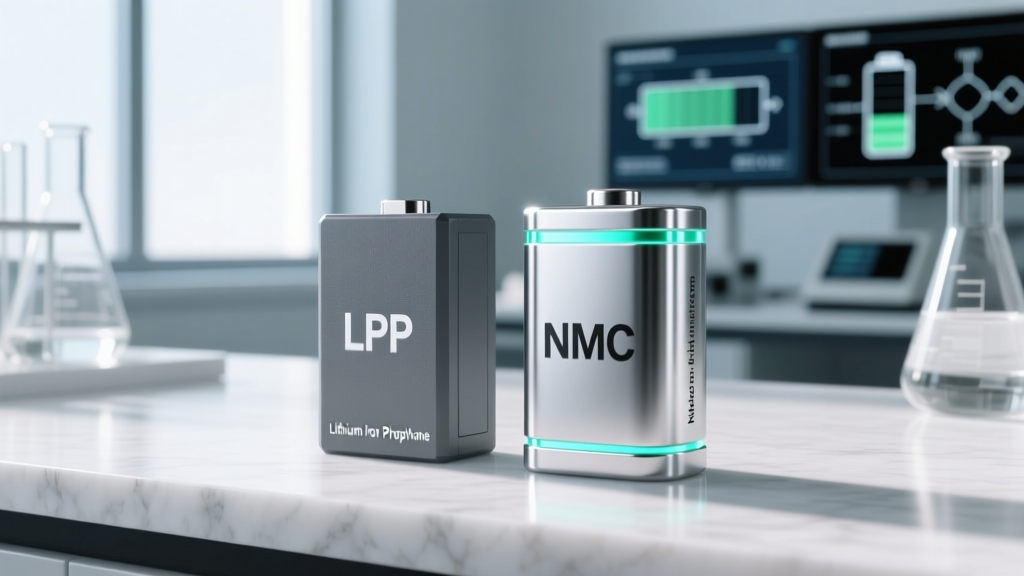
However, Honda has confirmed that future models — including vehicles built on its own Honda e:Architecture — will incorporate LFP (lithium iron phosphate) cells for standard-range and more affordable trims. LFP eliminates cobalt and nickel, reducing cost and supply-chain risk, though at the expense of some energy density.
| Attribute | NMC (Prologue / current) | LFP (upcoming Honda e:Architecture) |
|---|---|---|
| Energy density | ~250–270 Wh/kg (cell level) | ~160–180 Wh/kg (cell level) |
| Typical cycle life | 1,000–1,500 full cycles | 3,000–5,000+ full cycles |
| Cold-weather performance | Better low-temp discharge; preconditioning helps | More range loss below freezing; heat pump critical |
| Cost (per kWh, cell) | ~$110–$130 | ~$80–$100 |
| Charging to 100% regularly | Accelerates degradation above 80% SoC | Tolerates 100% SoC better; Honda recommends periodic full charges for calibration |
| Thermal stability | Good; requires active thermal management | Excellent; inherently more stable chemistry |
The takeaway: NMC gives Honda the range and packaging it needs today, but LFP's cost advantage and longer cycle life make it the logical choice for higher-volume, lower-priced models arriving from Honda's Ohio EV hub starting in 2026–2027.
Real-World Degradation: What Honda Owners Actually See
Battery degradation is the single biggest ownership concern, and it's also the most misunderstood. Lithium-ion cells don't fail catastrophically at a set mileage — they slowly lose capacity over time and charge cycles.
Typical EV Battery Degradation Curve (Industry Data Applied to Honda NMC Packs):
- Year 1 / 15,000 miles: ~2–4% capacity loss (initial formation drop)
- Year 3 / 45,000 miles: ~5–8% cumulative loss
- Year 5 / 75,000 miles: ~8–12% cumulative loss
- Year 8 / 120,000 miles: ~12–18% cumulative loss (varies heavily with charging habits and climate)
- Year 10 / 150,000 miles: ~15–22% cumulative loss for NMC; LFP packs typically retain 85–90%+ at this point
Source context: Data compiled from fleet analyses by Recurrent Auto and real-world owner telemetry aggregated across NMC-equipped EVs of similar pack size. Honda's liquid-cooled thermal management system in the Prologue helps keep cells in the optimal 20–40°C range, which is a key factor in minimizing degradation.
For a Prologue owner, that means an EPA-rated 296 miles when new could realistically deliver around 250–265 miles after five years of mixed driving — still comfortably adequate for daily use and road trips with DC fast-charging stops.
Honda's Battery Warranty: Terms, Thresholds, and What's Covered
Honda provides a dedicated battery warranty separate from the standard vehicle coverage. Here's exactly what it covers on current models:
| Component | Coverage Period | Mileage Limit | Capacity Retention Threshold |
|---|---|---|---|
| High-voltage traction battery | 8 years | 100,000 miles | Below 70% of original capacity |
| Battery management system (BMS) | 8 years | 100,000 miles | Functional failure |
| Power electronics / inverter | 8 years | 100,000 miles | Functional failure |
| Standard bumper-to-bumper | 3 years | 36,000 miles | All components |
| Powertrain (motor, reduction gear) | 5 years | 60,000 miles | Functional failure |
The 70% capacity retention threshold over 8 years/100,000 miles is the industry-standard benchmark, matching what Hyundai, GM, and most legacy automakers offer. California-emissions states (and states that have adopted CARB standards) may see extended coverage — typically 10 years/150,000 miles — so verify with your local Honda dealer.
Critical nuance: the warranty covers degradation below the threshold, not normal capacity loss above it. If your Prologue battery retains 72% after eight years, Honda considers that within specification, even though you've lost nearly 85 miles of range.
Battery Replacement Cost: When It's Needed and What It Costs
This is where fear-mongering runs rampant, so let's ground this in data. Most EV batteries outlive the vehicles they're installed in. According to fueleconomy.gov and long-term fleet studies, complete battery failure before 150,000 miles is rare — well under 2% of vehicles in most datasets. The more common scenario is gradual capacity loss that reduces range but doesn't strand the car.
| Model / Pack Size | Battery Type | Estimated Replacement Cost (parts + labor) | Typical Need Timeline |
|---|---|---|---|
| Prologue (85 kWh NMC) | Ultium-based NMC pouch | $14,000–$18,000 | Rarely needed before 200,000+ mi; usually out of warranty |
| Future Honda e:Architecture (est. 70–85 kWh LFP) | LFP prismatic/cylindrical | $9,000–$13,000 (projected) | LFP cycle life makes full replacement highly unlikely in vehicle lifetime |
| Module-level repair (partial) | Varies | $2,500–$5,000 | When individual cell groups fail; increasingly common repair approach |
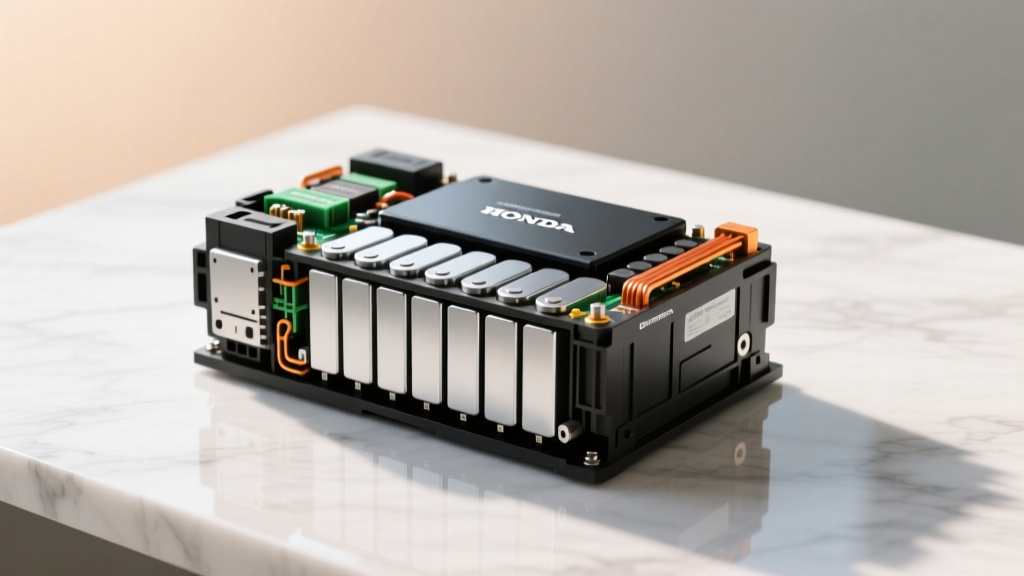
A full pack swap is the worst-case scenario and the least likely outcome. Modern battery diagnostics allow technicians to identify and replace individual modules — clusters of cells within the larger pack — at a fraction of the full-pack cost. Honda's service network has been training on module-level repair as part of its EV transition.
Factors That Accelerate (or Preserve) Battery Life
Degradation isn't random. Your daily habits have a measurable impact on how quickly your Honda's battery loses capacity. Here's what the electrochemistry actually rewards:
Battery Care Best Practices for Honda EV Owners
- Keep daily SoC between 20–80%. Set the charge limit in the HondaLink app. NMC cells degrade fastest when held at 100% for extended periods. (LFP future models will tolerate 100% better.)
- Minimize DC fast charging to road trips. Occasional 150 kW sessions are fine, but daily fast charging at high power generates sustained heat that accelerates calendar aging. The Prologue peaks at 150 kW DC, achieving 10–80% in approximately 32 minutes — reserve this for highway travel.
- Precondition before fast charging. Use the HondaLink app to precondition the battery 15–20 minutes before arriving at a DC station. Cold cells charge slower and experience more lithium plating stress.
- Avoid prolonged storage at extreme SoC. If the car will sit for more than two weeks, leave it at ~50% SoC in a shaded or temperature-controlled area.
- Use Level 2 home charging as your daily routine. A 240V / 48A Level 2 charger adds roughly 25–30 miles of range per hour — more than enough for overnight replenishment without the thermal stress of DC fast charging.
- Don't baby it excessively. Modern BMS systems actively manage cell balancing, thermal limits, and charge buffers (the Prologue has ~3–5 kWh of buffer above and below the displayed 0–100%). Drive normally and let the software do its job.
The single most impactful habit? Reducing time spent at 100% SoC. Research published in the Journal of The Electrochemical Society consistently shows that NMC cells stored or held at full charge degrade 2–3× faster than those cycled between 20–80%.
How to Monitor Battery Health (SoH) on a Honda EV
State of Health (SoH) is a percentage metric that compares your battery's current maximum capacity to its original, as-new capacity. Here's how Honda owners can check it:
- HondaLink App / In-Vehicle Display: Honda has indicated that newer EV models will include a battery health indicator within the energy management menu, though the granularity varies by model year. On the Prologue, range estimates that consistently fall below the EPA figure after a full charge are the most practical proxy.
- OBD-II Diagnostic Tools: Third-party EV diagnostic tools (such as those from OBDeleven or dedicated EV apps) can read the BMS-reported SoH value directly from the vehicle's CAN bus. This gives a precise percentage — for example, 94.2% SoH at 32,000 miles.
- Dealer Diagnostic Scan: Honda dealerships can pull a full battery health report during scheduled service visits, including individual cell voltage variance, which flags weak modules before they become a problem.
- Manual Tracking: Charge to 100% (on an NMC pack, do this only occasionally for calibration), note the displayed range, and compare it to the EPA sticker. A consistent 5–8% drop over the first two years is normal; a sudden 15%+ drop warrants a dealer visit.
Solid-State and Beyond: Honda's Forward-Looking Battery Roadmap
Honda has been vocal about its solid-state battery ambitions, and this deserves honest, timeline-grounded context — not hype.
What Honda has announced:
- A solid-state battery demonstration production line at its Tochigi facility, operational since early 2024, producing cells for testing and validation.
- A target to begin limited production of solid-state-equipped vehicles in the late 2020s (Honda has referenced 2028–2030 as a window, but no specific model or market has been confirmed).
- Projected benefits: ~30–40% greater energy density than current NMC cells, faster charging (potentially 10–80% in under 15 minutes), and improved safety due to the non-flammable solid electrolyte.
Realistic assessment: Solid-state batteries remain in the engineering-validation phase across the entire global auto industry. Toyota, Nissan, and Samsung SDI are pursuing parallel timelines. The primary hurdles are manufacturing yield, cost (currently 3–5× more expensive per kWh than liquid-electrolyte cells), and scaling from lab to gigafactory production. Honda's timeline is credible as an R&D target but should not factor into any near-term purchase decision.
Silicon-anode technology is the nearer-term evolution. Companies like Sila Nanotechnologies and Group14 are already supplying silicon-dominant anode materials to battery manufacturers. This technology boosts energy density by 15–25% without requiring a full chemistry overhaul, and it's expected to appear in production EVs from multiple automakers between 2026 and 2028. Honda's next-generation packs on the e:Architecture could incorporate silicon-enhanced anodes, though the company has not confirmed specific supplier partnerships for this component.
Frequently Asked Questions
How long do Honda EV batteries last?
Based on NMC degradation data and Honda's thermal management design, expect a Prologue battery to retain approximately 80–85% of its original capacity at 100,000 miles and 70–80% at 150,000 miles under normal use. LFP-equipped future models should retain 85–90%+ at equivalent mileage. Full battery failure before 200,000 miles is statistically rare (under 2% in industry-wide data).
How much does it cost to replace a Honda EV battery?
A full pack replacement for the Prologue (85 kWh NMC) runs approximately $14,000–$18,000 including labor. Module-level repairs — the more common scenario — cost $2,500–$5,000. Future LFP packs should be cheaper to replace (~$9,000–$13,000) and are far less likely to need replacement within the vehicle's useful life due to superior cycle life.
What does Honda's battery warranty cover?
Honda covers the high-voltage traction battery for 8 years or 100,000 miles against capacity loss below 70% of original capacity, as well as functional failures of the BMS and power electronics. CARB-adopted states may extend this to 10 years/150,000 miles. Normal degradation above the 70% threshold is not covered.
How do I check my Honda EV's battery health?
Use the HondaLink app or in-vehicle energy display for basic monitoring. For precise SoH percentage readings, an OBD-II EV diagnostic tool can pull BMS data directly. Your Honda dealer can also run a full battery health report during service visits, including cell-level voltage analysis.
LFP vs NMC — which battery chemistry is better for Honda owners?
It depends on your priorities. NMC offers higher energy density (more range in a lighter pack), making it ideal for longer-range models like the Prologue. LFP offers dramatically longer cycle life (3,000–5,000+ cycles vs 1,000–1,500), lower cost, and better tolerance for daily 100% charging — making it better for daily commuters who want maximum longevity. Neither is universally "better"; Honda's strategy of using both across its lineup is pragmatic.
Does frequent DC fast charging damage Honda EV batteries?
Occasional DC fast charging (1–3 times per week on road trips) has a negligible impact on battery life thanks to the Prologue's liquid cooling system. Daily fast charging, especially in hot climates without preconditioning, does accelerate degradation measurably. Level 2 home charging at 7–11 kW remains the optimal daily charging method for long-term battery health.
Note: Federal tax credit eligibility under IRS §30D depends on MSRP caps, buyer income limits, and battery component/critical mineral sourcing requirements. Honda's Prologue eligibility varies by model year and trim — verify current-year rules with a tax professional before purchase.