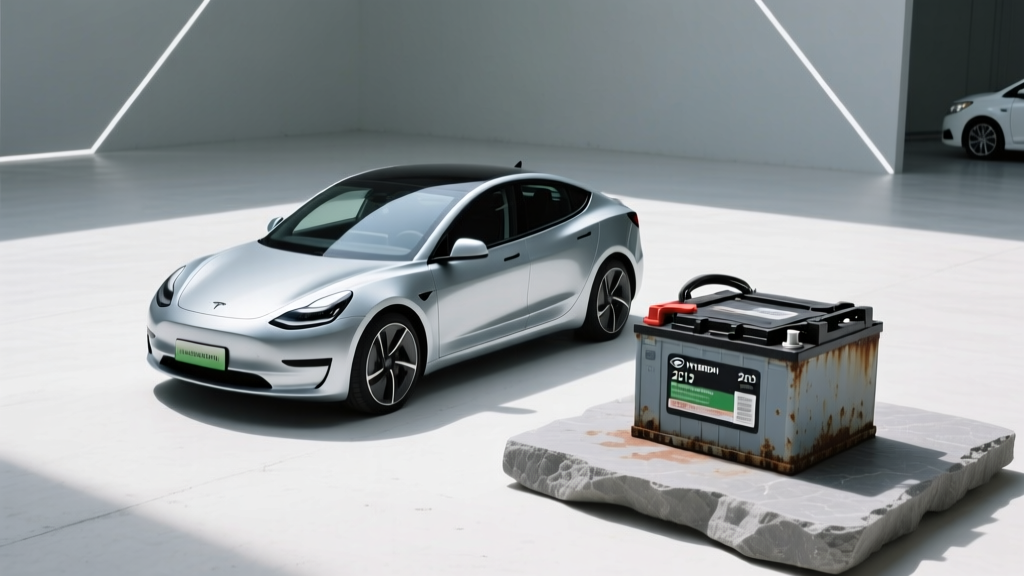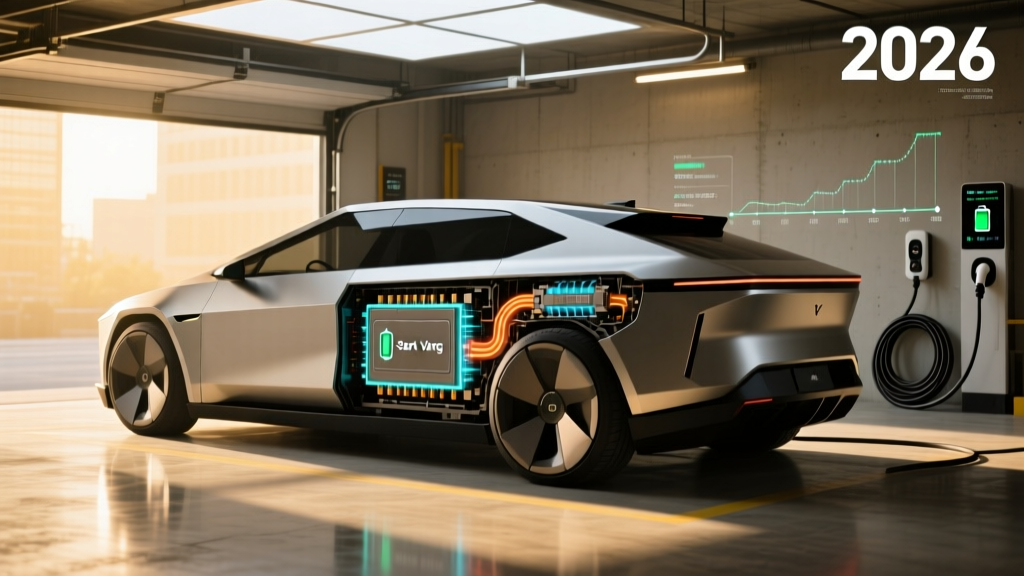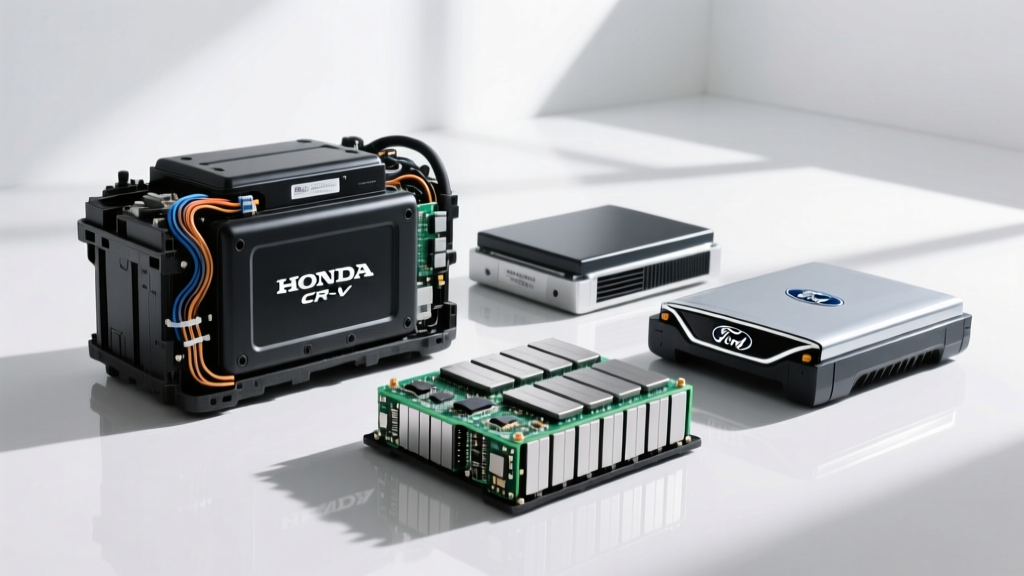
If you own a 2016 Honda CR-V and are researching a replacement battery, you are likely dealing with the 12-volt auxiliary battery that starts the engine and powers accessories. But if you are also exploring the electric-vehicle market, you have probably encountered terms like high-voltage traction battery, lithium-ion chemistry, and battery degradation. This guide bridges both worlds: what a battery for a Honda CR-V 2016 actually is, how it compares to the traction batteries powering today's EVs, and what every buyer or owner needs to know about longevity, cost, and care.
The 2016 Honda CR-V Battery: What You Are Actually Replacing
The 2016 Honda CR-V is a conventional gasoline compact SUV. It does not have a high-voltage traction battery. The battery in question is a standard 12V lead-acill group 51R flooded or AGM (absorbent glass mat) battery, typically rated at around 51 Ah (amp-hours) and 410-500 CCA (cold cranking amps). Its job is to crank the 2.4-liter inline-four engine and power electronics when the alternator is not running.
Replacement cost for a 12V battery for a Honda CR-V 2016 ranges from $130 to $220 installed, depending on whether you choose a conventional flooded battery or a premium AGM unit. Typical lifespan is 3 to 5 years, though extreme heat and frequent short trips can shorten that to under 3 years.
This is fundamentally different from an EV's traction battery, which stores tens of kilowatt-hours (kWh) of energy and powers the electric drive motors directly. Let us examine the EV side.
EV Traction Battery Chemistry: LFP vs NMC Explained
Modern electric vehicles use one of two dominant lithium-ion chemistries: NMC (nickel manganese cobalt) or LFP (lithium iron phosphate). The chemistry determines energy density, cycle life, thermal stability, and cost.
| Attribute | LFP (Lithium Iron Phosphate) | NMC / NCA (Nickel-based) |
|---|---|---|
| Energy Density | Lower (~160 Wh/kg cell-level) | Higher (~250-300 Wh/kg cell-level) |
| Typical Cycle Life | 3,000-5,000+ cycles to 80% SoH | 1,000-2,000 cycles to 80% SoH |
| Cold-Weather Performance | Weaker below 32°F; slower charging | Better low-temp discharge and charge acceptance |
| Thermal Stability | Excellent; highly resistant to thermal runaway | Good but requires more active thermal management |
| Cost per kWh (2026) | ~$80-$100/kWh (pack-level) | ~$110-$140/kWh (pack-level) |
| Recommended SoC for Daily Use | 100% is fine; no upper-limit penalty | 80% preferred for daily; 100% for trips only |
| Common in (2026 models) | Tesla Model 3 RWD, Ford Mustang Mach-E Select, BYD models | Tesla Long Range, Hyundai Ioniq 5, Rivian, most premium EVs |
Which is better? It depends on your use case. NMC delivers more range in a lighter, smaller pack — ideal for long-range and performance models. LFP lasts significantly more charge cycles, tolerates daily 100% charging, costs less, and is safer, but it sacrifices some range and cold-weather capability. For a commuter who charges at home every night, LFP is often the smarter choice. For a road-tripper in a northern climate, NMC's energy density and cold performance matter more.
How Long Do EV Batteries Last? Real Degradation Data
Unlike the 12V battery in your Honda CR-V, an EV traction battery is designed to outlast the vehicle itself. Data from fleet operators and long-term owners shows consistent patterns.
Observed Degradation Benchmarks (aggregated fleet/owner data):
- Year 1 / 15,000 miles: ~2-4% capacity loss (initial calibration drop)
- Year 3 / 45,000 miles: ~5-8% total loss
- Year 5 / 75,000 miles: ~8-12% total loss (NMC); ~5-7% (LFP)
- Year 8 / 120,000 miles: ~10-15% total loss (NMC); ~7-10% (LFP)
- Year 10+ / 150,000+ miles: Many packs still above 80% State of Health (SoH)
Sources: Geotab fleet data, Recurrent Auto battery health reports.
For context, a Tesla Model 3 Long Range with an 82 kWh (usable ~79 kWh) NMC battery that degrades 12% over 8 years still retains roughly 69 kWh usable, translating to an EPA-adjusted range of approximately 280 miles from its original 320-mile rating. That is still more range than most new EVs on the market today.
The key takeaway: EV traction batteries do not "die" like a 12V lead-acid battery. They gradually lose capacity. Most will retain 75-85% of original capacity at 150,000 miles.
EV Battery Warranty Terms: What Is Covered
Federal law mandates that EV batteries carry a minimum warranty of 8 years or 100,000 miles (10 years/150,000 miles in CARB states like California). Most manufacturers exceed the minimum.
| Manufacturer | Warranty Period | Capacity Retention Threshold |
|---|---|---|
| Tesla (Model 3/Y) | 8 yr / 100,000 mi (RWD) or 120,000 mi (LR/AWD) | 70% minimum SoH |
| Hyundai / Kia | 10 yr / 100,000 mi | 70% minimum SoH |
| Ford (Mach-E, F-150 Lightning) | 8 yr / 100,000 mi | 70% minimum SoH |
| GM (Ultium platform) | 8 yr / 100,000 mi | 70% minimum SoH |
| Rivian | 8 yr / 120,000 mi | 70% minimum SoH |
| BMW | 8 yr / 100,000 mi | 70% minimum SoH |
If your battery drops below the stated threshold within the warranty period, the manufacturer must repair or replace it at no cost. In practice, warranty claims are rare — most packs stay well above 70% SoH within the warranty window.
How Much Does an EV Battery Cost to Replace?
Out-of-warranty replacement is the biggest fear among EV shoppers. Here are real-world cost ranges based on current 2026 pricing and service data:
| Vehicle / Pack Size | Battery Capacity | Replacement Cost (Parts + Labor) |
|---|---|---|
| Tesla Model 3 RWD (LFP) | ~60 kWh | $8,000 - $12,000 |
| Tesla Model Y Long Range (NMC) | ~75 kWh | $12,000 - $16,000 |
| Hyundai Ioniq 5 (NMC) | ~77.4 kWh | $13,000 - $18,000 |
| Ford F-150 Lightning (Extended) | ~131 kWh | $20,000 - $30,000 |
| Chevrolet Bolt EV | ~65 kWh | $9,000 - $14,000 |
| Nissan Leaf (40 kWh pack) | ~40 kWh | $6,500 - $9,000 |
Important context: Full battery replacements are extremely uncommon. Most EVs are retired, sold, or totaled in accidents before the traction battery requires replacement. When replacements do occur, they are often covered under warranty, involve module-level repair (replacing individual cell modules rather than the entire pack), or use refurbished packs at lower cost.
Compare this to the 12V battery for a Honda CR-V 2016 at $130-$220 every 3-5 years. Over 10 years, you might spend $400-$700 on 12V batteries. An EV owner may never spend a dime on traction battery replacement.
Factors That Affect EV Battery Lifespan
Not all degradation is equal. How you charge, drive, and store an EV significantly impacts how quickly the battery loses capacity.
Battery Care Best Practices
- Avoid sustained 100% SoC (NMC only): Charge to 80% daily; reserve 100% for road trips. LFP owners can charge to 100% daily without penalty.
- Minimize DC fast charging when possible: Frequent use of 150+ kW DC fast chargers accelerates degradation slightly. Use Level 2 home charging for daily needs; fast charge on road trips.
- Avoid extreme SoC storage: Do not leave the vehicle at 100% or below 10% for days. If storing for weeks, aim for 50-60% SoC.
- Precondition in cold weather: Use the vehicle's preconditioning feature before charging in winter. Cold lithium-ion cells charge slower and accept less current, increasing stress.
- Let thermal management do its job: Modern EVs actively cool and heat batteries. Park in shade during extreme heat when possible; plug in during extreme cold so the thermal system can draw grid power.
- Drive normally: Aggressive acceleration draws high current, generating heat. Occasional hard acceleration is fine; sustained track driving is not what consumer EV batteries are designed for.
Research from the National Renewable Energy Laboratory (NREL) confirms that batteries kept between 20-80% SoC, charged primarily on Level 2, and operated in moderate climates show the lowest degradation rates — often under 1% per year after the initial break-in period.
Monitoring Battery Health: Checking State of Health (SoH)
State of Health (SoH) is the percentage of original battery capacity remaining. A new battery is 100% SoH; a battery that can only hold 85% of its original kWh is at 85% SoH.
How to Check SoH
- In-vehicle displays: Tesla shows battery health in the service menu. Hyundai/Kia provides a battery health indicator via the infotainment system. Many EVs show estimated range at full charge, which indirectly reflects SoH.
- OBD-II tools: Devices like the OBDLink SX paired with apps such as EV Pro or LeafSpy (for Nissan Leaf) can read real-time battery capacity, cell voltages, and degradation estimates.
- Dealer diagnostics: Any authorized service center can run a full battery health report, showing individual module voltages and overall capacity.
- Third-party services: Companies like Recurrent Auto offer free battery health reports by connecting to your vehicle's telematics data.
For used-EV buyers, verifying SoH before purchase is as critical as checking a Carfax report. A 2020 EV at 90% SoH is a far better buy than the same model at 78% SoH, even if the mileage is similar.
Emerging Battery Technology: What Is Coming
Several next-generation battery technologies are in development. None are available in production vehicles as of 2026, but timelines are becoming clearer:
- Solid-state batteries: Replace the liquid electrolyte with a solid material, promising 2-3x energy density, faster charging, and improved safety. Toyota has announced a solid-state battery targeting 2027-2028 production, initially in limited-run models. QuantumScape and Samsung SDI are also in pilot production. Expect mainstream availability no earlier than 2029-2030.
- Silicon-dominant anodes: Companies like Sila Nanotechnologies and Group14 are replacing graphite anodes with silicon, boosting energy density by 20-40%. These are beginning to appear in limited applications (the Mercedes G-Class 580e uses a silicon-anode battery from Group14). Broader adoption is expected by 2027-2028.
- Sodium-ion batteries: Cheaper and free of lithium and cobalt, but with lower energy density. CATL and BYD are deploying sodium-ion in Chinese-market EVs. US availability remains uncertain and likely limited to low-cost, short-range models.
These technologies are forward-looking. If you are buying an EV today, current LFP and NMC chemistries are mature, well-understood, and backed by extensive real-world data.
Putting It All Together: CR-V 12V vs EV Traction Battery at a Glance
| Attribute | 2016 Honda CR-V 12V Battery | EV Traction Battery (Typical 2026) |
|---|---|---|
| Type | Lead-acid (flooded or AGM) | Lithium-ion (LFP or NMC/NCA) |
| Voltage | 12V | 400V-800V nominal |
| Capacity | ~51 Ah (~0.6 kWh) | 60-131 kWh usable |
| Purpose | Engine cranking, accessories | Vehicle propulsion |
| Lifespan | 3-5 years | 10-15+ years (to 70-80% SoH) |
| Replacement Cost | $130-$220 | $8,000-$30,000 (rarely needed) |
| Warranty | 2-4 years (pro-rated) | 8-10 years / 100,000+ miles |
Frequently Asked Questions
How long do EV batteries last in years and miles?
Most EV traction batteries retain 75-85% of their original capacity after 150,000 miles or 10-12 years. They are designed to outlast the vehicle. LFP chemistries tend to degrade more slowly than NMC, often retaining 90%+ capacity after 100,000 miles.
How much does an EV battery cost to replace?
Full replacements range from $8,000 for a smaller pack (e.g., Nissan Leaf 40 kWh) to $30,000 for a large pack (e.g., Ford F-150 Lightning Extended Range 131 kWh). However, full replacements are rare — most EVs are retired before the battery fails, and warranty coverage handles most premature degradation cases.
What does the EV battery warranty actually cover?
The federal minimum is 8 years/100,000 miles. If the battery drops below the manufacturer's stated capacity threshold (typically 70% SoH), the automaker must repair or replace it at no cost. This covers defects and abnormal degradation but not damage from accidents, flooding, or improper modifications.
How do I check and maximize my EV battery health?
Check SoH via the vehicle's built-in display, an OBD-II scanner with an EV app, or a dealer diagnostic. Maximize lifespan by charging to 80% daily (NMC) or 100% (LFP), minimizing DC fast charging, avoiding extreme SoC storage, preconditioning in cold weather, and parking in shade during heat.
LFP vs NMC — which battery chemistry is better?
Neither is universally better. LFP wins on cycle life (3,000-5,000 cycles), cost ($80-100/kWh), safety, and daily charging convenience (100% SoC is fine). NMC wins on energy density (more range per pound), cold-weather performance, and charge speed. Choose LFP for commuting and warm climates; choose NMC for long-range driving and cold climates.
Is the battery for a Honda CR-V 2016 the same kind as an EV battery?
No. The 2016 CR-V uses a conventional 12V lead-acid battery (Group 51R, ~51 Ah) for engine starting and accessories. EV traction batteries are high-voltage lithium-ion packs (400V-800V, 60-131 kWh) that propel the vehicle. They are entirely different technologies with different costs, lifespans, and maintenance requirements.
Will solid-state batteries make current EVs obsolete?
Not soon. Solid-state batteries are in pilot production as of 2026, with limited availability expected in 2027-2028 premium models. Mainstream adoption is likely 2029-2030 at the earliest. Current LFP and NMC batteries are proven, reliable, and cost-effective for today's buyers.
For official EPA range and efficiency data, see fueleconomy.gov. For federal EV tax credit rules that may offset battery-related costs, consult the IRS clean vehicle credit page.