If you own or are considering a used Honda Civic Hybrid with Integrated Motor Assist (IMA), battery replacement is likely on your radar. The Civic IMA system, produced primarily between 2003 and 2015, used a nickel-metal hydride (NiMH) traction battery — a fundamentally different technology from the lithium-ion packs found in modern hybrids, plug-in hybrids, and full battery-electric vehicles. Understanding what that means for replacement cost, longevity, and how today's battery chemistry compares is essential before writing any check to a dealer or independent shop.
This guide covers the Civic IMA battery specifically, then broadens into modern EV and hybrid battery technology so you can contextualize what you're dealing with — whether you're keeping your Civic on the road or using it as a stepping stone toward a newer electrified vehicle.
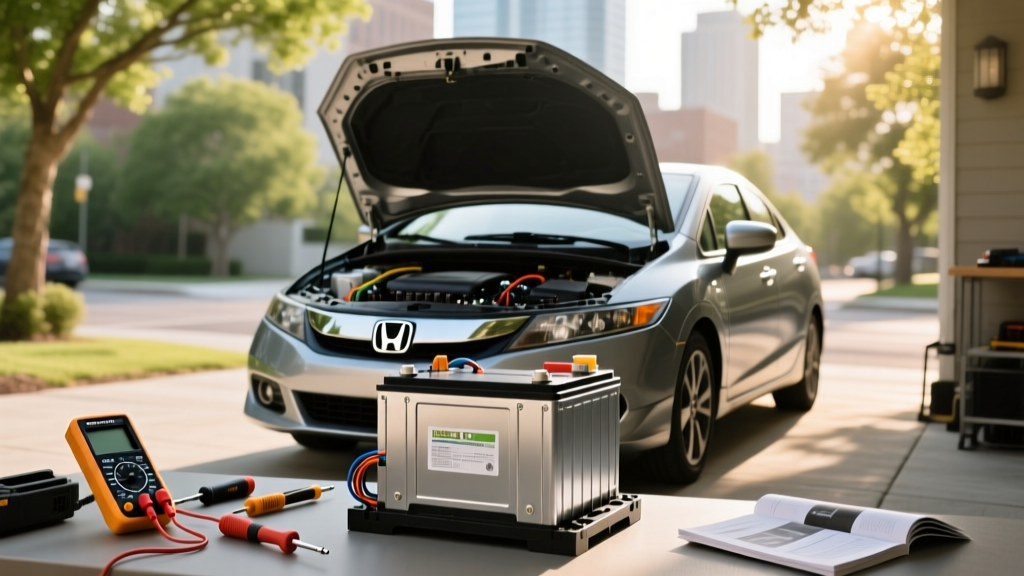
Honda Civic IMA Battery: What You're Actually Replacing
The Honda IMA system pairs a small electric motor sandwiched between the engine and transmission with a NiMH battery pack mounted behind the rear seats. Unlike Toyota's Hybrid Synergy Drive, which can propel the car on electric power alone at low speeds, Honda's IMA was an assist-only hybrid — the electric motor supplemented the gasoline engine during acceleration and captured energy during braking, but could not drive the wheels independently (with one minor exception in later models at very low speed).
Key specs for the most common Civic IMA pack (2006–2011 generation):
- Chemistry: Nickel-Metal Hydride (NiMH)
- Nominal voltage: ~158V (132 cells in series)
- Capacity: approximately 0.6–0.8 kWh usable
- Location: Behind rear seat, integrated with BCM (Battery Condition Module) and MCM (Motor Control Module)
The IMA battery is a high-voltage traction battery — not to be confused with the standard 12V auxiliary battery under the hood that powers lights, radio, and ECU. When people discuss "IMA battery replacement," they mean this high-voltage hybrid pack, and that distinction matters enormously for cost and safety.
Honda Civic IMA Battery Replacement Cost: What to Budget
Replacement costs for the Civic IMA battery vary depending on whether you choose a new OEM pack from Honda, a refurbished/remanufactured unit, or a used pack from a salvage yard.
| Option | Part Cost | Labor | Total Range | Typical Warranty |
|---|---|---|---|---|
| New OEM (Honda dealer) | $2,500–$3,500 | $500–$800 | $3,000–$4,300 | 3 yr / 36,000 mi |
| Remanufactured (aftermarket) | $1,500–$2,200 | $400–$700 | $1,900–$2,900 | 1–3 yr / varies |
| Used / salvage yard | $400–$900 | $400–$700 | $800–$1,600 | 30–90 days |
| DIY (remanufactured, self-install) | $1,200–$1,800 | $0 | $1,200–$1,800 | Part warranty only |
Real-world context: A new OEM pack from a Honda dealer is the safest bet for longevity, but given that a 2010 Civic Hybrid might be worth $4,000–$7,000 in 2026, spending $3,500+ on a battery raises the question of whether the repair is economically justified. Many owners opt for remanufactured packs from reputable hybrid-battery specialists, which use tested and reconditioned NiMH cells. Salvage packs are a gamble — you're inheriting someone else's degradation curve with minimal warranty protection.
Labor typically runs 2–4 hours at shop rates, as the rear seat cushion and battery cover must be removed, high-voltage connections disconnected (safely, with the service plug pulled), and the ~50 lb pack swapped. Any competent hybrid-experienced shop can handle this; it does not require Honda-specific tooling.
How Long Does the Civic IMA Battery Last?
Honda originally warranted the IMA battery for 8 years / 80,000 miles (10 years / 150,000 miles in CARB states like California, New York, and others adopting California emissions standards). In practice, many Civic IMA owners experienced battery failures or significant capacity loss between 80,000 and 120,000 miles, or roughly 8–12 years — though some packs lasted well beyond 150,000 miles with favorable driving patterns.
NiMH degradation manifests differently than lithium-ion degradation. Rather than a smooth capacity decline, NiMH packs often suffer from cell imbalance — individual cells within the 132-cell pack weaken at different rates, causing the Battery Condition Module to flag errors (the dreaded IMA warning light) and disable the hybrid system. This is why "reconditioning" services exist: they cycle individual cells to rebalance the pack, though this is a temporary fix at best.
Modern EV Battery Chemistry: LFP vs NMC Explained
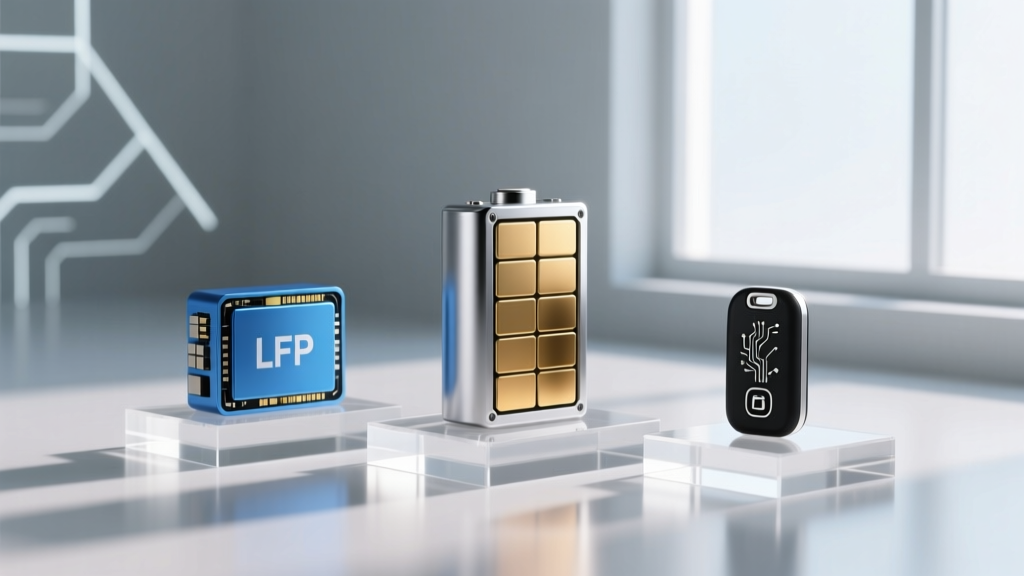
If you're weighing whether to invest in your Civic IMA or transition to a newer hybrid or full EV, understanding modern lithium-ion battery chemistry is essential. Today's electrified vehicles predominantly use two chemistries: LFP (Lithium Iron Phosphate) and NMC (Nickel Manganese Cobalt) — both vastly outperform the NiMH pack in your Civic in energy density, cycle life, and reliability.
| Attribute | LFP (LiFePO₄) | NMC / NCA |
|---|---|---|
| Energy density | Lower (~160 Wh/kg cell-level) | Higher (~220–260 Wh/kg cell-level) |
| Cycle life | 3,000–5,000+ cycles to 80% SoH | 1,000–2,000 cycles to 80% SoH |
| Cold-weather performance | Weaker below 32°F; slower charge acceptance | Better low-temp performance |
| Thermal stability | Excellent; very resistant to thermal runaway | Good; requires more active thermal management |
| Cost (per kWh) | Lower (~$80–100/kWh cell-level in 2026) | Higher (~$110–140/kWh cell-level) |
| SoC recommendation | Can charge to 100% daily without harm | Best kept at 80–90% for daily; 100% for trips only |
| Common in | Tesla Model 3/Y RWD, BYD, Ford Mustang Mach-E Select (some) | Tesla Long Range, Hyundai Ioniq 5/6, most PHEVs |
| Cobalt content | None | Varies; trending toward low-cobalt formulations |
Which is better? It depends on your priorities. LFP wins on longevity, cost, and safety — if you plan to keep a vehicle 10+ years, an LFP pack will likely outlast the car. NMC wins on range-per-pound and cold-weather usability, making it the choice for Long Range and Performance trims where maximizing EPA range in a given battery volume matters. Neither chemistry suffers from the cell-imbalance failures that plagued NiMH packs like the Civic IMA.
EV and Hybrid Battery Degradation: What the Data Shows
Modern lithium-ion traction batteries degrade far more gracefully than the NiMH pack in the Civic IMA. Here's what real-world fleet data indicates for current-generation packs:
- Year 1–2: ~2–4% capacity loss (initial calibration drop, then slow decline)
- Year 3–5: ~1–2% loss per year under normal use
- Year 8: Most packs retain 85–92% of original capacity (State of Health)
- Year 10–12: ~75–88% retention depending on climate, charging habits, and chemistry
A landmark study by Geotab analyzing over 10,000 EVs found that the average EV battery loses approximately 2.3% of its capacity per year — meaning at 10 years, the average pack still holds roughly 77% of its original capacity. LFP-equipped vehicles trend toward the better end of this range.
For context: a 2026 Hyundai Ioniq 5 with a 77.4 kWh NMC pack (EPA range 305 miles) might realistically offer ~250–265 miles of range at the 8-year mark — still entirely functional for daily driving. This is a fundamentally different ownership experience than the binary "IMA light on / hybrid system disabled" scenario Civic owners face.
Battery Warranty Terms: What's Covered and What Isn't
Federal law mandates that hybrid and EV battery packs carry a minimum warranty of 8 years / 100,000 miles in CARB states and 8 years / 80,000 miles elsewhere. Most manufacturers exceed this baseline. Here's how major warranties compare for 2026 models:
| Manufacturer | Warranty Period | Capacity Threshold | Notes |
|---|---|---|---|
| Tesla (Model 3/Y LFP) | 8 yr / 100,000 mi | 70% retention | Transfers to subsequent owners |
| Tesla (Long Range / NMC) | 8 yr / 120,000 mi | 70% retention | Higher mileage for larger packs |
| Hyundai / Kia | 10 yr / 100,000 mi | 70% retention | Among the longest in the industry |
| Ford (Mach-E, F-150 Lightning) | 8 yr / 100,000 mi | 70% retention | Covers battery and hybrid components |
| Toyota (bZ4X, hybrids) | 10 yr / 150,000 mi | 70% retention | Extended from prior 8/100k in recent years |
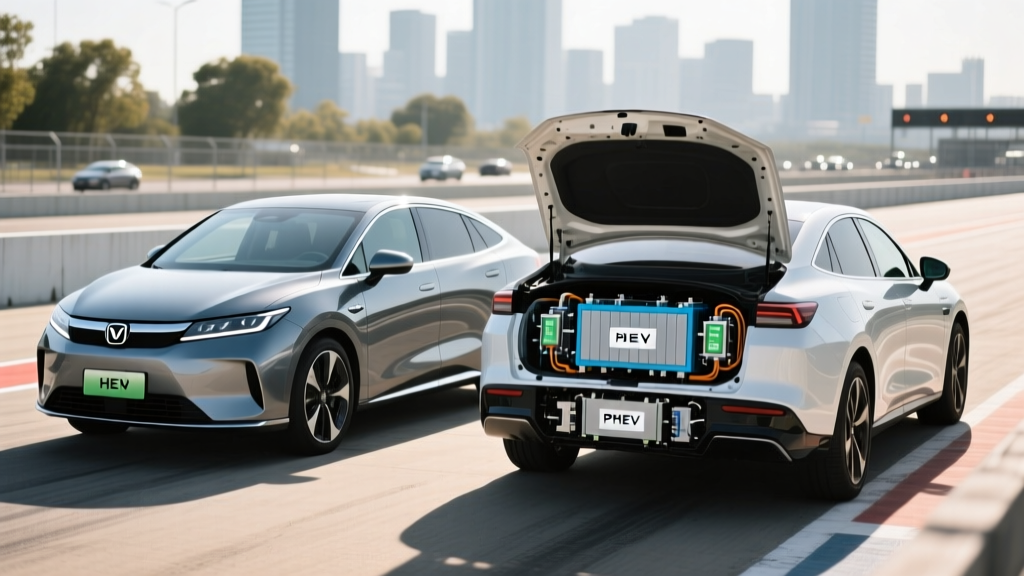
| Honda (current hybrids, e.g., Civic e:HEV) | 8 yr / 100,000 mi | ~70% retention | Varies by state; check dealer for specifics |
What triggers a warranty claim? If your battery's State of Health drops below the stated threshold (typically 70%) within the warranty period, the manufacturer will repair or replace it at no cost. This is measured via the BMS (Battery Management System), which tracks capacity against the pack's original specification. Keep in mind: the warranty covers defects and abnormal degradation, not damage from accidents, flooding, or unauthorized modifications.
For your Civic IMA: if the vehicle is a 2011 or earlier model, the original 8-year/80,000-mile (or 10/150k in CARB states) warranty has expired. You're paying out of pocket for any replacement — which is why understanding aftermarket options matters.
Factors That Accelerate Battery Degradation
Whether you're maintaining a Civic IMA NiMH pack or a modern lithium-ion EV battery, certain behaviors accelerate wear. Here's what matters most, ranked by impact:
- Avoid sustained high SoC (NMC only): For NMC/NCA packs, don't charge to 100% daily. Set your charge limit to 80–90% for daily driving. LFP packs can and should be charged to 100% regularly for BMS calibration.
- Minimize DC fast-charging frequency: Occasional road-trip fast charging is fine, but daily 150+ kW DC sessions generate cumulative heat stress. Level 2 home charging (7–11 kW) is gentler on the pack.
- Precondition in cold weather: Use your EV's preconditioning feature (available on virtually all 2020+ EVs) to warm the battery before fast charging. Cold batteries charge slower and accept charge less efficiently.
- Avoid prolonged storage at extreme SoC: If leaving the vehicle for weeks, store at ~50% SoC. Neither 100% nor near-0% is ideal for long-term parking.
- Park in shade/garage when possible: Sustained high ambient temperatures (above 95°F) accelerate chemical degradation. This was a known issue for early Nissan LEAFs in Arizona.
- For NiMH (Civic IMA): Regular driving is the best maintenance. Long periods of inactivity allow cells to self-discharge unevenly, worsening imbalance. If storing, drive the car at least once every two weeks.
Checking Battery Health: State of Health (SoH) Monitoring
For the Civic IMA: Honda's IMA system does not provide a user-facing State of Health percentage. You can infer pack condition from behavior — if the battery gauge (displayed on the dash) rarely shows a full charge, if the IMA assist is weaker than it used to be, or if you're seeing the IMA warning light, the pack is degraded. Some owners use OBD-II scan tools with Honda-specific software (such as the ScanGauge or Torque Pro with Honda PIDs) to read individual cell voltages and pack current, giving a rough picture of cell balance.
For modern EVs: Most 2022+ electric vehicles expose battery health data through the infotainment system or companion app. Tesla shows a rated range figure that correlates to SoH. Hyundai/Kia provides a battery health screen in the cluster. Third-party tools like OBDeleven (for VW Group), Leaf Spy (for Nissan), or generic OBD-II readers with EV-capable software can pull detailed SoH percentages, cell voltage deltas, and cycle counts.
A healthy modern EV battery should show SoH above 90% for the first 3–4 years. If a used EV you're evaluating shows SoH below 80% with fewer than 80,000 miles, that's a red flag — either the pack was abused (frequent DCFC in extreme heat, chronic 100% storage) or there may be a defect worth investigating under warranty.
Looking Ahead: Solid-State and Silicon-Anode Batteries
While NiMH and current lithium-ion chemistries dominate today's roads, two emerging technologies promise significant leaps:
Solid-state batteries replace the liquid electrolyte with a solid ceramic, polymer, or sulfide material. Benefits include higher energy density (potentially 400+ Wh/kg at the cell level), faster charging, and dramatically improved thermal safety. Toyota has announced plans for limited solid-state EV production around 2027–2028, and Samsung SDI and QuantumScape are targeting similar timelines. However, manufacturing scalability and cost remain unsolved challenges. Realistic mass-market availability is 2029–2030 at the earliest, with meaningful cost parity likely into the 2030s.
Silicon-anode batteries (used in limited form by companies like Sila Nanotechnologies and already appearing in the Mercedes G-Wagon EV) increase energy density by 20–40% over conventional graphite anodes. These are closer to mainstream adoption — expect to see them in premium EVs from 2026–2027 onward, gradually filtering down to volume models.
Neither technology is available in any production vehicle you can buy today. If anyone tells you to "wait for solid-state," understand that the wait is measured in years, not months — and today's LFP and NMC packs are already lasting 150,000+ miles with minimal degradation.
Should You Replace Your Civic IMA Battery or Upgrade?
This is ultimately a financial and practical decision. Here's a framework:
- Replace the IMA battery if: The rest of the car is in good shape, you're attached to it, your annual mileage is low, and a $2,000–$3,500 investment keeps a reliable commuter running for another 3–5 years. A remanufactured pack is the sweet spot for cost-to-benefit.
- Consider retiring/upgrading if: The car has other aging components (transmission, suspension, A/C), you drive high annual miles, or you want the safety, tech, and fuel-economy gains of a modern hybrid or EV. A 2026 Honda Civic Hybrid (e:HEV, 2.0L + dual-motor, 51 MPG combined per fueleconomy.gov) starts around $30,000 and may qualify for partial incentives. A full EV like the Chevrolet Equus EV or Hyundai Kona Electric eliminates hybrid battery concerns entirely.
- Run without IMA if: Technically, some Civic Hybrids can be driven with the IMA system disabled — the gasoline engine runs solo. Fuel economy drops from ~40–44 MPG combined to roughly 30–34 MPG, and you lose regenerative braking assist. This is a stopgap, not a long-term solution, and may trigger emissions-compliance issues in states requiring OBD-II readiness monitors.
Frequently Asked Questions
How long do EV batteries last in years and miles?
Modern lithium-ion EV batteries (LFP and NMC) are designed to last 150,000–200,000+ miles before reaching 70–80% of original capacity. In calendar years, that translates to 12–20 years for most drivers. The Civic IMA's NiMH pack had a shorter practical lifespan of 80,000–120,000 miles or 8–12 years due to cell-imbalance issues unique to NiMH chemistry.
How much does an EV battery cost to replace?
For the Honda Civic IMA, replacement runs $1,200 (DIY remanufactured) to $4,300 (OEM dealer install). For a modern full EV, out-of-warranty battery replacement costs vary enormously by pack size: approximately $5,000–$8,000 for a 50–60 kWh pack (e.g., Nissan LEAF, Chevy Bolt) and $12,000–$20,000+ for a 75–100 kWh pack (e.g., Tesla Model S/X, Ford F-150 Lightning Extended Range). However, the vast majority of modern EV batteries never need replacement — they outlast the vehicle's economic life.
What does the battery warranty cover?
Federally mandated minimum coverage is 8 years / 80,000 miles (10 years / 150,000 miles in CARB states) for capacity retention above a stated threshold, typically 70%. This covers defects, abnormal degradation, and component failure. It does not cover physical damage, improper use, or modifications. Always check the specific warranty language from your manufacturer — details vary, and the IRS also ties certain tax credits to battery sourcing requirements that affect new-vehicle purchases.
How do I check and maximize my battery's health?
For the Civic IMA, use an OBD-II scanner with Honda-specific PIDs to read cell voltages; watch for the IMA warning light and reduced assist. For modern EVs, check the SoH readout in the vehicle's settings or use a third-party OBD tool. Maximize lifespan by avoiding daily 100% charges (NMC), minimizing DC fast-charging frequency, preconditioning in cold weather, and avoiding prolonged storage at extreme SoC levels.
LFP vs NMC — which battery chemistry is better and why?
Neither is universally better. LFP offers longer cycle life (3,000–5,000+ cycles), lower cost, better thermal safety, and tolerance for daily 100% charging — making it ideal for standard-range vehicles and owners who plan to keep their car 10+ years. NMC offers higher energy density (more range in a smaller, lighter pack) and better cold-weather performance — making it the right choice for Long Range models and colder climates. Both are vastly superior to the NiMH chemistry in the Civic IMA.
Can I put a modern lithium battery in my Civic IMA?
No direct lithium-ion drop-in replacement exists for the Civic IMA system. The IMA's Battery Condition Module, Motor Control Module, and charging logic are calibrated specifically for NiMH voltage curves and charge profiles. While some hobbyists have attempted lithium conversions, these require custom BMS hardware and software and are not practical or emissions-legal for street use. Stick with NiMH replacements — new OEM, remanufactured, or used.