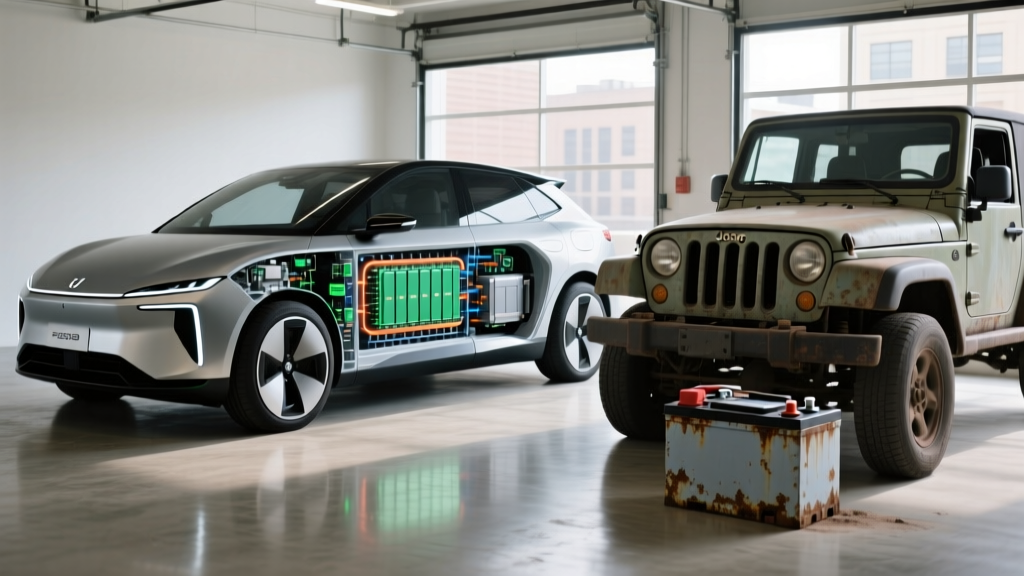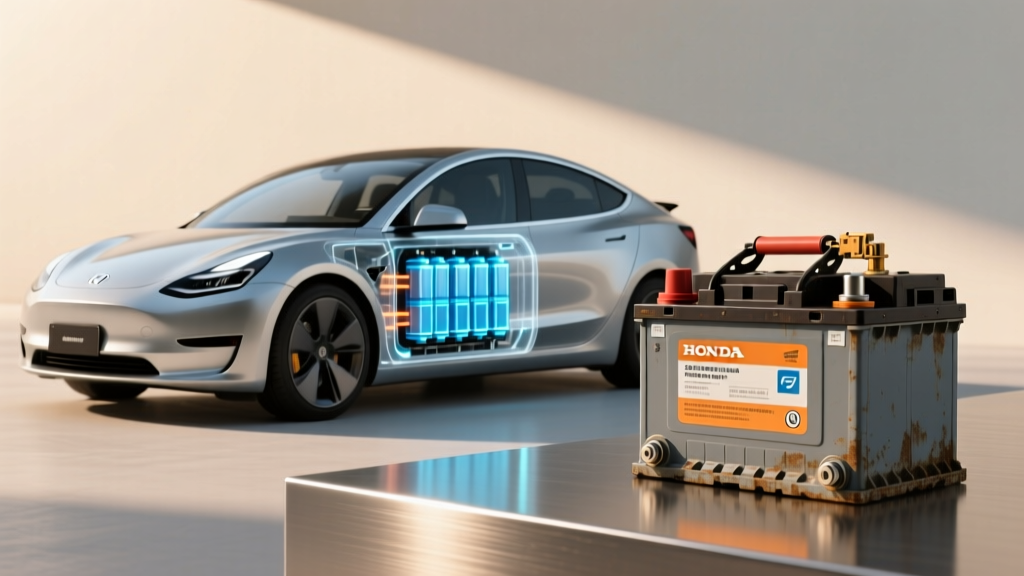
When shoppers search for "Honda Civic 2022 battery life," they are usually worried about one of two things: the 12-volt auxiliary battery that starts the car and powers the electronics, or the long-term reliability of the vehicle's electrical system. But for EV buyers, "battery life" means something entirely different — the high-voltage traction battery that stores energy and powers the electric motor. This guide bridges both worlds, starting with the 2022 Honda Civic's 12V battery and then delivering a comprehensive deep-dive into EV traction battery longevity, chemistry, degradation, and replacement costs.
The 2022 Honda Civic 12V Battery: What to Expect
The 2022 Honda Civic uses a conventional 12V lead-acid or AGM (absorbed glass mat) auxiliary battery — the same technology found in virtually every internal-combustion vehicle. This battery powers the starter motor, infotainment, lights, and onboard computers. It is not the same as a high-voltage traction battery in an electric vehicle.
Typical 12V battery lifespan in a 2022 Civic runs 3 to 5 years, depending on climate, driving habits, and parasitic drain from electronics. Hot climates accelerate plate corrosion; cold climates reduce cranking amps. Replacement costs range from $150 to $300 for the battery itself, plus installation. Honda's original battery carries a 3-year/36,000-mile limited warranty under the new-vehicle coverage.
EV Traction Batteries: How Long Do They Actually Last?
Unlike the 12V battery in a Honda Civic, an EV's high-voltage traction battery is engineered for the life of the vehicle. Real-world data from fleet operators and long-term studies show most modern EV batteries retain 80–90% of their original capacity after 150,000–200,000 miles. Catastrophic failure requiring full replacement is rare — far rarer than transmission or engine failure in gas cars.
Typical EV Battery Degradation Curve (NMC Chemistry):
- Year 1 / 15,000 mi: ~3–5% capacity loss (initial drop-off)
- Year 3 / 45,000 mi: ~6–8% total loss
- Year 5 / 75,000 mi: ~8–11% total loss
- Year 8 / 120,000 mi: ~10–15% total loss
- Year 10 / 150,000 mi: ~12–18% total loss
Sources: Geotab fleet data, Recurrent Auto battery studies.
LFP (lithium iron phosphate) batteries degrade even more slowly, often retaining 90%+ capacity at 150,000 miles. The key takeaway: most EV batteries will outlast the car's body, suspension, and interior before degrading to a point where replacement is necessary.
LFP vs NMC Battery Chemistry: Which Is Better?
Battery chemistry is the single most important factor determining longevity, range, and cost. Two chemistries dominate the EV market in 2026:
| Factor | LFP (Lithium Iron Phosphate) | NMC/NCA (Nickel Manganese Cobalt / Nickel Cobalt Aluminum) |
|---|---|---|
| Energy Density | Lower (~160 Wh/kg cell-level) | Higher (~250–300 Wh/kg cell-level) |
| Cycle Life | 3,000–5,000+ cycles | 1,000–2,000 cycles |
| Cold-Weather Performance | Moderate — greater range loss below freezing | Better low-temperature discharge |
| Cost | Lower (no cobalt or nickel) | Higher (critical mineral dependency) |
| State of Charge Flexibility | Can be charged to 100% daily without harm | Best kept at 80% daily; 100% for trips only |
| Common Vehicles (2026) | Tesla Model 3 RWD, BYD models, Ford Mustang Mach-E Select | Hyundai Ioniq 5, Kia EV6, Chevy Equinox EV, Tesla LR/Performance |
| Best For | Daily commuters, fleet vehicles, warm climates | Long-range drivers, cold climates, performance trims |
The bottom line: If your priority is maximum battery lifespan and you don't need 350+ miles of range, LFP is the superior choice for longevity. If you need maximum range per charge or live where winters are harsh, NMC/NCA remains the practical pick.
EV Battery Warranty Terms: What's Actually Covered
Federal law mandates that EV batteries carry a minimum warranty of 8 years / 100,000 miles (10 years / 150,000 miles in California and states that follow CARB rules). Most automakers exceed this baseline:
| Automaker | Warranty Term | Capacity Retention Threshold |
|---|---|---|
| Tesla | 8 yr / 100,000–120,000 mi (varies by model) | 70% |
| Hyundai / Kia | 10 yr / 100,000 mi | 70% |
| Ford | 8 yr / 100,000 mi | 70% |
| Chevrolet | 8 yr / 100,000 mi | 60% (Bolt); 70% (Ultium vehicles) |
| BMW | 8 yr / 100,000 mi | 70% |
| Volkswagen | 8 yr / 100,000 mi | 70% |
The capacity retention threshold is critical: the warranty replaces or repairs the battery only if it degrades below that percentage. A battery at 72% capacity after 9 years is not a warranty claim — it's normal aging. According to the U.S. Department of Energy via fueleconomy.gov, most EV batteries will remain above the warranty threshold for the full coverage period under normal use.
EV Battery Replacement Cost: The Real Numbers
This is the number that causes the most anxiety, but context matters enormously. Most EV batteries never need replacement during original ownership. When they do, costs have been declining steadily:
| Battery Size | Example Models | Replacement Cost Range (2026) | Typical Replacement Trigger |
|---|---|---|---|
| 40–60 kWh | Nissan Leaf, Chevy Bolt (discontinued), base Model 3 | $6,000–$10,000 | Physical damage, rare defect |
| 60–85 kWh | Tesla Model 3/Y LR, Hyundai Ioniq 5, Ford Mach-E | $10,000–$16,000 | Out-of-warranty degradation (15+ years) |
| 85–120 kWh | Tesla Model S/X, GMC Hummer EV, Rivian R1T | $15,000–$25,000 | Out-of-warranty, high-mileage fleet use |
Several factors reduce this concern in practice:
- Module-level repair: Many packs allow individual module replacement ($1,500–$4,000) rather than a full pack swap.
- Refurbished packs: A growing aftermarket offers refurbished batteries at 40–60% lower cost.
- Most batteries outlive the car: The average EV is scrapped or recycled at 15–18 years with 70%+ battery capacity remaining.
Factors That Affect EV Battery Life
While EV batteries are remarkably durable, owner habits influence the degradation rate. Here's what the data shows:
Battery Longevity Best Practices:
- Avoid exclusive DC fast charging: Frequent use of 150+ kW DC fast chargers accelerates degradation by ~2–4% over 100,000 miles compared to Level 2 home charging. Use DC fast charging for road trips; rely on Level 2 for daily needs.
- Manage state of charge (SoC): For NMC/NCA batteries, keep daily SoC between 20–80%. Charge to 100% only before long trips. LFP batteries can and should be charged to 100% regularly (this helps the BMS calibrate).
- Avoid extreme heat exposure: Parking in direct sun in 100°F+ climates without thermal preconditioning accelerates calendar degradation. Garage parking extends battery life.
- Use preconditioning: Most EVs allow you to precondition the battery before fast charging or departure. This warms or cools the pack to optimal temperature, reducing stress.
- Don't store at 100% or 0%: If leaving the car unused for weeks, set SoC to ~50%. Both full and empty states accelerate calendar aging.
- Drive moderately in extreme cold: Cold batteries have higher internal resistance. Gentle acceleration in sub-freezing temps reduces stress until the thermal management system warms the pack.
How to Check and Monitor Battery Health (SoH)
State of Health (SoH) is the percentage of original capacity remaining in your battery. Monitoring it helps you track degradation and plan ahead:
- In-vehicle displays: Many EVs (Tesla, Hyundai/Kia, BMW) show battery health or estimated range vs. original in the settings menu.
- OBD-II tools: Devices like the OBDLink SX paired with apps such as Leaf Spy (Nissan) or Scan My Tesla read actual kWh capacity and degradation data directly from the BMS.
- Dealer diagnostics: A service center can run a full battery health report, often free during warranty inspections.
- Third-party services: Companies like Recurrent Auto offer free battery health reports that compare your degradation to a fleet of identical vehicles.
For used-EV buyers, requesting a battery health report before purchase is as essential as checking a Carfax. A Recurrent or Geotab report provides data-backed confidence in the vehicle's remaining range.
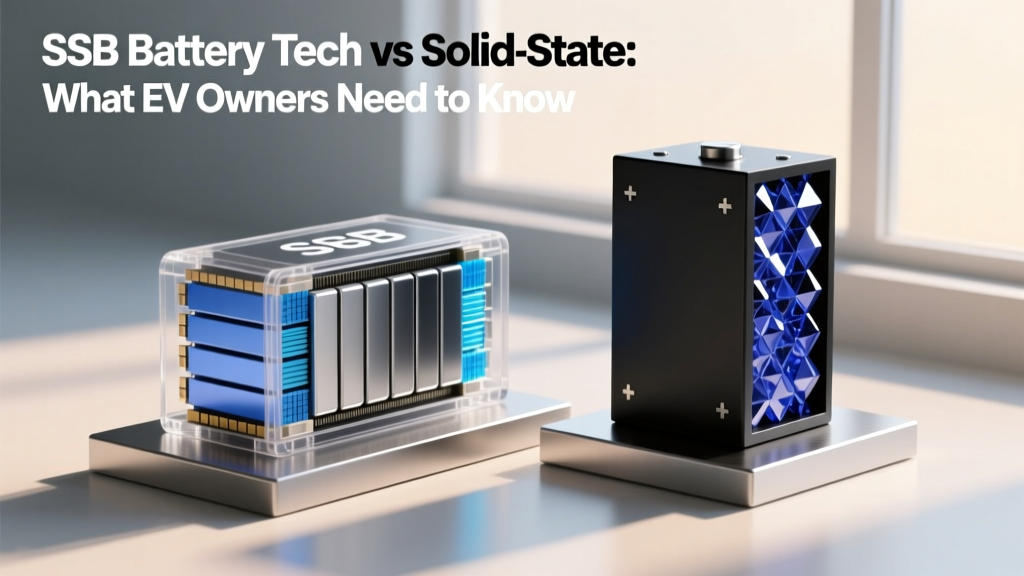
What's Next: Solid-State and Silicon-Anode Batteries
Looking beyond 2026, two technologies promise to further extend battery life and reduce costs:
- Solid-state batteries: Replace the liquid electrolyte with a solid material, offering higher energy density (~400+ Wh/kg projected), faster charging, and near-zero degradation over 5,000+ cycles. Toyota, Samsung SDI, and QuantumScape have announced pilot production, but mass-market availability is not expected before 2028–2030. These are forward-looking and not currently available in any production vehicle.
- Silicon-anode batteries: Replace graphite anodes with silicon, boosting energy density by 20–40%. Companies like Sila Nanotechnologies and Group14 are in early production with Mercedes and other partners. Expect limited availability in premium models starting 2026–2027, with broader rollout by 2029.
Neither technology changes the buying calculus today. Current lithium-ion batteries already deliver 150,000–200,000+ mile lifespans with manageable degradation — a fact worth remembering the next time you see a headline about battery replacement fears.
Frequently Asked Questions
How long do EV batteries last in years and miles?
Most modern EV batteries last 15–20 years or 150,000–200,000+ miles before degrading below 70–80% of original capacity. Catastrophic failure is rare. LFP chemistry batteries often exceed 200,000 miles with minimal degradation.
How much does an EV battery cost to replace?
Full replacement ranges from $6,000 to $25,000 depending on battery size and vehicle, but most batteries never need replacement during typical ownership. Module-level repairs cost $1,500–$4,000. The vast majority of EV batteries outlive the vehicle itself.
What does the EV battery warranty cover?
Federal law requires at minimum 8 years/100,000 miles of coverage (10 years/150,000 miles in CARB states). The warranty covers capacity loss below a threshold — typically 70% of original capacity — as well as defects and failures. Normal gradual degradation above the threshold is not covered.
How do I check my EV battery health?
Use the vehicle's built-in battery health display, an OBD-II scanner with a compatible app, a dealer diagnostic report, or a third-party service like Recurrent Auto. For used-EV purchases, always request a battery health report before committing.
LFP vs NMC — which battery chemistry is better for longevity?
LFP batteries offer superior cycle life (3,000–5,000+ cycles vs. 1,000–2,000 for NMC) and can be charged to 100% daily without harm. However, NMC provides higher energy density for longer range and better cold-weather performance. For maximum lifespan in a daily commuter, LFP wins. For maximum range and cold-climate driving, NMC is the better choice.
Does the 2022 Honda Civic have an EV battery?
No. The 2022 Honda Civic is a conventional gasoline vehicle with a 12V lead-acid auxiliary battery. Honda's EV offerings as of 2026 include the Prologue (a midsize SUV). The Civic's 12V battery typically lasts 3–5 years and costs $150–$300 to replace — a completely different component from an EV's high-voltage traction battery.