If you're researching the Honda Accord Hybrid — or comparing it against plug-in hybrids and full EVs — one question inevitably surfaces: how long do Honda Accord Hybrid batteries last? The short answer, backed by Honda's warranty data and real-world fleet evidence, is that the high-voltage traction battery in the Accord Hybrid is engineered to outlast the typical ownership cycle, often exceeding 150,000 miles before meaningful degradation appears. But the full picture requires understanding the chemistry inside the pack, what Honda actually warrants, what replacement costs if the worst happens, and how your driving and charging habits influence longevity.
This guide covers the 2026 Honda Accord Hybrid's battery system in depth, while also contextualizing its lithium-ion pack within the broader EV and hybrid battery landscape — including the LFP vs. NMC chemistry debate that shapes every electrified vehicle on the market today.
Honda Accord Hybrid Battery: Chemistry and Capacity Explained
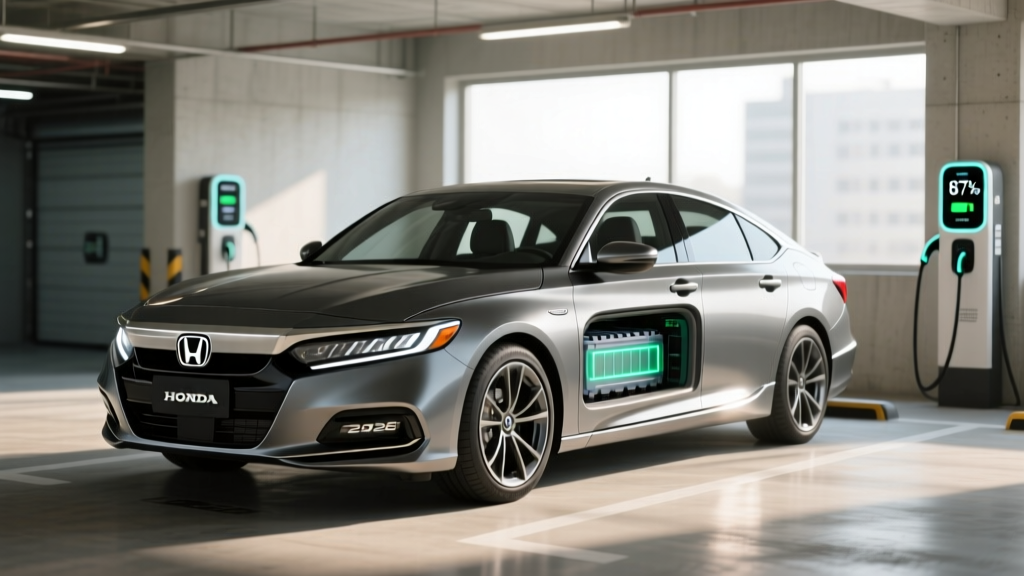
The 2026 Honda Accord Hybrid uses a two-motor hybrid powertrain paired with a lithium-ion battery pack. Honda does not publish the exact kWh capacity in consumer-facing materials (a common practice among traditional hybrids, where the battery serves as a power buffer rather than a primary energy source like in a full EV). What we know from teardown data and Honda technical documentation is that the Accord Hybrid's pack is in the range of approximately 1.0 to 1.3 kWh of total capacity — far smaller than a BEV's 60–100 kWh pack, but purpose-built for frequent shallow charge-discharge cycles rather than deep cycling.
This is a critical distinction. The Accord Hybrid battery isn't designed to store miles of electric-only range. Instead, it captures energy from regenerative braking, stores it briefly, and deploys it to assist the gasoline engine during acceleration or to enable short low-speed EV-mode driving. The battery management system (BMS) keeps the state of charge (SoC) within a narrow, protective window — typically between roughly 40% and 80% — which dramatically reduces stress on the cells compared to a full EV that routinely cycles from 10% to 90% or higher.
Battery Chemistry Comparison: What's Inside Electrified Vehicles
| Attribute | NMC / NCA (Nickel-based) | LFP (Lithium Iron Phosphate) |
|---|---|---|
| Energy Density | High (200–300 Wh/kg) — more range per kg | Moderate (140–180 Wh/kg) — heavier for same kWh |
| Cycle Life | ~1,000–2,000 full cycles to 80% SoH | ~3,000–5,000+ full cycles to 80% SoH |
| Cold-Weather Performance | Better low-temp discharge capability | Reduced performance below freezing; benefits from preconditioning |
| Thermal Stability | Lower — requires more robust thermal management | Higher — inherently more stable chemistry |
| Cost per kWh | Higher (nickel/cobalt commodity exposure) | Lower (iron/phosphate are abundant) |
| Common Applications | Long-range BEVs, performance models | Standard-range BEVs, hybrids, stationary storage |
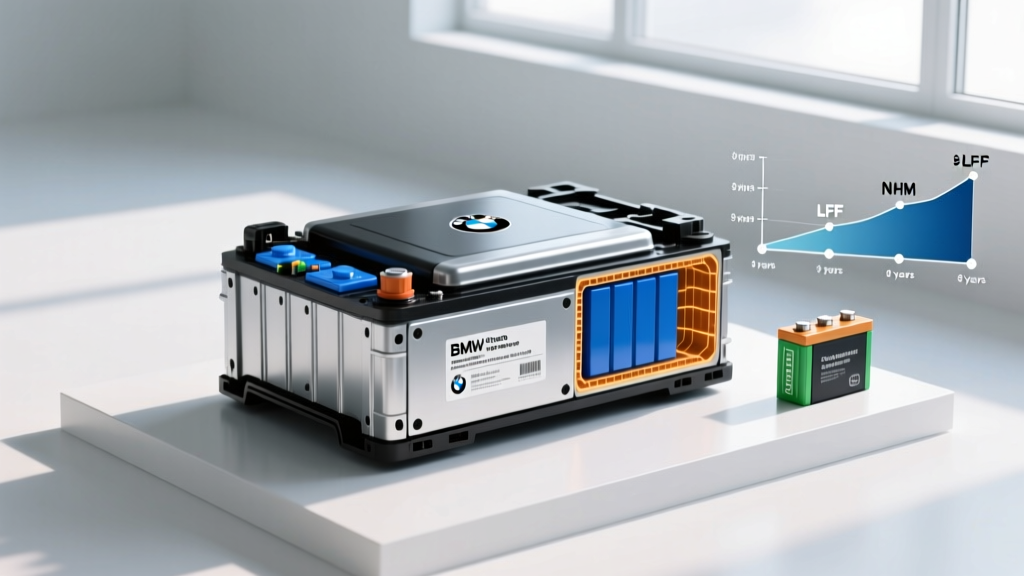
The Accord Hybrid's lithium-ion cells are typically nickel-based (NMC variant), chosen for their energy density in a compact packaging envelope. However, the hybrid duty cycle — shallow discharges, narrow SoC window, moderate temperatures — means the cells experience far less wear per mile than the same chemistry would in a full EV. This is why hybrid battery longevity data consistently outperforms what raw cycle-life numbers would predict.
Real-World Degradation: What the Data Actually Shows
Battery degradation follows a nonlinear curve: a steeper initial drop in the first year or two (typically 2–5%), followed by a long, slow linear decline. For the Accord Hybrid, the degradation picture is favorable for several reasons:
- Shallow cycling: The BMS restricts the usable window, so cells rarely see deep discharge or full charge states that accelerate wear.
- Low C-rate stress: Unlike a BEV pulling 200+ kW from a 75 kWh pack during DC fast charging, the Accord Hybrid battery sees moderate charge and discharge rates relative to its capacity.
- Thermal environment: Honda's hybrid system includes thermal management that prevents the pack from operating at extreme temperatures, which are the primary catalyst for accelerated degradation.
Typical Hybrid Battery Degradation Trajectory
| Mileage | Estimated Capacity Retention | Driver-Noticeable Effect |
|---|---|---|
| 0–30,000 mi (Years 1–2) | ~95–98% | None — imperceptible |
| 30,000–80,000 mi (Years 3–5) | ~90–95% | Minimal — slight MPG reduction possible |
| 80,000–150,000 mi (Years 6–10) | ~85–92% | Mild — slightly less EV-mode availability, MPG may drop 1–3 MPG |
| 150,000–200,000+ mi | ~75–88% | Moderate — more noticeable engine reliance, potential warranty threshold |
Note: These are generalized estimates based on hybrid fleet data and lithium-ion degradation modeling. Individual results vary with climate, driving style, and maintenance. Honda does not publish official degradation curves for the Accord Hybrid.
Real-world evidence supports these estimates. EPA fuel economy data for the Accord Hybrid shows consistent 48 MPG combined ratings across model years, and owner forums and fleet data from high-mileage Accord Hybrids (including prior-generation models with earlier hybrid systems) frequently report original batteries functioning well past 150,000 miles without replacement. Taxi and rideshare fleets using Honda hybrids have logged 200,000+ miles on original packs — a strong indicator of durability under even high-use conditions.
Honda's Hybrid Battery Warranty: What's Covered and for How Long
Honda backs the Accord Hybrid's high-voltage battery with a warranty that reflects confidence in its longevity. The coverage is consistent with industry standards for hybrid and electric vehicles:
2026 Honda Accord Hybrid Battery Warranty Terms
| Parameter | Coverage |
|---|---|
| Duration | 8 years / 100,000 miles (whichever comes first) |
| CARB-State Extension | 10 years / 150,000 miles in states adopting California emissions standards |
| Capacity Threshold | Honda evaluates on a case-by-case basis; industry standard is replacement if capacity drops below ~70% of original |
| What's Covered | Defects in materials/workmanship, abnormal capacity loss, hybrid system components (inverter, electric motors) |
| What's Not Covered | Damage from accidents, flooding, improper modifications, or use outside normal operating parameters |
The CARB-state extension is significant. If you register your Accord Hybrid in California, New York, Massachusetts, Colorado, Washington, or any of the growing list of states adopting California's stricter emissions standards, your battery warranty extends to 10 years or 150,000 miles. Check your state's current CARB adoption status, as this list has expanded through 2025–2026.
For comparison, full EV battery warranties from manufacturers like Hyundai (10 yr/100,000 mi), Tesla (8 yr/100,000–150,000 mi depending on model), and Ford (8 yr/100,000 mi) follow similar structures, typically guaranteeing 70% capacity retention over the warranty period. Honda's hybrid warranty is competitive, especially with the CARB extension.
Replacement Cost: What If the Battery Fails?
This is where buyer anxiety peaks — and where context matters most. Yes, a high-voltage battery replacement is expensive. But the probability of needing one within the warranty period is low, and even out-of-warranty, the Accord Hybrid's relatively small battery keeps costs well below full EV replacements.
Hybrid & EV Battery Replacement Cost Ranges
| Vehicle Type | Battery Size | Estimated Replacement Cost (Parts + Labor) | Typical Replacement Timing |
|---|---|---|---|
| Honda Accord Hybrid | ~1.0–1.3 kWh | $2,000–$4,000 | Rarely needed; if required, typically 150,000+ mi |
| Toyota Prius / Camry Hybrid | ~1.0–1.6 kWh | $2,000–$4,500 | Rarely needed; 150,000–200,000+ mi |
| Plug-in Hybrid (e.g., RAV4 Prime) | ~18 kWh | $6,000–$10,000 | Uncommon; 120,000–180,000 mi |
| Full EV (e.g., Tesla Model 3, Ioniq 5) | 60–84 kWh | $8,000–$20,000+ | Very rare; typically 200,000+ mi or 15+ years |
Sources: Manufacturer parts pricing, independent hybrid/EV repair shops, and industry cost analyses. Prices vary by region, model year, and labor rates. Always get a dealer or certified-shop quote for your specific vehicle.
Two important points for Accord Hybrid owners:
- The 12V auxiliary battery is separate. Like every modern car, the Accord Hybrid has a standard 12-volt battery that powers accessories and electronics. This battery typically costs $150–$300 to replace and lasts 3–5 years — it is not the high-voltage traction battery discussed here. Confusing the two is a common source of unnecessary alarm.
- Refurbished and remanufactured options exist. If an out-of-warranty Accord Hybrid battery does fail, third-party suppliers offer refurbished hybrid battery packs at lower cost than new OEM units, often in the $1,500–$2,500 range installed.
Factors That Influence Battery Longevity — and What You Can Control
While the Accord Hybrid's BMS does most of the protective work automatically, owner habits still influence long-term battery health. Here's what matters, ranked by impact:
Battery Care Checklist for Honda Accord Hybrid Owners
- Extreme heat exposure (HIGH impact): Prolonged parking in direct sunlight in hot climates (100°F+) accelerates electrolyte degradation. Park in shade or a garage when possible. The Accord Hybrid's thermal management mitigates this, but prevention helps.
- Aggressive driving patterns (MODERATE impact): Frequent hard acceleration and heavy regenerative braking generate higher C-rates and more heat in the cells. Smooth driving extends battery life and improves MPG simultaneously.
- Long-term storage at extreme SoC (MODERATE impact): If storing the vehicle for weeks or months, avoid leaving it with the battery fully depleted or fully charged. Honda's BMS manages this during normal use, but extended storage requires attention — start the vehicle periodically to let the system rebalance.
- Ignoring warning lights (HIGH impact): If the hybrid system warning illuminates, address it promptly. A failing cooling fan or thermal sensor can allow the battery to overheat, causing damage that could have been prevented.
- Regular maintenance (LOW but REAL impact): Keep the hybrid system's cooling vents clean and unobstructed. Dust and debris can reduce airflow to the battery pack, raising operating temperatures over time.
- DC fast charging (NOT APPLICABLE): Unlike full EVs, the Accord Hybrid does not use DC fast charging. This eliminates one of the largest degradation factors that BEV owners must manage. The battery charges only through regenerative braking and the engine-driven generator.
The absence of DC fast charging is actually a longevity advantage for the Accord Hybrid. Research from the National Renewable Energy Laboratory (NREL) has consistently shown that high-rate DC charging accelerates lithium-ion degradation through elevated temperatures and lithium plating. Since the Accord Hybrid battery charges at relatively low rates through regen and the engine, it avoids this stressor entirely.
Monitoring Battery Health: How to Check SoH on the Accord Hybrid
Unlike full EVs from Tesla, Rivian, or Hyundai that offer in-app State of Health (SoH) readouts, the Honda Accord Hybrid does not provide a direct battery health percentage to the driver through the infotainment system or an app. Here's how you can assess battery condition:
Dealer Diagnostic Scan
A Honda dealership can run a diagnostic scan on the hybrid battery system using Honda's proprietary HDS (Honda Diagnostic System) tool. This provides cell voltage balance data, internal resistance measurements, and capacity estimates. Request this during routine service visits, especially as you approach 80,000+ miles or if you notice reduced EV-mode availability or declining MPG.
MPG as a Proxy Indicator
The Accord Hybrid's fuel economy is a reliable indirect health indicator. If your vehicle consistently delivered 48 MPG combined when new and you're now seeing 44–45 MPG under similar driving conditions, the battery may have experienced moderate degradation. A drop of 1–3 MPG over 100,000 miles is normal; a sudden or dramatic drop warrants investigation.
EV-Mode Availability
As the battery degrades, you may notice that EV-mode engages less frequently or for shorter durations, particularly at low speeds or in stop-and-go traffic. This is because the reduced capacity means less stored energy is available for electric-only driving. The gasoline engine compensates seamlessly, but the change is perceptible to attentive drivers.
Third-Party OBD-II Scanners
Some advanced OBD-II diagnostic tools (such as those from OBDeleven or Carista, though compatibility varies) can read hybrid battery parameters from the vehicle's CAN bus. Results are less comprehensive than a dealer scan but can provide useful trend data over time.
LFP vs. NMC: Which Chemistry Is Better for Hybrids and EVs?
The LFP (lithium iron phosphate) vs. NMC (nickel manganese cobalt) debate is the defining battery chemistry question of this decade. For Accord Hybrid buyers, the answer is straightforward: Honda uses NMC-type cells optimized for the hybrid duty cycle, and the longevity data supports this choice. But understanding the broader trade-offs matters if you're also considering full EVs or plug-in hybrids.
NMC advantages: Higher energy density means more kWh in a smaller, lighter package — critical for vehicles where battery mass directly affects efficiency and handling. NMC also performs better in cold weather, retaining more usable capacity at sub-freezing temperatures.
LFP advantages: Superior cycle life (3,000–5,000+ cycles vs. 1,000–2,000 for NMC), lower cost, better thermal stability (reduced fire risk), and no cobalt or nickel supply-chain concerns. LFP can also be safely charged to 100% SoC regularly without the degradation penalty that NMC incurs — a significant daily-use advantage.
The industry trend is clear: LFP is gaining ground in standard-range EVs (Tesla already uses LFP in Model 3 Standard Range, and BYD uses it exclusively), while NMC remains dominant in long-range and performance models where energy density is paramount. For hybrids like the Accord, where the battery is small and the SoC window is narrow, NMC's energy density advantage matters more than LFP's cycle-life benefit — because the hybrid duty cycle already delivers exceptional cycle life from NMC cells.
Emerging Battery Technology: What's on the Horizon
Several next-generation battery technologies promise to reshape longevity and performance, though none are currently available in production vehicles:
- Solid-state batteries: These replace the liquid electrolyte with a solid conductor, promising higher energy density, faster charging, and dramatically improved cycle life. Toyota has announced plans for solid-state production in the late 2020s, and Honda is part of a consortium researching the technology. Realistic timeline for mainstream availability: 2028–2032. These are not available in any 2026 production vehicle.
- Silicon-dominant anodes: Replacing graphite anodes with silicon can increase energy density by 20–40%. Companies like Sila Nanotechnologies and Group14 are scaling production. Early applications are appearing in premium EVs, with broader adoption expected by 2027–2029.
- Sodium-ion batteries: Lower cost and no lithium dependency, but lower energy density. Likely to appear first in budget EVs and stationary storage rather than hybrids. Timeline: 2026–2028 for initial production applications.
For current Accord Hybrid buyers, these technologies are informational rather than actionable. The existing lithium-ion NMC system is mature, well-proven, and backed by comprehensive warranty coverage. Waiting for solid-state means waiting years for technology that will debut at premium price points before reaching mainstream vehicles.
The Bottom Line: How Long Will Your Accord Hybrid Battery Last?
Based on Honda's engineering, warranty terms, and real-world fleet data, here's a practical longevity framework:
- Under warranty (0–100,000 mi / 8 years): Battery failure is rare. If abnormal degradation occurs, Honda covers replacement.
- Post-warranty (100,000–200,000 mi): Most Accord Hybrid batteries continue functioning with gradual capacity loss. Expect 85–92% capacity retention at 150,000 miles under normal conditions.
- Beyond 200,000 miles: The battery will still function but with more noticeable degradation — reduced EV-mode availability, slightly lower MPG. Replacement may become cost-effective depending on the vehicle's overall condition.
The data consistently shows that hybrid battery replacement is the exception, not the rule. Most Accord Hybrids will reach the end of their useful life (due to body, transmission, or other mechanical wear) before the hybrid battery requires replacement. This is the single most important fact for buyers who worry about long-term battery costs.
How long do Honda Accord Hybrid batteries last in years?
Based on warranty coverage and real-world data, expect 10–15 years of functional service from the Accord Hybrid's high-voltage battery under normal driving conditions. Honda warrants the battery for 8 years (10 years in CARB states), and many units last well beyond the warranty period with gradual, manageable degradation.
How much does a Honda Accord Hybrid battery cost to replace?
A new OEM replacement battery for the Accord Hybrid typically costs between $2,000 and $4,000 including labor. Refurbished options may be available for $1,500–$2,500 installed. However, most Accord Hybrid batteries last 150,000+ miles, and many owners never need a replacement during their ownership.
What does the Honda hybrid battery warranty cover?
Honda covers defects, abnormal capacity loss, and hybrid system component failures for 8 years/100,000 miles (10 years/150,000 miles in CARB-adopting states). The warranty does not cover damage from accidents, flooding, or unauthorized modifications.
Can I check my Accord Hybrid battery health myself?
The Accord Hybrid does not display a battery health percentage in the infotainment system. You can monitor MPG trends and EV-mode behavior as indirect indicators, but a dealer diagnostic scan using Honda's HDS tool is the most accurate way to assess battery State of Health.
Is LFP better than NMC for hybrid batteries?
For the Accord Hybrid's specific duty cycle (small battery, narrow SoC window, shallow cycling), NMC's energy density advantage makes it the better fit. LFP excels in full EVs where frequent 100% charging and high cycle counts favor its longevity and cost advantages. Neither chemistry is universally "better" — the right choice depends on the vehicle application.
Does cold weather damage the Accord Hybrid battery?
Cold weather temporarily reduces battery performance (less regen capture, slightly reduced EV-mode availability), but it does not cause permanent damage. Honda's thermal management system protects the battery from extreme cold stress. The more significant longevity risk is sustained high-temperature exposure, not cold.
Do I need to change how I drive to preserve battery life?
Not significantly. Honda's BMS handles the heavy lifting. Smooth driving, avoiding prolonged parking in extreme heat, and addressing warning lights promptly are sufficient. Unlike full EVs, you don't need to manage charging habits or worry about DC fast-charging degradation — the Accord Hybrid battery charges only through regen and the engine.