From Lead-Acid to Lithium: Why the Honda Accord 2008 Battery Specifications Matter as a Baseline
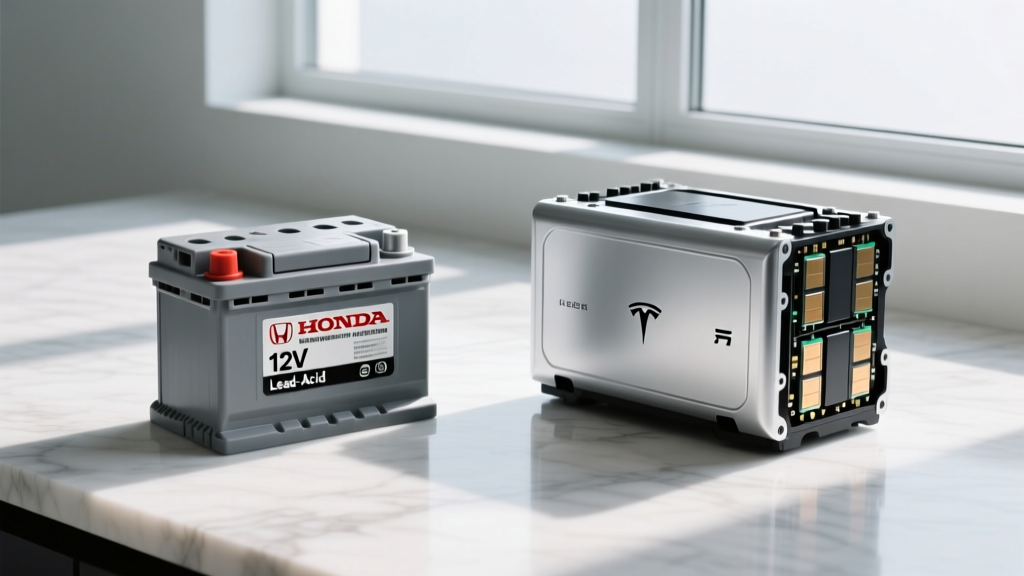
When shoppers search for Honda Accord 2008 battery specifications, they're typically looking for a Group 24F or Group 35 lead-acid 12V battery rated around 550–650 cold cranking amps (CCA) and roughly 50 Ah of capacity. That 12V starter battery weighs about 35–40 pounds, costs $120–$180 at an auto parts store, and lasts 3–5 years before replacement. It powers the starter motor, lights, and accessories — nothing more.
Fast-forward to 2026, and a modern battery electric vehicle (BEV) carries a high-voltage lithium-ion traction battery pack with 60–100+ kWh of usable energy, weighing 800–1,200 pounds, costing $8,000–$20,000+ to replace, and engineered to last 15–20 years. The gap between a 2008 Accord's 12V battery and a 2026 EV's traction pack is the single biggest technological leap in automotive history.
This guide uses that 2008 Accord baseline to explain exactly what's inside today's EV batteries, how long they last, what warranties cover, and what emerging chemistries mean for buyers shopping in 2026 and beyond.
EV Battery Chemistry Explained: LFP vs NMC vs NCA
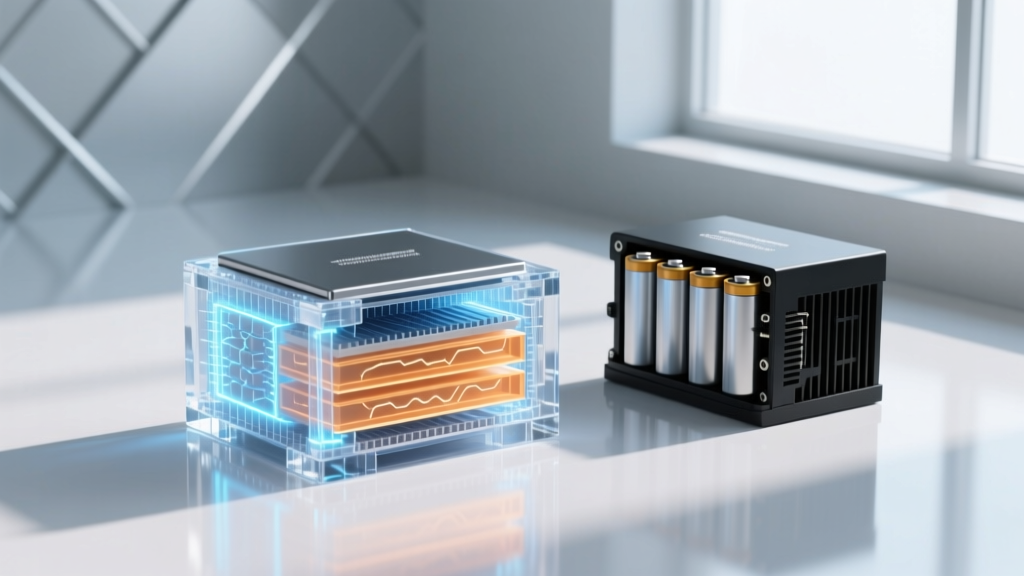
Every modern EV uses one of three primary lithium-ion chemistries. The choice affects range, longevity, charging speed, cold-weather performance, and price. Here's how they compare:
| Attribute | LFP (Lithium Iron Phosphate) | NMC (Nickel Manganese Cobalt) | NCA (Nickel Cobalt Aluminum) |
|---|---|---|---|
| Energy Density | 160–180 Wh/kg (lower) | 220–260 Wh/kg (higher) | 240–270 Wh/kg (highest) |
| Cycle Life | 3,000–5,000+ cycles | 1,500–2,500 cycles | 1,200–2,000 cycles |
| Cold Performance | Moderate — 15–25% range loss below 32°F | Better — 10–20% range loss below 32°F | Similar to NMC |
| Thermal Stability | Excellent — very low thermal runaway risk | Good — requires active thermal management | Good — requires active thermal management |
| Cost (per kWh, 2026) | $90–$110 | $120–$145 | $130–$155 |
| Cobalt Content | None | 5–15% | 5–10% |
| Typical Use in 2026 | Tesla Model 3/Y RWD, Ford Mustang Mach-E Select, many Chinese-market EVs | Hyundai Ioniq 5/6, VW ID.4, BMW iX, most long-range AWD models | Tesla Model S/X, Lucid Air, Rivian (some packs) |
| Charging to 100% OK? | Yes — manufacturers recommend periodic 100% for cell balancing | No — daily limit 80% recommended for longevity | No — daily limit 80% recommended |
The practical takeaway: LFP batteries are cheaper, last significantly longer in cycle count, and tolerate daily 100% charging — but they're heavier and lose more range in freezing weather. NMC/NCA packs deliver more range per pound and handle cold better, but cost more and degrade faster if routinely charged above 80%. If you live in a mild climate and charge at home daily, LFP is increasingly the smarter ownership bet. If you need maximum range or live in sub-zero winters, NMC/NCA remains the better fit.
How Long Do EV Batteries Actually Last? Degradation Data
The most common fear among EV shoppers is catastrophic battery failure. Real-world data from millions of vehicles on the road tells a different story: most EV batteries outlast the cars they're installed in.
Typical EV Battery Degradation Curve (NMC Chemistry, Moderate Climate):
- Year 1 / 15,000 miles: ~2–4% capacity loss (initial formation period)
- Year 3 / 45,000 miles: ~5–8% total loss
- Year 5 / 75,000 miles: ~8–12% total loss
- Year 8 / 120,000 miles: ~10–15% total loss
- Year 12 / 180,000 miles: ~15–20% total loss (approaching warranty threshold)
Sources: Geotab fleet data (2024–2025), Recurrent Auto battery health reports.
LFP batteries degrade more slowly — typically 5–10% total loss over 8 years / 120,000 miles under normal use. Tesla's 2025 Impact Report showed Model 3/Y LFP packs retaining approximately 92% capacity at 100,000 miles. NMC packs in hot climates (Arizona, Texas) with frequent DC fast charging may see degradation on the higher end of the ranges above.
For context, that 2008 Honda Accord's 12V battery would be completely dead and replaced 3–4 times over the same 15-year period. A modern EV traction battery is engineered as a lifetime component, not a consumable.
What Does the Battery Warranty Cover? 2026 Terms by Manufacturer
Federal law (EPA emissions warranty requirements applied to EV batteries under CARB-adopted states) effectively mandates a minimum of 8 years / 100,000 miles for battery capacity retention in California-emissions states. Most manufacturers meet or exceed this nationally. Here's what the major brands cover in 2026:
| Manufacturer | Warranty Term | Capacity Retention Threshold | Notes |
|---|---|---|---|
| Tesla (Model 3/Y LFP) | 8 yr / 100,000 mi | 70% | Standard Range RWD |
| Tesla (Model 3/Y Long Range, S/X) | 8 yr / 120,000 mi | 70% | NMC/NCA packs |
| Hyundai / Kia (E-GMP platform) | 10 yr / 100,000 mi | 70% | Among the longest coverage |
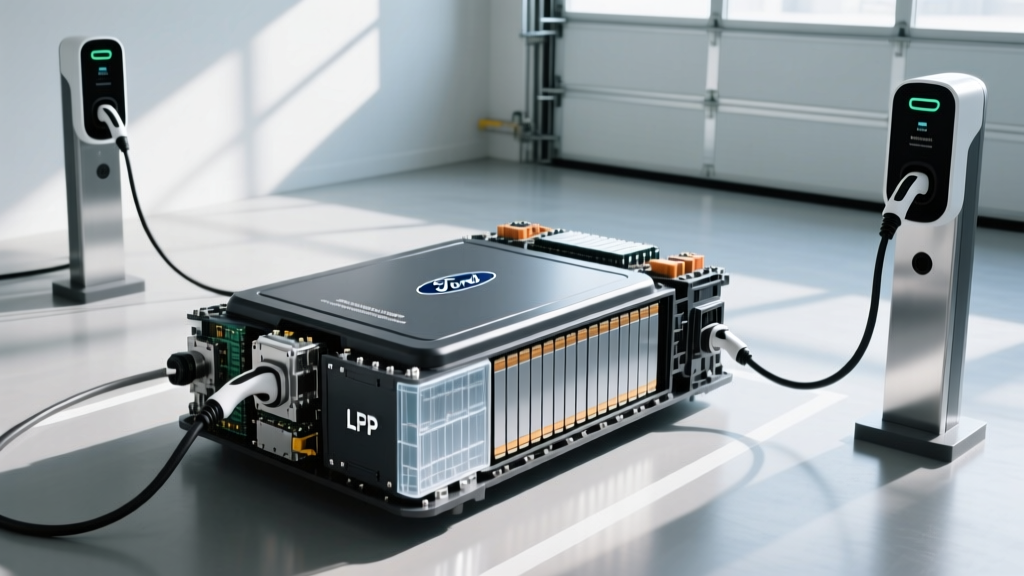
| Ford (Mustang Mach-E, F-150 Lightning) | 8 yr / 100,000 mi | 70% | Covers LFP and NMC packs |
| GM (Ultium platform — Blazer EV, Equinox EV, Silverado EV) | 8 yr / 100,000 mi | 70% (60% for commercial) | Ultium packs use NMC |
| Volkswagen (ID.4, ID.7) | 8 yr / 100,000 mi | 70% | MEB platform, NMC chemistry |
| BMW (iX, i4, i7) | 8 yr / 100,000 mi | 70% | Gen5 eDrive NMC packs |
| Rivian (R1T, R1S) | 8 yr / 175,000 mi | 70% | Highest mileage threshold in market |
What "70% capacity retention" means: If your EV started with an EPA-rated 300 miles of range, the warranty guarantees at least 210 miles of range (at 70% SoH) for the full warranty period. If the battery drops below that threshold, the manufacturer replaces or refurbishes the pack at no cost. According to fueleconomy.gov, most EVs retain well above 85% capacity at the 8-year mark under normal use — warranty claims remain rare.
What's NOT covered: Damage from collisions, flooding, improper modifications, or using non-approved charging equipment. Gradual degradation above the 70% threshold is considered normal wear, not a defect.
EV Battery Replacement Cost: What It Actually Costs and When
Out-of-warranty battery replacement is the number-one fear driving EV hesitation. Here's the real cost landscape in 2026, and why context matters:
| Vehicle / Pack Size | Battery Capacity | Chemistry | Replacement Cost (Parts + Labor) | Typical Replacement Timeline |
|---|---|---|---|---|
| Tesla Model 3 RWD | ~60 kWh | LFP | $8,000–$12,000 | Rarely before 200,000+ mi |
| Tesla Model Y Long Range | ~75 kWh | NMC | $12,000–$16,000 | Rarely before 180,000+ mi |
| Hyundai Ioniq 5 | 77.4 kWh | NMC | $14,000–$18,000 | Rarely before 180,000+ mi |
| Ford F-150 Lightning Extended | ~131 kWh | NMC | $20,000–$28,000 | Rarely before 150,000+ mi |
| Chevrolet Equinox EV | ~85 kWh | NMC (Ultium) | $14,000–$18,000 | Rarely before 180,000+ mi |
| Nissan LEAF (40/62 kWh) | 40–62 kWh | NMC (passive air cooling) | $6,500–$10,000 | Earlier degradation due to no active cooling |
Critical context: These are worst-case, out-of-warranty figures that very few owners ever face. Battery pack prices have fallen from over $1,200/kWh in 2010 to roughly $110–$130/kWh in 2026 (per BloombergNEF data). Most EVs are scrapped for collision damage, not battery failure. The average age of a scrapped vehicle in the US is roughly 15 years — and current data suggests most EV batteries will still hold 75–85% capacity at that age.
Compare this to that 2008 Honda Accord: over 15 years, you'd spend $400–$700 on four or five 12V battery replacements, plus thousands in fuel, oil changes, transmission fluid, and timing belt service — costs an EV simply doesn't have.
Factors That Affect EV Battery Life (And How to Maximize It)
Do:
- Keep daily charge between 20–80% for NMC/NCA batteries. LFP owners can charge to 100% regularly — Tesla and Ford recommend this for cell balancing.
- Use Level 2 home charging as your primary method. Slow, steady charging at 7–11 kW generates far less heat than DC fast charging and extends cycle life.
- Precondition the battery before DC fast charging (most EVs do this automatically when you navigate to a charger). A warm battery charges faster and with less stress.
- Park in shade or a garage during extreme heat. Sustained battery temperatures above 95°F accelerate degradation.
- Drive it regularly. Lithium-ion cells prefer moderate, regular use over sitting at high SoC for weeks.
Don't:
- DC fast charge daily unless necessary. Occasional road-trip fast charging is fine; daily reliance on 150+ kW chargers adds heat stress. Studies from Recurrent Auto show vehicles that fast-charge more than 3x/week degrade ~1–3% faster over 4 years.
- Let the battery sit at 0% or 100% for extended periods (weeks). If storing an EV, set charge to ~50%.
- Ignore extreme cold prep. Below 20°F, range drops 20–30% and charging is slower. Preconditioning mitigates this significantly.
How to Check Your EV's Battery Health (State of Health Monitoring)
State of Health (SoH) is the percentage of original battery capacity remaining. A brand-new EV has 100% SoH; a pack at 85% SoH holds 85% of its original kWh. Here's how to monitor it in 2026:
- In-vehicle displays: Tesla, Hyundai/Kia, BMW, and GM Ultium vehicles show battery health or energy-use data in the infotainment system. Some display SoH percentage directly; others show it indirectly via range-at-full-charge trends.
- Manufacturer apps: The Tesla app, FordPass, Hyundai Bluelink, and myChevrolet apps provide charging history and, in some cases, SoH estimates.
- OBD-II diagnostic tools: Devices like the OBDeleven or apps like LeafSpy (for Nissan LEAF) and TeslaFi (for Tesla) read raw battery management system (BMS) data, including cell voltage variance, total kWh counted, and calculated SoH.
- Dealer diagnostic reports: Any authorized service center can pull a full battery health report. Request one before buying a used EV — it's the single most important pre-purchase check.
- Third-party services: Companies like Recurrent and Geotab offer battery health reports based on telematics data, particularly useful for fleet operators and used-EV certification programs.
What to watch for: Cell voltage variance above 0.1V between modules can signal an imbalanced pack. A sudden drop in SoH (more than 2–3% in a single month) warrants a dealer visit. Gradual, linear decline is normal and expected.
Emerging Battery Tech: Solid-State and Silicon Anode (Forward-Looking)
Several next-generation battery technologies are in development, but none are commercially available in production vehicles as of 2026:
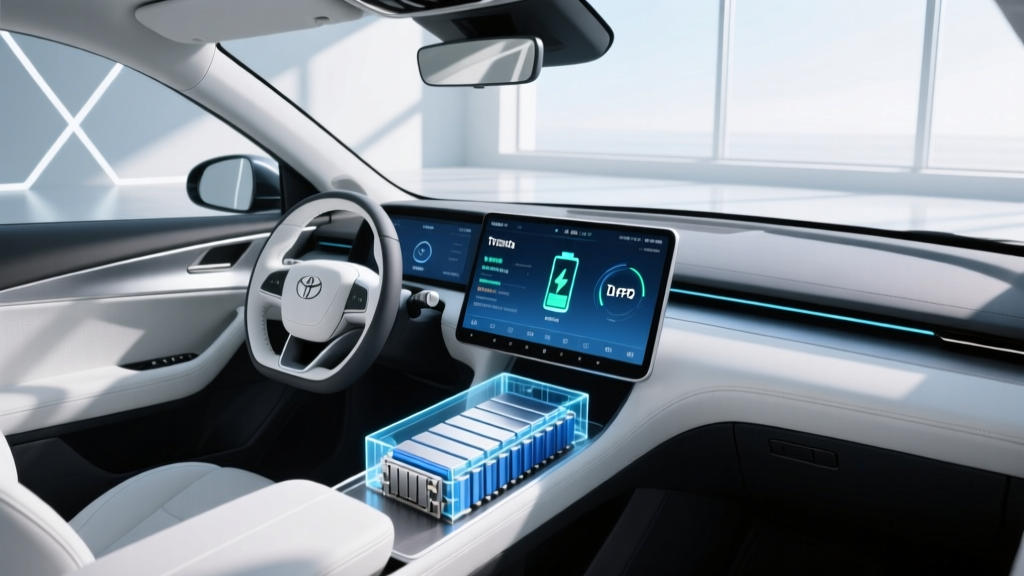
- Solid-state batteries: Replace the liquid electrolyte with a solid ceramic or polymer, promising 30–50% higher energy density, faster charging, and improved safety. Toyota has announced solid-state EVs for 2027–2028, but production volumes are expected to be very limited initially. Samsung SDI and QuantumScape are also in pilot production. Realistic mass-market availability: 2029–2032.
- Silicon anode batteries: Replace graphite anodes with silicon, boosting energy density by 20–40%. Companies like Sila Nanotechnologies and Group14 are supplying early production cells. Mercedes-Benz and GM have announced pilot programs. Limited production vehicles may appear by 2027–2028, with broader adoption by 2030.
- Sodium-ion batteries: Use abundant sodium instead of lithium, cutting costs significantly but with lower energy density. CATL has begun production in China for low-range city EVs. US-market availability is uncertain and likely 2028+ for affordable compact models.
What this means for 2026 buyers: Don't wait for solid-state. Current LFP and NMC batteries are proven, well-warrantied, and cost-competitive. Waiting 3–5 years for next-gen chemistry means missing years of fuel savings and available §30D federal tax credits that may change or expire.
Frequently Asked Questions
How long do EV batteries last in years and miles?
Based on fleet data from Geotab and Recurrent Auto, most modern EV batteries (2020+ models with active thermal management) retain 80–90% capacity at 100,000 miles and 75–85% at 150,000 miles. In years, that translates to 15–20 years of usable service life for most owners before capacity drops below 70%. LFP batteries tend to outlast NMC by 30–50% in cycle life.
How much does an EV battery cost to replace?
Out-of-warranty replacement costs range from $8,000 for a ~60 kWh LFP pack (Tesla Model 3 RWD) to $28,000 for a ~131 kWh NMC pack (Ford F-150 Lightning Extended Range). However, the vast majority of EV batteries never need replacement during the vehicle's lifetime. Under the 8-year/100,000-mile federal minimum warranty, replacements due to premature degradation are covered at no cost.
What does the EV battery warranty actually cover?
Manufacturer warranties guarantee that the battery will retain at least 70% of its original capacity for 8 years or 100,000 miles (whichever comes first). Hyundai/Kia and Rivian exceed this. If your battery falls below the threshold, the manufacturer replaces or refurbishes it for free. Warranties do not cover collision damage, flooding, or aftermarket modifications.
How do I check and maximize my EV's battery health?
Monitor SoH through your vehicle's app, in-vehicle displays, or OBD-II tools like TeslaFi or LeafSpy. Maximize longevity by keeping NMC/NCA charge between 20–80% daily (LFP can go to 100%), relying on Level 2 home charging over DC fast charging, preconditioning before fast charges, avoiding prolonged storage at extreme SoC, and parking in shade during extreme heat.
LFP vs NMC — which battery chemistry is better for me?
Choose LFP if: you want maximum cycle life, charge at home daily, live in a mild-to-moderate climate, and value lower cost. Choose NMC/NCA if: you need maximum range per charge, live in a cold climate (below 20°F winters), or want the lightest possible pack for performance. Neither is universally "better" — the right choice depends on your driving patterns and climate.
How do Honda Accord 2008 battery specifications compare to a modern EV battery?
The 2008 Accord uses a 12V lead-acid battery (Group 24F or 35, ~550–650 CCA, ~50 Ah, ~0.6 kWh of energy) that costs $120–$180 and lasts 3–5 years. A 2026 EV traction battery operates at 400–800V, stores 60–131 kWh of energy (100–200x more), costs $8,000–$28,000, and is designed to last 15–20 years. They serve fundamentally different purposes: the Accord battery starts an engine; the EV battery IS the powertrain.