What Makes an EV Battery "Highest Rated"?
When EV shoppers search for the highest rated car batteries, they're usually weighing three concerns: How long will it last? What will it cost to replace? And which chemistry gives the best blend of range, durability, and value? Unlike a gas car's 12V starter battery, the high-voltage traction battery in an EV is a $5,000–$20,000 component that directly determines the vehicle's usable range, charging speed, and long-term ownership cost.
This guide breaks down the battery packs powering today's top-selling EVs — from the Tesla Model Y's NMC cells to the Ford Mustang Mach-E's LG Energy Solution modules and BYD's Blade LFP packs — with exact degradation data, warranty thresholds, and real-world care strategies that extend lifespan well past 200,000 miles.
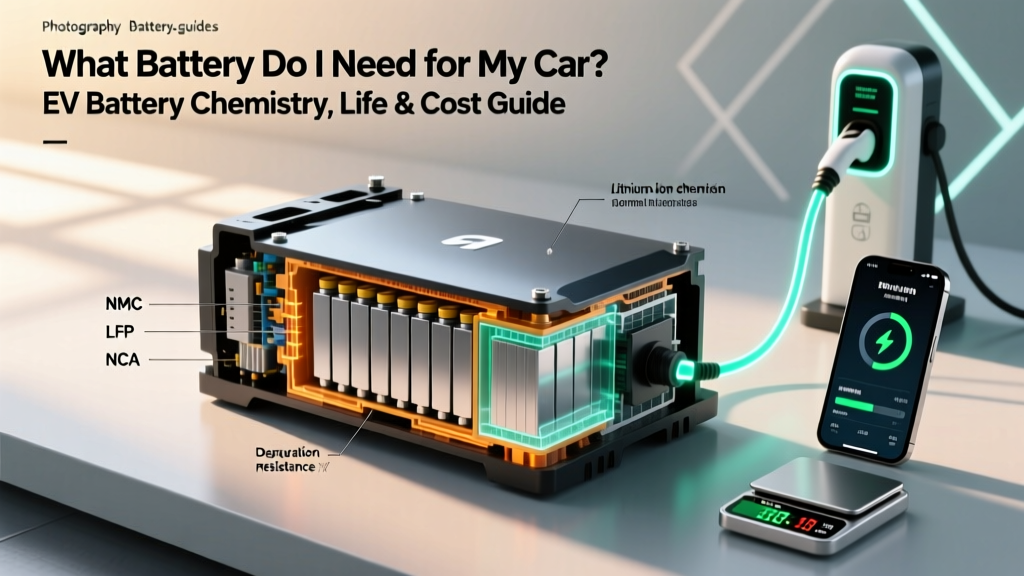
LFP vs NMC vs NCA: Which Chemistry Leads the Ratings?
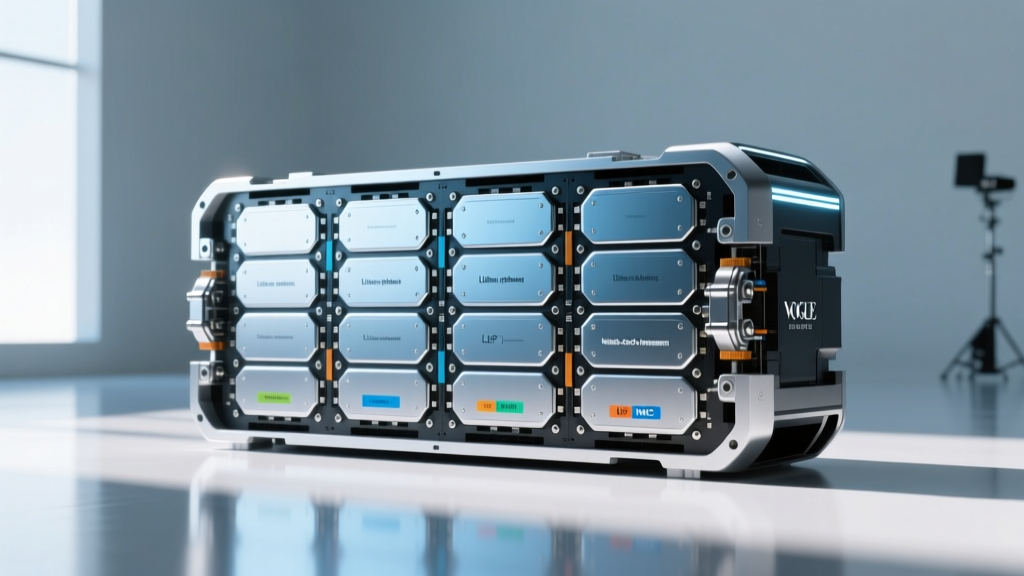
The two dominant lithium-ion chemistries in 2026 EVs are NMC/NCA (nickel-manganese-cobalt or nickel-cobalt-aluminum) and LFP (lithium iron phosphate). Each has distinct trade-offs that directly affect range, longevity, and cost.
| Attribute | LFP (Lithium Iron Phosphate) | NMC / NCA |
|---|---|---|
| Energy Density | ~160–180 Wh/kg (lower) | ~220–270 Wh/kg (higher) |
| Cycle Life | 3,000–5,000+ cycles | 1,000–2,500 cycles |
| Cold-Weather Performance | Weaker — ~15–25% range loss at 20°F | Better — ~10–20% range loss at 20°F |
| Thermal Stability | Excellent — higher runaway threshold (~518°F) | Good — lower runaway threshold (~392°F) |
| Cost per kWh | ~$80–$100 (lower) | ~$110–$140 (higher) |
| Charging to 100% Daily | Recommended by most OEMs | Not recommended — 80% daily limit advised |
| Typical Use | Standard Range models (Tesla Model 3 SR, Model Y SR, Rivian Standard) | Long Range / Performance models (Model Y LR, Ioniq 5, Mach-E Extended Range) |
The bottom line: If maximum range per charge is your priority and you don't mind limiting daily charge to 80%, NMC/NCA remains the higher-rated choice. If you want a battery that tolerates daily 100% charging, delivers 3,000+ cycles with minimal degradation, and costs less to replace, LFP is the durability champion. Tesla's own 2025 Impact Report confirmed that vehicles equipped with LFP packs showed an average of less than 5% capacity loss after 200,000 miles — a figure that has made LFP the highest rated car battery chemistry for fleet and high-mileage drivers.
How Long Do EV Batteries Actually Last?
Federal law mandates that EV batteries carry a warranty of at least 8 years or 100,000 miles (10 years/150,000 miles in California Air Resources Board states). But real-world data shows most packs outlast those thresholds by a wide margin.
Typical Degradation Curve — NMC and LFP Packs
| Mileage | NMC Avg. Capacity Retention | LFP Avg. Capacity Retention |
|---|---|---|
| 0 miles (new) | 100% | 100% |
| 30,000 miles | 95–97% | 97–99% |
| 60,000 miles | 92–95% | 95–98% |
| 100,000 miles | 88–93% | 93–97% |
| 150,000 miles | 84–90% | 90–95% |
| 200,000 miles | 80–87% | 88–94% |
Data synthesized from Tesla Impact Reports (2023–2025), Geotab fleet studies, and Recurrent Auto battery health data across 10,000+ vehicles. Individual results vary based on climate, charging habits, and thermal management.
The steepest degradation typically occurs in the first 15,000–25,000 miles (a 2–5% drop), after which the curve flattens considerably. A 2026 Model Y Long Range with its 75 kWh usable NMC pack might show 310 miles of EPA range when new but settle around 285–295 miles after two years of mixed driving — still well above the threshold where most drivers notice practical range loss.
Battery Warranty Terms: What's Actually Covered?
Every mainstream EV sold in the U.S. includes a high-voltage battery warranty, but the fine print matters. The standard coverage is 8 years/100,000 miles with a capacity retention threshold — meaning the manufacturer will repair or replace the pack if it falls below a specified percentage of original capacity.
| Manufacturer | Warranty Period | Capacity Threshold | Notes |
|---|---|---|---|
| Tesla (Model 3/Y) | 8 yr / 100,000–120,000 mi | 70% | 120k mi for LR/Performance |
| Hyundai / Kia (Ioniq 5/6, EV6) | 10 yr / 100,000 mi | 70% | Among the longest coverage |
| Ford (Mach-E, F-150 Lightning) | 8 yr / 100,000 mi | 70% | Transferable to second owner |
| GM (Ultium-based: Equinox EV, Blazer EV) | 8 yr / 100,000 mi | 70% | Some Ultium packs rated for 1M mi in fleet use |
| Rivian (R1T/R1S) | 8 yr / 175,000 mi | 70% | Higher mileage threshold reflects truck use |
| BMW (i4, iX) | 8 yr / 100,000 mi | 70% | Includes module-level replacement option |
Source: Manufacturer warranty documentation and fueleconomy.gov EV technology overview.
Critical distinction: a battery warranty covers capacity degradation below the threshold, not cosmetic issues or damage from accidents, flooding, or improper charging equipment. Most OEMs also require that warranty claims involve certified diagnostic scans proving the degradation is battery-inherent, not caused by aftermarket modifications.
EV Battery Replacement Cost: What Owners Actually Pay
The fear of a $20,000 battery replacement keeps some buyers in gas cars. Here's the reality: most EV batteries never need full replacement during the vehicle's typical ownership life. When they do, costs have dropped significantly since 2020.
| Vehicle | Battery Size (usable kWh) | Chemistry | Est. Replacement Cost |
|---|---|---|---|
| Tesla Model 3 Standard Range | 57 kWh | LFP | $8,000–$12,000 |
| Tesla Model Y Long Range | 75 kWh | NMC | $12,000–$16,000 |
| Hyundai Ioniq 5 (Extended Range) | 77.4 kWh | NMC | $10,000–$15,000 |
| Ford Mustang Mach-E Extended Range | 91 kWh | NMC | $14,000–$18,000 |
| Ford F-150 Lightning Extended Range | 131 kWh | NMC | $18,000–$25,000 |
| Chevrolet Equinox EV | 85 kWh | NMC (Ultium) | $12,000–$16,000 |
| Rivian R1T (Large Pack) | 128 kWh | NMC | $18,000–$22,000 |
Costs include parts and labor at OEM service centers. Module-level repairs (replacing individual cell groups rather than the full pack) can reduce costs by 40–60%. Aftermarket and remanufactured packs are increasingly available at 20–35% lower cost.
For context, a Model 3 owner driving 12,000 miles per year will likely put 150,000 miles on the car over 12+ years before the pack approaches the 70% capacity threshold — and even then, the vehicle may still offer 180+ miles of usable range. The average gas car spends $3,000–$5,000 on transmission and engine repairs over the same period, a cost EVs simply don't incur.
Five Factors That Accelerate (or Preserve) Battery Life
What Hurts Your Battery
- Frequent DC fast charging above 150 kW: Occasional road-trip fast charging is fine, but daily use of 250–350 kW chargers generates sustained heat that accelerates cell wear. Data from Geotab's 2025 fleet study showed vehicles fast-charging more than 3x per week degraded ~1.5–2% faster over 100,000 miles than those primarily using Level 2.
- Prolonged 100% or 0% State of Charge (SoC): For NMC/NCA packs, sitting at 100% SoC — especially in hot weather — stresses the cathode. LFP packs are more tolerant of 100% storage, which is why Tesla recommends periodic 100% charges for LFP-equipped vehicles to recalibrate the BMS.
- Extreme heat exposure: Ambient temperatures above 95°F combined with high SoC is the worst-case scenario. Vehicles with active liquid-cooled thermal management (Tesla, Hyundai E-GMP, GM Ultium) handle this far better than passively cooled packs.
- Aggressive driving in cold weather: Hard acceleration when the battery is below 40°F forces high C-rates on cold cells, increasing internal resistance and lithium plating risk. Preconditioning the battery via the vehicle's app before driving mitigates this significantly.
- Aftermarket charging equipment: Non-UL-listed Level 2 chargers or modified adapters can deliver inconsistent voltage, stressing the onboard charger and battery management system.
What Preserves Your Battery
- Daily Level 2 charging at 7–11 kW: Gentle, slow charging generates minimal heat and is the gold standard for long-term health.
- 20–80% SoC window for NMC/NCA: Keeping daily driving within this range roughly doubles cycle life vs. 0–100% cycling.
- Preconditioning before fast charging: Most 2026 EVs automatically precondition the battery when you navigate to a DC fast charger. This warms the cells to ~85–95°F, enabling peak charge rates and reducing stress.
- Garage parking in extreme climates: Even an unheated garage in Minnesota or a shaded carport in Arizona moderates the thermal extremes the pack endures overnight.
- Software updates: OEMs regularly refine battery management algorithms. A 2025 OTA update for the Ioniq 5, for instance, adjusted the charge curve taper above 80% to reduce heat generation — adding measurable long-term life.
How to Check Your EV Battery's State of Health
State of Health (SoH) is the percentage of a battery's original capacity that remains usable. A new pack is 100% SoH; a pack that held 75 kWh when new but now holds 67.5 kWh is at 90% SoH.
Here's how to check it on major platforms:
- Tesla: Navigate to Service → Battery Health in the vehicle's touchscreen (added in 2024 software updates). Alternatively, third-party apps like Tessie or TeslaFi pull SoH data from the vehicle's API.
- Hyundai / Kia: The Bluelink/Kia Connect app displays battery health percentage. Dealership diagnostic scans provide a more granular cell-balance report.
- GM (Ultium): The myChevrolet/myCadillac app includes a battery health indicator. OnStar diagnostics can generate a detailed SoH report.
- Ford: The FordPass app shows estimated battery health. A dealer IDS scan provides module-level voltage delta data.
- OBD-II tools: Devices like the OBDLink MX+ paired with apps such as ABRP (A Better Routeplanner) or Car Scanner can read SoH, cell voltages, and pack temperature on most 2026 EVs.
For used-EV buyers, requesting a battery health report before purchase is as essential as checking a Carfax. A SoH reading below 85% on a vehicle with fewer than 80,000 miles warrants investigation — it may indicate chronic fast-charging abuse or a defective module.
Emerging Battery Tech: Solid-State and Silicon Anodes
Two next-generation technologies are frequently cited as the future of EV batteries, but neither is available in production vehicles as of 2026.
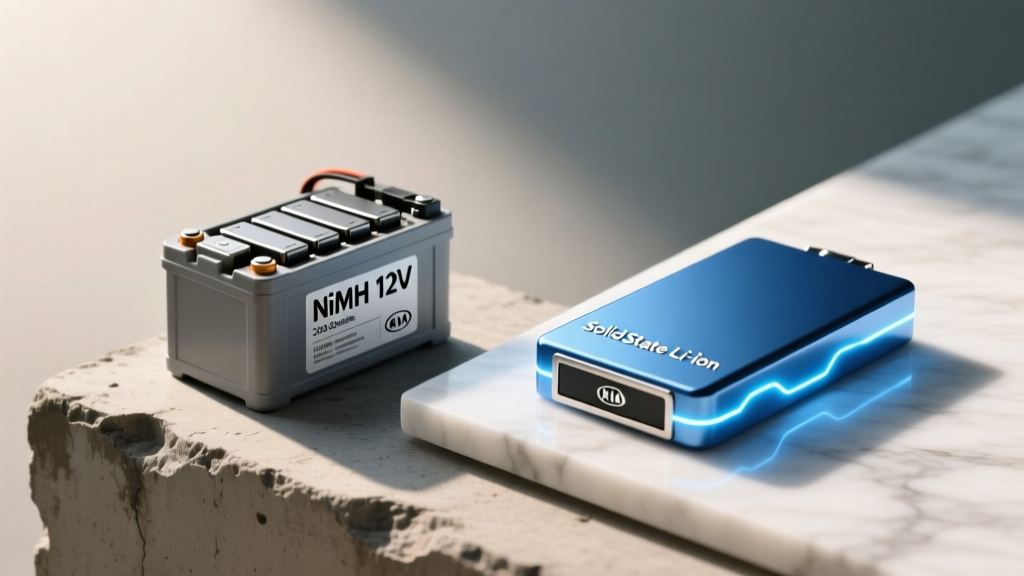
Solid-state batteries replace the liquid electrolyte with a solid ceramic, polymer, or sulfide layer, promising 30–50% higher energy density, faster charging (potentially 10–80% in under 10 minutes), and improved safety. Toyota has announced pilot production for 2027–2028, with limited deployment in a Lexus model first. Samsung SDI and QuantumScape are targeting similar timelines. Realistic mass-market availability remains 2029–2030 at the earliest, with initial costs likely commanding a significant premium.
Silicon-anode batteries replace graphite anodes with silicon-dominant materials, boosting energy density by 20–40%. Sila Nanotechnologies and Group14 Technologies have begun supplying silicon-composite anode materials to cell manufacturers, and early limited deployments in luxury EVs are expected by 2027–2028. The challenge remains cycle-life stability — silicon expands ~300% during lithiation, which historically caused rapid cracking and capacity fade.
Both technologies are worth tracking, but if you're buying an EV in 2026, today's NMC and LFP packs are the proven, highest rated car batteries available — with degradation data and warranty backing that make them a sound long-term investment.
Frequently Asked Questions
How long do EV batteries last in years and miles?
Based on fleet data from Tesla, Geotab, and Recurrent Auto, the average EV battery retains 85–93% of its original capacity at 150,000 miles. Most packs are engineered to deliver usable range well past 200,000 miles before approaching the 70% warranty threshold. In practical terms, that's 15–20 years of average driving (12,000–15,000 miles/year). Full replacement during typical ownership is uncommon.
How much does an EV battery cost to replace?
Out-of-warranty replacement costs range from approximately $8,000 for a smaller LFP pack (Tesla Model 3 Standard Range, 57 kWh) to $18,000–$25,000 for large NMC packs (F-150 Lightning Extended Range, 131 kWh). Module-level repairs can reduce costs by 40–60%. Remanufactured packs and third-party services are increasingly available at lower price points. For comparison, a gas vehicle's engine or transmission replacement often costs $4,000–$8,000 and is far more common than an EV battery swap.
What does the EV battery warranty actually cover?
Federal law requires a minimum of 8 years/100,000 miles of battery warranty coverage. CARB states (California, New York, and others) extend this to 10 years/150,000 miles. The warranty covers capacity loss below a specified threshold — typically 70% of original capacity. It does not cover damage from accidents, flooding, unauthorized modifications, or use of non-certified charging equipment. Some manufacturers (Hyundai, Kia, Rivian) offer longer or higher-mileage coverage as standard. Always review the specific warranty booklet for your model year.
How do I check and maximize my EV battery health?
Check SoH through your vehicle's native app (Tesla Service menu, Bluelink, FordPass) or an OBD-II scanner with EV-compatible software. To maximize longevity: charge primarily on Level 2 at home, keep NMC/NCA packs in the 20–80% SoC range for daily use, precondition before DC fast charging, avoid prolonged 100% storage in hot weather, and keep up with OTA software updates that refine battery management algorithms. LFP owners can charge to 100% regularly without concern.
LFP vs NMC — which battery chemistry is better for me?
Choose LFP if you want maximum cycle life (3,000–5,000+ cycles), daily 100% charging convenience, lower replacement cost, and superior thermal safety — and you can accept ~10–15% less range per charge and slightly worse cold-weather performance. Choose NMC/NCA if you prioritize maximum EPA range, better cold-weather efficiency, and faster DC fast-charge speeds — and you're willing to manage daily charging to ~80% SoC. For high-mileage commuters and fleet drivers, LFP is increasingly the highest rated car battery chemistry. For road-trip-focused buyers in cold climates, NMC remains the stronger pick.