What Are Hemp Batteries — and Are They Ready for EVs?
The term "hemp batteries" has circulated in EV forums and sustainability circles for years, promising a plant-based alternative to mined graphite and silicon anodes. The core idea is legitimate: hemp hurd — the woody inner core of the cannabis sativa stalk — can be pyrolyzed into a hard carbon material suitable for use as a battery anode. Researchers at institutions like the University of Guelph and startups such as Canada-based Altair Nanotechnologies (now part of broader nanomaterial ventures) have demonstrated that hemp-derived carbon can exhibit favorable surface area and porosity for ion storage.
However, as of 2026, no production electric vehicle uses a hemp-based anode. Every mainstream EV on the road today relies on one of two dominant cathode chemistries — LFP (lithium iron phosphate) or NMC/NCA (nickel manganese cobalt / nickel cobalt aluminum) — paired with a graphite or graphite-silicon anode. Hemp-derived carbon remains a laboratory and pilot-stage material, not a commercially available battery chemistry for automotive traction packs.
This guide covers what hemp batteries actually are, how they compare to the chemistries you can buy today, and everything you need to know about EV battery longevity, cost, and care.
The Science Behind Hemp-Derived Battery Anodes
In a lithium-ion cell, the anode stores lithium ions during charging and releases them during discharge. Today's EV anodes are overwhelmingly made from synthetic or natural graphite, with some newer cells blending in silicon to boost energy density.
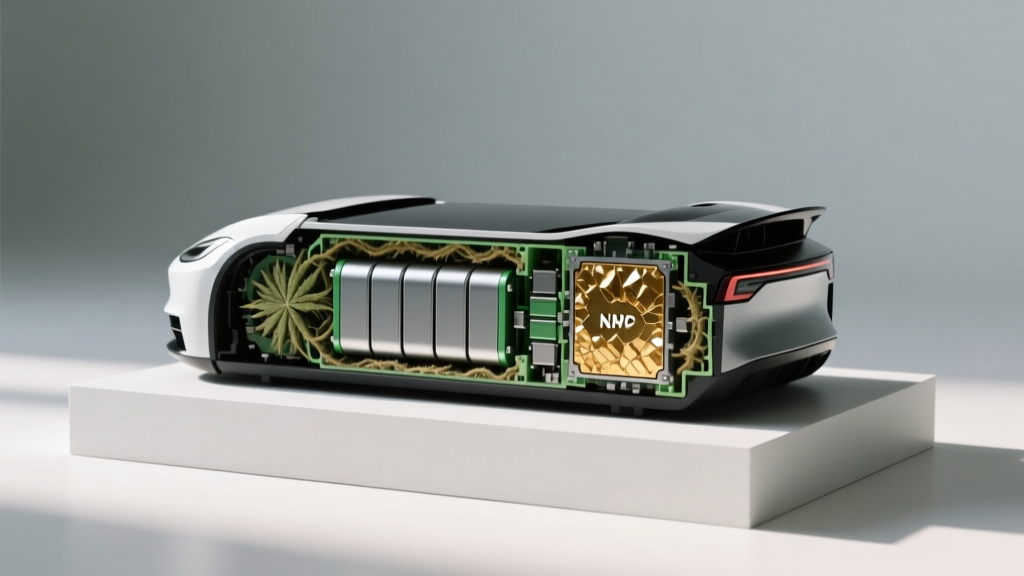
Hemp-derived hard carbon works through a different mechanism. When hemp hurd is heated to roughly 1,100–1,400°C in an oxygen-free environment (pyrolysis), it produces a disordered carbon structure with micro-pores that can intercalate sodium or lithium ions. Key research findings include:
- A 2016 study published in ACS Sustainable Chemistry & Engineering demonstrated hemp-derived hard carbon anodes for sodium-ion batteries with a specific capacity of approximately 300 mAh/g — competitive with graphite in lithium-ion cells.
- The primary advantage is feedstock cost and sustainability: hemp grows rapidly (90–120 days to harvest), sequesters carbon, and requires less processing than mining and refining graphite.
- The primary limitation is that hard carbon's disordered structure leads to a sloping voltage profile and lower volumetric energy density than graphite, making it better suited to stationary storage or sodium-ion cells than to the energy-dense packs EVs demand.
Bottom line: Hemp batteries are a real area of materials science research, primarily targeting sodium-ion stationary storage. They are not a drop-in replacement for EV traction batteries in 2026.
LFP vs. NMC/NCA: The Chemistries Actually Powering Your EV
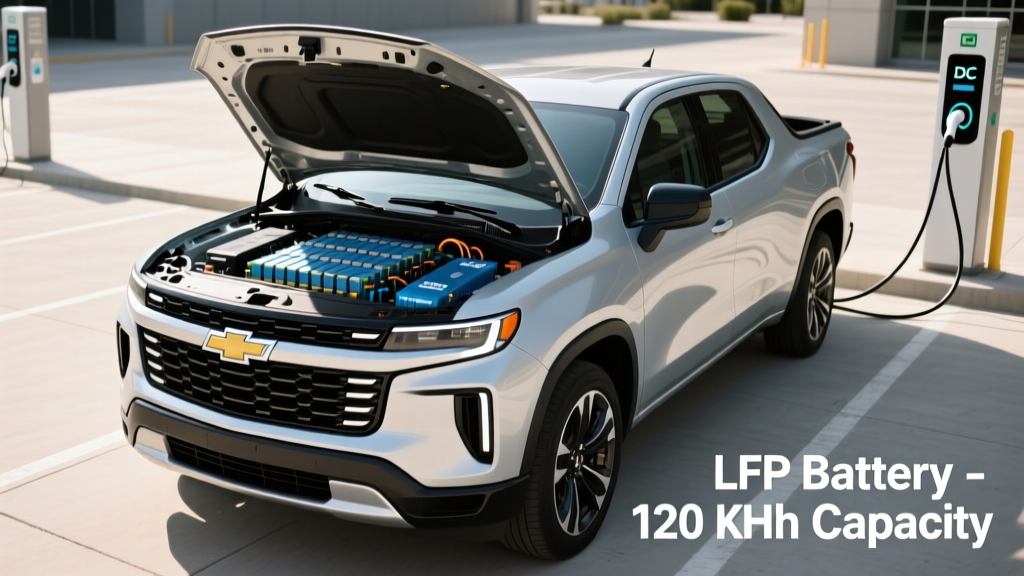
Since hemp anodes are not yet in production vehicles, here is the chemistry decision that matters today. Every EV buyer in 2026 faces a choice between LFP and NMC/NCA cathode chemistries — and the anode in both cases is graphite (sometimes with a silicon blend).
| Attribute | LFP (Lithium Iron Phosphate) | NMC / NCA (Nickel-Based) |
|---|---|---|
| Energy Density (cell-level) | ~160–180 Wh/kg | ~220–300 Wh/kg |
| Typical Cycle Life | 3,000–5,000+ cycles to 80% SoH | 1,000–2,500 cycles to 80% SoH |
| Cold-Weather Performance | Moderate — greater range loss below freezing | Better low-temp discharge capability |
| Thermal Stability / Safety | Excellent — less prone to thermal runaway | Good — requires more robust BMS and cooling |
| Cost per kWh (cell-level, 2026) | ~$80–$100 | ~$110–$140 |
| Cobalt / Nickel Content | None | Significant — supply-chain and ethical concerns |
| Recommended Daily Charge Limit | 100% (LFP tolerates full SoC well) | 80–90% for daily; 100% for road trips only |
| Example 2026 Vehicles | Tesla Model 3 RWD, Ford Mustang Mach-E Select (LFP option), BYD Seal | Hyundai Ioniq 5, Kia EV6, Tesla Model Y Long Range, Rivian R1S |
Which is better? It depends on your use case. If you drive moderate daily distances, have access to home charging, and want maximum longevity with minimal babysitting, LFP is the pragmatic choice — charge it to 100% every night and don't worry. If you need maximum range per charge for frequent road trips or live in a cold climate where every mile of EPA range counts, NMC/NCA's higher energy density is worth the extra care.
How Long Do EV Batteries Last? Real Degradation Data
The most persistent EV myth is that batteries need replacing every few years like a smartphone. Real-world fleet data tells a different story. According to analysis by Geotab, which tracks over 10,000 EVs in fleet service, the average EV battery loses roughly 1.8% of its original capacity per year under typical use — meaning after 10 years, the average pack retains approximately 82% of its original capacity.
Typical EV Battery Degradation Curve
| Vehicle Age | Average Capacity Retained (SoH) | Real-World Range Impact (from 300 mi EPA baseline) |
|---|---|---|
| New | 100% | ~300 mi (real-world: ~260–280 mi highway) |
| 2 years / 30,000 mi | ~96–97% | ~250–270 mi |
| 5 years / 75,000 mi | ~91–93% | ~237–260 mi |
| 8 years / 100,000 mi | ~85–88% | ~221–246 mi |
| 10 years / 130,000 mi | ~80–84% | ~208–235 mi |
| 15 years / 180,000 mi | ~73–78% | ~190–218 mi |
Note: Degradation is non-linear — a steeper drop occurs in the first 1–2 years, then the curve flattens significantly. Data represents fleet averages; individual results vary by climate, charging habits, and chemistry.
LFP packs generally degrade more slowly than NMC, particularly when routinely charged to 100%. Tesla's own 2024 Impact Report showed that Model 3/Y batteries retained approximately 85% capacity at 200,000 miles — a figure that aligns with the chemistry's cycle-life advantage.
EV Battery Warranty Terms: What's Actually Covered
Federal law mandates a minimum EV battery warranty of 8 years / 100,000 miles (10 years / 150,000 miles in CARB states like California). Most manufacturers meet or exceed this baseline. Here is how the major brands compare:
| Manufacturer | Warranty Term | Capacity Retention Threshold | Notes |
|---|---|---|---|
| Tesla (Model 3/Y) | 8 yr / 120,000 mi (LWD); 8 yr / 100,000 mi (RWD) | 70% | Separate terms for Standard Range (LFP) vs. Long Range (NMC) |
| Hyundai / Kia | 10 yr / 100,000 mi | 70% | Among the longest coverage in the industry |
| Ford (Mach-E, F-150 Lightning) | 8 yr / 100,000 mi | 70% | Transferable to second owner |
| GM (Chevrolet, Cadillac) | 8 yr / 100,000 mi | 70% | Ultium platform packs covered across brands |
| Rivian | 8 yr / 175,000 mi | 70% | Higher mileage cap reflects adventure-use positioning |
| BMW | 8 yr / 100,000 mi | 70% | Includes i4, iX, i7 lineup |
What triggers a warranty claim? If your battery's State of Health drops below the stated threshold (typically 70% of original capacity) within the warranty period, the manufacturer will repair or replace modules — or the full pack — to bring it back above that threshold. In practice, very few owners hit this threshold within the warranty window. The vast majority of EV batteries outlast the vehicle's useful economic life.
EV Battery Replacement Cost: When and How Much
Out-of-warranty battery replacement is the cost scenario that generates the most anxiety. Here are real-world figures based on 2025–2026 service data and manufacturer parts pricing:
| Vehicle | Battery Size (kWh) | Chemistry | Replacement Cost (Parts + Labor) | Typical Replacement Trigger |
|---|---|---|---|---|
| Tesla Model 3 RWD | ~60 kWh | LFP | $10,000–$13,000 | Rarely needed; LFP longevity is excellent |
| Tesla Model Y Long Range | ~82 kWh (usable) | NMC | $14,000–$18,000 | Typically 250,000+ mi if at all |
| Hyundai Ioniq 5 | ~77.4 kWh | NMC | $14,000–$17,000 | 10-year warranty mitigates most cases |
| Ford Mustang Mach-E Extended Range | ~91 kWh (usable) | NMC | $18,000–$22,000 | Larger pack = higher cost |
| Chevrolet Bolt EV (2023 legacy) | ~65 kWh | NMC | $14,000–$16,000 | Older platform; module-level repair often possible |
| Rivian R1S / R1T (Large Pack) | ~128 kWh | NMC | $20,000–$28,000 | Largest consumer pack; modular design may allow partial replacement |
Key context: These are worst-case, full-pack replacement figures. In practice, many out-of-warranty issues can be resolved with module-level repairs at a fraction of the cost — often $2,000–$6,000. And because degradation is gradual, a pack at 70% SoH still provides usable daily range; it doesn't suddenly "die." Most EV batteries are never replaced during the vehicle's first-owner lifespan.
Factors That Accelerate (or Slow) Battery Degradation
Battery longevity is not purely a function of time and miles — how you treat the pack matters significantly. Here is what the data shows:
Battery Care Best Practices
- Avoid sustained high State of Charge (NMC only): For NMC/NCA packs, daily charging to 80–90% significantly reduces stress versus sitting at 100%. Set your charge limit in the vehicle's app. LFP packs are an exception — charge to 100% regularly for accurate BMS calibration.
- Minimize DC fast charging when possible: Occasional DCFC (150–350 kW) is fine, but daily reliance on fast charging accelerates degradation. A study by the Idaho National Laboratory found that exclusive DC fast charging can increase capacity loss by roughly 2–4% over 50,000 miles compared to Level 2 charging. Use Level 2 (7–11 kW) at home as your primary charging method.
- Precondition before fast charging: Most modern EVs automatically precondition the battery when a Supercharger or DCFC is set as your navigation destination. This warms the cells to the optimal temperature (~30–40°C) and prevents lithium plating. If your EV has a manual precondition toggle, use it.
- Avoid extreme SoC in extreme temperatures: Don't let an NMC pack sit at 100% SoC in 100°F+ heat for days. Similarly, avoid leaving any EV at very low SoC (below 10%) in sub-freezing weather for extended periods. The battery management system (BMS) buffers the extremes, but minimizing stress helps.
- Don't baby it too much: The difference between "perfect" battery care and "normal" care is typically a few percentage points of SoH over a decade. Charge at home, set an 80% limit for NMC (100% for LFP), fast-charge on road trips without guilt, and drive the car.
How to Check Your EV's Battery Health (State of Health)
State of Health (SoH) is a percentage representing your battery's current maximum capacity relative to its original capacity when new. A new pack is 100% SoH; a pack that can now hold only 77 kWh of its original 82 kWh is at ~94% SoH.
How to check SoH by brand:
- Tesla: No native SoH readout in the app. Use third-party OBD-II tools like Scan My Tesla (Android) with an OBDLink adapter to read the BMS-reported nominal full pack capacity. Divide by the original usable capacity for SoH.
- Hyundai / Kia: Some models display battery health in the infotainment system's EV diagnostics menu. The Carista or Car Scanner OBD apps can also pull BMS data.
- Ford: The FordPass app provides a battery health indicator, though it's a simplified status rather than a precise percentage. Dealership service can run a full diagnostic.
- GM (Ultium): The myChevrolet / myCadillac app shows a battery health status. For precise SoH, a dealer diagnostic tool is required.
- Universal method: An OBD-II adapter (such as the OBDLink MX+, ~$60) paired with an EV-capable app (EVNotify, Car Scanner Pro, or ABRP's OBD integration) can read the BMS-reported SoH on most EVs.
When to check: Once every 6 months is sufficient for most owners. If you notice a sudden drop in range that doesn't correlate with temperature changes, check SoH immediately and contact your dealer if it has dropped below the warranty threshold.
Beyond Hemp and Lithium-Ion: Solid-State and Silicon Anodes
While hemp-derived carbon anodes target sodium-ion and stationary storage, the next-generation EV battery technologies with realistic automotive timelines are:
- Silicon-dominant anodes: Companies like Sila Nanotechnologies and Group 14 are already supplying silicon-carbon composite anodes to automakers. Mercedes-Benz's upcoming G-Class EV (announced for 2025–2026 production) uses a Sila anode to boost cell energy density by roughly 20–40%. This is the nearest-term anode innovation reaching production EVs.
- Solid-state batteries: Toyota, Samsung SDI, and QuantumScape are the most prominent players. Toyota has announced a 2027–2028 target for limited production of solid-state EVs with a claimed 750 km (~465 mi) range and 10-minute 10–80% charging. QuantumScape has delivered prototype cells to Volkswagen for testing. However, manufacturing scale-up, cost reduction, and yield challenges mean solid-state packs are unlikely to appear in mainstream, affordable EVs before 2029–2030.
- Sodium-ion batteries: CATL and BYD are producing sodium-ion cells for budget EVs in China (e.g., the Chery QQ Ice Cream EV variant). Sodium-ion is cheaper and cobalt-free but has roughly 30–40% lower energy density than NMC, limiting it to short-range city cars and stationary storage. This is the space where hemp-derived hard carbon anodes could eventually find a home — not in a long-range SUV, but in an affordable urban commuter or home energy system.
Forward-looking note: All timelines above are based on manufacturer announcements and industry analysis as of early 2026. Production delays are common in battery technology transitions. Solid-state and sodium-ion should be considered announced/emerging, not currently available for US-market EV buyers.
Frequently Asked Questions
How long do EV batteries last in years and miles?
Based on fleet data from Geotab and manufacturer reports, the average EV battery retains 80–85% of its original capacity at 10 years / 130,000–200,000 miles. LFP chemistries tend to degrade more slowly, with Tesla reporting ~85% retention at 200,000 miles for Model 3/Y packs. Most EV batteries outlast the vehicle's practical lifespan without needing replacement.
How much does an EV battery cost to replace?
Full-pack replacement costs range from approximately $10,000 for a smaller LFP pack (e.g., Tesla Model 3 RWD) to $28,000 for a large NMC pack (e.g., Rivian R1S Large Pack). However, full replacements are rare — many issues can be resolved with module-level repairs for $2,000–$6,000. And because degradation is gradual, most owners never face this cost.
What does the EV battery warranty cover?
Federal law requires a minimum 8-year / 100,000-mile warranty on EV batteries (10 years / 150,000 miles in CARB states). The warranty covers capacity loss below a specified threshold — typically 70% of original capacity. If your battery drops below that threshold within the warranty period, the manufacturer repairs or replaces it at no cost. Hyundai and Kia offer an industry-leading 10 years / 100,000 miles.
How do I check and maximize my EV battery health?
Check SoH every 6 months using your vehicle's app, infotainment diagnostics, or an OBD-II adapter with an EV-capable app. To maximize longevity: set an 80–90% charge limit for NMC packs (100% for LFP), favor Level 2 home charging over daily DC fast charging, precondition before fast charging, and avoid leaving the car at extreme SoC in extreme temperatures for prolonged periods.
LFP vs. NMC — which battery chemistry is better?
Neither is universally "better." LFP offers longer cycle life (3,000–5,000+ cycles), lower cost (~$80–100/kWh), no cobalt, and tolerance for daily 100% charging — making it ideal for daily commuters and fleet use. NMC/NCA provides higher energy density (220–300 Wh/kg), better cold-weather performance, and more range in a given pack size — making it the choice for long-range and performance models. Choose LFP for hassle-free daily driving; choose NMC if you need maximum range per charge.
Will hemp batteries ever be used in electric vehicles?
Possibly, but not as a primary EV traction battery in the foreseeable future. Hemp-derived hard carbon is most promising as an anode material for sodium-ion batteries, which are being developed for low-cost, short-range city EVs and stationary energy storage. For mainstream long-range EVs, the energy density requirements favor graphite and silicon anodes in lithium-ion cells. If hemp-based anodes reach production vehicles, expect them first in budget urban EVs or home battery systems, likely not before the late 2020s.
The Verdict: What Matters for EV Buyers Today
Hemp batteries are a legitimate and intriguing area of materials science, but they are not a purchasing consideration for any EV buyer in 2026. The chemistry decision that matters today is LFP vs. NMC — and the data is clear that both chemistries deliver batteries that will outlast the vast majority of ownership scenarios with proper (but not obsessive) care.
Focus on what you can control: install a Level 2 home charger, set appropriate charge limits for your chemistry, fast-charge without anxiety on road trips, and check your SoH a couple times a year. The battery in a 2026 EV is one of the most durable components in the vehicle — and the warranty backs that up.