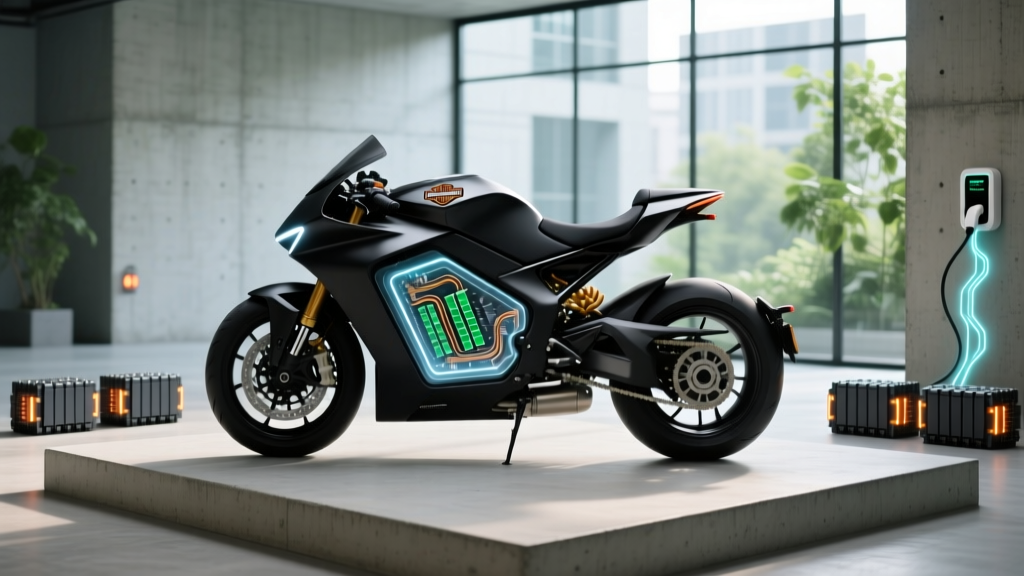
Harley-Davidson's electric pivot began with the LiveWire, and as the brand expands its EV lineup under the LiveWire sub-brand, buyers and enthusiasts alike are asking: who makes batteries for Harley-Davidson electric motorcycles? The answer reveals a lot about how EV battery supply chains work — and it opens the door to understanding the chemistry, longevity, and cost dynamics that apply across the entire electric vehicle market, from motorcycles to trucks.
This guide answers the Harley-Davidson battery question directly, then zooms out to give you a comprehensive, data-driven look at EV battery technology in 2026: chemistry trade-offs, real degradation numbers, warranty terms, replacement costs, and what emerging tech like solid-state actually means for buyers today.
Who Makes Batteries for Harley-Davidson's LiveWire?
Harley-Davidson does not manufacture its own battery cells. For the original LiveWire (introduced for the 2020 model year and later spun off as its own brand), the high-voltage traction battery — officially called the RESS (Rechargeable Energy Storage System) — uses lithium-ion cells supplied by Samsung SDI, one of the world's largest EV and electronics battery manufacturers based in South Korea.
The LiveWire ONE's RESS is a 15.5 kWh total capacity pack (approximately 13.6 kWh usable) using NMC (Nickel Manganese Cobalt) chemistry. Samsung SDI supplies cylindrical 21700-format cells, which Harley-Davidson/LiveWire then packages into the motorcycle's proprietary battery enclosure with its own battery management system (BMS), thermal management, and structural housing.
For the LiveWire S2 Del Mar, which launched with a smaller and lighter battery platform, LiveWire again relies on major Tier 1 cell suppliers. The S2 uses a 10.5 kWh (total) battery pack with NMC chemistry, and while LiveWire has not publicly named a second-source supplier, industry reporting and supply-chain analysis point to continued Samsung SDI involvement, potentially supplemented by other Asian cell makers for newer platforms.
This supplier arrangement is standard in the EV industry. Very few automakers — essentially only BYD and Tesla (to a degree) — produce their own cells at scale. Nearly every other brand, from Ford to Rivian to Harley-Davidson, sources cells from a handful of mega-suppliers: Samsung SDI, LG Energy Solution, SK On, Panasonic, and CATL.
EV Battery Chemistry: LFP vs NMC Explained
Whether you're looking at a LiveWire motorcycle, a Tesla Model 3, or a Ford F-150 Lightning, the battery chemistry inside determines range, longevity, cost, and how you should charge it. In 2026, two chemistries dominate the EV market:
| Attribute | NMC / NCA | LFP (Lithium Iron Phosphate) |
|---|---|---|
| Energy Density | High (~250-300 Wh/kg cell-level) | Moderate (~160-200 Wh/kg) |
| Cycle Life | ~1,000-2,000 full cycles | ~3,000-5,000+ full cycles |
| Cold-Weather Performance | Better low-temp discharge | Reduced performance below 32°F; needs preconditioning |
| Cost per kWh | Higher (cobalt, nickel exposure) | Lower (~20-30% cheaper per cell) |
| Charging to 100% | Best kept at 80-90% daily | Can and should be charged to 100% regularly |
| Thermal Stability | Good, but more prone to thermal runaway | Excellent — inherently more stable |
| Common In | Long-range EVs, performance models, motorcycles | Standard-range models, fleet/commercial, stationary storage |
Which is better? It depends on the application. NMC wins where space and weight are constrained — exactly why LiveWire uses it in motorcycles, where every pound and cubic inch matters. LFP wins on cost, cycle life, and safety, which is why Tesla uses it in the Model 3 RWD, and why Ford, Hyundai, and others have adopted it for standard-range trims.
For most EV buyers: if you want maximum range and don't mind charging to 80% daily, NMC delivers. If you want a battery that will likely outlast the car and you can charge to 100% without worry, LFP is the pragmatic choice.
How Long Do EV Batteries Actually Last?
This is the number-one concern for EV shoppers, and the data in 2026 is reassuring: modern EV batteries are lasting longer than most buyers expect, typically outliving the vehicle's useful economic life.
Here's what real-world degradation data shows across chemistries and use cases:
| Vehicle / Chemistry | 1 Year | 3 Years | 5 Years / ~75k mi | 8 Years / ~120k mi |
|---|---|---|---|---|
| Tesla Model 3/Y (NMC/NCA) | ~2-3% loss | ~5-7% loss | ~8-10% loss | ~10-14% loss |
| Tesla Model 3 RWD (LFP) | ~1-2% loss | ~3-4% loss | ~5-7% loss | ~7-10% loss |
| Hyundai Ioniq 5 (NMC) | ~2-3% loss | ~4-6% loss | ~7-9% loss | ~10-12% loss |
| Ford F-150 Lightning (NMC) | ~2-4% loss | ~5-8% loss | ~8-12% loss | ~12-16% loss |
| LiveWire ONE (NMC, motorcycle) | ~2-3% loss | ~5-7% loss | ~8-11% loss | ~11-15% loss |
Data synthesized from Tesla Impact Reports, fueleconomy.gov owner data, Geotab fleet studies, and manufacturer disclosures. Individual results vary with climate, charging habits, and use patterns.
The key takeaway: most modern NMC packs lose roughly 10-15% capacity over 8 years and 100,000+ miles. LFP packs lose even less. A 300-mile EPA-range EV with 12% degradation still delivers ~264 miles — plenty for daily driving and most road trips.
Motorcycle batteries like the LiveWire's face slightly more stress due to smaller pack sizes and higher C-rates (charge/discharge relative to capacity), but the lower total mileage accumulation on motorcycles generally offsets this.
What Does the EV Battery Warranty Actually Cover?
Federal law in the United States mandates that EV batteries carry a minimum warranty of 8 years or 100,000 miles (whichever comes first). In California Air Resources Board (CARB) states, that extends to 10 years or 150,000 miles. Most manufacturers meet or exceed these thresholds.
| Manufacturer / Model | Battery Warranty | Capacity Retention Threshold |
|---|---|---|
| Tesla Model 3/Y Long Range | 8 yr / 120,000 mi | 70% minimum |
| Tesla Model 3 RWD (LFP) | 8 yr / 100,000 mi | 70% minimum |
| Hyundai Ioniq 5 | 10 yr / 100,000 mi | 70% minimum |
| Ford F-150 Lightning | 8 yr / 100,000 mi | 70% minimum |
| Chevrolet Bolt EV/EUV | 8 yr / 100,000 mi | 60% minimum (older), 70% (2023+) |
| LiveWire ONE | 5 yr / unlimited mi (battery) | Not publicly specified — contact dealer |
What the warranty covers: If your battery degrades below the stated threshold (typically 70% of original capacity) within the warranty period, the manufacturer must repair or replace it at no cost. This covers cell failures, BMS defects, and abnormal degradation. It does not cover damage from accidents, flooding, or unauthorized modifications.
LiveWire's battery warranty is notably shorter than four-wheel EV competitors at 5 years, which is a factor for high-mileage riders. Most motorcycle owners accumulate fewer miles annually than car drivers, but it's worth confirming terms with your dealer before purchase.
How Much Does an EV Battery Cost to Replace?
This is where fear-mongering runs rampant, so let's anchor the conversation in data. Battery replacement is expensive, but it's also increasingly rare — most EV batteries never need replacement under normal ownership.
| Vehicle | Battery Size (kWh) | Estimated Replacement Cost (2026) | Typical Replacement Trigger |
|---|---|---|---|
| Tesla Model 3 (Standard/LFP) | ~60 kWh | $8,000 - $12,000 | Accident damage, rare cell failure post-warranty |
| Tesla Model Y (Long Range/NMC) | ~82 kWh | $12,000 - $16,000 | Same as above |
| Hyundai Ioniq 5 | ~77.4 kWh | $11,000 - $15,000 | Same as above |
| Ford F-150 Lightning (Extended) | ~131 kWh | $18,000 - $28,000 | Same as above |
| LiveWire ONE | ~15.5 kWh | $5,000 - $8,000 (est.) | Post-warranty degradation or damage |
| Chevrolet Bolt EV | ~65 kWh | $9,000 - $14,000 | Same as above |
Context that matters: Battery prices have fallen roughly 80-90% since 2010 on a per-kWh basis, according to BloombergNEF. By 2026, pack-level pricing for NMC hovers around $120-$150/kWh and LFP around $90-$110/kWh at the wholesale level. Installed replacement costs include labor, diagnostics, and dealer markup, which is why the consumer price is higher.
Most EV batteries outlive the vehicle's economic life. According to data aggregated by NHTSA and independent fleet analyses, fewer than 2-3% of EV batteries require out-of-warranty replacement due to failure. Gradual degradation to 70-80% capacity over 10-15 years is the norm — not sudden failure.
Factors That Affect EV Battery Life (And What You Can Control)
Battery degradation isn't random. It's driven by physics and chemistry, and understanding the factors lets you maximize your pack's lifespan.
Battery Care Best Practices
- Daily charging limit (NMC): Set to 80-90% for daily use. Charge to 100% only before long road trips.
- Daily charging limit (LFP): Charge to 100% at least once a week — LFP chemistry benefits from full charges and its BMS needs periodic full-SoC calibration.
- DC fast charging: Occasional use is fine. Daily DC fast charging accelerates degradation by an estimated 1-3% over the battery's life. Use Level 2 at home as your primary charging method.
- Extreme heat: Avoid leaving your EV at high SoC (above 80%) in sustained 95°F+ heat for days. If you must, plug in and let the thermal management system run.
- Extreme cold: Cold doesn't degrade the battery permanently, but it reduces range by 15-30% temporarily. Always precondition your battery before driving or charging in freezing weather.
- Storage: If storing for weeks, leave the battery at ~50% SoC. Avoid storing at 100% or below 10%.
- Regen braking: Using moderate regen settings puts less stress on the battery than max-regen in very cold conditions (when the pack can't accept high charge rates).
The single biggest factor in battery longevity? Avoiding sustained high SoC in high temperatures. A battery sitting at 100% in a Phoenix summer degrades faster than one cycled between 20-80% in moderate climates. Modern BMS systems actively manage this, but owner habits still matter.
How to Check and Monitor Your Battery's State of Health (SoH)
State of Health (SoH) is the percentage of your battery's current maximum capacity compared to its original capacity when new. A brand-new battery is at 100% SoH; a battery that can now hold only 90% of its original energy is at 90% SoH.
Here's how to check it across major platforms:
- Tesla: The in-car display doesn't show SoH directly. Use third-party apps like Tessie or TeslaFi, which estimate SoH from charge/discharge data. Alternatively, request a battery health report from a Tesla Service Center.
- Hyundai/Kia: Some models display SoH in the EV settings menu. Dealers can pull a detailed BMS report via diagnostic tools.
- Ford: The FordPass app provides battery status. For detailed SoH, visit a dealer for an OBD-II diagnostic readout.
- LiveWire: The LiveWire app shows charge status and estimated range. For formal SoH measurement, contact a LiveWire/Harley-Davidson dealer for a BMS diagnostic.
- OBD-II tools: Devices like the OBDLink SX paired with apps such as EVNotify or LeafSpy (Nissan-specific) can read real-time SoH data from the BMS on many EVs.
For used-EV buyers: always request an SoH reading before purchase. A battery at 88-92% SoH after 3-4 years is normal. Below 80% on a relatively low-mileage vehicle warrants investigation.
Emerging Battery Tech: Solid-State and Silicon Anodes
The EV battery landscape is evolving, but it's critical to separate what's available now from what's still in development.
Solid-state batteries replace the liquid electrolyte in current lithium-ion cells with a solid material (ceramic, sulfide, or polymer). The promise: higher energy density (potentially 400-500 Wh/kg at the cell level), faster charging, and improved safety. Toyota has announced a solid-state battery targeting 2027-2028 production in limited models, and Samsung SDI is developing a solid-state cell for potential 2028 availability. However, these remain announced and preliminary — no mass-market EV currently on sale uses a solid-state battery. Manufacturing cost and scalability remain significant hurdles.
Silicon anode technology replaces or supplements the graphite anode in current cells with silicon, which can store roughly 10x more lithium ions per unit mass. Companies like Sila Nanotechnologies and Group14 are supplying silicon-dominant anode materials to battery makers, with early commercial deployments in premium EVs expected in the 2026-2028 timeframe. This is closer to market than solid-state but still in early production ramp.
Sodium-ion batteries are entering the market from CATL and BYD for low-cost, short-range EVs — primarily in China. They offer lower energy density than LFP but use abundant, cheap materials. US-market availability remains limited as of 2026.
For buyers today: current NMC and LFP batteries are mature, well-understood, and proven to last 10-15+ years. There is no practical reason to delay an EV purchase waiting for solid-state unless your timeline is flexible on the order of 3-5 years and you're targeting a premium model.
Frequently Asked Questions
Does Harley-Davidson make its own EV batteries?
No. Harley-Davidson (and its LiveWire sub-brand) sources lithium-ion cells from Samsung SDI, which supplies NMC cells in the 21700 cylindrical format. LiveWire designs the battery pack enclosure, BMS, and thermal management system, but the cells themselves come from Samsung SDI.
How long will the LiveWire battery last?
Based on NMC chemistry degradation patterns, expect the LiveWire ONE's 15.5 kWh battery to retain approximately 85-90% of its original capacity after 5 years of typical motorcycle use. The battery is warrantied for 5 years (unlimited miles). With proper care — avoiding prolonged storage at 100% SoC and minimizing exclusive DC fast charging — the pack should remain functional for 10+ years.
LFP vs NMC — which chemistry should I choose?
Choose NMC if you need maximum range or performance in a compact package (long-range sedans, motorcycles, trucks towing). Choose LFP if you prioritize longevity, lower cost, and the convenience of regular 100% charging (daily commuters, standard-range models, fleet vehicles). Neither is universally "better" — the right choice depends on your driving pattern.
Will my EV battery need to be replaced?
Statistically, probably not. Fleet data shows fewer than 2-3% of EV batteries require replacement due to failure. Gradual degradation is the norm — your EV will slowly lose range over many years, but the battery will almost certainly remain functional well past 150,000 miles. If replacement is needed, costs are declining annually.
Does fast charging damage my EV battery?
DC fast charging generates more heat than Level 2 charging, which marginally accelerates degradation. However, modern BMS and thermal management systems actively protect the battery during fast charging. Using DC fast charging for road trips while relying on Level 2 at home results in negligible additional degradation — estimated at 1-3% more capacity loss over the battery's lifetime compared to Level 2-only charging. For more on charging best practices, see the DOV's EV technology resources at fueleconomy.gov.
How do I maximize my EV battery's lifespan?
For NMC batteries: charge to 80-90% daily, avoid prolonged 100% storage, precondition before fast charging, and use Level 2 as your primary method. For LFP: charge to 100% regularly (weekly minimum), and follow the same temperature and storage guidelines. In all cases, avoid letting the battery sit at very low SoC (below 10%) for extended periods.