Why Your EV Battery Matters — And Why Grid Programs Like Green Mountain Power's Matter Too
If you own or are shopping for an electric vehicle in Vermont, you've likely encountered the Green Mountain Power battery program — a utility initiative that incentivizes residential battery storage (like the Tesla Powerwall) to stabilize the grid during peak demand. While that program focuses on home batteries, it intersects with a question every EV buyer asks: how long will my car's high-voltage traction battery actually last, and what happens when it degrades?
This guide breaks down EV battery chemistry, real-world degradation data, warranty protections, replacement economics, and daily habits that extend pack life — all with exact numbers, not marketing fluff. Whether you're eyeing a 2026 Tesla Model Y with an NMC pack or a base-trim BYD Dolphin with LFP cells, the physics and economics below apply.
LFP vs NMC vs NCA: Which Battery Chemistry Is in Your EV?
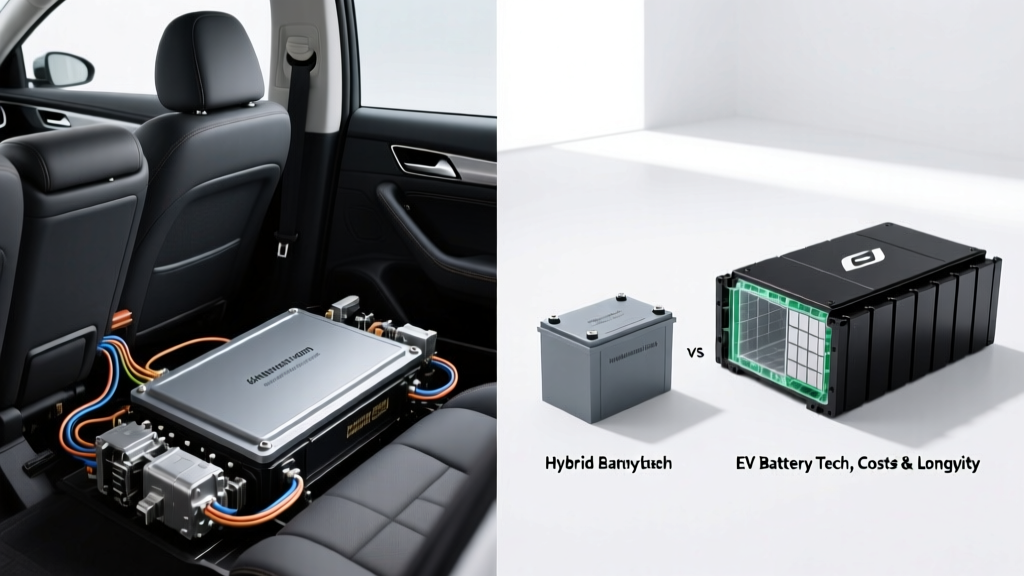
Not all lithium-ion batteries are the same. The two dominant chemistries in 2026 EVs are LFP (lithium iron phosphate) and NMC/NCA (nickel manganese cobalt / nickel cobalt aluminum). Each has distinct trade-offs that affect range, longevity, cold-weather performance, and cost.
| Attribute | LFP (Lithium Iron Phosphate) | NMC / NCA (Nickel-based) |
|---|---|---|
| Energy Density | ~160–180 Wh/kg (lower) | ~220–300 Wh/kg (higher) |
| Cycle Life | 3,000–6,000+ cycles | 1,000–2,500 cycles |
| Cold-Weather Performance | Moderate — loses more range below 32°F | Better low-temp conductivity |
| Cost (per kWh, pack-level) | ~$90–$110 | ~$120–$150 |
| Thermal Stability | Excellent — less prone to thermal runaway | Good, but requires more active management |
| State-of-Charge Recommendation | Can charge to 100% daily | Best kept at 80–90% for daily use |
| Common In (2026 Models) | Tesla Model 3/Y RWD, BYD lineup, Ford Mustang Mach-E Select | Tesla Long Range, Hyundai Ioniq 5/6, Rivian, most luxury EVs |
Which is better? It depends on your use case. If you prioritize maximum range per charge and live in a cold climate, NMC/NCA delivers higher energy density and better winter efficiency. If you plan to keep the vehicle 10+ years, charge daily to 100%, and want lower replacement risk, LFP's superior cycle life makes it the durability champion. Tesla's shift to LFP for standard-range models and BYD's global expansion on LFP (branded as "Blade Battery") signal the industry's confidence in this chemistry for mainstream use.
How Long Do EV Batteries Actually Last? Real Degradation Data
The fear that EV batteries need replacing every 5–7 years is a persistent myth. Data from fleet operators, manufacturer reports, and third-party testing paint a far more reassuring picture.
Observed Degradation Benchmarks (2024–2026 data):
- Tesla Model 3/Y (NMC Long Range): ~5–8% capacity loss at 100,000 miles; ~10–12% at 200,000 miles (Tesla Impact Report 2024)
- Nissan Leaf (passive-cooled NMC, older gen): ~15–20% loss at 100,000 miles — a cautionary case for thermal management importance
- Hyundai/Kia E-GMP platform (Ioniq 5, EV6, NMC): ~6–9% loss at 100,000 miles per fleet data from Recurrent Auto
- LFP packs (Tesla Model 3 RWD, BYD): Early data shows ~3–5% loss at 80,000 miles, with a flatter degradation curve thereafter
- Chevrolet Bolt EV/EUV (NMC, liquid-cooled): ~7–10% loss at 100,000 miles per owner-reported data on Bolt forums
How long do EV batteries last in years and miles? Most liquid-cooled packs from major manufacturers retain 70–85% of original capacity at 150,000–200,000 miles (roughly 12–18 years at average US driving of ~13,500 miles/year per FHWA data). The battery typically outlasts the vehicle's economic life. Full pack failure before 100,000 miles is rare and usually tied to manufacturing defects covered under warranty.
EV Battery Warranty Terms: What's Actually Covered?
Federal law mandates a minimum 8-year / 100,000-mile warranty on EV battery packs (10 years / 150,000 miles in California and states adopting CARB standards). Most manufacturers exceed this baseline.
| Manufacturer (2026 Models) | Warranty Term | Capacity Retention Threshold | Notes |
|---|---|---|---|
| Tesla (Model 3/Y) | 8 yr / 120,000 mi (LR/AWD); 8 yr / 100,000 mi (RWD) | 70% | Covers defects + capacity below threshold |
| Hyundai / Kia | 10 yr / 100,000 mi | 70% | Among the longest in the industry |
| Ford (Mach-E, F-150 Lightning) | 8 yr / 100,000 mi | 70% | Covers battery and electric drive components |
| General Motors (Ultium platform) | 8 yr / 100,000 mi | 70% (60% for Bolt-era packs) | Module-level replacement available |
| BMW / Mercedes-Benz | 8 yr / 100,000 mi | 70% | Some offer extended purchase options |
| BYD | 8 yr / 100,000 mi (varies by market) | 70% | LFP Blade Battery — longer cycle life expected |
What does the battery warranty cover? These warranties protect against two scenarios: (1) manufacturing defects causing premature failure, and (2) capacity degradation below the stated threshold (typically 70% of original kWh). If your 75 kWh pack drops below 52.5 kWh usable within the warranty window, the manufacturer must repair or replace it — often via module-level service rather than a full pack swap. Warranties do not cover damage from accidents, flooding, or unauthorized modifications.
EV Battery Replacement Cost: Numbers by Model and When It's Needed
Out-of-warranty battery replacement is the nightmare scenario EV skeptics cite. Here's what it actually costs in 2026 — and why most owners will never face it.
| Vehicle | Battery Size (usable kWh) | Chemistry | Replacement Cost Range (Parts + Labor) |
|---|---|---|---|
| Tesla Model 3 RWD | ~57 kWh | LFP | $8,000–$12,000 |
| Tesla Model Y Long Range | ~75 kWh | NMC | $12,000–$16,000 |
| Hyundai Ioniq 5 | ~77.4 kWh | NMC | $11,000–$15,000 |
| Ford F-150 Lightning (Extended) | ~131 kWh | NMC | $20,000–$30,000 |
| Chevrolet Equinox EV | ~85 kWh | NMC (Ultium) | $12,000–$18,000 |
| Nissan Leaf (40 kWh) | ~40 kWh | NMC | $6,500–$9,000 |
| BMW i4 eDrive40 | ~81 kWh | NMC | $15,000–$22,000 |
When is replacement typically needed? For most liquid-cooled EVs, a full pack replacement due to degradation alone is uncommon before 200,000+ miles. The more realistic scenarios are: a manufacturing defect caught under warranty, physical damage from a collision or ground strike, or a vehicle kept 15–20+ years with high mileage. Module-level repairs (replacing individual cell groups rather than the entire pack) are increasingly available from manufacturers like GM and Hyundai, reducing out-of-pocket costs to $2,000–$6,000 per module.
The broader context: pack-level prices have fallen from over $1,000/kWh in 2010 to roughly $130–$150/kWh at the cell level in 2026 (BloombergNEF). LFP packs are even cheaper. As the first-generation EV fleet ages, a growing aftermarket and refurbished-pack industry is emerging, offering replacements at 40–60% of OEM new-pack pricing.
Factors That Accelerate (or Slow) Battery Degradation
Your daily habits have a measurable impact on how quickly your pack loses capacity. Here's what the data shows:
Habits That Preserve Battery Health
- Keep daily charge between 20–80% (NMC/NCA): Storing the battery at extreme states of charge stresses the cathode. LFP owners can charge to 100% regularly without the same penalty.
- Use Level 2 (AC) charging for daily needs: Reserve DC fast charging for road trips. Frequent 150+ kW sessions accelerate degradation by ~1–3% over 100,000 miles vs. primarily L2 charging.
- Precondition the battery before fast charging: Most EVs do this automatically when you navigate to a charger. Cold batteries charge slower and experience more lithium plating stress.
- Park in shade or a garage in extreme heat: Sustained battery temps above 104°F (40°C) accelerate calendar aging. Active thermal management helps, but ambient temperature still matters.
- Avoid leaving the car at 100% SoC for days: If you charge to full for a road trip, try to depart the same day. Extended storage at 100% is more harmful than occasional full charges.
Habits That Accelerate Degradation
- Daily DC fast charging (especially at 250+ kW) as your primary charge method
- Regularly draining the pack below 10% and leaving it there
- Storing the vehicle at 100% SoC in hot climates for extended periods
- Aftermarket modifications that disable thermal management
- Towing heavy loads frequently in high ambient temperatures (sustained high C-rate discharge)
How to Check and Monitor Your Battery's State of Health (SoH)
State of Health (SoH) is the percentage of your battery's original capacity that remains usable. A new pack is 100% SoH; a pack at 85% SoH that originally held 75 kWh now delivers ~63.75 kWh.
How to check SoH:
- In-vehicle displays: Tesla shows battery health in the service menu (or via the Tesla app on newer software). Hyundai/Kia provides SoH via the dealer diagnostic tool — ask at your next service visit. BMW's iDrive includes a battery health readout in newer models.
- OBD-II dongles + apps: Tools like OBDLink SX paired with apps such as LeafSpy (Nissan Leaf), Scan My Tesla, or Car Scanner can read pack-level SoH, cell voltage variance, and degradation curves.
- Third-party services: Companies like Recurrent Auto provide battery health reports by connecting to your vehicle's telematics — often free, and useful for resale documentation.
- Dealer diagnostics: Any authorized service center can run a full battery health report. Request one before purchasing a used EV.
What to look for: A healthy pack should show SoH declining gradually and linearly — roughly 1.5–2.5% per year in moderate climates. Sudden drops or large cell-voltage imbalances (more than 50 mV variance between cell groups) warrant a service visit. Calendar aging (degradation from time alone, even with low mileage) accounts for ~1–2% annual loss in temperate climates and up to ~3% in consistently hot regions.
The Green Mountain Power Battery Program: How It Connects to EV Ownership
Vermont's Green Mountain Power battery program (often called the "Bring Your Own Device" or BYOD program) offers residential customers rebates or bill credits for installing home battery systems like the Tesla Powerwall or Enphase IQ Battery. These systems store energy during off-peak hours and discharge during grid peak events, reducing strain on the utility's infrastructure.
How does this relate to your EV? If you charge your EV at home using a Level 2 charger, a home battery system can:
- Buffer your charging load: Instead of pulling 7–11 kW directly from the grid during peak rate hours, your home battery can supply power to your EV charger, reducing demand charges.
- Provide backup power: During outages, a home battery can keep your EV charged — critical if you rely on your vehicle for emergencies.
- Optimize time-of-use rates: Store cheap off-peak electricity and use it for both home loads and EV charging during expensive peak windows.
Green Mountain Power has offered incentives of up to $10,500 in bill credits or upfront rebates for qualifying battery installations (program terms vary by year and enrollment period — check greenmountainpower.com for current availability). The program does not cover your EV's traction battery directly, but the ecosystem of home energy storage and EV charging creates a compelling total-cost argument for Vermont EV owners.
For the latest on GMP's battery program terms, eligibility, and enrollment windows, consult the utility's official site or contact their energy consultants directly. Program details, incentive amounts, and qualifying equipment change periodically.
Emerging Battery Tech: Solid-State, Silicon Anodes, and Realistic Timelines
Next-generation battery technologies are advancing, but timeline expectations need tempering with manufacturing reality.
Solid-state batteries replace the liquid electrolyte with a solid material (ceramic, sulfide, or polymer), promising higher energy density (~400+ Wh/kg at cell level), faster charging, and improved safety. Toyota has announced a solid-state EV targeted for 2027–2028 with ~750 km (WLTP) range and 10-minute 10–80% charging. Samsung SDI is targeting 2027 for mass production. However, these remain announced timelines — solid-state manufacturing at automotive scale has not yet been demonstrated commercially. Expect initial deployment in limited, premium models before mainstream adoption post-2030.
Silicon-anode batteries (used in limited form in the 2026 GM Hummer EV and Porsche Taycan) increase energy density by replacing graphite anodes partially or fully with silicon. This delivers ~10–20% more kWh in the same physical pack size. Companies like Sila Nanotechnologies and Group14 are scaling production. Silicon anode tech is available now in select models, but full silicon-anode packs remain in pilot stages.
Sodium-ion batteries (from CATL and BYD) offer a lower-cost, cobalt-free alternative for budget EVs and urban runabouts, with energy density around 140–160 Wh/kg. These are entering production in Chinese-market vehicles in 2025–2026 but are not yet available in US-market EVs.
For today's buyer: current LFP and NMC chemistries are mature, well-understood, and backed by extensive warranty protection. Waiting for solid-state is not a practical strategy unless your purchase timeline extends beyond 2029.
Frequently Asked Questions
How long do EV batteries last in years and miles?
Most liquid-cooled EV batteries from major manufacturers (Tesla, Hyundai, GM, Ford, BMW) retain 70–85% of original capacity at 150,000–200,000 miles. At average US driving of ~13,500 miles per year, that translates to 12–18 years of usable service. LFP packs may last even longer due to higher cycle life. Full failure before 100,000 miles is rare and typically covered under warranty.
How much does an EV battery cost to replace?
Out-of-warranty replacement costs range from ~$6,500 for a small pack (Nissan Leaf 40 kWh) to ~$30,000 for a large pack (Ford F-150 Lightning Extended Range 131 kWh). Typical mid-size EVs (Tesla Model Y, Ioniq 5) fall in the $11,000–$16,000 range including labor. Module-level repairs, where available, cost $2,000–$6,000. Most owners never need a full replacement — the pack outlasts the vehicle's economic life.
What does the EV battery warranty actually cover?
Federal law requires a minimum 8-year/100,000-mile warranty (10/150,000 in CARB states). Coverage includes manufacturing defects and capacity loss below a threshold — usually 70% of original capacity. If your pack falls below that threshold within the warranty window, the manufacturer repairs or replaces it. Warranties do not cover accident damage, flood damage, or unauthorized modifications.
How do I check my EV battery's health?
Use your vehicle's built-in diagnostics (Tesla's app/service menu, BMW iDrive), OBD-II tools with apps like LeafSpy or Car Scanner, third-party services like Recurrent Auto, or request a dealer diagnostic report. Look for gradual, linear SoH decline (~1.5–2.5%/year) and consistent cell voltages. Sudden drops or high cell variance warrant a service visit.
LFP vs NMC — which chemistry should I choose?
Choose LFP if you want maximum longevity (3,000–6,000+ cycles), plan to charge to 100% daily, prioritize lower cost, and don't need maximum range per charge. Choose NMC/NCA if you need the longest possible range, live in a very cold climate (better low-temp performance), or are buying a Long Range / AWD trim. Both chemistries are proven and well-supported by manufacturer warranties.
Does the Green Mountain Power battery program cover my EV battery?
No. The Green Mountain Power battery program covers home energy storage systems (like the Tesla Powerwall), not your vehicle's traction battery. However, pairing a home battery with your EV charger can optimize charging costs, provide backup power during outages, and reduce peak-demand grid strain. Check greenmountainpower.com for current incentive amounts and eligibility.
Does frequent DC fast charging damage my battery?
Exclusively relying on DC fast charging (150+ kW) can accelerate degradation by ~1–3% over 100,000 miles compared to primarily Level 2 (AC) charging. Occasional fast charging on road trips is fine — modern thermal management systems precondition the pack to minimize stress. The biggest risk is frequent fast charging in extreme heat without preconditioning. For daily use, a home Level 2 charger at 7–11 kW remains the healthiest option for your pack.