Why the Graphite Anode Still Dominates EV Batteries in 2026
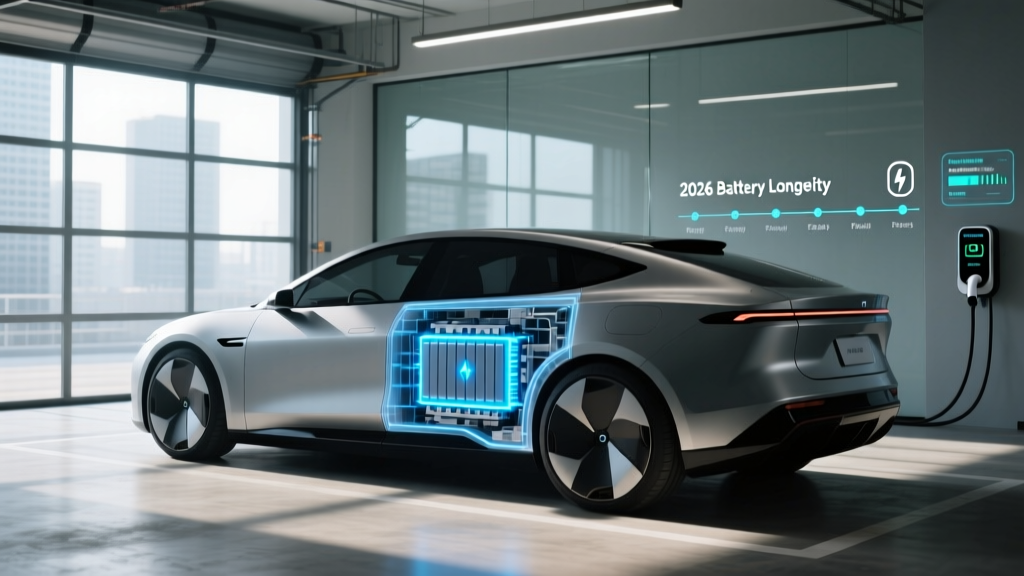
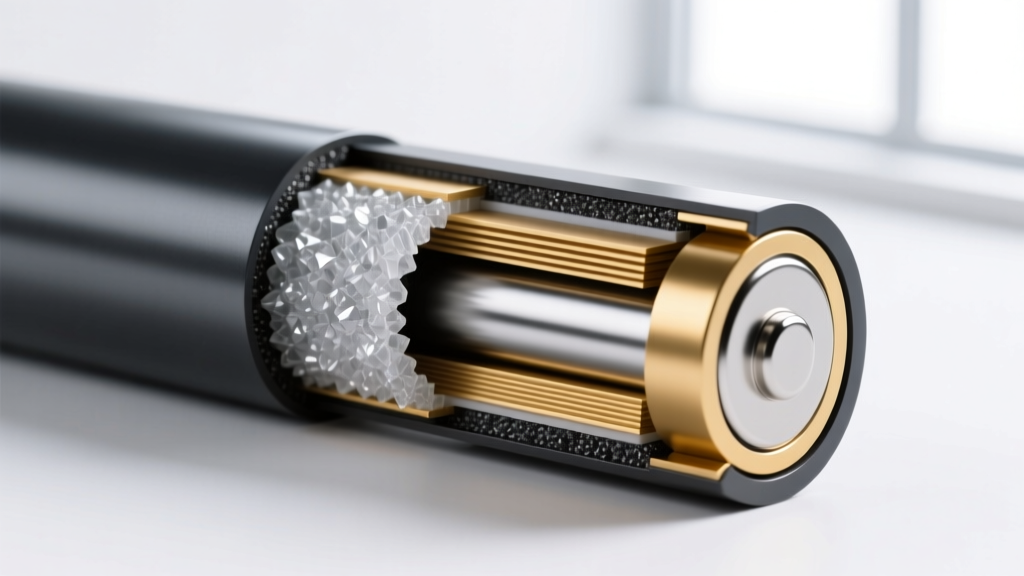
Every lithium-ion battery in a production EV today — whether it's an LFP pack in a base Tesla Model 3 or an NMC module in a BMW iX — relies on a graphite anode. Graphite, a crystalline form of carbon, serves as the host structure that intercalates (absorbs and releases) lithium ions during charge and discharge cycles. It's cheap, abundant, electrically conductive, and structurally stable over thousands of cycles. That combination is why graphite battery technology remains the backbone of the EV industry, even as engineers push to augment it with silicon.
But not all EV batteries are created equal. The cathode chemistry — LFP (lithium iron phosphate) versus NMC (nickel manganese cobalt) or NCA (nickel cobalt aluminum) — determines energy density, cold-weather behavior, cycle life, and cost. The anode stays largely graphite across the board, but the total package defines what you experience as a driver: range, charging speed, longevity, and eventual replacement expense.
This guide breaks down how graphite-based lithium-ion batteries actually perform in real-world EV ownership, what degradation looks like at 50,000 and 100,000 miles, what warranties actually cover, and what emerging anode tech (silicon-dominant and solid-state) might change in the years ahead.
LFP vs NMC/NCA: Chemistry Trade-Offs That Matter
The anode in both chemistries is graphite (sometimes with a small silicon blend, typically 5-10% by mass). The cathode is where the divergence happens, and it drives nearly every ownership variable you care about.
| Attribute | LFP (Lithium Iron Phosphate) | NMC / NCA (Nickel-Based) |
|---|---|---|
| Energy Density | ~160-180 Wh/kg (cell level) | ~220-270 Wh/kg (cell level) |
| Typical Cycle Life | 3,000-5,000+ full cycles | 1,000-2,000 full cycles |
| Cold-Weather Performance | Reduced efficiency below 32°F; slower charge acceptance | Better low-temp conductivity; preconditioning still needed |
| Cost (per kWh) | ~$70-90/kWh (2026 cell pricing) | ~$100-130/kWh (2026 cell pricing) |
| Thermal Stability | Excellent — very low thermal runaway risk | Good — requires more robust BMS and cooling |
| Usable SoC Range | Can charge to 100% daily without significant harm | Best kept 20-80% daily; 100% for trips only |
| Common Vehicles (2026) | Tesla Model 3/Y RWD, Ford Mustang Mach-E Select (base), BYD models, Rivian Standard | Hyundai Ioniq 5/6 Long Range, BMW iX, Porsche Taycan, Tesla Model S/X, Lucid Air |
| Anode Material | Graphite (some silicon blend) | Graphite (some silicon blend) |
The practical takeaway: If you want maximum range per kilogram of battery and don't mind managing state of charge carefully, NMC/NCA wins. If you prioritize longevity, lower cost, and the convenience of daily 100% charging, LFP is the pragmatic choice — especially for commuters covering under 200 miles daily.
How Long Do EV Batteries Actually Last?
The short answer: longer than most buyers assume. Data aggregated from fleet operators, manufacturer warranty claims, and third-party testing shows that modern graphite-anode lithium-ion packs lose roughly 5-8% of original capacity in the first 50,000 miles, then degrade at a slower, more linear rate of approximately 1-2% per 50,000 miles thereafter.
Typical Degradation Curve (NMC 75-85 kWh pack, moderate climate, mixed charging):
- Year 1 / 15,000 mi: ~96-97% State of Health (SoH) — initial formation loss
- Year 3 / 45,000 mi: ~92-94% SoH
- Year 5 / 75,000 mi: ~89-92% SoH
- Year 8 / 120,000 mi: ~85-89% SoH
- Year 10 / 150,000 mi: ~82-87% SoH
LFP packs tend to sit 2-4 percentage points higher on this curve due to superior cycle life. Data sources: Recurrent Auto fleet data, Tesla Impact Reports, and Geotab battery health studies.
At 80% SoH, a 300-mile EPA-rated EV effectively becomes a 240-mile EV. That's still usable for most daily driving, but it's the threshold where many warranties trigger a replacement or repair. The key insight: most EV batteries will outlast the vehicle's economic life. Catastrophic failure is rare; gradual capacity fade is the norm.
What the Battery Warranty Actually Covers
Federal law mandates a minimum 8-year / 100,000-mile warranty on EV battery packs for emissions-related compliance, and most manufacturers exceed this. But the details matter — specifically the capacity retention threshold and what qualifies as a claim.
| Manufacturer (2026 MY) | Warranty Period | Capacity Threshold | Notes |
|---|---|---|---|
| Tesla (Model 3/Y LFP) | 8 yr / 100,000 mi | 70% retention | Covers cell modules and BMS |
| Tesla (Model 3/Y LR, S, X) | 8 yr / 120,000 mi | 70% retention | Higher mileage due to NMC/NCA |
| Hyundai / Kia | 10 yr / 100,000 mi | 70% retention | Among the longest coverage |
| Ford (Mach-E, F-150 Lightning) | 8 yr / 100,000 mi | 70% retention | Transferable to second owner |
| GM (Ultium-based) | 8 yr / 100,000 mi | 70% retention | Module-level replacement capability |
| BMW (iX, i4) | 8 yr / 100,000 mi | 70% retention | Includes thermal management components |
| Rivian | 8 yr / 175,000 mi | 70% retention | Highest mileage threshold in market |
What's covered: Capacity loss below the stated threshold, manufacturing defects, and BMS (battery management system) failures. What's typically excluded: Damage from accidents, flooding, unauthorized modifications, or failure to maintain the thermal management system (coolant service intervals).
The 70% threshold is standard across the industry. If your 250-mile EV drops to 175 miles of range within the warranty window, you have a valid claim. In practice, very few owners hit this threshold under normal use.
EV Battery Replacement Cost: What to Budget (and When)
Battery replacement is the single largest fear among prospective EV buyers. The numbers are real, but context matters: most replacements occur only after accidents or extreme manufacturing defects, not from normal degradation.
| Vehicle / Pack Size | Battery Cost (Parts) | Labor & Programming | Total Estimated Range |
|---|---|---|---|
| Tesla Model 3 RWD (~60 kWh LFP) | $8,000 - $10,000 | $2,000 - $3,500 | $10,000 - $13,500 |
| Tesla Model Y LR (~75 kWh NMC) | $12,000 - $15,000 | $2,500 - $4,000 | $14,500 - $19,000 |
| Hyundai Ioniq 5 (~77.4 kWh NMC) | $11,000 - $14,000 | $2,500 - $4,000 | $13,500 - $18,000 |
| Ford F-150 Lightning Ext. (~131 kWh) | $18,000 - $25,000 | $3,500 - $5,000 | $21,500 - $30,000 |
| BMW iX xDrive50 (~111 kWh) | $16,000 - $22,000 | $3,000 - $5,000 | $19,000 - $27,000 |
| Chevy Bolt EV (~65 kWh NMC) | $9,000 - $12,000 | $2,000 - $3,000 | $11,000 - $15,000 |
Prices have declined steadily — in 2020, a comparable replacement would have cost 30-50% more. Module-level repair (replacing individual cell groups rather than the full pack) is increasingly available through manufacturers like GM and Hyundai, reducing out-of-warranty costs to $4,000-$8,000 in many cases.
When is replacement typically needed? Almost never during the first 150,000 miles under normal use. Most replacements happen post-warranty on high-mileage vehicles (180,000+ miles) used for rideshare or commercial service, or after collision damage that compromises the pack enclosure.
Five Factors That Accelerate Battery Degradation
Your graphite-anode lithium-ion pack isn't a fixed-depreciation asset. How you treat it directly determines whether you see 5% or 12% loss over five years. These are the variables under your control:
- DC Fast-Charging Frequency: Occasional fast charging (1-2 sessions/week) causes negligible extra wear. Daily reliance on 150+ kW DC charging without preconditioning can accelerate degradation by 1-3% over 5 years. Always use your vehicle's preconditioning feature before fast-charging — it warms the battery to the optimal temperature window (77-95°F) for lithium intercalation, reducing lithium plating risk on the graphite anode.
- State of Charge Habits: For NMC/NCA packs, sustained storage above 90% SoC or below 10% SoC stresses the cathode and electrolyte. The 20-80% daily window remains best practice. LFP packs tolerate 100% daily charging well — in fact, periodic 100% charges help the BMS recalibrate cell balancing.
- Extreme Temperature Exposure: Repeated operation in ambient temperatures above 100°F or below 10°F accelerates electrolyte decomposition and increases internal resistance. Garage parking and preconditioning mitigate this significantly. Vehicles with active liquid thermal management (Tesla, Hyundai E-GMP, GM Ultium) fare much better than passively cooled packs.
- High-Discharge Patterns: Frequent hard acceleration and sustained high-speed driving (85+ mph) generate heat within cells. Track days or regular towing at max capacity add thermal stress. This is a minor factor for daily commuters but material for performance-oriented drivers.
- Calendar Aging: Even a parked EV battery degrades over time — roughly 1-2% per year from electrolyte breakdown alone. Storing at ~50% SoC in moderate temperatures minimizes calendar aging. Leaving a car at 100% SoC in a hot garage for weeks is the worst-case scenario.
How to Monitor and Maximize Battery Health (SoH)
State of Health (SoH) is the percentage of original capacity your battery can still hold. A new pack is 100% SoH; at 80% SoH, a 75 kWh usable pack effectively holds 60 kWh.
How to check SoH:
- Tesla: Use the in-app service menu or third-party tools like TeslaFi or Scan My Tesla (OBD-II dongle + app) to read pack energy remaining vs. original capacity.
- Hyundai/Kia: The dealer diagnostic tool reads SoH directly. Some owners use the Carista OBD app for approximate readings.
- GM Ultium: The myChevrolet/myCadillac app provides a battery health index. Full SoH requires dealer scan.
- Universal method: Track your actual energy consumption over a full charge cycle. If your 75 kWh pack now accepts only 68 kWh from 0-100% (measured via your Level 2 charger's meter), your SoH is approximately 91%.
Maximizing longevity — the simple protocol:
- Set daily charge limit to 80% (NMC/NCA) or 100% (LFP).
- Precondition before every DC fast charge.
- Avoid leaving the car below 15% SoC for more than a few hours.
- Use Level 2 home charging as your primary method — it's gentler on cells and the graphite anode structure.
- In extreme heat, park in shade or a garage when possible.
Beyond Graphite: Silicon Anodes and Solid-State Batteries
Graphite's theoretical capacity limit is 372 mAh/g (milliamp-hours per gram). Silicon can hold roughly 4,200 mAh/g — over 10x more. The problem is that silicon expands up to 300% in volume during lithiation, cracking the anode structure and destroying cycle life within dozens of cycles.
The current industry approach is a graphite-silicon composite anode — blending 5-15% silicon (as nanoparticles or silicon oxide) into the graphite matrix. This yields a 5-10% energy density improvement without catastrophic swelling. You'll find this in higher-density cells from Panasonic (Tesla 4680 cells), CATL, and LG Energy Solution as of 2026.
Forward-looking timeline (estimated, not guaranteed):
- 2026-2028: Silicon-dominant anodes (50%+ silicon content) from startups like Sila Nanotechnologies and Group14 begin appearing in limited production vehicles, promising 15-25% energy density gains.
- 2028-2032: Solid-state batteries (replacing liquid electrolyte with a solid ceramic or polymer) are expected to reach limited commercial production. Toyota, Samsung SDI, and QuantumScape are targeting this window. Benefits include faster charging, improved safety, and potentially higher energy density — but manufacturing cost and scalability remain unsolved at volume.
- 2032+: If solid-state achieves cost parity, it could fundamentally reshape EV range and charging. Until then, graphite-anode lithium-ion cells with incremental silicon blending remain the dominant, proven, and increasingly affordable technology.
None of these technologies are available in a vehicle you can buy today. If you're purchasing in 2026, you're buying a graphite-based lithium-ion battery — and that's a mature, well-understood technology with strong warranty backing and predictable degradation behavior.
Frequently Asked Questions
How long do EV batteries last in years and miles?
Based on fleet data from Recurrent Auto and manufacturer reports, modern EV batteries retain 80-90% of original capacity at 150,000 miles (roughly 10-12 years of average use). Many will remain functional — albeit with reduced range — well past 200,000 miles. Catastrophic failure before 100,000 miles is statistically rare.
How much does it cost to replace an EV battery?
Full pack replacement ranges from approximately $11,000 (smaller packs like the Chevy Bolt) to $30,000 (large packs like the F-150 Lightning Extended Range). Module-level repair, where available, can reduce costs to $4,000-$8,000. Most owners never pay for a replacement — the battery outlasts the car, or the warranty covers it.
What does the EV battery warranty actually cover?
Standard coverage is 8 years / 100,000 miles (Rivian extends to 175,000 miles) with a 70% capacity retention threshold. If your battery falls below 70% of original capacity within that window, the manufacturer replaces or repairs it at no cost. Coverage includes cells, modules, and the BMS, but excludes accident damage and neglect of thermal management maintenance.
Is LFP or NMC better for my EV?
Neither is universally better — they serve different priorities. LFP excels in cycle life (3,000-5,000+ cycles vs. 1,000-2,000), lower cost, and tolerance for daily 100% charging. NMC wins on energy density (more range per pound) and cold-weather performance. If you commute under 200 miles daily and want maximum longevity, choose LFP. If you need 300+ miles of range and drive in cold climates, NMC is the stronger fit.
Does fast charging damage my EV battery?
Modern battery management systems have made fast charging far less damaging than early-generation EVs experienced. Using DC fast charging 1-3 times per week adds negligible degradation compared to exclusive Level 2 charging — likely less than 1% additional loss over 5 years. The critical factor is preconditioning: always enable your car's battery preconditioning before arriving at a DC charger to bring cells to optimal temperature.
What is a graphite battery, and why does it matter?
A "graphite battery" in EV context refers to any lithium-ion cell that uses a graphite-based anode — which is virtually every production EV battery today. Graphite provides the stable, conductive host structure for lithium ions during charging. It's proven, affordable, and durable. Emerging silicon-blend anodes augment graphite for higher energy density, but pure graphite remains the dominant anode material and will for the foreseeable future.