Beyond the Brand: Understanding EV Battery Chemistry
When shoppers search for a good car batteries brand, they're usually thinking about the 12V auxiliary battery that starts a gas engine. But in an electric vehicle, the high-voltage traction battery is the most expensive and important component — and the "brand" that matters most is often the cell chemistry and manufacturer behind it, not the badge on the hood.
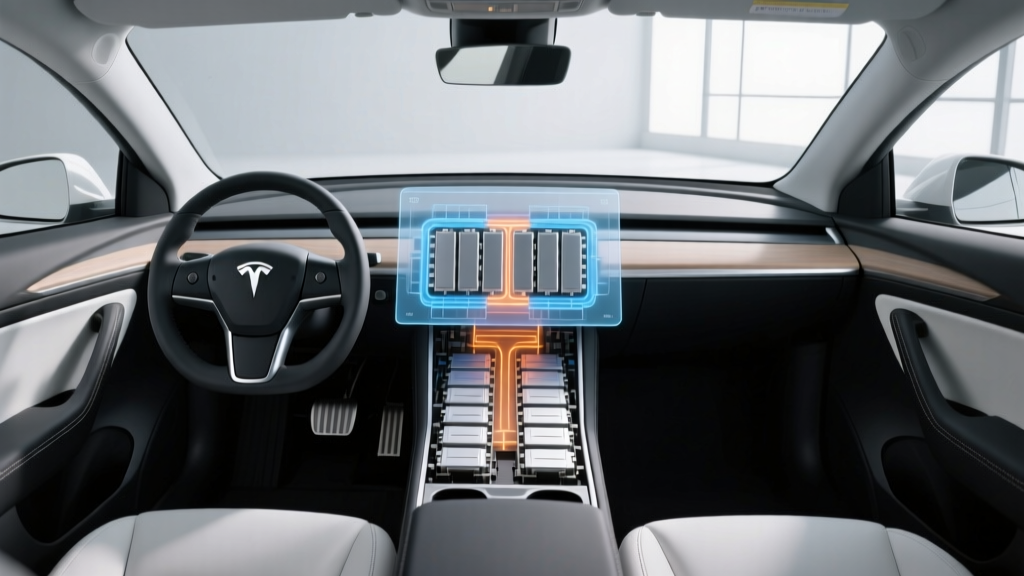
Most EVs in 2026 use one of two lithium-ion chemistries: NMC (Nickel Manganese Cobalt) or LFP (Lithium Iron Phosphate). Tesla, Ford, and Hyundai source cells from CATL, LG Energy Solution, SK On, Panasonic, or BYD — and the chemistry choice determines your range, charging behavior, longevity, and cold-weather performance far more than the automaker's name.
| Attribute | LFP (Lithium Iron Phosphate) | NMC / NCA (Nickel-based) |
|---|---|---|
| Energy Density | ~160–180 Wh/kg (lower) | ~220–260 Wh/kg (higher) |
| Typical Range per Pack Size | Shorter for same kWh | Longer for same kWh |
| Cycle Life | 3,000–5,000+ cycles | 1,000–2,000 cycles |
| Calendar Lifespan | 15–20+ years estimated | 10–15 years estimated |
| Cold-Weather Performance | Weaker — greater range loss below 32°F | Better — less range loss in cold |
| Charging to 100% Daily | Recommended — no degradation penalty | Not recommended — accelerates wear |
| Thermal Runaway Risk | Very low | Low but higher than LFP |
| Cost per kWh (2026) | ~$90–$110 | ~$110–$140 |
| Cobalt Content | None | Yes (supply-chain and ethical concerns) |
| Common In (2026 Models) | Tesla Model 3 RWD, Ford Mustang Mach-E Select (LFP option), BYD vehicles | Tesla Model Y Long Range, Hyundai Ioniq 5, BMW iX, most AWD/performance trims |
LFP vs NMC — Which Is Better and Why?
Neither chemistry is universally "better." The right choice depends on how you drive and charge:
Choose LFP if: You have reliable home charging, commute under 200 miles daily, want to charge to 100% without worry, prioritize maximum lifespan, and don't regularly drive in sub-freezing conditions. Tesla's standard-range Model 3 RWD (2026, 60 kWh LFP pack, EPA 272 miles) is a textbook LFP use case — lower upfront cost, exceptional cycle life, and the freedom to charge fully every night.
Choose NMC/NCA if: You need maximum range from a smaller or lighter pack (road trips, towing), live in a cold climate where winter range loss matters, or want the fastest DC charging speeds. The Hyundai Ioniq 5 Long Range (84 kWh NMC, EPA 305 miles, peak 240 kW DC charging) leverages NMC's higher energy density to deliver both range and rapid 10–80% charging in roughly 18 minutes.
The key trade-off most buyers miss: LFP batteries tolerate daily 100% charging and deep cycling far better than NMC, which prefers staying between 20–80% state of charge (SoC) for longevity. If your routine is "plug in at home every night to full," LFP is the more forgiving chemistry.
How Long Do EV Batteries Last? Real Degradation Data
The short answer: most modern EV batteries will outlast the car they're installed in. But the data matters more than reassurance.
Observed Degradation Benchmarks (2024–2026 fleet data):
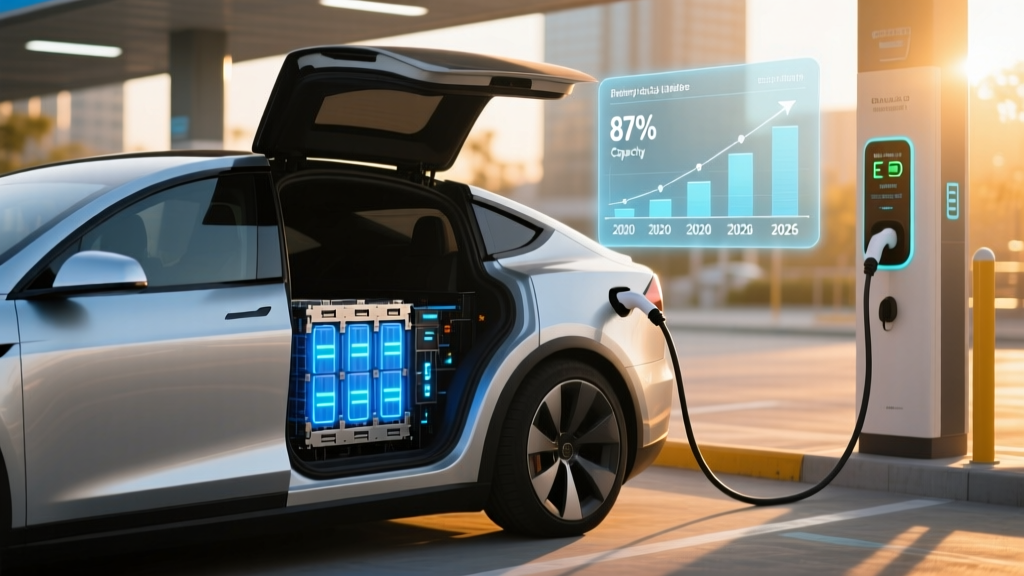
- Tesla Model 3/Y (NMC/NCA): ~5–8% capacity loss at 100,000 miles, based on Tesla's 2024 Impact Report and owner fleet telemetry. Models with LFP packs show even slower degradation curves.
- Hyundai Ioniq 5 / Kia EV6 (NMC): ~4–7% loss at 100,000 miles in owner-reported data from EV community tracking tools.
- Nissan LEAF (passive air-cooled NMC, older generations): 10–20%+ loss at 100,000 miles — a cautionary example of why active thermal management matters.
- General fleet average (all chemistries, 2020+ models with liquid cooling): ~6–10% degradation at 150,000 miles, per Geotab's fleet battery health study.
Most degradation occurs in the first 20,000–30,000 miles (an initial "break-in" drop of 2–4%), after which the curve flattens significantly. A 2026 EV with liquid-cooled battery management losing 8% capacity over 150,000 miles still retains 92% of its original range — meaning a 300-mile EPA-rated vehicle would still deliver roughly 276 miles when new-equivalent conditions are met.
Real-world range will always be lower than the EPA sticker due to highway speeds, cold temperatures, and terrain. A 300-mile EPA vehicle may deliver 240–260 miles on a 75°F highway drive and 200–220 miles in 20°F winter conditions. That's not degradation — that's physics.
What Does the EV Battery Warranty Cover?
Federal law mandates that EV batteries carry a minimum warranty of 8 years / 100,000 miles (10 years / 150,000 miles in California and states adopting CARB standards). But the details vary significantly by automaker.
| Automaker | Warranty Period | Capacity Retention Threshold | Notes |
|---|---|---|---|
| Tesla (Model 3/Y RWD — LFP) | 8 yr / 120,000 mi | 70% | Long Range/Performance: 8 yr / 120,000 mi, 70% |
| Hyundai / Kia (Ioniq 5, EV6, EV9) | 10 yr / 100,000 mi | 70% | Among the longest coverage periods |
| Ford (Mustang Mach-E, F-150 Lightning) | 8 yr / 100,000 mi | 70% | Covers battery and electric drive components |
| BMW (iX, i4, i7) | 8 yr / 80,000 mi | 70% | Lower mileage cap than competitors |
| GM (Ultium-platform: Equinox EV, Blazer EV, Silverado EV) | 8 yr / 100,000 mi | 70% | Battery and propulsion components covered |
| Rivian (R1T, R1S) | 8 yr / 175,000 mi | 70% | Highest mileage threshold among mainstream brands |
The 70% capacity retention threshold is industry standard. If your battery drops below 70% of its original capacity within the warranty period, the manufacturer must repair or replace it at no cost. In practice, very few modern liquid-cooled EV batteries hit this threshold before the warranty expires — which is why out-of-pocket replacement remains rare for original owners.
Important caveat: warranties typically exclude damage from collisions, flooding, improper modifications, or use of non-approved charging equipment. Always check the specific terms in your owner's manual. For full federal warranty requirements, see fueleconomy.gov's EV technology overview.
How Much Does an EV Battery Cost to Replace?
This is the question that drives the most anxiety — and the most misinformation. Here are the actual numbers as of 2026:
| Vehicle / Pack Size | Battery Capacity | Chemistry | Estimated Replacement Cost (Parts + Labor) |
|---|---|---|---|
| Tesla Model 3 RWD | 60 kWh | LFP | $10,000–$13,000 |
| Tesla Model Y Long Range | 75 kWh | NMC | $13,000–$16,000 |
| Hyundai Ioniq 5 Long Range | 84 kWh | NMC | $14,000–$18,000 |
| Ford F-150 Lightning Extended Range | 131 kWh | NMC | $20,000–$28,000 |
| GMC Hummer EV | 212 kWh | NMC | $30,000–$40,000 |
| Chevrolet Bolt EV/EUV (older gen) | 65 kWh | NMC | $14,000–$16,000 |
Context that matters: the vast majority of EV owners will never pay for a battery replacement. The battery will either remain within warranty coverage for the duration of ownership, or it will retain sufficient capacity (80–90%+) to function well beyond 200,000 miles. Battery replacement is most relevant for second- or third-owners of high-mileage vehicles purchased out of warranty.
Costs have been declining steadily. In 2015, pack-level costs exceeded $350/kWh. By 2026, they hover around $110–$140/kWh at the pack level, and continue to trend downward. Module-level repair (replacing individual failed modules rather than the entire pack) is also becoming more common, reducing costs to $3,000–$8,000 for partial replacements at qualified shops.
Factors That Affect EV Battery Life — and What You Can Control
Battery degradation is driven by heat, high state of charge, and charge rate. Here's what the data shows:
Habits That Maximize Battery Longevity:
- Limit DC fast charging to road trips. Frequent use of 150+ kW DC charging accelerates degradation. Daily Level 2 home charging (7–11 kW) is ideal for battery health.
- For NMC batteries, set charge limits to 80–90% for daily use. Reserve 100% charges for road trips. Most EVs let you set this in the app or infotainment system.
- For LFP batteries, charge to 100% regularly. LFP chemistry benefits from periodic full charges for cell balancing and accurate state-of-charge calibration.
- Avoid leaving the vehicle at very low (below 10%) or very high (above 95%) SoC for extended periods, especially in hot weather. If storing for weeks, set to ~50%.
- Use preconditioning. When navigating to a DC fast charger, the vehicle preheats or pre-cools the battery to optimal temperature, reducing stress during high-power charging.
- Park in shade or a garage during extreme heat. Sustained battery temperatures above 95°F accelerate calendar degradation even when the car isn't driven.
- In cold weather, plug in when possible. Battery thermal management systems draw power from the grid rather than the pack to maintain temperature.
The single biggest controllable factor is DC fast-charging frequency. A 2024 study by Geotab found that vehicles that DC fast-charged more than three times per week showed roughly double the degradation rate of vehicles that primarily used Level 2 charging over the same mileage. This doesn't mean avoid DC charging entirely — it means relying on home Level 2 for daily needs and reserving fast charging for longer trips.
How to Check and Monitor Your Battery's State of Health (SoH)
State of Health (SoH) is the percentage of your battery's original capacity that remains usable. A new battery is 100% SoH; at 70% SoH, the warranty threshold is typically triggered.
Built-in methods:
- Tesla: The mobile app displays estimated range at 100% charge, which you can compare to the original EPA rating. Third-party tools like Teslalogger or Scan My Tesla (via OBD-II) can pull more granular SoH data.
- Hyundai/Kia: The infotainment system's EV diagnostics screen shows battery health percentage on some 2024+ models. Dealers can pull detailed SoH reports via the KDS diagnostic tool.
- GM (Ultium): The myChevrolet/myCadillac app provides battery health metrics, and OnStar can deliver detailed reports.
- Ford: FordPass shows estimated range at full charge; dealers can access the Battery State of Health report through FDRS (Ford Diagnostic & Repair System).
Third-party tools: Devices like the OBD-II dongle paired with apps such as Car Scanner, ABRP (A Better Route Planner) OBD integration, or Torque Pro can read battery management system (BMS) data on many EVs, including cell voltage variance, pack temperature, and estimated SoH. This is especially useful when evaluating a used EV before purchase.
A practical rule: if your vehicle's displayed range at 100% SoC has dropped more than 10% from its original EPA figure (accounting for seasonal variation), it's worth having the dealer run a formal SoH diagnostic. Seasonal cold-weather range drops of 15–30% are normal and not indicative of degradation — the range returns in warmer weather.
What's Next? Solid-State and Silicon-Anode Batteries
Emerging battery technologies promise step-change improvements, but realistic timelines matter:
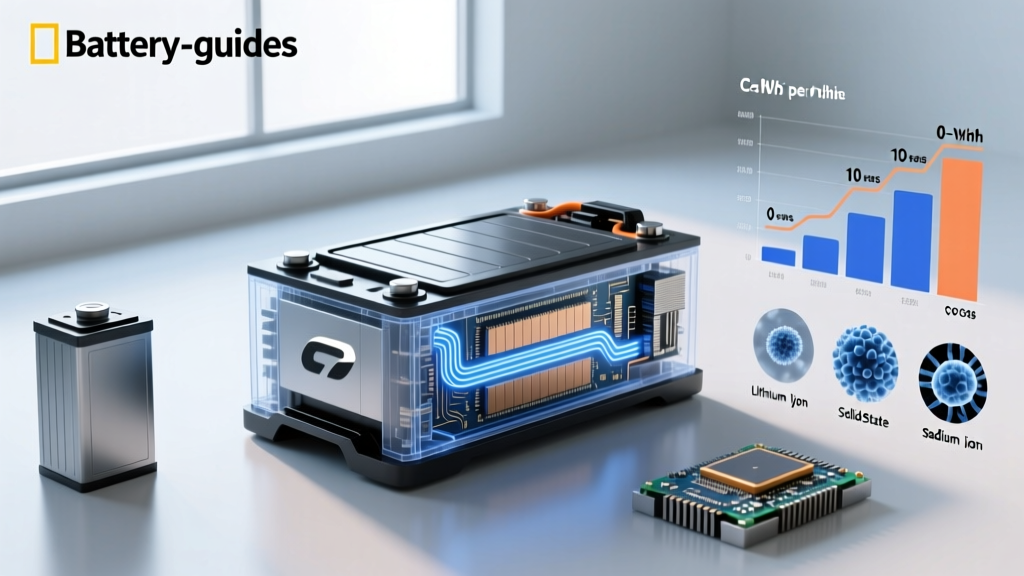
Solid-state batteries replace the liquid electrolyte with a solid material, potentially offering 40–50% higher energy density, faster charging, and improved safety. Toyota has announced a solid-state EV expected around 2027–2028 with a claimed 600+ mile range, while Samsung SDI targets 2027 for mass production. However, manufacturing scale-up remains the primary bottleneck. No solid-state EV is currently available for purchase in 2026, and initial vehicles will likely carry premium pricing.
Silicon-anode batteries (from companies like Sila Nanotechnologies and Group14) increase energy density by replacing graphite anodes with silicon-dominant materials. These are entering production in 2025–2026 for select applications and may appear in consumer EVs by 2027–2028, offering 10–20% range improvements within the same pack footprint.
Sodium-ion batteries are emerging as a low-cost alternative for budget EVs, particularly from BYD and CATL. They offer lower energy density but excellent cycle life and no reliance on lithium or cobalt. Expect these in entry-level models by 2027.
For buyers in 2026: today's LFP and NMC chemistries are mature, well-understood, and backed by extensive warranty coverage. Waiting for solid-state means waiting at least 2–3 years for limited-availability, premium-priced vehicles. Current technology is more than adequate for the vast majority of driving needs.
Frequently Asked Questions
Is there a single "best" EV battery brand?
Not in the way you'd choose a brand for a 12V car battery. EV traction batteries are sourced from cell manufacturers like CATL, LG Energy Solution, SK On, Panasonic, Samsung SDI, and BYD. The automaker integrates these cells into a pack with proprietary thermal management and BMS software. What matters more than the cell brand is the chemistry (LFP vs NMC), the pack's thermal management system (liquid-cooled vs air-cooled), and the warranty terms. A Tesla with Panasonic cells and a Hyundai with SK On cells can both deliver excellent longevity if properly managed.
How long do EV batteries last in years and miles?
Based on fleet data, most liquid-cooled EV batteries from 2020 onward retain 85–95% of original capacity at 150,000 miles. In calendar years, that translates to roughly 15–20 years of usable service life before capacity drops to a level that noticeably impacts daily usability (below 70–80%). LFP batteries are expected to last even longer — potentially 20+ years — due to their superior cycle life. Very few EVs have needed battery replacements due to degradation alone.
Does fast charging damage my EV battery?
Occasional DC fast charging (1–2 times per week or during road trips) has minimal impact on modern batteries with active thermal management. However, exclusive reliance on DC fast charging — especially at 150+ kW rates — accelerates degradation compared to Level 2 home charging. The heat generated during high-power charging stresses the cells over time. For optimal longevity, use Level 2 (7–11 kW) for daily charging and reserve DC fast charging for longer trips.
Should I be worried about battery replacement cost?
For most first owners, no. Your battery is covered under warranty for 8–10 years / 100,000–175,000 miles, and fleet data shows that batteries rarely degrade to the warranty threshold (70% capacity) within that period. Replacement costs range from $10,000–$16,000 for a 60–84 kWh pack and up to $28,000+ for large packs like the F-150 Lightning's 131 kWh unit — but these costs are declining yearly, and module-level repairs offer a lower-cost alternative. The concern is most relevant for buyers of older, high-mileage, out-of-warranty used EVs.
How do I check my EV battery health before buying used?
Request a battery State of Health (SoH) report from the seller or a dealer. Many EVs display estimated range at 100% charge — compare this to the original EPA rating (accounting for seasonal temperature differences). Use an OBD-II scanner with EV-compatible software (Car Scanner, LeafSpy for Nissan, Scan My Tesla for Tesla) to pull BMS data including cell voltage variance and SoH percentage. A variance of more than 0.1V between cells or SoH below 85% on a vehicle under 80,000 miles warrants further investigation.
Sources: fueleconomy.gov — EV battery and technology data; IRS.gov — §30D clean vehicle credit rules; Geotab EV Battery Health Study (2024 fleet data).