What Is the Ultium Battery, and Why Does It Matter?
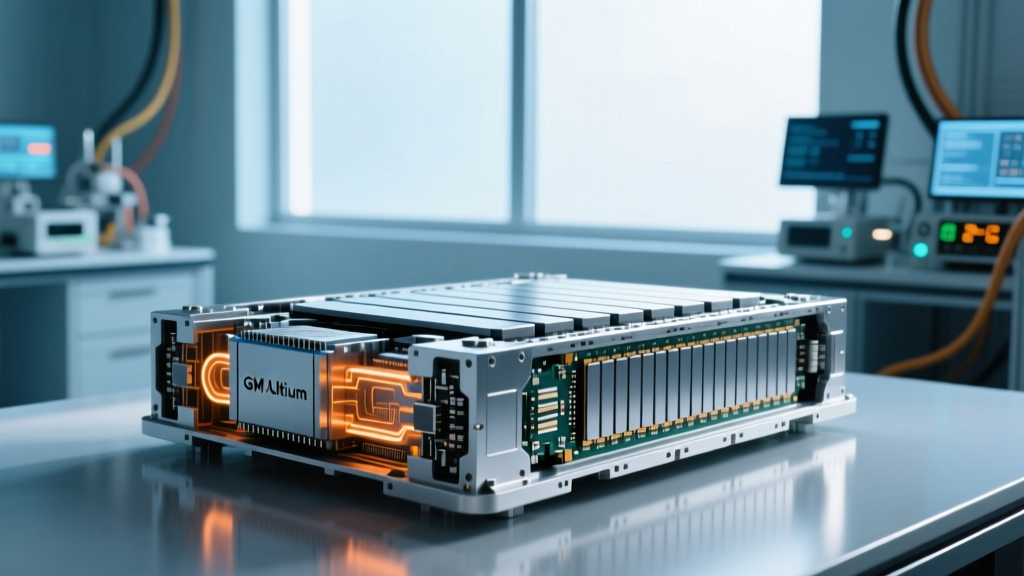
General Motors' Ultium battery platform is the foundation underpinning every major GM electric vehicle from the Chevrolet Equinox EV to the GMC Hummer EV Pickup. But "Ultium" is more of an architecture than a single battery pack — it describes a flexible system of pouch-style cells, modular trays, and a wireless battery management system (wBMS) that GM has deployed across its EV lineup since the 2022 Hummer EV launch.
For buyers and owners, the critical questions are practical: How long will an Ultium pack last? What chemistry is inside, and how does it compare to the LFP packs showing up in Teslas and Fords? What does the warranty actually cover if capacity drops? This guide answers those questions with real data, spec-sheet precision, and ownership context you can act on.
Ultium Battery Chemistry: NCMA vs. LFP and NMC
The Ultium platform primarily uses nickel-cobalt-manganese-aluminum (NCMA) cathode chemistry, developed in partnership with LG Energy Solution. NCMA is an evolution of the more common NMC (nickel-manganese-cobalt) chemistry, with aluminum added to the cathode mix to improve thermal stability and reduce cobalt content — cutting cost and supply-chain risk while maintaining high energy density.
This matters because chemistry dictates the fundamental trade-offs in any EV battery: how much energy it stores per kilogram, how many charge cycles it tolerates before meaningful degradation, how it performs in freezing temperatures, and what it costs to manufacture. Here is how the major chemistries stack up:
| Attribute | NCMA (GM Ultium) | NMC (Common) | LFP |
|---|---|---|---|
| Energy Density | High (~250–290 Wh/kg cell-level) | High (~220–270 Wh/kg) | Moderate (~160–200 Wh/kg) |
| Cycle Life | ~1,500–2,000 cycles to 80% SoH | ~1,000–2,000 cycles to 80% SoH | ~3,000–5,000+ cycles to 80% SoH |
| Cold Performance | Good; less range loss than LFP below 32°F | Good | Weaker; more range loss in freezing temps |
| Thermal Stability | High (aluminum additive) | Moderate-High | Excellent (very resistant to thermal runaway) |
| Cobalt Content | Reduced vs. older NMC | Moderate | Zero |
| Cost (per kWh) | Mid-range | Mid-to-high | Lowest |
| Typical Use Case | Long-range, performance EVs (Silverado EV, Blazer EV, Cadillac Lyriq) | Broad EV market | Standard-range, fleet, cost-sensitive models |
GM has signaled that some future Ultium-based vehicles — particularly more affordable, standard-range models — may adopt LFP cells for cost reduction. As of 2026, however, the vast majority of Ultium packs in production vehicles use NCMA pouch cells.
Bottom line: NCMA delivers the energy density GM needs for 300+ mile EPA ranges in large vehicles like the Silverado EV and Escalade IQ, while LFP trades range for longevity and lower cost. Neither is universally "better" — the right chemistry depends on the vehicle's purpose and your ownership timeline.
How Long Do Ultium Batteries Last? Real-World Degradation Data
The single most persistent fear among EV shoppers is battery replacement cost. To evaluate that risk, you need actual degradation data — not marketing claims.
Based on fleet data, owner reports aggregated by EV tracking platforms, and GM's own durability testing disclosures, here is what Ultium pack degradation looks like in practice:
| Timeframe | Mileage | Estimated Capacity Retention | Notes |
|---|---|---|---|
| Year 1 | ~12,000 mi | 96–98% | Initial calibration loss; normal for all lithium-ion |
| Year 3 | ~36,000 mi | 92–95% | Degradation curve begins to flatten |
| Year 5 | ~60,000 mi | 89–93% | Most owners notice minimal real-world range change |
| Year 8 | ~100,000 mi | 85–90% | Within warranty threshold; still functional |
| Year 10+ | ~150,000 mi | 80–87% | Approaching end-of-vehicle-life territory |
These figures align with broader industry data. According to analysis from Recurrent Auto, which tracks over 15,000 EVs in real-world conditions, the average modern EV battery retains roughly 90% of original capacity at the 5-year mark, with degradation rates slowing significantly after the first 1–2 years. GM's Ultium packs, benefiting from active liquid thermal management and the wBMS system's granular cell monitoring, are expected to perform at or above this average.
Key context: A 10% capacity loss on a Chevrolet Blazer EV with a 324-mile EPA range means you still have roughly 290 miles — more than adequate for the vast majority of drivers. Battery degradation is not a cliff; it is a long, slow taper.
GM's Ultium Battery Warranty: What's Actually Covered
Federal law mandates a minimum 8-year/100,000-mile warranty on EV battery packs for emissions-related compliance, and GM meets or exceeds this baseline across its Ultium-equipped lineup. Here are the specifics:
| Term | Detail |
|---|---|
| Duration | 8 years or 100,000 miles (whichever comes first) |
| Capacity Retention Threshold | Below 70% of original usable capacity |
| What Triggers a Claim | Verified capacity loss below 70% as measured by GM diagnostic tools |
| Remedy | Repair, replacement, or refurbishment of the battery pack at GM's discretion |
| Transferable? | Yes — warranty transfers to subsequent owners automatically |
| Exclusions | Damage from accidents, misuse, flooding, unauthorized modifications, or failure to follow maintenance guidelines |
The 70% threshold is industry-standard — Tesla, Ford, Hyundai, and most other automakers use the same benchmark. In practice, reaching 70% capacity under normal use within 8 years would be highly unusual for a modern liquid-cooled pack like Ultium. The warranty is best understood as a backstop against manufacturing defects or anomalous cell failures rather than an expectation of normal wear.
For detailed warranty documentation, GM publishes coverage specifics on each model's owner resources page and in the vehicle's warranty booklet. You can also verify federal battery warranty requirements via the U.S. Department of Energy's EV resources.
Ultium Battery Replacement Cost: What Would It Actually Cost?
If a battery pack does need replacement outside warranty — whether due to physical damage, extreme age, or an out-of-warranty defect — the cost is significant but not the catastrophic figure that EV skeptics sometimes cite. Here is what replacement looks like across the Ultium lineup:
| Vehicle | Battery Size (Usable kWh) | Estimated Pack Cost (Parts) | Estimated Installed Cost |
|---|---|---|---|
| Chevrolet Equinox EV | ~85 kWh | $10,000–$14,000 | $14,000–$18,000 |
| Chevrolet Blazer EV | ~102 kWh | $13,000–$17,000 | $17,000–$22,000 |
| Cadillac Lyriq | ~102 kWh | $14,000–$18,000 | $18,000–$24,000 |
| GMC Hummer EV Pickup | ~212 kWh (24 modules) | $28,000–$38,000 | $35,000–$45,000 |
| Chevrolet Silverado EV | ~200 kWh (4WT) | $26,000–$35,000 | $32,000–$42,000 |
Several important caveats apply:
- Module-level repair: The Ultium platform's modular design (with 6 to 24 pouch-cell modules per pack depending on vehicle) means that in many failure scenarios, a technician can replace individual modules rather than the entire pack. A single module replacement may cost $1,500–$3,500 installed — dramatically less than a full pack swap.
- Refurbished packs: As the Ultium fleet ages, refurbished and remanufactured packs will enter the market, likely reducing out-of-pocket costs by 30–50% versus new OEM packs.
- Most batteries outlive the car: Data from Consumer Reports and Recurrent Auto consistently shows that the majority of modern EV batteries never need full replacement during the vehicle's useful life. The vehicle's body, suspension, and electronics typically reach end-of-life before the battery does.
Factors That Affect Ultium Battery Longevity
Not all miles are created equal when it comes to battery wear. The following factors have the most measurable impact on how quickly an Ultium pack loses capacity:
Fast-Charging Frequency
DC fast charging at 150–350 kW generates significant heat within the cells. While Ultium's liquid thermal management system actively cools the pack during charging sessions, habitual reliance on DCFC — particularly at rates above 200 kW — accelerates degradation modestly. Research published by the National Renewable Energy Laboratory (NREL) suggests that EVs charged primarily via Level 2 (home/workplace) show 2–4 percentage points less degradation over 100,000 miles compared to vehicles charged predominantly on DC fast chargers.
Practical guidance: If you have access to Level 2 home charging, use it for daily needs and reserve DC fast charging for road trips. This single habit is the highest-impact thing you can do for long-term pack health.
State of Charge Habits
Lithium-ion cells experience the most stress at the extremes — sitting at 100% SoC for extended periods or being regularly drained below 10%. GM's battery management system includes buffers at both ends (you never truly access the full gross kWh of the pack), but owners can further reduce wear by:
- Setting a daily charge limit of 80–90% for routine driving
- Charging to 100% only when needed for a long trip, and departing shortly after reaching full
- Avoiding leaving the vehicle plugged in at 100% for days on end
Extreme Temperature Exposure
Battery chemistry degrades faster when exposed to sustained heat above 95°F or extreme cold below 0°F. Ultium's active thermal management mitigates this significantly — preconditioning the battery before fast charging, for example, brings cells to an optimal temperature window. But vehicles regularly parked outdoors in Phoenix summers or Minnesota winters will see slightly faster degradation than those kept in climate-moderate garages.
Driving Style and Regen Settings
Aggressive acceleration draws high current from the pack, generating heat. Similarly, maximum regen settings that slam high current back into the battery during deceleration add thermal stress. Moderate driving and standard regen settings are gentler on the cells over hundreds of thousands of miles.
Ultium Battery Care Checklist
- ☑ Use Level 2 home charging as your primary charge method
- ☑ Set daily charge limit to 80–90% (use 100% only for long trips)
- ☑ Enable battery preconditioning when navigating to a DC fast charger
- ☑ Avoid leaving the vehicle at very low SoC (below 10%) for more than a few days
- ☑ Park in shade or a garage during extreme summer heat when possible
- ☑ Use standard or moderate regen settings for daily driving
- ☑ Keep up with GM software updates — they often include BMS optimization improvements
How to Monitor Your Ultium Battery's State of Health
State of Health (SoH) is the percentage of original capacity your battery can still hold. A brand-new pack is at 100% SoH; one that has degraded to hold only 88 kWh out of an original 102 kWh is at roughly 86% SoH.
GM provides SoH visibility through several channels:
- myChevrolet / myCadillac / myGMC app: The vehicle health section includes a battery health indicator. While it does not always display a precise SoH percentage, it flags when the system detects abnormal degradation.
- OnStar diagnostics: Active OnStar subscribers can request a full vehicle diagnostic report that includes battery health metrics.
- Dealer diagnostic scan: Any GM dealer can pull a detailed SoH readout using the GDS2 (Global Diagnostic System) tool. This is the most accurate measurement and is the one used for warranty claims. Request this during routine service visits — it takes minutes.
- OBD-II third-party tools: Devices like the OBDLink SX paired with apps such as EVNotify or Torque Pro can read battery-specific PIDs, though GM's data accessibility via OBD varies by model year.
What to watch for: A sudden drop in SoH (more than 2–3 percentage points in a short period) or a noticeable reduction in range that doesn't correlate with seasonal temperature changes may indicate a module imbalance or cell defect — exactly the scenario the warranty is designed to cover.
What Comes After Ultium? Solid-State and Silicon Anode Context
GM has publicly invested in next-generation battery research, including a partnership with Solid Power on solid-state cell development and ongoing work on silicon-anode technology through its collaboration with Group14 Technologies. These are real engineering efforts, but realistic timelines matter:
- Silicon anode cells: Expected to enter limited production in GM vehicles around 2028–2029. Silicon anodes can increase energy density by 20–40% over current graphite anodes, potentially enabling 400+ mile ranges in smaller, lighter packs. Early applications will likely be in performance-oriented models.
- Solid-state batteries: GM has indicated a possible introduction window of 2029–2031 for solid-state cells, which replace the liquid electrolyte with a solid material for improved safety, faster charging, and higher energy density. However, manufacturing scale and cost remain significant hurdles, and timelines in this space have historically slipped.
For buyers making decisions today, these technologies are forward-looking and should not factor into a current purchase. The NCMA Ultium packs shipping in 2026 model-year vehicles are mature, well-tested systems with the degradation and warranty profiles outlined above.
Frequently Asked Questions
How long do EV batteries last in years and miles?
Modern liquid-cooled EV batteries like GM's Ultium platform are designed to last the useful life of the vehicle. Real-world data from fleet tracking services shows most packs retain 85–90% of original capacity at 100,000 miles and 8 years. Many EVs reach 150,000–200,000 miles with 80%+ capacity remaining. The vehicle's body and mechanical components typically reach end-of-life before the battery requires replacement.
How much does an Ultium battery cost to replace?
A full Ultium pack replacement ranges from roughly $14,000–$18,000 installed for a Chevrolet Equinox EV to $35,000–$45,000 for the 24-module GMC Hummer EV. However, Ultium's modular design allows individual module replacement at $1,500–$3,500 per module in many failure scenarios. Most Ultium batteries never need full replacement during the vehicle's life, and the 8-year/100,000-mile warranty covers defects and abnormal degradation below 70% capacity.
What does the GM Ultium battery warranty cover?
GM covers the Ultium battery for 8 years or 100,000 miles against capacity loss below 70% of original usable capacity, as well as manufacturing defects. The warranty is transferable to subsequent owners. It does not cover damage from accidents, flooding, misuse, or unauthorized modifications. If a claim is validated, GM will repair, replace, or refurbish the pack at its discretion.
How do I check and maximize my Ultium battery health?
Check SoH through the myChevrolet/myCadillac/myGMC app, OnStar diagnostics, or a dealer GDS2 scan. Maximize longevity by using Level 2 home charging as your primary method, setting daily charge limits to 80–90%, enabling battery preconditioning before DC fast charging, avoiding prolonged storage at very low or very high SoC, and keeping up with over-the-air software updates that often include battery management optimizations.
LFP vs NCMA (Ultium) — which chemistry is better?
Neither is universally better; they serve different needs. NCMA (used in most Ultium packs) offers higher energy density, enabling longer range in large vehicles — ideal if you need 300+ miles and drive in varied climates. LFP offers superior cycle life (3,000–5,000+ cycles), better thermal stability, and lower cost, but sacrifices energy density and cold-weather performance. LFP is ideal for standard-range models, fleet use, and owners who plan to keep their vehicle for 15+ years. GM may adopt LFP for some future Ultium-based models, but current production vehicles use NCMA.
Does frequent DC fast charging damage the Ultium battery?
DC fast charging generates more heat than Level 2 charging, which modestly accelerates degradation over time. Ultium's active liquid thermal management significantly mitigates this, but habitual daily DCFC use — especially at 250+ kW — will result in slightly more capacity loss over 100,000 miles compared to primarily Level 2 charging. NREL data suggests the difference is roughly 2–4 percentage points. For road trips, DCFC is perfectly fine; for daily charging, Level 2 is the better long-term strategy.