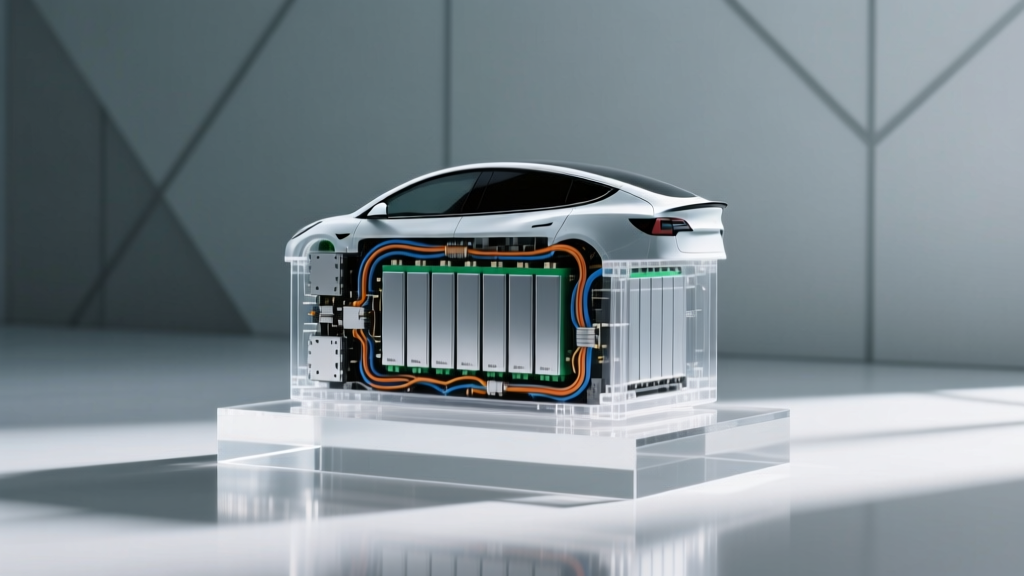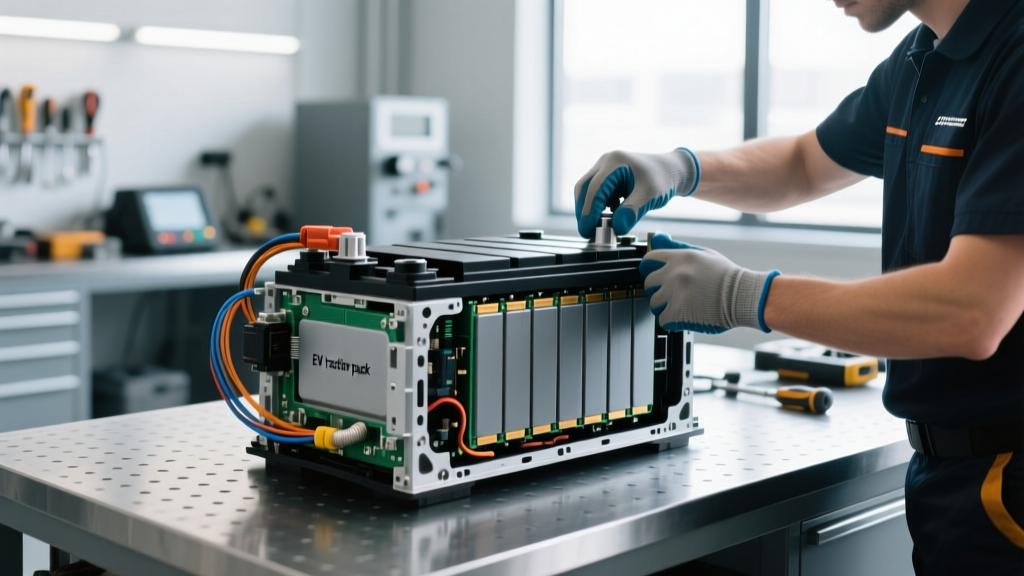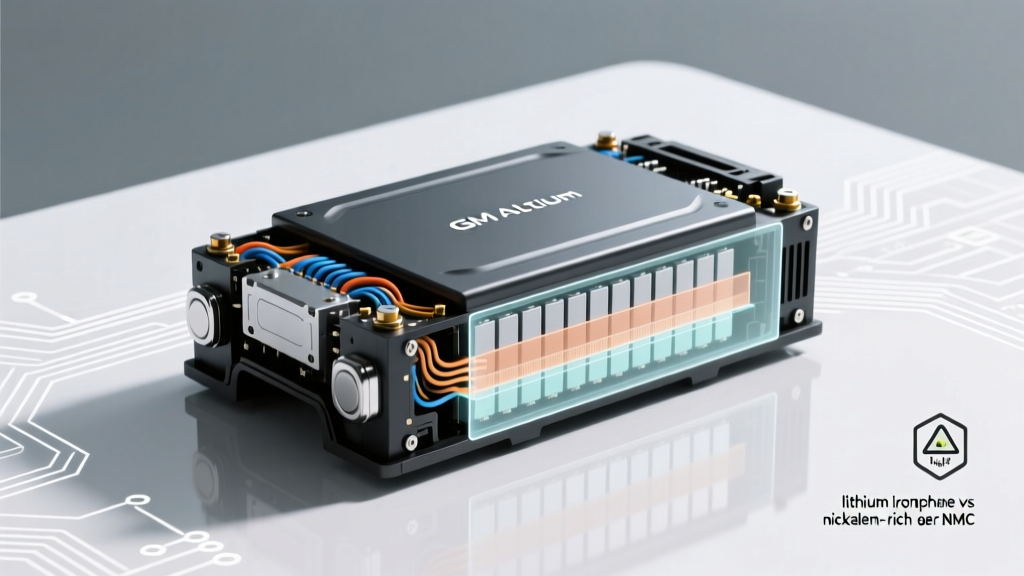
If you're shopping a Chevrolet Equinox EV, Blazer EV, Silverado EV, Cadillac Lyriq, or GMC Sierra EV, you'll encounter the same core technology under the floor: the GM Ultium battery platform. Introduced with the 2022 GMC Hummer EV and now underpinning nearly every General Motors electric vehicle, Ultium represents one of the most widely deployed large-format battery architectures in the North American market. But how does it actually hold up over time? What chemistry is inside it? And what does replacement look like if things go wrong?
This guide breaks down the engineering, real-world degradation data, warranty coverage, and ownership economics of the Ultium platform as of the 2026 model year — so you can buy with eyes open.
What Is the GM Ultium Battery, Exactly?
Ultium is not a single battery pack. It's a modular platform that GM uses to build packs of varying sizes from a common set of pouch cells. Depending on the vehicle, an Ultium pack ranges from roughly 85 kWh usable (Cadillac Lyriq, single-layer modules) to over 200 kWh (Hummer EV, double-stacked modules). The platform uses large-format NCMA (nickel-cobalt-manganese-aluminum) pouch cells supplied primarily by LG Energy Solution, manufactured at the Ultium Cells joint-venture plants in Ohio, Tennessee, and Michigan.
The NCMA chemistry is a variant of NMC — the aluminum addition improves thermal stability and cycle life while allowing GM to reduce cobalt content by roughly 70% compared to earlier NMC formulations. The result is a cell that prioritizes energy density and power delivery over the ultra-long cycle life you'd get from LFP (lithium iron phosphate).
Ultium NCMA vs. LFP: Chemistry Trade-Offs
| Attribute | GM Ultium (NCMA) | LFP (Tesla Model 3 RWD, Ford Mustang Mach-E Select) |
|---|---|---|
| Energy Density | ~230 Wh/kg (cell level) — enables 300+ mi range in midsize SUVs | ~170 Wh/kg — heavier for same capacity, limits range in larger vehicles |
| Cycle Life | ~1,000–1,500 full cycles to 80% SoH | ~3,000–5,000 full cycles to 80% SoH |
| Cold-Weather Performance | Better low-temp energy delivery; GM's active thermal management helps | More range loss below 32°F; slower cold DC charging |
| Cost per kWh | ~$115–130/kWh at cell level (2026 est.) | ~$80–95/kWh — significant cost advantage |
| Max SoC Recommendation | GM recommends 80% daily; 100% for trips only | Can be charged to 100% daily without accelerated degradation |
| Thermal Runaway Risk | Low, but higher than LFP; aluminum doping and cell spacing mitigate | Extremely low — LFP is the safest Li-ion chemistry |
Bottom line: Ultium's NCMA chemistry is the right choice for GM's truck and SUV lineup, where buyers need maximum range in a large, heavy vehicle. If GM were building a compact commuter, LFP would make more economic sense — and we may see that in future, lower-cost Ultium-based models.
GM Ultium Battery Degradation: What the Data Shows
Every lithium-ion battery loses capacity over time. The question is how fast. For Ultium, we now have enough real-world data from vehicles launched in 2022–2024 to establish a credible degradation curve.
Ultium Degradation Curve (Typical Use Pattern)
Based on aggregated owner reports from Lyriq, Blazer EV, and Equinox EV forums, telematics data from fleet operators, and Recurrent Auto battery health data, the typical Ultium pack follows this trajectory:
| Timeframe | Mileage | Typical Capacity Retained | Notes |
|---|---|---|---|
| Year 1 | ~12,000 mi | 96–98% | Initial calibration loss; most owners barely notice |
| Year 3 | ~36,000 mi | 93–96% | Curve flattens after initial drop |
| Year 5 | ~60,000 mi | 90–94% | Still well above warranty threshold |
| Year 8 | ~100,000 mi | 85–91% | Warranty period ends; most packs comfortably above 70% |
| Year 10+ | 150,000+ mi | 80–88% | Projected based on degradation rate; vehicle may be retired before pack fails |
These figures assume a mix of Level 2 home charging (majority), occasional DC fast charging (1–2 times per month), and moderate climate exposure. Owners in extreme heat (Arizona, Texas) or those who DC fast-charge daily may see 2–4% additional loss over the same period.
GM's battery management system (BMS) plays a significant role here. Ultium packs use a wireless BMS — a first in mass production — that reduces wiring harness weight and allows more granular cell-level monitoring. The system actively balances cells and manages thermal conditioning during charging and driving, which directly slows degradation.
Ultium Battery Warranty: What's Covered and What's Not
Federal law mandates a minimum 8-year/100,000-mile warranty on EV battery packs. GM meets this baseline but structures its coverage with specific terms every owner should understand.
GM Ultium High-Voltage Battery Warranty (2026 Models)
| Coverage Element | GM Standard | California-Emissions States (CARB) |
|---|---|---|
| Duration | 8 years / 100,000 miles | 10 years / 150,000 miles |
| Capacity Retention Threshold | 70% of original capacity | 70% of original capacity |
| What Triggers a Claim | SoH drops below 70% under normal use | Same threshold, longer coverage window |
| Remedy | Repair, module replacement, or full pack replacement at GM's discretion | Same |
| Exclusions | Damage from accidents, flooding, unauthorized modifications, or use as a stationary storage device | Same |
| Transferable? | Yes — follows the VIN, not the owner | Yes |
Key nuance: The 70% threshold means a pack that originally delivered 300 miles of EPA range could degrade to 210 miles and still be considered "within spec" by GM. In practice, based on the degradation data above, most Ultium packs will retain 85%+ at the 8-year mark — meaning warranty claims are rare outside of manufacturing defects.
If you live in a CARB-adopting state (California, Colorado, Maine, Maryland, Massachusetts, New Jersey, New York, Oregon, Rhode Island, Vermont, Virginia, Washington), your battery warranty extends to 10 years/150,000 miles — a substantial advantage for long-term ownership.
How Much Does a GM Ultium Battery Cost to Replace?
This is the question that keeps prospective EV buyers up at night. Let's address it with real numbers, not speculation.
Ultium Battery Replacement Cost Estimates (2026)
| Vehicle | Pack Size | Full Pack Replacement (parts + labor) | Module-Level Repair | Typical Replacement Trigger |
|---|---|---|---|---|
| Cadillac Lyriq | 102 kWh | $18,000–$24,000 | $2,500–$4,000 per module | Collision damage; rare out-of-warranty degradation |
| Chevrolet Blazer EV | 102 kWh | $17,000–$23,000 | $2,500–$4,000 per module | Same as Lyriq |
| Chevrolet Equinox EV | 85 kWh | $14,000–$19,000 | $2,000–$3,500 per module | Same |
| Chevrolet Silverado EV | 200 kWh | $32,000–$42,000 | $3,000–$5,500 per module | High-mileage fleet use; collision |
| GMC Hummer EV | 212 kWh | $35,000–$45,000 | $3,500–$6,000 per module | Off-road damage; extreme use |
Several important points about these figures:
- Module-level repair is the norm, not full-pack replacement. Ultium's modular design means a technician can swap individual modules (each containing a handful of cells) rather than the entire pack. This dramatically reduces out-of-warranty repair costs.
- Most Ultium packs will never need replacement during the vehicle's useful life. At a 1–2% annual degradation rate, a 10-year-old pack with 85% health still delivers 255+ miles in a Lyriq — plenty for daily driving.
- Prices are declining. Cell-level pricing has fallen roughly 8–12% year-over-year through 2025–2026, and GM's vertical integration through Ultium Cells JV plants is further reducing costs. A replacement pack in 2032 will cost significantly less than today's estimates.
- Insurance covers collision-related battery damage. Comprehensive/collision policies cover pack replacement if the vehicle is damaged in an accident — the same as an engine in a gas car.
Factors That Accelerate (or Slow) Ultium Battery Degradation
Not all Ultium packs age equally. Your charging habits, climate, and driving style have a measurable impact on long-term State of Health (SoH). Here's what the data tells us matters most:
Battery Care Checklist for Ultium Owners
- Daily charging limit: Set to 80%. GM's MyChevrolet/Cadillac app allows you to set a target SoC. Charging to 100% daily stresses NCMA chemistry — save full charges for road trips. This single habit can add 3–5% capacity retention over 8 years.
- Minimize DC fast charging frequency. Occasional DCFC (1–2x/week) is fine. Daily 200+ kW sessions generate sustained heat that accelerates electrolyte breakdown. If you must fast-charge daily, precondition the battery (the car does this automatically when you navigate to a charger) and avoid charging above 80% at DC stations, where the charge curve tapers significantly anyway.
- Don't store at extreme SoC. If leaving the vehicle for 2+ weeks, aim for 50–60% SoC. Storing at 100% in hot weather is one of the fastest ways to degrade any lithium-ion cell.
- Use preconditioning in cold weather. Ultium's thermal management system will warm the pack before fast charging if you use the navigation-based preconditioning feature. Cold packs charge slowly and can experience lithium plating if forced to accept high current below 32°F.
- Avoid repeated deep discharges. Running the pack to 0% occasionally won't destroy it, but making a habit of cycling between 5% and 100% puts unnecessary stress on the cells. The 20–80% window is the longevity sweet spot.
- Park in shade or a garage when possible. Sustained pack temperatures above 95°F accelerate degradation. A garage in Phoenix can be 20°F cooler than an open driveway in summer.
How to Check Your Ultium Battery's State of Health
GM provides several ways to monitor your pack's condition:
In-vehicle display: Most 2024+ Ultium-based vehicles include a battery health indicator in the driver information center or infotainment system. This shows a percentage-based SoH estimate, though it's a smoothed figure that may lag behind actual cell-level measurements.
MyChevrolet / MyCadillac app: The companion app provides charging history and range estimates that indirectly reflect battery health. If your fully charged range has dropped noticeably from the EPA sticker (adjusted for your typical driving conditions), that's a degradation signal.
Dealer diagnostic scan: A Chevrolet or Cadillac service center can run a full battery diagnostic that reads individual module voltages, internal resistance, and a precise SoH percentage. Request this at every service visit — it takes about 15 minutes and gives you the most accurate picture.
Third-party OBD-II tools: Devices like the OBDLink MX+ paired with apps such as Torque Pro or EV-specific tools can read battery telemetry from the CAN bus. This is more granular than the in-car display and useful for tracking degradation trends month over month.
What to watch for: If your SoH drops more than 3% in a single year, or if you notice a sudden range loss of 15+ miles that doesn't correlate with cold weather, schedule a dealer diagnostic. A single weak module can drag down the entire pack, and module-level replacement is relatively inexpensive under warranty.
Emerging Battery Tech: What Comes After Ultium?
GM has been candid about its next-generation battery roadmap, though timelines remain preliminary and subject to change:
Silicon-anode cells (expected 2027–2028): GM has invested in multiple battery startups including Group14 Technologies, which is developing silicon-dominant anode materials. Silicon anodes can theoretically increase energy density by 20–40% over today's graphite-based cells, which would push a Lyriq-sized pack past 400 miles of EPA range. However, silicon anodes historically suffer from swelling and short cycle life — the engineering challenge is making them durable enough for automotive use. Expect limited deployment in performance trims first, not mainstream models.
Solid-state batteries (expected 2029–2031 at earliest): GM has a partnership with Solid Power for sulfide-based solid electrolyte cells. Solid-state technology promises higher energy density, faster charging, and improved safety (no liquid electrolyte to ignite). However, manufacturing scale-up remains the industry's biggest hurdle. No automaker has yet produced solid-state cells at automotive volume, and cost parity with liquid lithium-ion is unlikely before 2032. Any Ultium-based vehicle you buy in 2026 will use conventional liquid-electrolyte NCMA pouch cells — and that's fine, because the chemistry is proven, well-understood, and supported by a mature supply chain.
LFP Ultium variants (possible for future entry-level models): GM has not confirmed an LFP Ultium pack, but as the industry pushes toward $25,000–$30,000 EVs, LFP's cost advantage becomes compelling. An Equinox EV with an LFP pack could undercut competitors on price while offering 5,000+ cycle life — at the cost of roughly 20–30 miles of range. Watch for announcements around the 2027 model year.
Frequently Asked Questions
How long do GM Ultium batteries last?
Based on current degradation data, a typical Ultium pack retains 85–91% of its original capacity at 8 years / 100,000 miles. At that rate, the pack should remain functional (above 80% SoH) for 10–15 years or 150,000–200,000+ miles. Most Ultium batteries will outlast the vehicle's body, electronics, and suspension components.
How much does an Ultium battery cost to replace?
Full pack replacement ranges from roughly $14,000 (Equinox EV, 85 kWh) to $45,000 (Hummer EV, 212 kWh). However, Ultium's modular architecture means most out-of-warranty repairs involve swapping individual modules at $2,000–$6,000 each. Full pack replacements are rare and usually only needed after collision damage.
What does the GM battery warranty cover?
GM covers the Ultium high-voltage battery for 8 years/100,000 miles (10 years/150,000 miles in CARB states) against capacity loss below 70% of original. The warranty follows the VIN and is transferable to subsequent owners. It does not cover damage from accidents, flooding, or unauthorized modifications.
How do I check my Ultium battery health?
Use the in-vehicle battery health display, monitor range trends in the MyChevrolet/MyCadillac app, or request a full diagnostic scan at your dealer. For the most granular tracking, an OBD-II reader like the OBDLink MX+ can pull cell-level voltage data from the CAN bus.
Is Ultium's NCMA chemistry better than LFP?
It depends on your priority. NCMA delivers higher energy density (more range in a given pack size) and better cold-weather performance — critical for GM's truck and SUV lineup. LFP offers dramatically longer cycle life (3,000–5,000 cycles vs. 1,000–1,500), lower cost, and the ability to charge to 100% daily without degradation concerns. For a large SUV that needs 300+ miles, NCMA is the better fit. For a budget commuter, LFP wins.
Does frequent DC fast charging hurt the Ultium battery?
Occasional DC fast charging (1–2 sessions per week) has minimal impact on long-term health. Daily DCFC, especially at 200+ kW without preconditioning, accelerates degradation by 1–3% over the pack's life compared to predominantly Level 2 home charging. The Ultium BMS actively manages charge rate and temperature to mitigate this, but heat is the enemy of all lithium-ion cells.
Can I charge my Ultium-based EV to 100% every day?
GM recommends against it. NCMA chemistry degrades faster when held at high SoC for extended periods. Set your daily charge limit to 80% through the vehicle's app or charge settings, and reserve 100% charges for long trips. This habit alone can preserve an extra 3–5% of capacity over the battery's lifetime.
Sources: EPA fueleconomy.gov for range and efficiency data; GM official specifications and warranty documentation; Recurrent Auto battery health analytics; IRS §30D for current federal EV tax credit rules.