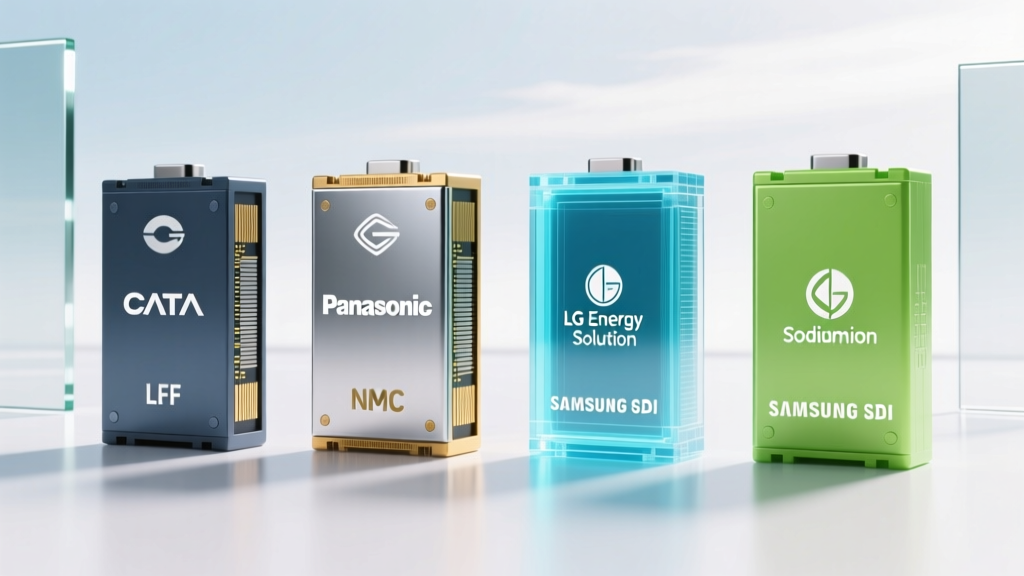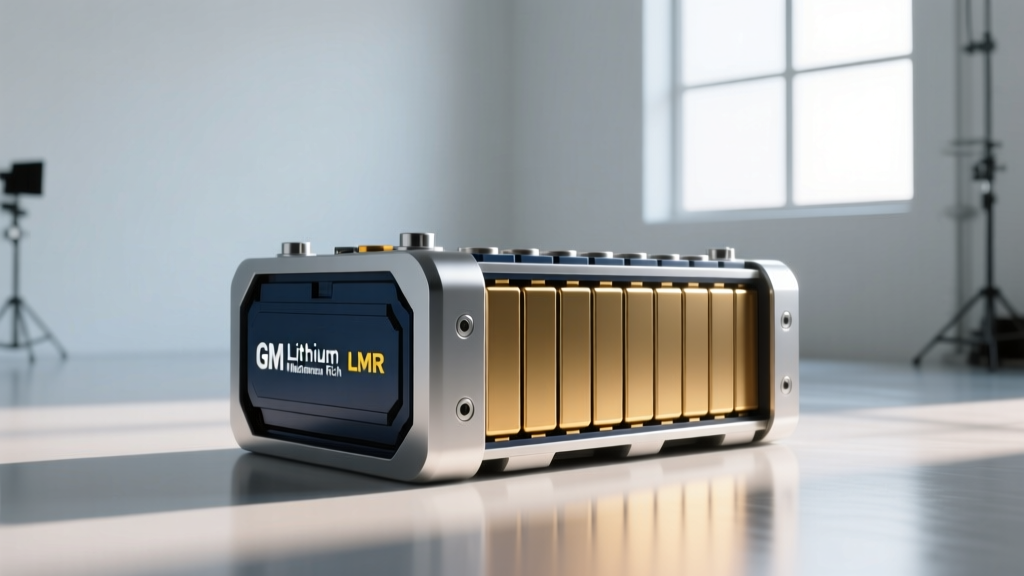
General Motors is betting on a battery chemistry most EV buyers have never heard of: lithium manganese rich (LMR). Slated for production in the Chevrolet Silverado EV and next-generation Ultium-platform vehicles, the GM lithium manganese rich battery promises a middle path between the energy density of nickel-heavy NMC cells and the durability of LFP — while reducing reliance on expensive, supply-chain-sensitive cobalt and nickel. But how does LMR actually stack up against the chemistries already powering millions of EVs on the road today?
This guide breaks down LMR in the context of the full EV battery landscape: what it is, how it degrades, what warranty protection looks like, what replacement costs if you ever need one, and how to maximize the lifespan of whatever chemistry is under your floor.
EV Battery Chemistry 101: LFP, NMC, and Where LMR Fits
Before we get to GM's LMR cells, it helps to understand the two dominant chemistries in today's EV market and the trade-offs each one makes. Every lithium-ion cell uses a cathode material that largely determines its characteristics — energy density, cycle life, thermal stability, and cost.
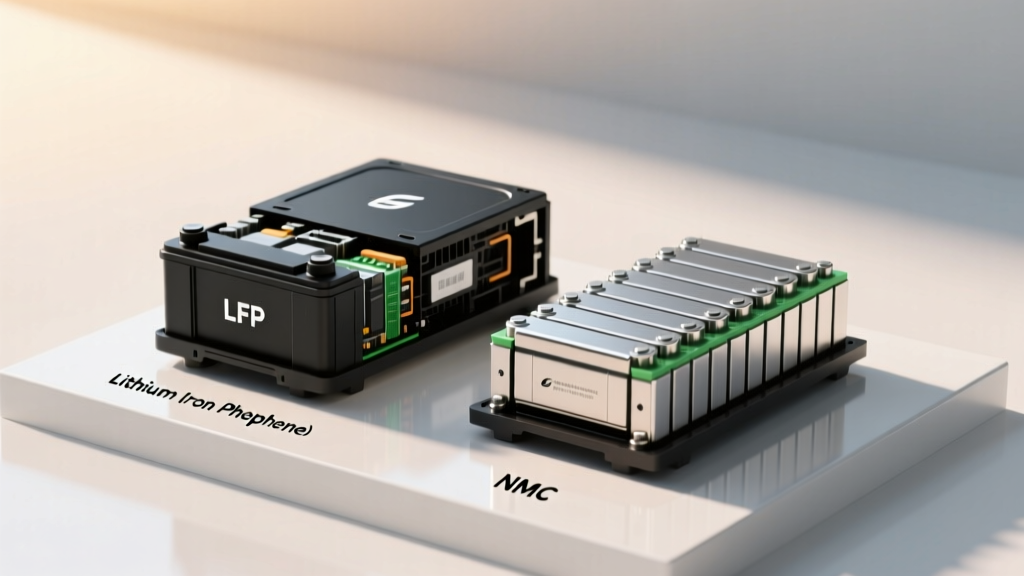
NMC (Nickel Manganese Cobalt) has been the default for most long-range EVs — Tesla Model 3/Y Long Range, Hyundai Ioniq 5, Ford Mustang Mach-E Extended Range. Its high energy density enables 300+ mile EPA ranges in manageable pack sizes, but it depends on costly nickel and cobalt, degrades faster than LFP, and is more thermally sensitive.
LFP (Lithium Iron Phosphate) has surged in popularity for standard-range and entry-level EVs — Tesla Model 3 RWD, Ford Mustang Mach-E Select (2025+), and many Chinese-market vehicles. It sacrifices roughly 15-20% energy density compared to NMC but gains dramatically better cycle life (often 3,000+ cycles to 80% capacity vs. ~1,000-1,500 for NMC), superior thermal stability, and lower raw-material cost. LFP also tolerates regular 100% charging, which simplifies daily ownership.
LMR (Lithium Manganese Rich), as developed by GM in partnership with LG Energy Solution, aims to split the difference. By using a manganese-rich cathode with reduced nickel and zero cobalt, GM targets energy density competitive with mid-range NMC, better thermal stability than high-nickel NMC, and a cost structure closer to LFP — all while sourcing materials more easily within North America (a key factor for IRS §30D tax credit critical-mineral requirements).
| Attribute | LFP | NMC (811/622) | GM LMR (Projected) |
|---|---|---|---|
| Energy Density (Wh/kg, cell-level) | 160–180 | 220–260 | 200–230 (est.) |
| Cycle Life (to 80% SoH) | 3,000–5,000 | 1,000–1,500 | 1,500–2,500 (est.) |
| Thermal Stability | Excellent | Moderate (requires active cooling) | Good (better than high-Ni NMC) |
| Cold-Weather Performance | Moderate (~25-35% range loss at 20°F) | Better (~20-30% loss at 20°F) | Similar to NMC (est.) |
| Cobalt Content | None | 5–10% cathode | None (cobalt-free cathode) |
| Nickel Content | None | 60–80% cathode | Reduced vs. NMC |
| Typical Use Case | Standard-range, fleet, daily commuter | Long-range, performance | Mid-to-long range, cost-optimized |
| Recommended Daily Charge Limit | 100% (no penalty) | 80% (to slow degradation) | 80–90% (est., pending GM guidance) |
| Relative Cell Cost ($/kWh) | Lowest (~$80–100) | Highest (~$120–150) | Mid-range (~$95–120 est.) |
The LFP vs. NMC question, simplified: LFP is better for buyers who prioritize longevity, lower cost, and simpler daily charging habits and who don't need maximum range. NMC is better for buyers who need 300+ miles of EPA range and accept slightly faster degradation. LMR, if GM's projections hold, targets buyers who want NMC-class range with LFP-class cost and better supply-chain resilience — but it is not yet proven at scale in consumer vehicles.
How Long Do EV Batteries Actually Last?
The short answer: longer than most buyers expect, and usually longer than the rest of the car. Modern EV traction batteries are engineered for 150,000–200,000+ miles before reaching 70–80% of original capacity. Catastrophic, sudden failure is rare; what you see instead is gradual capacity loss over years.
Real-world degradation data from high-mileage EV fleets and long-term owner reports paints a consistent picture:
| Milestone | NMC (Typical) | LFP (Typical) | Notes |
|---|---|---|---|
| 1 year / 15,000 mi | 2–4% loss | 1–2% loss | Initial formation loss; steepest early drop |
| 3 years / 45,000 mi | 6–9% loss | 3–5% loss | Curve flattens significantly after year 1 |
| 5 years / 75,000 mi | 9–13% loss | 5–8% loss | Most owners notice ~5-10 mi range reduction |
| 8 years / 120,000 mi | 12–18% loss | 7–12% loss | Warranty threshold period; still functional |
| 10 years / 150,000 mi | 15–22% loss | 10–15% loss | Vehicle often retired for other reasons first |
These figures align with data tracked by sources like fueleconomy.gov's EV technology overview and long-term fleet studies. Key takeaway: a 2024 NMC-equipped EV with a 300-mile EPA range will likely still deliver 250–265 miles at 100,000 miles. That's noticeable, but it's not a crisis.
For GM's LMR chemistry, no large-scale consumer degradation data exists yet because the cells haven't been in customer hands long enough. GM has stated in investor presentations that LMR targets cycle life in the 1,500–2,500 range (to 80% SoH), which would position it between NMC and LFP. We'll need 2–3 years of real-world data to validate those claims.
What the Battery Warranty Actually Covers
Federal law mandates a minimum EV battery warranty of 8 years or 100,000 miles (whichever comes first), and in California Air Resources Board (CARB) states, that extends to 10 years or 150,000 miles. Most automakers, including GM, match or exceed these minimums.
| Automaker | Warranty Term | Capacity Retention Threshold | Chemistry Covered |
|---|---|---|---|
| GM (Chevrolet/GMC/Cadillac EVs) | 8 yr / 100,000 mi | Below 70% SoH | NMC (current Ultium); LMR (upcoming) |
| Tesla (Model 3/Y NMC) | 8 yr / 120,000 mi | Below 70% SoH | NMC / NCA |
| Tesla (Model 3 RWD LFP) | 8 yr / 100,000 mi | Below 70% SoH | LFP |
| Hyundai/Kia | 10 yr / 100,000 mi | Below 70% SoH | NMC |
| Ford | 8 yr / 100,000 mi | Below 70% SoH | NMC / LFP (select trims) |
What triggers a warranty claim: The battery's State of Health (SoH) must fall below the stated threshold — typically 70% of original capacity — within the warranty period. A 85 kWh pack at 70% SoH still holds ~59.5 kWh, which is enough for meaningful daily driving. The warranty covers defects and abnormal degradation, not damage from accidents, flooding, or unauthorized modifications.
Important nuance: Warranty replacement may involve a refurbished or remanufactured pack with capacity equal to or greater than the threshold, not a brand-new battery. This is standard across the industry and is sufficient to restore the vehicle to warranted performance levels.
EV Battery Replacement Cost: What You'd Actually Pay
This is the number that generates the most anxiety — and the most misinformation. Here are the real figures based on current service pricing and manufacturer disclosures:
| Vehicle / Pack Size | Chemistry | Pack Cost (Parts) | Labor & Total | Typical Need Timeline |
|---|---|---|---|---|
| Tesla Model 3 RWD (60 kWh) | LFP | $8,000–$11,000 | $10,000–$14,000 | Rarely before 200,000 mi |
| Tesla Model Y LR (82 kWh) | NMC | $12,000–$16,000 | $15,000–$20,000 | Rarely before 180,000 mi |
| Hyundai Ioniq 5 (77.4 kWh) | NMC | $11,000–$15,000 | $14,000–$19,000 | Rarely before 150,000 mi |
| Chevrolet Silverado EV (200+ kWh) | NMC (Ultium) | $20,000–$30,000 | $25,000–$38,000 | Large pack degrades slowly |
| Ford F-150 Lightning Ext. (131 kWh) | NMC | $18,000–$25,000 | $22,000–$32,000 | Rarely before 150,000 mi |
Context that matters: The vast majority of EV owners will never pay for a battery replacement out of pocket. The battery will either remain functional for the vehicle's entire ownership life, be covered under warranty, or the vehicle will be retired for other reasons (body damage, suspension wear, technology obsolescence) before the pack fails. Out-of-warranty replacement is a real cost, but it is a low-probability event for typical owners who drive 12,000–15,000 miles per year.
Cell costs continue to decline. BloombergNEF's annual battery price survey has tracked average pack-level costs falling from over $400/kWh in 2013 to approximately $120–140/kWh by 2025, with further reductions expected. GM's LMR chemistry, by reducing nickel and eliminating cobalt, is designed to push costs lower still — potentially into the $90–110/kWh range at scale, though that projection depends on manufacturing ramp and supply-chain execution.
Factors That Accelerate (or Protect) Battery Life
Not all miles age a battery equally. Here's what the data shows about the habits that matter most:
Battery Longevity: Do This
- Charge to 80% daily (for NMC/LMR packs). Reserve 100% for road trips. LFP packs can be charged to 100% regularly without significant penalty.
- Use Level 2 (home) charging as your default. Slow, steady AC charging generates less heat and stress than repeated DC fast charging.
- Precondition the battery before fast charging in cold weather. Most EVs do this automatically when you navigate to a charger; it warms the cells to optimal temperature (~70–85°F) for faster charging and less lithium plating risk.
- Keep the pack between 20–80% SoC for daily use. The extremes (below 10% or above 90%) accelerate calendar degradation.
- Park in shade or a garage when possible in hot climates. Sustained high pack temperatures (above 95°F ambient, higher internally) are the single biggest longevity killer.
Avoid When Possible
- Daily DC fast charging. Occasional road-trip fast charging is fine, but using 150–350 kW DC chargers as your primary charging method adds thermal stress and accelerates degradation by an estimated 1–3% additional loss over 5 years vs. Level 2 only.
- Leaving the car at 100% SoC for extended periods (days or weeks), especially in heat. If you must charge to 100%, drive it down within 24 hours.
- Letting the pack sit at very low SoC (below 5%) for more than a few days. This can cause copper dissolution in the anode current collector.
- Repeated hard launch/acceleration from low SoC. High current draw on an already stressed, low-charge pack compounds wear.
How to Check and Monitor Your Battery's State of Health
State of Health (SoH) is the percentage of original capacity your battery can still hold. A new 85 kWh pack at 92% SoH can store ~78.2 kWh. Here's how to track it:
In-vehicle displays: Many 2025–2026 EVs now include SoH indicators or detailed energy history screens. Tesla's app and service mode can display estimated SoH. Hyundai/Kia's Bluelink/Uvo connected services provide battery health reports. GM's Ultium-platform vehicles offer battery health data through the myChevrolet/myGMC apps.
OBD-II diagnostic tools: Third-party devices like the OBDLink SX paired with apps such as EVNotify, LeafSpy (Nissan), or ABRP's battery health feature can read SoH directly from the battery management system (BMS). This is the most accurate consumer-accessible method.
Dealer service visits: Any authorized dealer can pull a full BMS report showing SoH, cell voltage balance, and historical charge data. Request this during routine service, especially before the warranty period expires — if SoH is approaching the 70% threshold, you want it documented while coverage is active.
The DIY range test: Charge to a known SoC (e.g., 100%), reset the trip meter, drive until you reach a low SoC (e.g., 10%), and note the miles driven and energy consumed. Compare to the original EPA-rated kWh/100mi figure. This won't match a BMS read precisely, but it gives a reasonable approximation of real-world capacity.
What GM's LMR Battery Means for the Lineup
GM has announced that LMR cells, developed with LG Energy Solution at their joint-venture Ultium Cells plants in Ohio, Tennessee, and Michigan, will begin entering production vehicles in the 2025–2027 timeframe. The target applications include mid-price, mid-range EVs where cost reduction matters more than squeezing out the last 20 miles of range.
The strategic logic is clear: by eliminating cobalt and reducing nickel, GM lowers both cost and exposure to supply-chain bottlenecks (much of the world's cobalt is mined in the DRC; nickel prices have been volatile). Manganese is abundant, cheap, and can be sourced within North America — which helps future GM vehicles qualify for the §30D federal clean vehicle credit, which requires critical minerals to be sourced from the U.S. or free-trade-agreement partners. Note: credit eligibility depends on MSRP caps ($55,000 for cars, $80,000 for SUVs/trucks/vans), buyer income limits, and final assembly requirements. Always verify current-year rules with a tax professional.
For buyers, the practical question is whether to wait for LMR-equipped models or buy today's NMC/LFP vehicles. If you need an EV now, current chemistries are proven, well-warrantied, and supported by robust charging infrastructure. If you're shopping in the 2026–2028 window and prioritizing value over maximum range, LMR could offer a compelling cost-per-mile proposition — but wait for independent degradation data before assuming it will match LFP's longevity.
Beyond LMR: Solid-State and Silicon-Anode Timelines
Two emerging technologies are frequently cited as the "next big thing" in EV batteries. Here's where they realistically stand:
Solid-state batteries replace the liquid electrolyte with a solid material (ceramic, sulfide, or polymer), potentially doubling energy density, eliminating flammability risk, and enabling faster charging. Toyota, Samsung SDI, and QuantumScape are leading development. However, manufacturing challenges — particularly achieving consistent solid-to-solid interfaces at scale — have pushed realistic production timelines to 2028–2032 for limited-volume applications, with mass-market availability likely not before the early 2030s. No solid-state EV is currently available for purchase.
Silicon-anode batteries replace the graphite anode with silicon, which can store roughly 10x more lithium ions per gram. Companies like Sila Nanotechnologies and Group14 are shipping early silicon-anode materials in limited applications. The challenge is that silicon expands ~300% during charging, causing mechanical stress. Expect incremental adoption — starting with 5–10% silicon blending in conventional anodes — through the late 2020s, with higher silicon content possible by the early 2030s. This will improve energy density gradually, not overnight.
Neither technology invalidates your current or near-future EV purchase. LFP, NMC, and LMR chemistries will remain the dominant platforms through at least 2030, and their continued cost reduction and manufacturing refinement will deliver the most impactful near-term improvements in EV affordability and range.
Frequently Asked Questions
How long do EV batteries last in years and miles?
Most modern EV batteries (NMC, LFP, and projected LMR) are designed to retain 70–80% of original capacity at 150,000–200,000 miles, which typically corresponds to 10–15 years of average driving. LFP chemistries tend to last longer in cycle life, while NMC offers higher energy density. The battery rarely fails catastrophically; it gradually loses capacity over time. Many EVs are retired for non-battery reasons before the pack becomes unusable.
How much does it cost to replace an EV battery?
Full pack replacement costs range from approximately $10,000–$14,000 for smaller packs (60 kWh LFP) to $25,000–$38,000 for large truck/SUV packs (130–200+ kWh NMC), including parts and labor. However, the vast majority of EV owners never pay this cost — the battery either lasts the vehicle's lifetime, is covered under the 8-year/100,000-mile federal warranty mandate, or the vehicle is retired before the pack reaches end of life. Cell costs continue declining year over year.
What does the EV battery warranty cover?
Federal law requires at minimum 8 years/100,000 miles of battery coverage (10 years/150,000 miles in CARB states). The warranty covers capacity loss below a defined threshold — typically 70% of original capacity — as well as manufacturing defects. It does not cover damage from accidents, floods, or unauthorized modifications. Warranty replacement may use a refurbished pack meeting the capacity threshold, not necessarily a brand-new unit.
How do I check my EV battery's State of Health?
You can check SoH through your vehicle's app (Tesla, Hyundai Bluelink, GM myChevrolet), via OBD-II diagnostic tools paired with EV-specific apps (EVNotify, LeafSpy), or by requesting a BMS report from your dealer during service. You can also estimate SoH by comparing your real-world range at a known state of charge to the original EPA-rated range.
LFP vs. NMC: which battery chemistry is better?
It depends on your priorities. LFP is better if you want maximum longevity (3,000–5,000 cycles), lower cost, simpler charging habits (100% daily charging is fine), and don't need 300+ miles of range. NMC is better if you need maximum range and energy density and accept a shorter cycle life (1,000–1,500 cycles) and more careful charging habits (80% daily limit). GM's upcoming LMR chemistry aims to bridge the gap, offering NMC-class range with lower cost and better supply-chain resilience, but long-term consumer data is not yet available.
Is GM's LMR battery available now?
As of early 2026, GM's lithium manganese rich battery cells are in pre-production and validation phases, with first consumer vehicles expected in the 2025–2027 model-year window. Current GM Ultium-platform vehicles (Silverado EV, Blazer EV, Equinox EV, Cadillac Lyriq) use NMC chemistry. Check GM's official EV pages for the latest availability updates on LMR-equipped models.