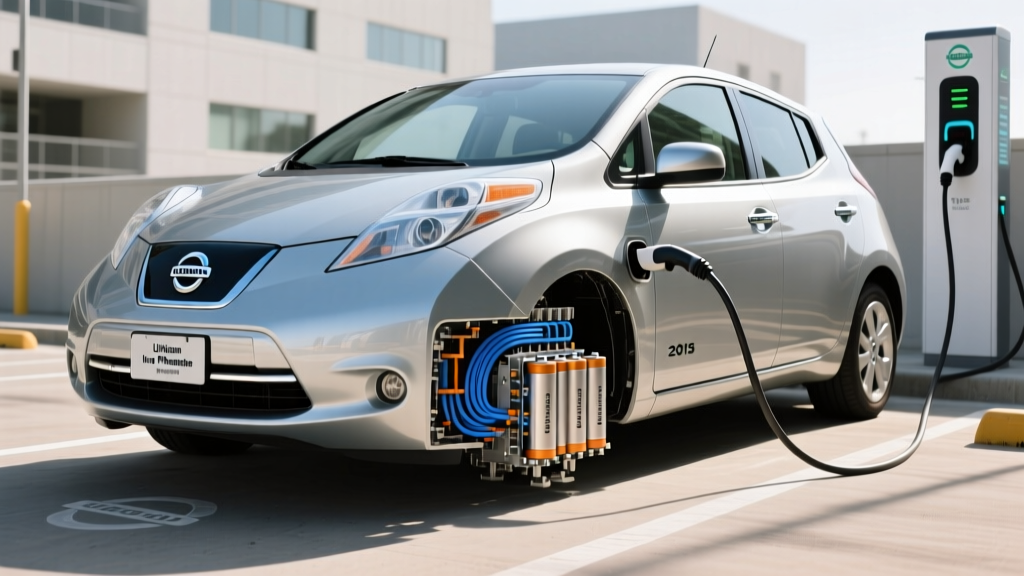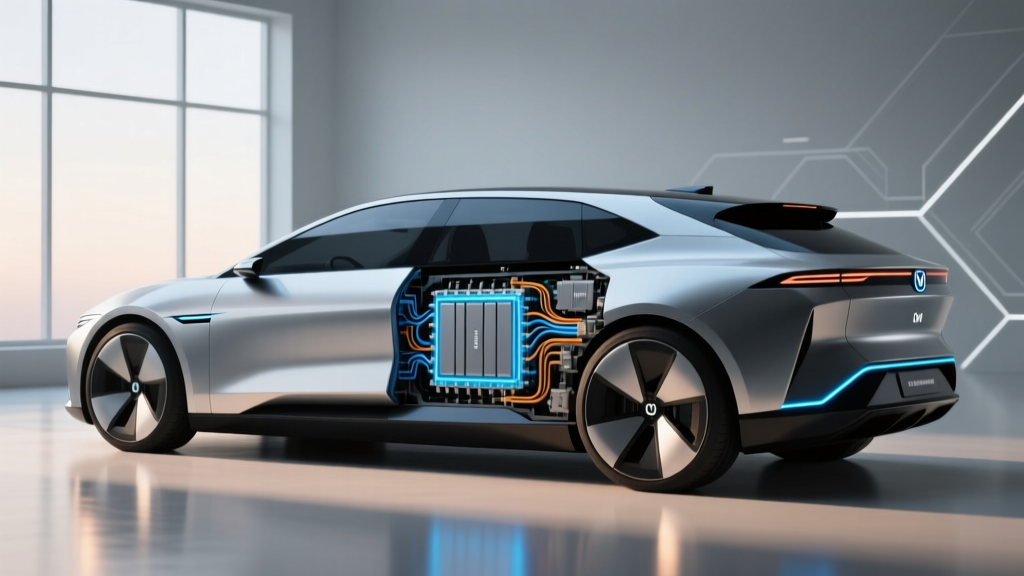
General Motors has bet its electrified future on a single, scalable architecture: the Ultium platform. But for buyers eyeing a 2026 Chevrolet Equinox EV, Cadillac Lyriq, or GMC Sierra EV, the real question isn't just how far these vehicles go on a charge — it's how long the battery will last, what it costs if something goes wrong, and whether GM's cell chemistry is the right fit for your driving habits.
This guide breaks down everything you need to know about GM EV battery technology in 2026, from the nickel-rich NMC cells powering its long-range models to the emerging LFP options, real-world degradation patterns, warranty protections, and the care habits that can add years to your pack's life.
Ultium Platform: What Makes GM's Battery Architecture Different
GM's Ultium platform, developed in partnership with LG Energy Solution, uses large-format pouch cells arranged in modular trays. Unlike competitors that lock a single cell format across all vehicles, Ultium supports both horizontal and vertical cell orientations, allowing GM to scale from the compact Chevrolet Equinox EV (85 kWh usable) up to the GMC Hummer EV (24-module, ~212 kWh pack).
The key engineering decision: GM chose nickel-cobalt-manganese-aluminum (NCMA) chemistry for its initial Ultium lineup — a variant of NMC that reduces cobalt content by roughly 70% compared to earlier LG cells while maintaining high energy density. This translates to more miles per kilogram of battery, which matters for vehicle weight, efficiency, and cost.
As of 2026, Ultium-based vehicles span a wide range:
- Chevrolet Equinox EV: 85 kWh, up to 319 miles EPA, starting ~$33,600
- Cadillac Lyriq: 102 kWh, up to 314 miles EPA, starting ~$58,590
- Chevrolet Silverado EV: up to 200 kWh (4WT trim), up to 440 miles EPA
- GMC Sierra EV Denali: ~200 kWh, up to 440 miles EPA, starting ~$99,495
- Chevrolet Blazer EV: 102 kWh, up to 324 miles EPA
The modularity matters for serviceability: if a single cell module degrades prematurely, GM's service network can theoretically swap individual trays rather than replacing the entire pack — a potential cost saver out of warranty.
NMC vs LFP: GM's Chemistry Strategy and Trade-Offs
GM's primary chemistry remains NCMA (an NMC variant), but the automaker has signaled LFP (lithium iron phosphate) adoption for entry-level trims to reduce costs and improve supply-chain resilience. Here's how the two chemistries stack up in practical terms:
| Attribute | NMC / NCMA (Current Ultium) | LFP (Emerging in GM Lineup) |
|---|---|---|
| Energy Density | ~250–300 Wh/kg (cell level) | ~160–200 Wh/kg (cell level) |
| Typical Use Case | Long-range, performance trims | Base trims, fleet, cost-sensitive models |
| Cycle Life | ~1,000–1,500 full cycles to 80% SoH | ~3,000–5,000+ full cycles to 80% SoH |
| Cold-Weather Performance | Better low-temp energy delivery | More range loss below freezing; preconditioning critical |
| Charging to 100% | Accelerates degradation above 80% SoC | Can charge to 100% regularly with minimal penalty |
| Cost per kWh (cell) | ~$110–$130 (2026 est.) | ~$75–$95 (2026 est.) |
| Cobalt Content | Low (NCMA reduces it further) | Zero |
| Thermal Stability | Good; requires active thermal management | Excellent; inherently more stable |
Which is better? It depends on your usage. If you need maximum range and live in a cold climate, NMC/NCMA delivers more miles per kWh and handles winter better. If you're a daily commuter who charges at home every night and wants a pack that could outlast the vehicle itself, LFP's superior cycle life and tolerance for 100% charging make it compelling — provided you can accept the heavier weight and slightly lower range for a given pack size.
GM has indicated that LFP cells will appear in base-trim Equinox EV and commercial fleet variants, while NCMA remains standard for Lyriq, Silverado EV, and Sierra EV models prioritizing range.
How Long Do GM EV Batteries Actually Last?
The short answer: almost certainly longer than you'll own the vehicle. But let's look at the data.
GM warranties its Ultium batteries for 8 years / 100,000 miles (whichever comes first) with a capacity retention threshold of 70% or greater. California-emissions-state vehicles (which include states that have adopted CARB standards) receive an extended 10 years / 150,000 miles warranty on the battery pack.
| Coverage | Federal (49-State) | CARB States (CA, NY, WA, etc.) |
|---|---|---|
| Duration | 8 years / 100,000 miles | 10 years / 150,000 miles |
| Capacity Threshold | 70% of original capacity | 70% of original capacity |
| What's Covered | Cell defects, excessive degradation, BMS failures | Same |
| Transferable? | Yes, to subsequent owners | Yes |
Real-World Degradation Data Points
Ultium is relatively new (first deliveries in late 2022 with the GMC Hummer EV, followed by the Lyriq in 2023), so multi-year fleet data is still accumulating. However, we can piece together a realistic picture from available evidence:
- Year 1–2 (0–30,000 miles): Expect 2–5% capacity loss. This initial "formation degradation" is normal across all lithium-ion chemistries as the solid electrolyte interface (SEI) stabilizes.
- Year 3–5 (30,000–75,000 miles): Degradation slows to roughly 1–2% per year, assuming normal charging habits and moderate climates. A 2023 Lyriq owner at 60,000 miles might see ~90–93% State of Health.
- Year 6–8 (75,000–120,000 miles): Gradual linear decline continues. Most Ultium packs should remain above the 70% warranty threshold barring manufacturing defects or extreme use patterns.
- Beyond 8 years / 100,000 miles: Data from earlier GM EVs (Chevrolet Bolt with LG NMC cells) shows packs commonly retaining 85–90% capacity at 100,000 miles with proper care. The Bolt's smaller 65 kWh pack experienced more thermal stress; Ultium's larger packs with more robust thermal management are expected to degrade more slowly.
A critical nuance: degradation is not linear. Most lithium-ion packs experience a steeper initial drop, then a long plateau, then a possible "knee" point late in life where degradation accelerates. For most owners trading in at 5–7 years, the knee point is irrelevant.
According to fueleconomy.gov, modern EV batteries are designed to last the life of the vehicle, and data from millions of EVs on the road supports this for typical ownership cycles.
What Does the GM Battery Warranty Actually Cover?
GM's battery warranty protects against two scenarios:
- Manufacturing defects: Cell failures, module imbalances, battery management system (BMS) faults, and coolant leaks within the pack.
- Excessive capacity loss: If your pack drops below 70% of its original usable capacity within the warranty period (8yr/100k or 10yr/150k depending on state), GM will repair or replace modules to bring capacity back above the threshold.
What's not covered:
- Capacity loss from abuse (repeated 100% charges stored for weeks, operating in extreme heat without preconditioning)
- Physical damage from collisions, flooding, or road debris
- Aftermarket modifications to the charging system or battery
- Normal degradation above the 70% threshold (a pack at 72% at year 7 is functioning "as designed")
Warranty service typically involves module-level replacement rather than full-pack swaps, which is faster and less costly for GM. The Ultium platform's modular tray design was engineered specifically to enable this.
GM EV Battery Replacement Cost: What to Expect
This is the question that generates the most anxiety — and the most misinformation. Here are the realistic numbers for 2026:
| Vehicle | Pack Size (Usable) | Full Pack Replacement (Out of Warranty) | Single Module Repair |
|---|---|---|---|
| Chevrolet Equinox EV | 85 kWh | $12,000–$16,000 | $1,500–$3,000 |
| Cadillac Lyriq | 102 kWh | $15,000–$20,000 | $1,800–$3,500 |
| Chevrolet Silverado EV (4WT) | ~200 kWh | $25,000–$35,000 | $2,500–$5,000 |
| GMC Hummer EV | ~212 kWh | $28,000–$38,000 | $2,800–$5,500 |
Critical context: Full-pack replacements are rare. The vast majority of battery-related warranty claims involve single-module or BMS repairs. A module swap might cost $1,500–$3,500 out of warranty — comparable to a transmission repair on a gas vehicle.
When is replacement typically needed? For most owners, it isn't. Battery replacement outside of warranty usually occurs only after:
- Collision damage not covered by insurance (rare)
- Manufacturing defects discovered after warranty expiration (uncommon with Ultium)
- Extreme high-mileage use (200,000+ miles) with accelerated degradation
Cell prices continue to decline. By the time a 2026 Ultium vehicle needs an out-of-warranty replacement (likely 2034+), replacement costs could be 30–50% lower than today's estimates.
Factors That Accelerate (or Preserve) Battery Life
Your habits matter more than chemistry. Here's what the data shows about longevity factors:
Battery Care Checklist for GM Ultium Owners
- Daily charging limit: Set to 80% for NMC/NCMA packs. Use 100% only for road trips. (LFP packs can be charged to 100% daily.)
- DC fast charging: Limit to road trips when possible. Frequent 150+ kW sessions generate heat that accelerates SEI growth and capacity fade. GM's Ultium thermal management mitigates this, but physics still applies.
- Avoid storage at extreme SoC: Don't leave the vehicle at 100% or below 10% for more than a few days. The 40–60% range is ideal for extended parking.
- Precondition before fast charging: Use the GM navigation-based preconditioning (available in the myChevrolet/myCadillac app) to warm the battery before arriving at a DC fast charger. This optimizes the charge curve and reduces stress.
- Cold-weather charging: Plug in whenever possible in sub-freezing temperatures. The battery thermal management system will use grid power rather than pack energy to maintain optimal temperature.
- Avoid repeated deep discharges: Try not to regularly run the pack below 10%. The BMS maintains a buffer (typically 3–5 kWh below the displayed 0%), but habitual deep cycling still stresses cells.
- Use Level 2 for daily charging: A home Level 2 charger (7.7–11.5 kW) is the gentlest charging method and the one GM engineers designed the pack to use most often.
The single biggest longevity killer is heat + high state of charge. An Ultium pack stored at 100% SoC in Phoenix summer temperatures will degrade measurably faster than one stored at 70% in a garage. GM's liquid-cooled thermal management helps, but it can't fully overcome sustained thermal stress when the vehicle is parked unplugged.
How to Monitor Your Ultium Battery Health
GM provides several ways to check your battery's State of Health (SoH):
Through the Vehicle
The infotainment system on 2024+ Ultium vehicles includes an EV menu showing estimated range and energy usage. While GM doesn't display a direct SoH percentage on the dash (unlike Nissan Leaf), the range estimate relative to the EPA sticker provides a rough indicator. A Lyriq that originally showed 314 miles at 100% but now shows 290 miles has experienced approximately 7–8% degradation, accounting for variables like tire wear and climate.
Through the App
The myChevrolet, myCadillac, or myGMC app provides charging history and energy consumption data. While not a direct SoH readout, tracking your kWh/100mi efficiency over time reveals degradation trends. A gradual increase in consumption at consistent driving speeds suggests capacity loss.
Dealer Diagnostic
GM dealers can run a full battery diagnostic that reads individual module voltages, internal resistance, and estimated SoH. Request this during routine service visits, especially as you approach the warranty mileage threshold. If your pack is nearing the 70% capacity line within the warranty period, having dealer documentation on file is essential.
Third-Party Tools
OBD-II dongles paired with apps like Torque Pro or EV-specific tools can read the BMS data stream on Ultium vehicles, including pack voltage, cell-level deltas, and estimated capacity. These readings aren't officially recognized by GM for warranty claims but provide useful trend data for informed owners.
Looking Ahead: Solid-State and Silicon Anode Batteries
GM has invested heavily in next-generation battery R&D through its partnership with SolidEnergy Systems (SES) and internal research programs. Here's a realistic assessment of what's coming — and when:
Silicon-dominant anode cells: GM and SES are developing lithium-metal and silicon-anode cells that promise 20–40% higher energy density than current NCMA. These are targeted for late this decade (2028–2030) in limited production. They would extend range without increasing pack weight or size.
Solid-state batteries: While Toyota, Samsung SDI, and others have announced solid-state timelines, GM has been more cautious, indicating solid-state is a longer-term play likely arriving in the 2030–2035 timeframe for mainstream vehicles. The technology promises faster charging, improved safety, and higher energy density, but manufacturing scale and cost remain significant hurdles.
What this means for today's buyers: Waiting for solid-state is not a practical strategy. Current Ultium NCMA packs are mature, well-warrantied, and offer 300–440 miles of EPA range — enough for the vast majority of use cases. The next meaningful leap will likely come in the form of incremental improvements (silicon anode blending into existing NMC cells) rather than a sudden revolution.
For authoritative updates on battery technology timelines and EV infrastructure, the U.S. Department of Energy regularly publishes fleet degradation studies.
Frequently Asked Questions
How long do GM Ultium batteries last in years and miles?
Based on current data and GM's engineering targets, Ultium packs should retain 80–90% of original capacity at 100,000 miles / 8 years under normal use. Many will outlast 150,000 miles with 75%+ capacity remaining. The pack is designed to last the useful life of the vehicle (typically 15–20 years / 200,000 miles).
How much does it cost to replace a GM EV battery?
A full Ultium pack replacement runs $12,000–$38,000 depending on pack size (85 kWh Equinox EV to 212 kWh Hummer EV). However, full replacements are rare. Module-level repairs typically cost $1,500–$5,500 out of warranty. Within the 8-year/100,000-mile warranty, covered repairs cost the owner nothing.
What does the GM battery warranty cover?
GM covers cell defects, BMS failures, and capacity loss below 70% of original for 8 years/100,000 miles (10 years/150,000 miles in CARB states). It does not cover physical damage, abuse-related degradation, or aftermarket modifications. The warranty is fully transferable to subsequent owners.
How do I check my GM EV battery health?
Monitor range trends via the infotainment system, track kWh/100mi efficiency in the GM mobile app, request a dealer diagnostic at service visits, or use an OBD-II reader to access BMS data. No single reading is definitive — look for trends over weeks and months.
Is LFP or NMC better for a GM electric vehicle?
NMC (specifically GM's NCMA variant) offers higher energy density and better cold-weather performance, making it ideal for long-range and cold-climate drivers. LFP offers far longer cycle life, can be charged to 100% daily, and costs less — ideal for daily commuters who charge at home. GM is deploying both: NCMA for premium/long-range models and LFP for base trims.
Does frequent DC fast charging damage the Ultium battery?
Occasional DC fast charging (road trips) has minimal impact thanks to Ultium's active liquid thermal management. However, exclusive reliance on 150+ kW DC charging will accelerate degradation compared to Level 2 home charging. Aim for 80%+ of your charging on Level 2 for optimal longevity.
Can I get the federal tax credit on a GM EV?
Eligibility for the IRS §30D clean vehicle credit (up to $7,500) depends on your income, the vehicle's MSRP (must be under $55,000 for cars, $80,000 for SUVs/trucks), battery component and critical-mineral sourcing requirements, and whether you take delivery through a qualifying point-of-sale transfer. Rules change frequently — consult a tax professional and check the latest IRS guidance for your specific vehicle and filing status.
GM's Ultium battery technology represents one of the most flexible and well-engineered EV platforms on the road in 2026. With robust warranty coverage, modular serviceability, and a clear chemistry roadmap spanning both NMC and LFP, the long-term ownership picture for GM electric vehicles is genuinely strong — provided you follow basic care habits and understand what the warranty does and doesn't cover.