General Motors has bet its electric future on the Ultium platform — a modular battery architecture that underpins everything from the Chevrolet Equinox EV to the GMC Hummer EV. But for buyers and owners, the real questions aren't about platform branding. They're about chemistry, longevity, and what happens when the battery ages. This guide breaks down exactly what's inside GM's EV batteries, how they degrade over time, what the warranty actually covers, and what replacement costs look like in 2026.
Inside the Ultium Platform: Chemistry and Cell Design
GM's Ultium battery system uses nickel manganese cobalt (NMC) lithium-ion cells supplied primarily by LG Energy Solution through the Ultium Cells joint venture (now rebranded as Ultium CAMI). The chemistry is a high-nickel NMC variant — specifically engineered to reduce cobalt content by roughly 70% compared to earlier GM EV batteries like those in the original Bolt EV.
The Ultium platform is modular: battery packs are built from interchangeable pouch cells arranged in horizontal or vertical orientations within trays. This lets GM scale from a ~65 kWh pack in the Equinox EV up to the massive ~212 kWh pack in the Hummer EV — all using the same fundamental cell building block.
For 2026, GM has also begun incorporating LFP (lithium iron phosphate) cells in select lower-cost trims, following the industry trend toward chemistry diversification. Understanding the trade-offs between these two chemistries is critical for buyers choosing between trims.
| Attribute | NMC (Ultium Standard) | LFP (Select Trims) |
|---|---|---|
| Energy Density | ~250-300 Wh/kg (cell-level) | ~160-200 Wh/kg |
| Typical Pack Size | 85-212 kWh | 65-85 kWh |
| Cycle Life | ~1,000-1,500 full cycles | ~2,500-4,000+ full cycles |
| Cold Performance | Better at sub-32°F | Reduced range/charge speed in cold |
| Cost per kWh | Higher (~$120-140/kWh pack-level) | Lower (~$90-110/kWh pack-level) |
| Max Charge SoC | 80% recommended for daily | 100% daily charging acceptable |
| Weight (for equivalent range) | Lighter | Heavier pack needed |
The bottom line: NMC wins on range-per-pound and cold-weather performance, making it the right choice for long-range trims and buyers in northern climates. LFP wins on longevity, cost, and charging flexibility — you can charge to 100% daily without accelerating degradation, which simplifies ownership for commuters with home charging.
How Long Do GM EV Batteries Last? Real-World Degradation Data
The single most common question from prospective EV buyers is battery lifespan. Based on fleet data, owner reports, and DOE/EPA battery research, here's what the numbers show for NMC-based Ultium packs:
- Year 1 / 15,000 mi: ~2-4% capacity loss (initial settling)
- Year 3 / 45,000 mi: ~5-8% total capacity loss
- Year 5 / 75,000 mi: ~8-12% total capacity loss
- Year 8 / 100,000 mi: ~10-15% total capacity loss
- Year 10+ / 150,000 mi: ~15-20% total capacity loss (estimated, based on accelerated aging models)
Note: These figures assume mixed driving with a combination of Level 2 home charging and occasional DC fast charging. Heavy daily DCFC use or consistent 100% SoC storage will push losses toward the higher end of each range.
For context, a Chevrolet Blazer EV with an initial EPA range of 320 miles might realistically deliver ~280-290 miles of range after five years and 75,000 miles of typical use. That's meaningful but not catastrophic — the vehicle remains highly functional.
LFP-equipped trims should show slower degradation: published research on LFP cells consistently shows 5-8% loss at 100,000 miles, with some fleet data suggesting sub-5% loss under optimal conditions. The trade-off is that the starting range is lower due to reduced energy density.
It's worth noting that NHTSA and independent testing bodies have found that most modern EV batteries outlast the vehicles they're installed in. Catastrophic battery failure (sudden death, not gradual degradation) is statistically rare in liquid-cooled packs like Ultium.
GM's Battery Warranty: What's Covered and What's Not
GM provides a standardized high-voltage battery warranty across its Ultium-based EV lineup. Here are the exact terms as of the 2026 model year:
| Term | Detail |
|---|---|
| Duration | 8 years / 100,000 miles (whichever comes first) |
| Capacity Retention Threshold | 70% of original usable capacity |
| What Triggers a Claim | Battery falls below 70% SoH during warranty period |
| Remedy | Repair, module replacement, or full pack replacement at GM's discretion |
| Transferable? | Yes, to subsequent owners |
| Exclusions | Damage from accidents, modifications, flooding, or unauthorized repairs |
| California/PZEV States | 10 years / 150,000 miles (CARB states) |
The 70% threshold is the industry standard — shared by Tesla, Ford, Hyundai, and most major OEMs. It means that if your Blazer EV started with 102 kWh of usable capacity, GM would honor a warranty claim if it dropped below ~71.4 kWh within 8 years or 100,000 miles.
Based on the degradation data above, hitting that threshold under normal use is unlikely. You'd need to lose 30% of capacity — which accelerated aging models suggest would take 150,000-200,000+ miles for NMC packs and far longer for LFP. The warranty is there as a backstop, not as something most owners will need to use.
EV Battery Replacement Cost: What GM Owners Should Budget For
Out-of-warranty battery replacement is the scenario that generates the most anxiety. Here's what the actual numbers look like for GM Ultium packs in 2026:
| Model | Pack Size | Estimated Pack Cost | Labor + Diagnostics | Total Range |
|---|---|---|---|---|
| Chevrolet Equinox EV | ~85 kWh | $8,500 - $11,000 | $2,000 - $3,500 | $10,500 - $14,500 |
| Chevrolet Blazer EV | ~102 kWh | $10,000 - $13,500 | $2,500 - $4,000 | $12,500 - $17,500 |
| Cadillac Lyriq | ~102 kWh | $10,500 - $14,000 | $2,500 - $4,000 | $13,000 - $18,000 |
| GMC Sierra EV | ~200 kWh | $18,000 - $25,000 | $3,500 - $5,500 | $21,500 - $30,500 |
| GMC Hummer EV | ~212 kWh | $20,000 - $28,000 | $4,000 - $6,000 | $24,000 - $34,000 |
Several important caveats apply to these figures:
- Module-level repair is often possible. Ultium packs are designed with serviceable modules. A single degraded or faulty module can be replaced for $1,500-$3,500 rather than replacing the entire pack.
- Costs are declining. Pack-level pricing has fallen from ~$180/kWh in 2022 to roughly $110-130/kWh in 2026. By the time most 2024-2026 model-year vehicles need out-of-warranty service (2034+), replacement costs will likely be significantly lower.
- Most batteries outlive the car. The average vehicle age at scrappage in the US is roughly 15-17 years. Based on degradation curves, most Ultium packs will retain 75-80%+ capacity at that point — still functional, just with reduced range.
What Kills an EV Battery? Factors That Accelerate Degradation
Not all miles are created equal when it comes to battery wear. Research from the DOE's Idaho National Laboratory and real-world fleet data have identified the primary degradation accelerators:
- Daily SoC target: Set charge limit to 80% for NMC packs. LFP packs can be charged to 100% daily.
- DC fast charging: Limit to road trips when possible. Daily DCFC use can increase degradation by 2-5% over 100k miles compared to Level 2 only.
- Extreme heat: Avoid leaving the vehicle at high SoC (>90%) in hot weather (>95°F) for extended periods. The thermal management system helps, but prolonged heat exposure at high SoC is the single worst stressor for NMC cells.
- Extreme cold: Use preconditioning before charging in sub-freezing temps. Charging a cold battery without preconditioning causes lithium plating, which permanently reduces capacity.
- Long-term storage: If storing for 2+ weeks, leave the pack at 40-60% SoC. Never store at 100% or near 0%.
- Regen braking: Standard regen is fine. Max regen in cold weather without battery preconditioning can stress cells — the vehicle's BMS typically limits this automatically.
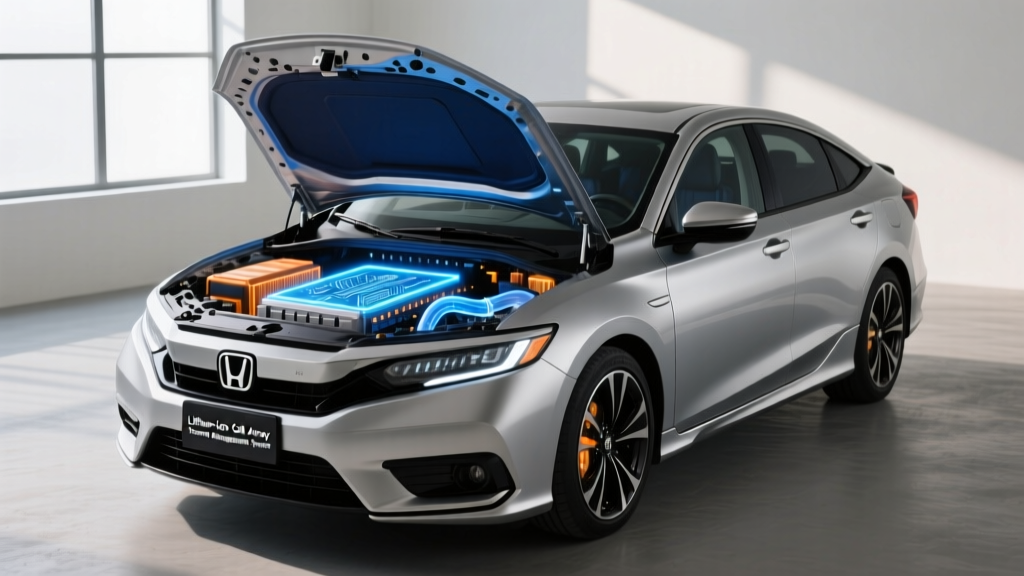
The Ultium platform's liquid thermal management system is a significant advantage here. Unlike passively-cooled packs (like the original Nissan Leaf), the Ultium system actively heats and cools cells to maintain an optimal temperature window of roughly 59-95°F (15-35°C). This dramatically reduces temperature-related degradation, which is why Ultium degradation curves are tracking better than early-generation EVs.
Monitoring Battery Health: How to Check Your SoH
GM provides battery State of Health (SoH) visibility through several channels:
- myChevrolet / myCadillac / myGMC app: The vehicle health section displays an estimated battery health percentage. This is calculated from the battery management system's (BMS) ongoing capacity measurements.
- OnStar Vehicle Diagnostics: Monthly diagnostic reports include battery system status. A declining trend over several months is more informative than a single snapshot.
- Dealer diagnostic scan: A GM dealer can pull a detailed battery health report showing individual module voltage variance, internal resistance, and precise capacity measurement. Request this during routine service visits, especially as you approach the 8-year/100,000-mile warranty boundary.
- Third-party OBD-II tools: Devices like the OBDLink SX combined with apps such as Torque Pro can read BMS-reported SoH data directly. Accuracy varies, but trending data over time is valuable.
One practical tip: track your actual range over consistent routes seasonally. If your 50-mile round-trip commute used to leave you with 40% remaining and now leaves you with 30%, that's roughly a 10% capacity loss signal — time to pull a formal SoH reading.
What's Next for GM: Solid-State and Silicon Anode Batteries
GM has been publicly developing next-generation battery technologies, and it's worth understanding what's realistic versus what's hype.
Silicon anode technology: GM has partnered with companies including Sila Nanotechnologies to develop silicon-dominant anodes that could increase energy density by 20-40% compared to current graphite anodes. GM has signaled potential production integration in the late 2020s. This is a credible timeline given that silicon anode materials are already in limited production for consumer electronics.
Solid-state batteries: GM has filed numerous solid-state patents and has discussed potential deployment, but as of 2026, no production vehicle from any major OEM uses solid-state cells at scale. Industry consensus places widespread solid-state EV deployment in the 2029-2032 timeframe, initially in premium/low-volume applications. The technical challenges — manufacturing yield, interfacial resistance, cost — remain significant.
Sodium-ion batteries: GM has acknowledged evaluating sodium-ion chemistry for ultra-low-cost applications, but this remains in the research phase. Sodium-ion offers lower energy density but dramatically lower material cost and no lithium dependency.
For buyers making decisions today: current Ultium NMC and LFP packs are mature, well-tested technologies. Waiting for solid-state is not a practical strategy unless your purchase timeline extends to 2030+.
Frequently Asked Questions
How long do GM EV batteries last in years and miles?
Based on degradation data, Ultium NMC packs should retain 80-85% of original capacity at 100,000 miles (~8 years of average driving) and 75-80% at 150,000 miles. LFP-equipped trims should retain 90%+ at 100,000 miles. Full pack replacement is rarely needed — most packs will outlast the vehicle's useful life.
How much does it cost to replace a GM EV battery?
Full pack replacement ranges from ~$10,500 for an Equinox EV to ~$34,000 for a Hummer EV, including labor. However, module-level repairs often cost $1,500-$3,500, and replacement costs are declining annually. Most owners will never need an out-of-warranty replacement.
What does the GM battery warranty cover?
GM covers the high-voltage battery for 8 years / 100,000 miles (10 years / 150,000 miles in CARB states) against capacity loss below 70% of original usable capacity. The warranty is transferable to subsequent owners and covers repair, module replacement, or full pack replacement at GM's discretion.
How do I check my GM EV battery health?
Use the myChevrolet/myCadillac/myGMC app's vehicle health section, review OnStar monthly diagnostics, or request a detailed BMS scan at a GM dealer. For ongoing tracking, third-party OBD-II readers can pull SoH data directly from the battery management system.
Is LFP or NMC better for my GM EV?
It depends on your use case. Choose NMC if you need maximum range, live in a cold climate, or frequently road-trip. Choose LFP if you primarily commute, have home charging, want maximum cycle life, and prefer the simplicity of charging to 100% daily. Neither is universally "better" — they optimize for different ownership patterns.
Does frequent Supercharger-style DC fast charging damage my Ultium battery?
DC fast charging does increase degradation compared to Level 2 charging, but the effect is moderate — roughly 2-5% additional capacity loss over 100,000 miles. The Ultium thermal management system mitigates much of the heat stress. For daily use, Level 2 home charging is ideal; for road trips, DC fast charging is perfectly fine and won't cause premature failure.