If you've searched for information on EV battery longevity in harsh environments, you may have encountered the term Germany salt air battery — a reference to ongoing research and real-world testing coming out of German automotive labs and coastal proving grounds that examine how saline, humid, and corrosive atmospheres impact high-voltage traction battery packs. Germany's major OEMs — Volkswagen, BMW, Mercedes-Benz — and suppliers like BASF and Bosch have invested heavily in understanding how salt-laden coastal air interacts with battery enclosures, thermal management systems, and electrical connectors over a vehicle's lifetime.
For US-based EV buyers living in coastal regions (think Florida, the Gulf Coast, the Pacific Northwest, or New England), these findings matter. Salt air doesn't degrade the lithium-ion cells inside a sealed battery pack directly, but it can attack cooling lines, high-voltage connectors, bus bars, and enclosure gaskets — potentially accelerating the kind of peripheral failures that lead to expensive warranty claims or premature pack replacements.
This guide covers everything you need to know about EV battery chemistry, degradation, warranties, replacement costs, and how environmental factors like coastal salt exposure fit into the longevity picture — all grounded in 2026 model-year data.
LFP vs NMC/NCA: Which Battery Chemistry Suits Your Climate?
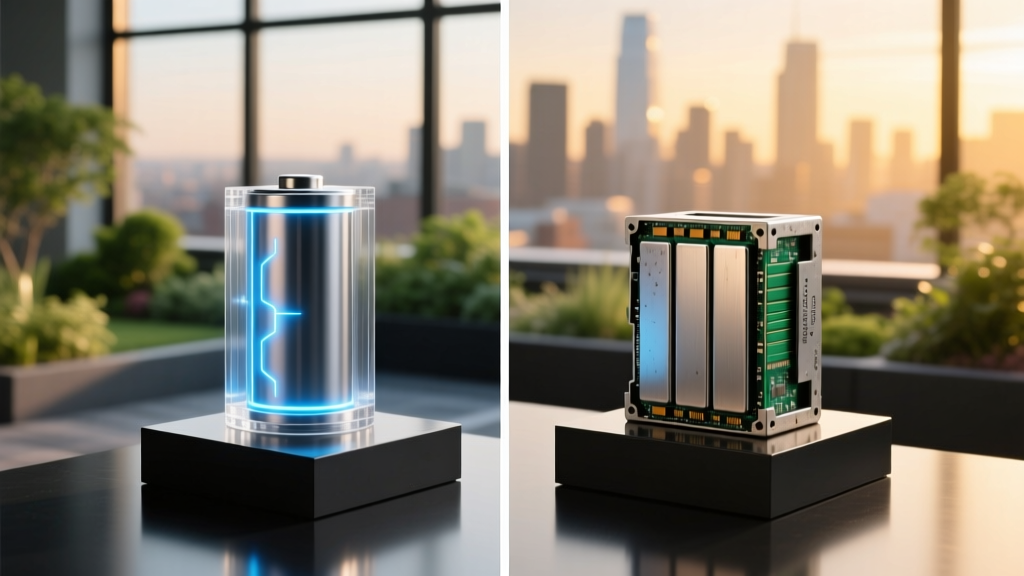
Every EV sold in the US in 2026 uses one of two dominant lithium-ion chemistries: LFP (lithium iron phosphate) or NMC/NCA (nickel manganese cobalt / nickel cobalt aluminum). The chemistry inside the cells determines energy density, cycle life, thermal stability, cold-weather performance, and cost — and it has implications for how well a pack tolerates the thermal stress that coastal heat and humidity can add.
| Attribute | LFP (LiFePO₄) | NMC / NCA |
|---|---|---|
| Energy Density | ~160–180 Wh/kg (lower) | ~220–300 Wh/kg (higher) |
| Cycle Life | 3,000–5,000+ cycles | 1,000–2,500 cycles |
| Thermal Stability | Excellent (stable to ~270°C) | Good (thermal runaway risk higher) |
| Cold Performance (below 32°F) | Moderate — slower charging, ~15-20% range loss | Better — ~10-15% range loss |
| Cost per kWh | ~$80–$100 (lower) | ~$110–$140 (higher) |
| Typical 100% SoC Charging | Recommended regularly for calibration | Best kept to 80% daily; 100% for trips |
| Common in 2026 Models | Tesla Model 3/Y RWD, Ford Mustang Mach-E Select, Rivian Standard | Tesla Long Range, Hyundai Ioniq 5/6, BMW iX, VW ID.4 Pro, Lucid Air |
What this means for coastal owners: LFP's superior thermal stability is an advantage in hot, humid coastal climates where ambient temperatures regularly exceed 90°F and battery thermal management systems work harder. NMC packs deliver more range per pound, which matters for longer coastal highway routes, but they require more careful state-of-charge management to maximize lifespan.
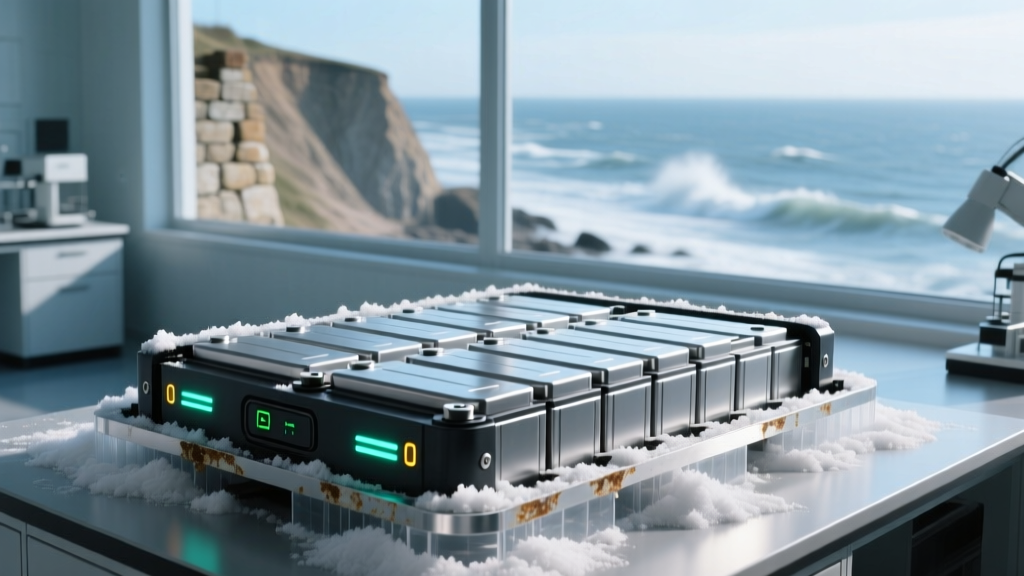
German researchers testing packs in North Sea and Baltic Sea coastal environments have found that the sealed battery enclosure itself protects cells from direct salt exposure. The vulnerability lies in external cooling loops, high-voltage cable junctions, and charge port assemblies — components that are chemistry-agnostic but environment-sensitive. Manufacturers like Volkswagen Group have responded with enhanced corrosion-resistant coatings on cooling plates and IP67+ rated connectors across their ID. family.
How Long Do EV Batteries Actually Last?
The short answer: most EV traction batteries outlast the vehicles they're installed in. But the numbers behind that statement deserve scrutiny.
Degradation Data: What Real-World Fleets Show
EV battery degradation follows a non-linear curve — steepest in the first 12–24 months, then flattening into a slow, predictable decline. Here's what aggregated fleet and owner data shows for 2026-relevant platforms:
| Time / Miles | NMC/NCA Packs | LFP Packs |
|---|---|---|
| Year 1 / ~12,000 mi | 95–97% remaining | 97–99% remaining |
| Year 3 / ~36,000 mi | 90–94% remaining | 94–97% remaining |
| Year 5 / ~60,000 mi | 86–91% remaining | 91–95% remaining |
| Year 8 / ~100,000 mi | 80–87% remaining | 87–93% remaining |
| Year 10 / ~120,000 mi | 76–84% remaining | 84–91% remaining |
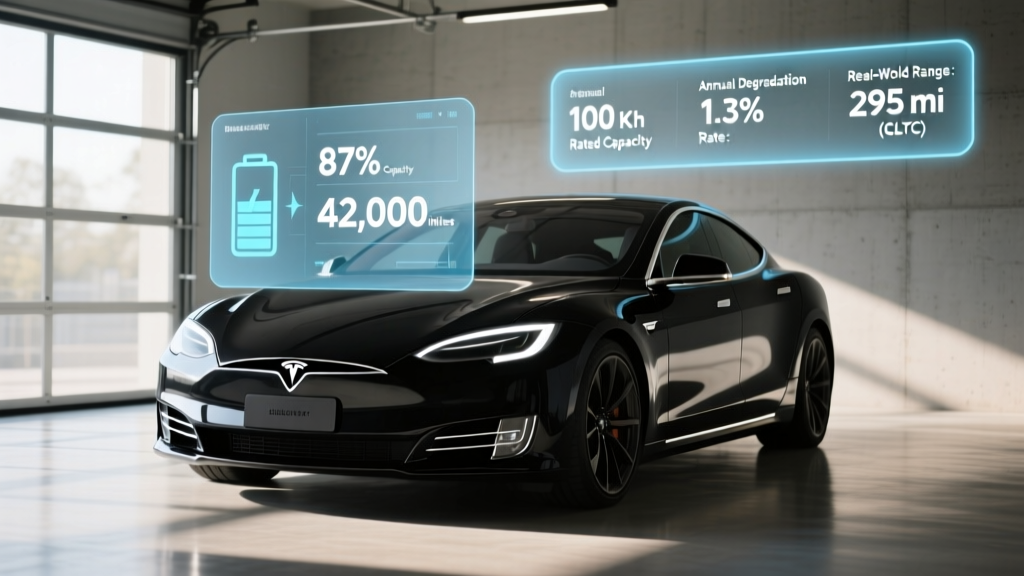
Sources like Geotab's fleet degradation studies and data aggregated by Recurrent Auto consistently show that median capacity loss across modern liquid-cooled packs is roughly 1.5–2.5% per year after the initial break-in period. Tesla's 2025 Impact Report noted that Model 3/Y packs retained an average of 85% capacity at 150,000 miles — well above the warranty threshold.
Coastal/salt-air note: There is no published evidence that salt air accelerates cell-level degradation. However, corrosion of thermal management components (coolant lines, pump housings) in salt-heavy environments can impair cooling efficiency, which indirectly raises average cell temperatures and slightly accelerates calendar aging. Rinsing the undercarriage periodically — especially after beach driving or winter road salt exposure — is a practical mitigation.
What Does the EV Battery Warranty Actually Cover?
Federal law (via EPA/CARB emissions warranty alignment and manufacturer commitments) effectively mandates that EV battery warranties cover a minimum of 8 years / 100,000 miles. Most automakers match or exceed this. The critical detail is the capacity retention threshold — the point at which the manufacturer agrees the pack has degraded enough to warrant repair or replacement.
| Manufacturer | Warranty Period | Capacity Threshold | Notes |
|---|---|---|---|
| Tesla (Model 3/Y RWD — LFP) | 8 yr / 120,000 mi | 70% | Module-level repair when possible |
| Tesla (Long Range/Performance — NMC) | 8 yr / 120,000 mi | 70% | Same threshold across chemistries |
| Hyundai / Kia (Ioniq 5/6, EV6/EV9) | 10 yr / 100,000 mi | 70% | Among the longest coverage |
| Ford (Mach-E, F-150 Lightning) | 8 yr / 100,000 mi | 70% | Component-level replacement strategy |
| Volkswagen (ID.4, ID.7) | 8 yr / 100,000 mi | 70% | Enhanced corrosion protection on coastal-market units |
| BMW (i4, iX, i7) | 8 yr / 100,000 mi | 70% | Modular pack design allows section replacement |
| Rivian (R1T, R1S) | 8 yr / 175,000 mi | 70% | Highest mileage threshold in market |
| GM (Chevrolet Equinox EV, Blazer EV, Cadillac Lyriq) | 8 yr / 100,000 mi | 60% (some trims 70%) | Verify threshold by specific model/year |
Key takeaway: If your battery drops below 70% of original usable capacity within the warranty window, the manufacturer will repair or replace it — typically by swapping defective modules rather than the entire pack. Corrosion damage from environmental exposure is generally not covered unless it can be traced to a manufacturing defect in sealing or coating. This is where Germany's salt-air testing protocols inform the enhanced protective measures OEMs now apply to packs destined for coastal markets.
EV Battery Replacement Cost: What You'll Actually Pay
This is the question that generates the most anxiety — and the most misinformation. Let's put concrete 2026 numbers to it.
| Vehicle / Pack Size | Full Pack Cost (Parts) | Labor | Total Estimated | Typical Need Timeline |
|---|---|---|---|---|
| Tesla Model 3 RWD (~60 kWh LFP) | $8,000–$11,000 | $1,500–$2,500 | $9,500–$13,500 | Rarely before 200,000+ mi |
| Hyundai Ioniq 5 (~77.4 kWh NMC) | $12,000–$16,000 | $2,000–$3,000 | $14,000–$19,000 | Rarely before 180,000+ mi |
| Ford F-150 Lightning Ext. Range (~131 kWh NMC) | $18,000–$25,000 | $3,000–$4,500 | $21,000–$29,500 | Rarely before 150,000+ mi |
| Chevrolet Equinox EV (~85 kWh NMC) | $11,000–$15,000 | $2,000–$3,000 | $13,000–$18,000 | Rarely before 180,000+ mi |
| BMW iX xDrive50 (~111.5 kWh NMC) | $16,000–$22,000 | $2,500–$4,000 | $18,500–$26,000 | Rarely before 170,000+ mi |
Context that matters: Battery cell prices have fallen from over $1,200/kWh in 2010 to roughly $95–$120/kWh at the pack level in 2026, per BloombergNEF data. More importantly, most modern packs are modular — meaning a technician can replace a single defective module ($1,500–$4,000) rather than the entire pack. Full-pack replacements are rare and typically only occur after major physical damage or catastrophic failure.
The vast majority of EV owners will sell, trade, or total their vehicle before needing a battery replacement. The US Department of Energy's fueleconomy.gov database shows no widespread pattern of premature pack failure in any current-generation platform.
Factors That Accelerate (or Preserve) Battery Health
Whether you're parked steps from the Atlantic or inland in Arizona, the same physics govern your battery's lifespan. Here's what actually moves the needle:
Battery Care Checklist for Maximum Longevity
- Minimize DC fast charging above 150 kW when unnecessary. Occasional road-trip fast charging is fine, but daily 250–350 kW sessions generate sustained heat that accelerates electrolyte decomposition. Aim for Level 2 home charging as your daily routine.
- Avoid prolonged storage at 100% or below 10% SoC. For NMC packs, the sweet spot is 20–80% for daily use. LFP packs should be charged to 100% at least once a week for cell-balancing calibration but don't need to sit at 100% for days.
- Precondition before fast charging. Most 2026 EVs do this automatically when you navigate to a charger. Preconditioning warms the pack to ~30–35°C, enabling faster charging with less stress on the cells.
- Manage extreme heat exposure. Park in shade or a garage when possible. Battery thermal management systems consume energy and work harder in sustained 95°F+ ambient temps — common in Gulf Coast summers.
- Rinse the undercarriage in salt environments. Coastal salt air and winter road salt can corrode cooling lines, suspension components, and connector housings. A quarterly undercarriage wash is cheap insurance.
- Keep software updated. OEM battery management system (BMS) updates often refine charge algorithms, thermal thresholds, and cell-balancing routines that extend pack life.
- Use scheduled charging. Set your EV to finish charging to 80% just before you leave — rather than sitting at 80% for 12 hours overnight. This reduces time at elevated voltage.
The salt-air specific factor: German testing by organizations including TÜV Rheinland has shown that EV battery enclosures rated IP67 or higher effectively prevent salt aerosol intrusion into the cell modules. The vulnerability is in external interfaces — the DC charge port, coolant service valves, and high-voltage service disconnects. Vehicles in coastal environments benefit from dielectric grease application on accessible connector interfaces during routine service, and from OEM-applied cavity wax and e-coat treatments that are now standard on most 2026 models.
How to Monitor Your Battery's State of Health (SoH)
State of Health (SoH) is expressed as a percentage of the battery's original usable capacity. A new pack is 100% SoH; a pack that can only hold 77 kWh of its original 84 kWh is at ~91.7% SoH. Here's how to check yours:
In-Vehicle Displays
Most 2026 EVs now include a battery health indicator in the infotainment system or mobile app:
- Tesla: The mobile app shows estimated range at 100% SoC, which you can compare to the original EPA rating. A significant drop signals degradation. Third-party tools like TeslaFi or Scan My Tesla can pull more granular SoH data from the BMS.
- Hyundai/Kia: The EV app displays battery health status and charging diagnostics. The Ioniq 5/6 and EV6/EV9 include a "Battery Condition" screen in the cluster.
- Ford: FordPass shows battery state of charge and estimated range trends. SoH percentage is available via OBD-II dongles.
- BMW: The My BMW app provides battery health reports, and dealers can pull detailed SoH readouts during service visits.
Third-Party and OBD-II Tools
Devices like the OBDLink MX+ paired with apps such as Car Scanner or ABRP (A Better Route Planner) can read BMS-reported SoH, cell voltage variance, and temperature data. For pre-purchase inspections on used EVs, a dealer BMS health report is the gold standard — request one before buying.
What's Normal vs. Concerning
A 2–3% capacity loss in year one is normal and not a defect. A sudden drop of more than 5% in a short period, or a single module showing significantly lower voltage than others (cell imbalance), warrants a service visit. Most BMS systems will flag this with a warning before it becomes critical.
Emerging Battery Tech: Solid-State and Silicon Anodes
German automakers and suppliers are at the forefront of next-generation battery development, which is partly why "Germany salt air battery" searches often surface alongside advanced chemistry discussions. Here's where the technology actually stands in 2026:
Solid-State Batteries
Solid-state batteries replace the liquid electrolyte with a solid ceramic, polymer, or sulfide conductor. The theoretical benefits are substantial: higher energy density (~400–500 Wh/kg at the cell level), faster charging, and dramatically improved thermal stability (essentially eliminating thermal runaway risk). BMW, Mercedes-Benz, and Volkswagen have all announced partnerships with solid-state developers — BMW with Solid Power, Mercedes with Factorial Energy.
Realistic timeline: Limited production vehicles with solid-state packs are expected in the 2028–2030 timeframe, initially in low-volume luxury models. Broad market availability at mainstream price points is not expected before 2032–2035. Manufacturing yield, cost, and interface stability challenges remain unsolved at scale.
Silicon Anode Technology
Silicon-dominant anodes (replacing graphite) offer 20–40% energy density improvements and faster lithium-ion diffusion. Companies like Sila Nanotechnologies and Group14 Technologies are supplying silicon anode materials to battery cell manufacturers. The 2026 Mercedes-Benz G-Class 580e uses a silicon-anode battery from Factorial Energy, marking one of the first production applications.
Realistic timeline: Silicon anode blends (10–30% silicon content) are already entering production cells in 2025–2026. Higher silicon content anodes will proliferate through 2027–2030 as swelling and cycle-life challenges are addressed.
Important: Neither solid-state nor high-silicon anode batteries are available in mainstream 2026 EVs. Any vehicle marketed today uses conventional lithium-ion with liquid electrolyte. Treat announcements of "solid-state coming soon" with appropriate skepticism — the engineering hurdles are real, even if the trajectory is promising.
Frequently Asked Questions
Does salt air damage EV batteries?
Salt air does not directly damage the sealed battery cells — modern packs are IP67-rated and hermetically sealed. However, salt-laden air can corrode external components like cooling lines, high-voltage connectors, and charge port contacts over time. German OEM testing has driven improved anti-corrosion coatings on these components for coastal-market vehicles. Periodic undercarriage rinsing and connector inspection during service visits are practical precautions.
How long do EV batteries last in years and miles?
Based on aggregated fleet data from sources like Recurrent Auto and Geotab, modern liquid-cooled EV batteries typically retain 80–90% of their original capacity at 100,000 miles (roughly 8 years of average driving). Most packs will outlast 150,000–200,000 miles before reaching the 70% capacity threshold that triggers a warranty claim. LFP chemistry packs generally outlast NMC packs in cycle life, though NMC offers better cold-weather performance.
How much does it cost to replace an EV battery in 2026?
Full pack replacement costs range from approximately $9,500 for a Tesla Model 3 RWD (~60 kWh LFP) to $29,500 for a Ford F-150 Lightning Extended Range (~131 kWh NMC), including parts and labor. However, most replacements involve individual module swaps at $1,500–$4,000 per module rather than full pack replacements. The majority of EV owners never need a battery replacement during their ownership.
Is LFP or NMC better for my EV?
Neither chemistry is universally "better" — it depends on your priorities. Choose LFP if you want maximum cycle life, lower cost, excellent thermal stability (advantageous in hot coastal climates), and don't mind slightly lower range. Choose NMC/NCA if you need maximum range per charge, better cold-weather performance, and faster DC charging speeds. For most daily-driving coastal residents who charge at home, LFP's longevity and heat tolerance make it an excellent choice.
What does the EV battery warranty cover?
Standard EV battery warranties cover defects in materials and workmanship, plus capacity degradation below a specified threshold (typically 70% of original capacity) within the warranty period (usually 8 years / 100,000 miles, or 10 years / 100,000 miles for Hyundai/Kia). Environmental corrosion damage is generally excluded unless traceable to a manufacturing defect. Check your specific owner's manual for exact terms, as they vary by manufacturer and model year.
How do I check my EV battery health?
Most 2026 EVs display battery health information through the vehicle's infotainment system or companion mobile app. For more detailed data — including cell-level voltage balance, internal resistance, and precise SoH percentage — use an OBD-II adapter with apps like Car Scanner or visit your dealer for a BMS diagnostic report. Comparing your current range at 100% charge to the original EPA rating gives a quick approximation of capacity loss.