Why Georgia's Climate Matters for Your EV Battery
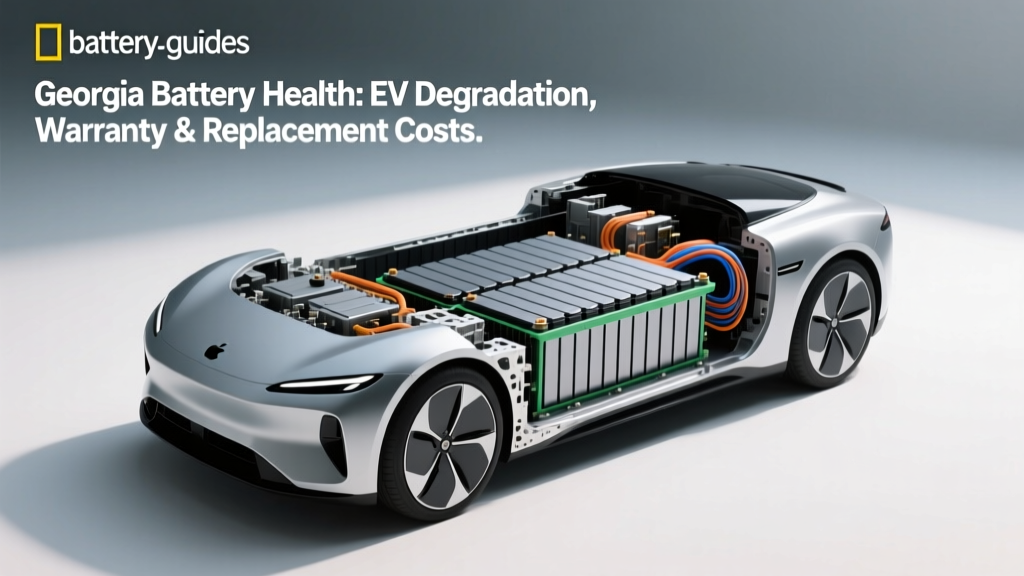
Owning an electric vehicle in Georgia presents a unique thermal environment for high-voltage traction batteries. Summers in Atlanta, Savannah, and Macon routinely push ambient temperatures above 95°F (35°C), with pavement and undercarriage temperatures climbing significantly higher. Heat accelerates lithium-ion cell degradation through electrolyte decomposition and solid electrolyte interphase (SEI) layer growth — meaning a Georgia battery in an EV may age differently than the same pack in cooler climates like Oregon or Michigan.
But the story isn't all negative. Georgia's mild winters mean you largely avoid the severe cold-weather range loss that plagues northern EV owners. Where a Tesla Model Y might lose 20-30% of its EPA range at 10°F in Minnesota, the same vehicle in a Georgia January (typically 40-55°F) retains nearly its full rated range. The net result: Georgia is a moderately favorable EV state, provided you understand how to manage heat exposure.
This guide breaks down battery chemistry, real-world degradation data, warranty coverage, replacement economics, and actionable care strategies — all calibrated for the Peach State's climate.
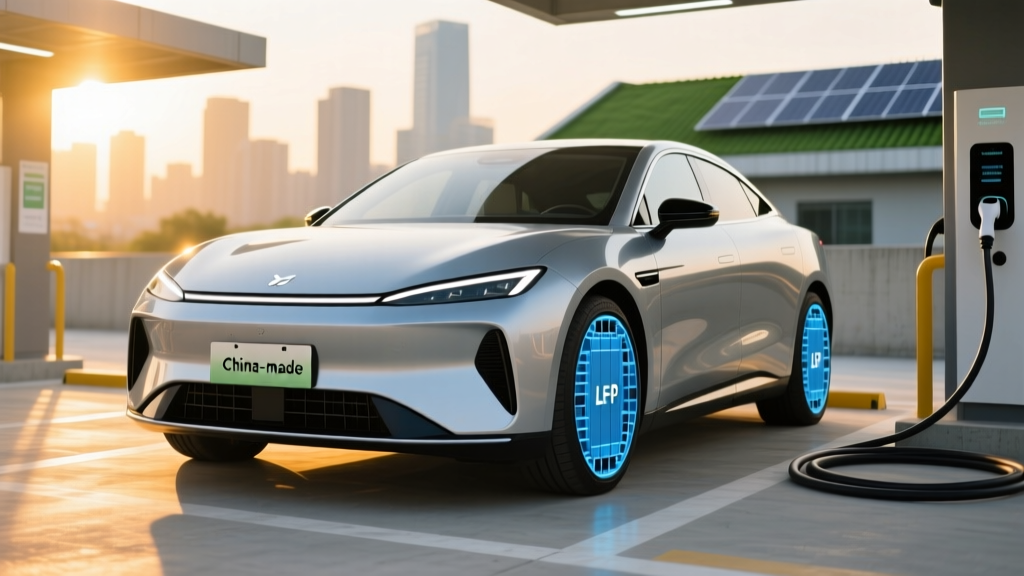
LFP vs. NMC: Which Battery Chemistry Suits Georgia Driving?
Two dominant lithium-ion chemistries power today's EVs: lithium iron phosphate (LFP) and nickel manganese cobalt (NMC), with some manufacturers using nickel cobalt aluminum (NCA). Your chemistry choice affects energy density, longevity, heat tolerance, and cost — all critical for Georgia drivers.
| Attribute | LFP (LiFePO₄) | NMC / NCA |
|---|---|---|
| Energy Density | ~160-180 Wh/kg (lower) | ~220-260 Wh/kg (higher) |
| Cycle Life | 3,000-5,000+ cycles | 1,500-2,500 cycles |
| Heat Tolerance | Excellent — less thermal runaway risk | Good — requires active cooling |
| Cold Performance | Weaker below 32°F | Better low-temp discharge |
| State of Charge (SoC) Limit | Can charge to 100% daily | Best kept 20-80% for longevity |
| Cost per kWh | ~$90-110/kWh (lower) | ~$120-145/kWh (higher) |
| Common In (2026) | Tesla Model 3 RWD, Model Y RWD, Ford Mustang Mach-E Select (LFP option), BYD models | Tesla Long Range/Performance, Hyundai Ioniq 5/6, Rivian, GM Ultium platforms |
How Long Do EV Batteries Actually Last? Real Degradation Data
The single most common question from prospective EV buyers: how long do EV batteries last? The data from 2025-2026 fleet studies and manufacturer reports paint a reassuring picture, though Georgia's heat demands context.
| Mileage | Mild Climate (GA/CA/TX) | Cold Climate (MN/MI/NY) | Hot Climate (AZ/NV) |
|---|---|---|---|
| 50,000 miles | 4-7% capacity loss | 5-8% capacity loss | 6-10% capacity loss |
| 100,000 miles | 8-12% capacity loss | 10-14% capacity loss | 12-18% capacity loss |
| 150,000 miles | 12-17% capacity loss | 14-19% capacity loss | 18-24% capacity loss |
| 200,000 miles | 16-22% capacity loss | 18-25% capacity loss | 22-30% capacity loss |
Key data points from the field:
- Tesla Impact Report (2024): Model 3/Y batteries retained approximately 85% capacity at 150,000 miles across all climates, with LFP variants showing slower degradation curves.
- Geotab fleet study (2024-2025): Analysis of 10,000+ EVs found average annual degradation of 1.8% in temperate climates vs. 2.5% in hot climates — a meaningful but manageable gap.
- Hyundai/Kia 800V platforms (Ioniq 5, EV6): Active liquid cooling has kept degradation under 10% at 100,000 miles in Southern US fleet data, thanks to superior thermal management during DC fast charging.
What Does the EV Battery Warranty Cover?
Federal law mandates a minimum 8-year/100,000-mile warranty on EV battery packs for emissions-related components, but manufacturers have standardized this as the baseline high-voltage battery warranty across all 50 states. Here's what Georgia buyers need to know:
| Manufacturer | Warranty Period | Mileage Limit | Capacity Retention Threshold | Chemistry |
|---|---|---|---|---|
| Tesla (Model 3/Y RWD) | 8 years | 100,000 mi | 70% | LFP |
| Tesla (Model 3/Y LR/Perf) | 8 years | 120,000 mi | 70% | NMC/NCA |
| Hyundai (Ioniq 5/6) | 8 years | 100,000 mi | 70% | NMC |
| GM (Ultium — Blazer EV, Equinox EV, Silverado EV) | 8 years | 100,000 mi | 70% (60% for fleet) | NMC |
| Ford (Mustang Mach-E, F-150 Lightning) | 8 years | 100,000 mi | 70% | NMC / LFP (Select) |
| Rivian (R1T, R1S) | 8 years | 120,000 mi | 70% | NMC |
| BMW (i4, i5, iX) | 8 years | 100,000 mi | 70% | NMC |
What triggers a warranty claim? If your battery's State of Health (SoH) drops below the stated threshold (typically 70% of original capacity) within the warranty period, the manufacturer will repair or replace the pack at no cost. This covers defects, premature cell failure, and abnormal degradation — but not damage from accidents, flooding, or unauthorized modifications.
Georgia-specific note: Georgia does not have a state-level EV battery warranty extension beyond the federal mandate. However, some manufacturers offer extended powertrain warranties in CARB-adopting states; Georgia is not one of them, so the 8-year/100,000-mile baseline applies uniformly.
How Much Does an EV Battery Replacement Cost?
Out-of-warranty battery replacement is the specter that haunts EV purchase decisions. Let's ground this in actual 2025-2026 pricing data, because the fear often exceeds the reality.
| Vehicle | Battery Size (kWh) | Chemistry | Replacement Cost (Parts + Labor) | Typical Replacement Trigger |
|---|---|---|---|---|
| Tesla Model 3 RWD | ~60 kWh | LFP | $7,000 - $10,000 | Rare before 200K+ mi |
| Tesla Model Y Long Range | ~82 kWh | NMC | $10,000 - $14,000 | Rare before 200K+ mi |
| Hyundai Ioniq 5 | 77.4 kWh | NMC | $11,000 - $15,000 | Uncommon before 180K mi |
| Ford F-150 Lightning Ext. Range | 131 kWh | NMC | $18,000 - $22,000 | Very rare; large pack degrades slowly |
| Chevrolet Equinox EV | ~85 kWh | NMC (Ultium) | $12,000 - $16,000 | Uncommon before 180K mi |
| Nissan Leaf (40 kWh) | 40 kWh | NMC (passive air cooling) | $5,500 - $8,000 | More likely; air-cooled packs age faster |
Critical context for Georgia owners: The vast majority of EV batteries never need full replacement during typical ownership. According to fueleconomy.gov data and manufacturer warranty claims, fewer than 2-3% of EVs require battery replacement within the first 10 years or 150,000 miles. When replacement is needed, it's often individual module swaps rather than full-pack replacements, reducing costs by 40-60%.
Also worth noting: battery prices have fallen dramatically. Pack-level costs dropped from roughly $180/kWh in 2020 to approximately $100-120/kWh by 2025-2026, according to BloombergNEF tracking. This means replacement costs will continue declining as your vehicle ages.
Georgia Battery Care: 7 Strategies to Maximize Longevity in Southern Heat
- Avoid parking in direct sunlight for extended periods. Cabin and battery temperatures can exceed 130°F on a Georgia summer afternoon. Use covered parking, garages, or reflective windshield shades whenever possible. Battery thermal management systems draw parasitic power to cool the pack even when parked.
- Limit DC fast charging to road trips. Frequent 150-350 kW DC fast charging generates significant internal cell heat. For daily driving, Level 2 home charging (7-11 kW) is far gentler on battery chemistry. Reserve DC fast charging for when you genuinely need it.
- Set your charge limit to 80% for NMC batteries. If your EV uses NMC or NCA chemistry, configure the charge limit to 80% for daily use. Sustained time at 100% SoC accelerates degradation — especially when combined with Georgia heat. LFP owners can charge to 100% daily without concern.
- Use preconditioning before DC fast charging. Most modern EVs (Tesla, Hyundai/Kia, GM Ultium, Ford) will precondition the battery when you navigate to a charger. This optimizes the pack temperature for faster charging and reduced thermal stress. Always use the vehicle's built-in navigation to route to chargers to enable this feature.
- Don't let SoC sit at 0% or 100% for days. If you're leaving for vacation from Hartsfield-Jackson, leave the car plugged in with a 50-60% charge limit. Extended storage at extreme SoC levels — especially in heat — accelerates calendar aging.
- Keep your EV plugged in during heat waves. When plugged in, the thermal management system can use grid power (not battery energy) to keep the pack cool. This is especially important during Georgia's July-August heat domes when overnight lows barely drop below 80°F.
- Monitor your State of Health regularly. Check SoH through your vehicle's app or infotainment system at least quarterly. Early detection of abnormal degradation allows you to file a warranty claim before the coverage period expires.
How to Check and Monitor Your EV Battery's State of Health
State of Health (SoH) is expressed as a percentage of original battery capacity. A new EV starts at 100% SoH; if your 82 kWh pack now holds 72 kWh, its SoH is approximately 88%.
Built-in monitoring tools by brand:
- Tesla: The Tesla app and in-car service menu display estimated range at 100% charge, which serves as a SoH proxy. Third-party tools like TeslaFi and Scan My Tesla (via OBD-II) provide granular cell-level data including capacity in kWh, internal resistance, and cell imbalance.
- Hyundai/Kia/Genesis: The infotainment system's EV menu shows battery health percentage. The Hyundai/Kia app also displays estimated range and charging health indicators.
- GM (Ultium): The myChevrolet/myCadillac apps include a battery health section showing SoH percentage and estimated range.
- Ford: FordPass app provides battery health status and alerts if degradation exceeds warranty thresholds.
- Universal OBD-II tools: Devices like the OBDLink SX paired with apps such as EVNotify or LeafSpy (Nissan) can read battery management system (BMS) data including individual cell voltages, pack temperature, and precise SoH.
When to be concerned: If you observe degradation exceeding 5% per year (beyond the typical 1.5-2.5% annual rate), or if individual cell voltage spreads exceed 0.1V, schedule a dealer diagnostic. Abnormal degradation may indicate a defective module covered under warranty.
Emerging Battery Tech: Solid-State and Silicon Anodes on the Horizon
The next generation of battery technology promises meaningful improvements, but Georgia shoppers should understand realistic timelines before delaying a purchase.
Solid-state batteries replace the liquid electrolyte with a solid ceramic, polymer, or sulfide material. Benefits include:
- Energy density 40-60% higher than current NMC (~350+ Wh/kg)
- Elimination of thermal runaway risk (no flammable liquid electrolyte)
- Faster charging potential (5C+ rates without degradation)
- Superior performance in extreme heat — highly relevant for Georgia summers
Realistic timeline: Toyota has announced limited solid-state production for 2027-2028, initially in small quantities for premium models. Samsung SDI targets 2027 for mass production. Quantumscape (backed by VW) is in pilot production. Widespread, affordable solid-state EVs are not expected before 2030. If you need a vehicle now, current lithium-ion technology is mature, well-understood, and backed by robust warranties.
Silicon anode batteries are closer to market. Companies like Sila Nanotechnologies and Group14 are replacing graphite anodes with silicon-dominant materials, boosting energy density by 15-25%. The Mercedes G-Class EV (2025) uses Sila's silicon anode cells. Expect broader adoption across 2026-2028 model years. This technology improves range without changing the fundamental charging or care equation.
Frequently Asked Questions: Georgia EV Battery Ownership
Does Georgia's heat significantly reduce EV battery life?
Georgia's heat accelerates degradation compared to temperate climates, but the effect is moderate. Expect approximately 1.8-2.5% annual capacity loss in Georgia vs. 1.5-2.0% in mild coastal climates. Over 8 years, that translates to roughly 14-18% total loss in Georgia vs. 11-14% in Oregon — a difference of 3-4 percentage points. Modern liquid-cooled battery packs (Tesla, Hyundai, GM, Ford) handle Georgia heat well. The bigger concern is passive-cooled packs (older Nissan Leaf), which degrade faster in heat.
LFP vs. NMC — which is better for Georgia drivers?
For most Georgia drivers, LFP is the better choice if range requirements are met. LFP's superior heat tolerance, longer cycle life (3,000-5,000+ cycles vs. 1,500-2,500 for NMC), and ability to charge to 100% daily without degradation make it ideal for hot-climate commuters. Choose NMC if you need maximum range (300+ miles EPA) or regularly take long highway trips where the higher energy density matters. The 2026 Tesla Model Y RWD (LFP, ~280 mi EPA) and Ford Mustang Mach-E Select (LFP option) are strong Georgia picks.
How much does it cost to replace an EV battery in Georgia?
Full battery replacement costs range from approximately $5,500 for a small pack (Nissan Leaf 40 kWh) to $22,000 for a large pack (Ford F-150 Lightning 131 kWh). Most mainstream EVs (Tesla Model 3/Y, Hyundai Ioniq 5, Chevrolet Equinox EV) fall in the $7,000-$16,000 range. However, fewer than 3% of EVs need battery replacement within 10 years, and module-level repairs cost 40-60% less than full-pack swaps. Per IRS §30D guidelines, battery replacement costs are not eligible for the federal EV tax credit, which applies only to new vehicle purchases.
What does the battery warranty actually cover in Georgia?
All major manufacturers provide an 8-year/100,000-mile battery warranty (120,000 miles for Tesla Long Range/Performance and Rivian) guaranteeing the pack will retain at least 70% of original capacity. This covers defects, premature cell failure, and abnormal degradation regardless of cause. It does not cover accident damage, flood damage, unauthorized modifications, or normal gradual degradation above the 70% threshold. Georgia follows the federal minimum — there is no state-level extension. If your SoH drops below 70% within the warranty window, the dealer will diagnose and repair or replace the pack at no cost.
How do I check my EV battery health without going to the dealer?
Most 2024-2026 EVs display battery health information through the manufacturer's mobile app or in-car infotainment system. Tesla owners can use third-party tools like TeslaFi for detailed cell-level data. Universal OBD-II scanners paired with EV-specific apps (EVNotify, LeafSpy, Scan My Tesla) can read the battery management system directly for precise SoH percentage, individual cell voltages, and pack temperature. Check SoH quarterly and document readings — this creates a record useful for warranty claims or resale.
Is frequent DC fast charging bad for my battery in Georgia heat?
DC fast charging (150-350 kW) generates significant internal cell heat, and Georgia's ambient temperatures compound this stress. Occasional DC fast charging on road trips is fine — modern thermal management systems precondition and actively cool the pack during charging. However, using DC fast charging as your primary daily charging method can accelerate degradation by 1-2% additional per year compared to Level 2 home charging. For daily driving, a 7-11 kW Level 2 home charger is the optimal strategy for battery longevity. If you must rely on public DC fast charging, try to charge during cooler morning hours and avoid charging above 80% SoC unless needed for range.
Should I wait for solid-state batteries before buying an EV in Georgia?
No — unless your purchase timeline is 2029 or later. Solid-state batteries remain in pilot and limited production as of 2026. Toyota, Samsung SDI, and Quantumscape target 2027-2028 for initial production, but these will debut in premium, low-volume models at high prices. Affordable, mass-market solid-state EVs are not expected before 2030. Current lithium-ion batteries (both LFP and NMC) are mature, well-understood, backed by 8-year warranties, and deliver 250-400 miles of range. Waiting 3-4+ years for speculative technology means missing years of EV ownership savings and potential §30D tax credit eligibility, which may change or expire under future legislation.
For the latest EPA range ratings and efficiency data for specific EV models, consult fueleconomy.gov's EV comparison tool. For current federal tax credit eligibility rules including battery sourcing requirements, see the IRS clean vehicle credits page.