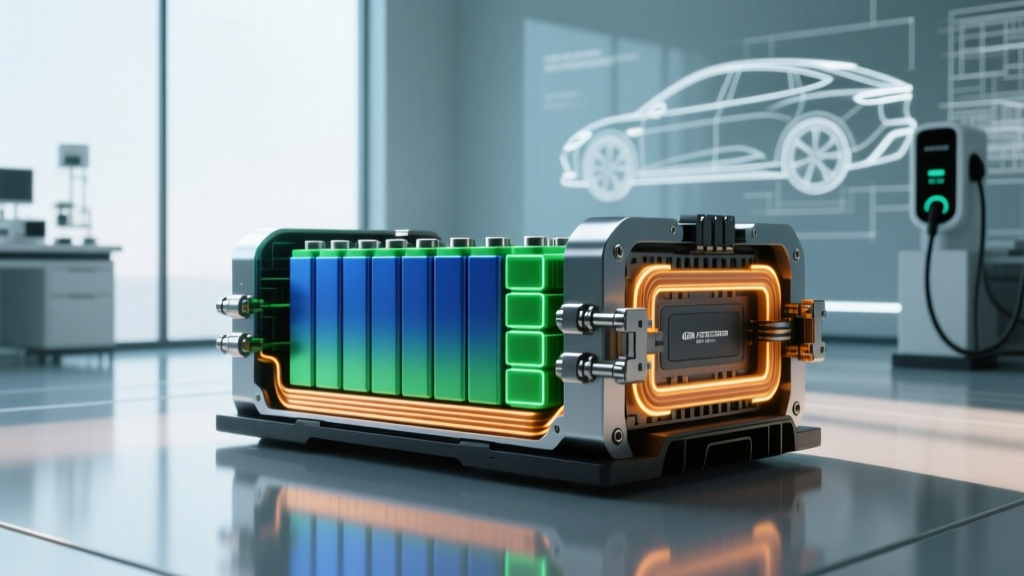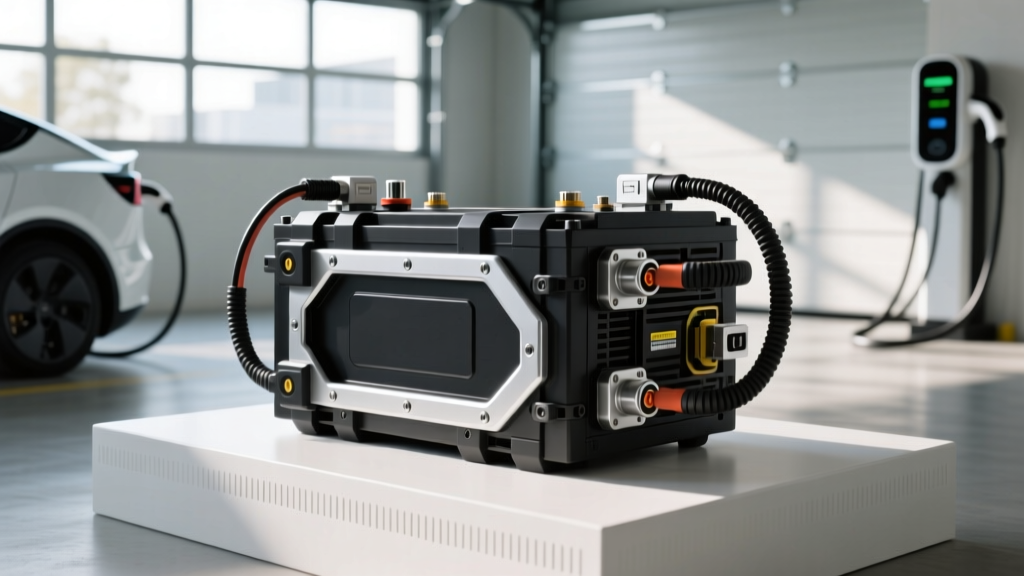
The electric vehicle battery supply chain is no longer confined to overseas gigafactories. Across the American Southeast, a new manufacturing corridor is emerging — and a Georgia battery company ecosystem is playing an increasingly visible role in it. From SK Battery America's sprawling plant in Commerce, Georgia (supplying Ford, Hyundai, and others), to emerging cell-materials startups clustering around Savannah and Augusta, the Peach State has become a focal point for domestic EV battery production.
But for EV shoppers and owners, the real questions are practical: What chemistry is inside your battery? How long will it last? What happens when it degrades? This guide breaks down the full picture of EV battery technology in 2026 — from the cells being built in Georgia to the pack sitting under your car's floor.
Why Georgia Has Become a Battery Manufacturing Hub
Georgia's rise as an EV battery production center is not accidental. The state offers proximity to major automaker assembly plants (Hyundai's Metaplant America near Savannah, Rivian's planned facility east of Atlanta, and Kia's West Point, Georgia plant), a growing skilled workforce, and aggressive state-level incentives for clean-energy manufacturing.
SK Battery America, a subsidiary of South Korea's SK On, operates one of the largest EV battery plants in the United States in Commerce, Georgia. The facility produces NMC (nickel-manganese-cobalt) pouch cells for the Ford F-150 Lightning, Hyundai Ioniq 5, and other high-volume models. A second Georgia facility, part of the BlueOval SK joint venture with Ford, is ramping production to supply next-generation Ford and Lincoln EVs.
Meanwhile, the broader Georgia battery company landscape includes cathode-material suppliers, recycling startups, and research partnerships with Georgia Tech — all contributing to a localized supply chain that reduces reliance on trans-Pacific shipping and supports the domestic-content requirements of the federal §30D EV tax credit.
LFP vs NMC: The Two Chemistries Powering Today's EVs
Every EV battery on the market in 2026 uses one of two dominant lithium-ion chemistries: LFP (lithium iron phosphate) or NMC/NCA (nickel-manganese-cobalt / nickel-cobalt-aluminum). The chemistry inside your pack determines your range, longevity, cold-weather behavior, and even how you should charge at home.
| Attribute | LFP (Lithium Iron Phosphate) | NMC / NCA |
|---|---|---|
| Energy Density | ~160–180 Wh/kg (lower) | ~230–280 Wh/kg (higher) |
| Typical Range | 230–330 mi EPA (smaller packs) | 280–400+ mi EPA (larger packs) |
| Cycle Life | 3,000–5,000+ cycles | 1,000–2,000 cycles |
| Cold-Weather Performance | Greater range loss (~30–40% at 20°F) | Better retention (~20–30% loss at 20°F) |
| Cost per kWh | ~$80–$100 (lower) | ~$110–$140 (higher) |
| Charging to 100% | Recommended periodically for BMS calibration | Generally capped at 80–90% daily for longevity |
| Cobalt Content | None (cobalt-free) | Contains cobalt (supply-chain concern) |
| Common 2026 Models | Tesla Model 3 RWD, BYD vehicles, Ford Mustang Mach-E Select (base) | Hyundai Ioniq 5, Kia EV6, Chevy Equinox EV, Ford F-150 Lightning Extended |
The bottom line: NMC delivers more range per pound and performs better in freezing temperatures — which is why cells produced by the Georgia battery company operations of SK On are predominantly NMC. LFP, however, offers dramatically longer cycle life and lower cost, making it ideal for standard-range models and fleet/high-mileage applications where the battery will see thousands of charge cycles.
How Long Do EV Batteries Actually Last?
The fear that EV batteries need replacement every few years is not supported by real-world data. Most modern EV battery packs are engineered to outlast the useful life of the vehicle itself.
Here is what the degradation data actually shows:
| Timeframe | Average Capacity Retained | Notes |
|---|---|---|
| Year 1 / 15,000 mi | ~95–97% | Initial "break-in" drop, then stabilizes |
| Year 3 / 45,000 mi | ~90–94% | Gradual linear decline |
| Year 5 / 75,000 mi | ~86–92% | LFP packs often retain more here |
| Year 8 / 120,000 mi | ~80–88% | Still above warranty threshold for most |
| Year 10 / 150,000 mi | ~75–85% | Noticeable range reduction but still functional |
According to long-term fleet analyses from sources like fueleconomy.gov and independent EV-data aggregators, the average modern EV battery loses roughly 1.5–2.5% of capacity per year under normal use. Tesla's 2025 Impact Report showed its fleet retaining an average of 88% capacity at 150,000 miles. Hyundai-Kia's E-GMP platform vehicles have shown similar trajectories.
Key insight: Degradation is not linear. Most packs experience a steeper drop in the first 10,000–20,000 miles (roughly 2–4%), then the curve flattens significantly. This means a 310-mile EPA range when new may become ~295 miles after year one, then decline slowly to ~270 miles by year five — still very usable.
What the Battery Warranty Actually Covers
Federal law mandates that EV batteries carry a minimum warranty of 8 years or 100,000 miles (whichever comes first). In California and states that follow CARB (California Air Resources Board) standards, that extends to 10 years or 150,000 miles. But the details matter enormously.
| Manufacturer | Warranty Period | Capacity Threshold | Notes |
|---|---|---|---|
| Tesla (Model 3/Y LFP) | 8 yr / 100,000 mi | 70% retention | Standard Range models |
| Tesla (Model 3/Y Long Range) | 8 yr / 120,000 mi | 70% retention | NMC/NCA packs |
| Hyundai / Kia | 10 yr / 100,000 mi | 70% retention | Among the longest coverage |
| Ford | 8 yr / 100,000 mi | 70% retention | F-150 Lightning, Mach-E |
| General Motors (Ultium) | 8 yr / 100,000 mi | 70% retention | Equinox EV, Blazer EV, Silverado EV |
| BMW | 8 yr / 100,000 mi | 70% retention | i4, iX, i7 |
Critical detail: The warranty guarantees the battery will retain at least 70% of its original capacity during the coverage period. If your 77.4 kWh Hyundai Ioniq 5 pack drops below 54.2 kWh usable capacity within 10 years/100,000 miles, Hyundai is obligated to repair or replace it — typically by swapping in a refurbished pack, not a brand-new one.
Warranties cover defects and abnormal degradation, but they generally exclude damage from accidents, flooding, improper modifications, or use of non-approved charging equipment. Always read the fine print in your owner's manual.
EV Battery Replacement Cost: The Real Numbers
This is where fear-mongering runs rampant. Let's look at actual replacement costs with context.
| Vehicle | Battery Size (kWh) | Replacement Cost Range | When Typically Needed |
|---|---|---|---|
| Tesla Model 3 RWD (LFP) | ~57.5 kWh | $10,000–$14,000 | Rarely before 200,000+ mi |
| Hyundai Ioniq 5 (NMC) | 77.4 kWh | $14,000–$18,000 | Rarely before 150,000+ mi |
| Ford F-150 Lightning Ext. Range | 131 kWh | $22,000–$30,000 | Rarely before 150,000+ mi |
| Chevy Equinox EV | ~85 kWh | $14,000–$17,000 | Rarely before 150,000+ mi |
| Nissan Ariya | 91 kWh | $16,000–$20,000 | Rarely before 150,000+ mi |
The honest context: Fewer than 2% of EVs on the road have required a full battery pack replacement outside of warranty coverage, according to industry service data. Most packs retain 75%+ capacity at 150,000 miles, meaning a vehicle with an original 300-mile range would still offer ~225 miles — acceptable for most daily driving. The majority of EV batteries will outlive the car's body, suspension, and interior before they become functionally unusable.
When replacements are needed, costs are declining. Domestic cell production from facilities like the Georgia battery company operations of SK On and LG Energy Solution's Michigan plants is helping push cell-level pricing below $100/kWh at the pack level. By 2028, analysts project replacement pack costs could fall another 20–30%.
Factors That Accelerate (or Preserve) Battery Life
Your battery's lifespan is not purely a function of time and miles. How you charge, store, and drive your EV has a measurable impact on long-term State of Health (SoH).
Practices That Preserve Battery Health
- Daily charge limit at 80–90% for NMC/NCA packs (LFP packs can and should be charged to 100% periodically for cell-balancing)
- Precondition the battery before DC fast charging — most EVs do this automatically when you navigate to a charger
- Use Level 2 home charging (7–11 kW) as your primary method — slower charging generates less heat stress
- Avoid prolonged storage above 90% SoC or below 10% SoC, especially in hot weather
- Drive moderately in extreme heat — sustained high-speed driving in 100°F+ weather increases pack temperature
Practices That Accelerate Degradation
- Frequent DC fast charging (150+ kW) without preconditioning — studies show exclusive DCFC use can add 1–2% additional annual degradation
- Regularly charging to 100% on NMC packs and leaving the car sitting for days
- Deep discharges to 0% — the low-voltage cutoff protects cells, but repeatedly running the pack to near-empty stresses the chemistry
- Exposure to sustained extreme heat (parking in 110°F+ desert sun for weeks without shade) — heat is the primary enemy of lithium-ion longevity
- Aftermarket modifications to charging or thermal systems that bypass manufacturer safeguards
One commonly misunderstood factor: cold weather does not permanently damage batteries. It temporarily reduces range (by 20–40% in sub-freezing conditions) because lithium ions move more sluggishly and cabin heating draws energy. Once temperatures rise, capacity returns. The permanent-degradation risk is overwhelmingly from heat, not cold.
How to Monitor Your Battery's State of Health
State of Health (SoH) is the percentage of your battery's original capacity that remains usable. A new EV has 100% SoH; a five-year-old EV might sit at 90%.
Here is how to check and track it:
- In-car displays: Tesla, Hyundai, Kia, BMW, and Mercedes now include battery health indicators in their infotainment or mobile apps. Tesla's app, for example, shows a "Battery Health" percentage under the vehicle specifications.
- OBD-II diagnostic tools: Devices like the OBDeleven (VW/Audi group) or third-party apps such as Battery Health for Tesla (iOS) can read the BMS (Battery Management System) directly for a more precise SoH figure.
- Dealer diagnostics: Any authorized service center can pull a full battery health report. Request one during routine service — it is typically free and provides cell-level voltage balance data.
- Manual calculation: Charge to 100%, note the displayed range, and compare it to the original EPA figure (adjusted for the fact that the displayed range is an estimate, not a guarantee). A 2025 Ioniq 5 that showed 303 miles at 100% when new but now shows 275 miles has roughly 91% SoH.
Track your SoH every 6–12 months. If you notice a sudden drop (more than 3–4% in a short period), contact your dealer — it may indicate a defective module eligible for warranty service.
What's Next: Solid-State and Silicon-Anode Batteries
The next major leap in EV battery technology involves solid-state batteries (which replace the liquid electrolyte with a solid material) and silicon-anode cells (which use silicon instead of graphite at the anode for higher energy density).
Solid-state batteries promise 30–50% more energy density, faster charging (potentially 10–80% in under 10 minutes), and improved safety (no flammable liquid electrolyte). Toyota, Samsung SDI, and QuantumScape have all demonstrated prototype cells. However, mass production at automotive scale remains challenging. Realistic timelines place the first commercial solid-state EVs in 2028–2030, with broad availability not expected until the early 2030s. These are announced technologies, not currently available in any production vehicle.
Silicon-anode batteries are closer to market. Companies like Sila Nanotechnologies and Group14 are already supplying silicon-dominant anode materials for select applications. Expect to see silicon-anode cells in production EVs by 2027–2028, offering roughly 15–20% more range per kWh of battery weight.
Georgia's growing battery manufacturing ecosystem is positioning itself to produce these next-generation cells as well. State economic-development authorities have signaled interest in attracting solid-state pilot lines, leveraging the existing workforce and supply-chain infrastructure built by the current Georgia battery company operations.
Frequently Asked Questions
How long do EV batteries last in years and miles?
Most modern EV batteries are designed to retain 70–85% of their original capacity after 8–10 years or 100,000–150,000 miles. Real-world fleet data from Tesla, Hyundai, and others shows packs regularly exceeding 150,000 miles with less than 15% degradation. Full pack failure before 100,000 miles is rare and typically covered under warranty.
How much does an EV battery cost to replace?
Replacement costs range from approximately $10,000 for a smaller LFP pack (Tesla Model 3 RWD) to $30,000 for a large NMC pack (Ford F-150 Lightning Extended Range), including parts and labor. However, fewer than 2% of EVs have required out-of-warranty replacements. Costs are declining as domestic manufacturing — including Georgia battery company facilities — scales up.
What does the battery warranty cover?
Federal law requires a minimum 8-year/100,000-mile battery warranty (10 years/150,000 miles in CARB states). The warranty guarantees the battery will retain at least 70% of its original capacity. Coverage includes defects and abnormal degradation but typically excludes accident damage, flooding, and unauthorized modifications.
How do I check and maximize my EV battery health?
Check SoH via your car's app, an OBD-II reader, or a dealer diagnostic report. Maximize longevity by keeping NMC packs between 20–80% SoC for daily use, using Level 2 home charging as your primary method, preconditioning before DC fast charging, and avoiding prolonged exposure to extreme heat.
LFP vs NMC — which is better and why?
Neither is universally better. LFP offers longer cycle life (3,000–5,000+ cycles), lower cost, and cobalt-free sourcing, but with lower energy density and worse cold-weather performance. NMC delivers more range per pound and better winter efficiency, but at higher cost and shorter cycle life. Choose LFP for daily commuting and high-mileage use; choose NMC for maximum range and cold-climate driving.
Does the Georgia battery company ecosystem affect my EV purchase?
Indirectly, yes. Cells manufactured by SK Battery America in Commerce, Georgia, power vehicles like the Ford F-150 Lightning and Hyundai Ioniq 5. Domestic production supports the battery-component requirements of the §30D federal tax credit, which can provide up to $7,500 in credit (subject to MSRP caps, buyer income limits, and critical-mineral sourcing rules — consult a tax professional for your specific eligibility).