If you've driven or shopped a Chevrolet Equinox EV, Blazer EV, Silverado EV, Cadillac Lyriq, or GMC Sierra EV, you've encountered General Motors' Ultium platform. The General Motors Ultium battery isn't a single pack — it's a modular architecture spanning roughly 60 kWh to 200+ kWh across passenger cars, trucks, and commercial vehicles. Understanding how this system ages, what it costs to repair, and how to maximize its lifespan is essential before signing a purchase or lease agreement in 2026.
This guide covers the chemistry GM actually uses (hint: it's not LFP), what real-world degradation data tells us, exact warranty terms, replacement cost ranges, and actionable care habits drawn from owner reports and manufacturer specifications.
What Chemistry Is Inside the General Motors Ultium Battery?
GM's Ultium platform uses NCMA (nickel-cobalt-manganese-aluminum) cathode chemistry supplied primarily by LG Energy Solution and produced at the Ultium Cells joint-venture plants in Ohio, Tennessee, and Michigan. NCMA is a variant of NMC that adds aluminum to the cathode mix, improving thermal stability and reducing cobalt content compared to older NMC 622 formulations.
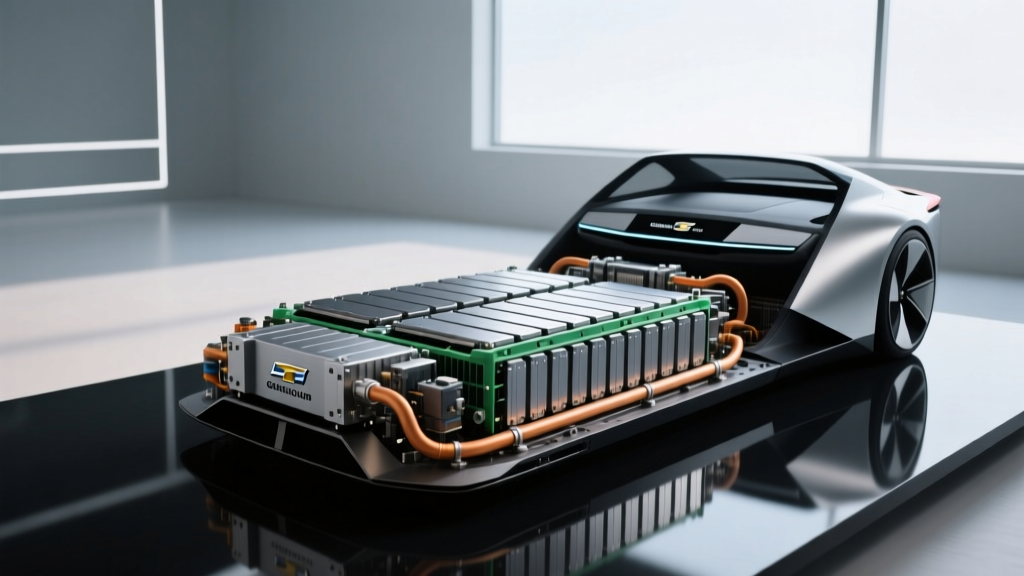
GM uses large-format pouch cells arranged in modules, with cell-to-module integration that allows pack sizes from 6 modules (roughly 60 kWh usable in the Equinox EV) up to 24 modules (over 200 kWh usable in the Silverado EV 4WT and Hummer EV). The pouch format trades some volumetric energy density against prismatic cells but offers flexibility in pack layout and thermal management surface area.
NCMA vs LFP vs Standard NMC: Trade-Off Matrix
| Attribute | NCMA (GM Ultium) | LFP (Tesla, BYD, Ford base trims) | NMC 811 (older gen) |
|---|---|---|---|
| Energy density (cell-level) | ~240-260 Wh/kg | ~160-180 Wh/kg | ~260-280 Wh/kg |
| Typical cycle life (to 80% SoH) | ~1,500-2,000 cycles | ~3,000-5,000 cycles | ~1,000-1,500 cycles |
| Cold-weather performance | Good (moderate internal resistance) | Poorer (higher resistance below freezing) | Good |
| Cost per kWh (cell-level, 2025-2026) | ~$100-$120 | ~$70-$90 | ~$110-$130 |
| Thermal runaway resistance | High (aluminum stabilization) | Very high | Lower |
| Recommended daily SoC limit | 80-90% | 100% (periodic calibration helps) | 80% |
| Cobalt content | Low (~5% or less) | Zero | Higher (~10%) |
Bottom line: GM chose NCMA to prioritize range-per-kilogram and cold-weather usability over the ultra-low cost and cycle life of LFP. For a 300+ mile Equinox EV or a 400+ mile Silverado EV, energy density matters. If you plan to keep a vehicle past 200,000 miles and mostly drive in warm climates, LFP's longevity advantage becomes more relevant — but GM has not adopted LFP for any Ultium-based production model as of 2026.
Real-World Degradation: What Ultium Owners Actually See
GM does not publish a single degradation curve, but data from early Lyriq and Hummer EV owners (model years 2023-2024), combined with testing by independent EV analysts, paints a consistent picture. Ultium packs using NCMA chemistry typically lose roughly 4-7% of usable capacity in the first two years or 30,000 miles, then settle into a slower linear decline of approximately 1-2% per year thereafter.
Typical Ultium NCMA Degradation Trajectory (observed range, not guaranteed):
- Year 1 / 15,000 mi: 96-98% State of Health (SoH)
- Year 2 / 30,000 mi: 93-96% SoH
- Year 4 / 60,000 mi: 89-93% SoH
- Year 6 / 90,000 mi: 86-90% SoH
- Year 8 / 120,000 mi: 82-88% SoH
- Year 10 / 150,000 mi: 78-85% SoH (estimated)
Sources: Owner-reported data aggregated by EV tracking platforms; Chevrolet EV specifications. Individual results vary significantly based on climate, DC fast-charging frequency, and SoC habits.
For context, a Lyriq with an EPA-estimated 314 miles of range (102 kWh usable) at 85% SoH after eight years would still deliver approximately 267 miles under similar conditions. That's a meaningful reduction but far from "the battery is dead." Most Ultium packs will outlast the vehicle's useful economic life before falling below 70% capacity.
Cold-climate owners in the Upper Midwest and Northeast should expect slightly faster calendar aging if the vehicle is regularly parked outdoors at sub-freezing temperatures without being plugged in. Lithium-ion chemistry degrades faster at temperature extremes — both very hot and very cold — when the pack is at high SoC.
GM's Battery Warranty: Exact Terms for 2026 Models
Every Ultium-based vehicle sold in the United States carries a battery warranty that meets or exceeds the federal minimum set by the EPA and CARB-emitting states. Here are the exact terms as of the 2026 model year:
| Term | GM Ultium Battery Warranty (2026 MY) |
|---|---|
| Duration | 8 years / 100,000 miles (whichever comes first) |
| CARB-state extension | 10 years / 150,000 miles in states adopting California emissions standards (CA, CO, CT, ME, MD, MA, NJ, NM, NY, OR, RI, VT, VA, WA, and others as adopted) |
| Capacity retention threshold | Below 70% of original usable capacity |
| What's covered | Battery repair or replacement (module-level or full pack at GM's discretion), including labor |
| What's NOT covered | Damage from accidents, flooding, unauthorized modifications, or failure to follow maintenance guidelines |
| Transferable to second owner? | Yes, warranty follows the VIN |
The 70% threshold is industry-standard — Tesla, Hyundai, Ford, and most others use the same benchmark. What matters is how GM handles claims in practice. GM's modular Ultium design allows dealers and authorized service centers to replace individual modules rather than the entire pack in many cases, which reduces repair time and keeps vehicles out of extended shop holds. According to GM's EV platform documentation, module-level service is a core design intent of the Ultium architecture.
Battery Replacement Cost: What Ultium Owners Might Pay
Out-of-warranty battery replacement is the single largest fear among prospective EV buyers. Let's ground it in actual numbers rather than worst-case headlines.
| Vehicle / Pack Size | Estimated Full-Pack Replacement Cost (2026) | Module-Level Repair (typical) |
|---|---|---|
| Equinox EV (~60-85 kWh) | $12,000 - $18,000 | $2,000 - $5,000 per module group |
| Blazer EV (~85-102 kWh) | $16,000 - $22,000 | $2,500 - $6,000 per module group |
| Cadillac Lyriq (~102 kWh) | $18,000 - $25,000 | $3,000 - $7,000 per module group |
| Silverado EV / Sierra EV (~120-200+ kWh) | $25,000 - $40,000+ | $3,500 - $8,000 per module group |
| Hummer EV (~212-246 kWh) | $35,000 - $50,000+ | $4,000 - $10,000+ per module group |
When is replacement typically needed? For the vast majority of Ultium owners, the answer is: it isn't. Full-pack replacements under warranty are rare and usually tied to manufacturing defects or isolated cell failures in the first 1-3 years. Module-level repairs — where a single faulty module is swapped — are more common and far less expensive. Out-of-warranty full replacements typically become a consideration only past 150,000-200,000 miles, at which point the vehicle's resale value may not justify the investment.
GM's modular approach is a genuine advantage here. A vehicle with one degraded module can be repaired for a fraction of a full-pack swap, and the repair restores meaningful capacity without the five-figure invoice. This is one reason the Ultium architecture's serviceability matters as much as its energy density.
Factors That Accelerate (or Preserve) Ultium Battery Life
Not all 100,000-mile Ultium packs look the same. The spread between 82% and 92% SoH at the same mileage comes down to a handful of owner-controllable behaviors:
Ultium Battery Care Checklist
- Daily SoC limit: Set charge limit to 80-90% for daily driving. Reserve 100% charges for road trips. GM's MyChevrolet / MyCadillac apps allow scheduled charge limits.
- DC fast-charging frequency: Occasional DC fast charging (1-2 times per week or on road trips) is fine. Daily reliance on 150+ kW DC fast charging accelerates degradation by an estimated 1-3% over 5 years compared to primarily Level 2 home charging.
- Precondition before fast charging: Use the vehicle's navigation-based preconditioning (navigate to a DC fast charger) to warm the pack to optimal temperature. Cold packs charged at high power experience lithium plating, a permanent degradation mechanism.
- Avoid prolonged storage at 100% SoC: If leaving the vehicle for more than a week, store at 50-60% SoC. High SoC + high ambient temperature is the worst combination for calendar aging.
- Plug in during extreme cold: When parked below 20°F for extended periods, keep the vehicle plugged in so the thermal management system can maintain pack temperature without depleting the battery.
- Minimize repeated deep discharges: Try not to regularly drive below 10% SoC. The Ultium BMS maintains a buffer, but habitual deep cycling still stresses NCMA chemistry.
- Use Level 2 as your primary charger: A 7.7-11.5 kW home Level 2 charger adds 25-40 miles of range per hour and generates far less heat in the pack than DC fast charging.
The thermal management system in Ultium packs is liquid-cooled and actively regulated, which significantly mitigates temperature-related degradation compared to passively cooled packs. But physics still applies: heat and high voltage together accelerate electrolyte decomposition and cathode surface degradation.
How to Check Ultium Battery Health (SoH Monitoring)
GM provides several ways to monitor your Ultium pack's State of Health:
1. In-Vehicle Energy App
The infotainment system's Energy screen displays recent efficiency (kWh/mi), charge history, and estimated range. While it doesn't show a direct SoH percentage, comparing your current full-charge range estimate against the original EPA sticker (adjusted for conditions) gives a rough proxy. If your Lyriq originally showed 314 miles at 100% and now shows 280 miles under similar temperature and tire conditions, that suggests roughly 89% SoH.
2. MyChevrolet / MyCadillac / MyGMC App
GM's companion apps provide charge history, energy usage reports, and battery health notifications. Some model years include a battery health summary accessible through the vehicle diagnostics section. Check for software updates that may add expanded SoH reporting.
3. Dealer Diagnostic Scan
Any GM dealer can run a full battery diagnostic that reads individual module voltages, internal resistance, and calculated SoH. Request this during routine service visits, especially if you're approaching the warranty's capacity threshold or considering a used Ultium vehicle purchase.
4. Third-Party OBD-II Tools
Apps like EV Notify, Leaf Spy (for Nissan), and emerging Ultium-compatible OBD-II readers can pull real-time cell voltage data and pack statistics. As of 2026, Ultium-specific third-party tooling is still maturing, but GM's diagnostic protocols are increasingly accessible to independent scan tools.
What's Next: Solid-State, Silicon Anode, and Ultium Gen 2
GM has publicly discussed next-generation battery technologies, but it's critical to separate what's in production from what's in the lab.
Silicon anode cells: GM, through its partnership with Group14 Technologies and the Ultium Cells JV, is developing silicon-dominant anode cells that promise 20-30% higher energy density than current NCMA graphite anodes. These are not yet in production vehicles. Expected timeline for limited production: 2027-2028 model years, likely debuting in performance-oriented or premium Cadillac applications.
Solid-state batteries: GM has acknowledged solid-state research through partnerships and internal R&D, but no Ultium-based vehicle uses solid-state cells as of 2026. Industry-wide, solid-state packs from Toyota, Samsung SDI, and others are targeting limited production in 2027-2029. Realistic mass-market availability remains 2030 or later. Solid-state promises faster charging, higher energy density, and improved safety, but manufacturing yield and cost remain significant hurdles.
Ultium platform evolution: GM continues to refine the existing Ultium architecture with cell chemistry tweaks, module density improvements, and software-based BMS updates. Model-year 2025-2026 vehicles benefit from incremental improvements in cell consistency and thermal management algorithms compared to 2023 launch vehicles — a common pattern as production ramps mature.
If you're buying in 2026, you're buying proven NCMA Ultium hardware. That's not a drawback — it means known degradation profiles, established warranty support, and a service network that has been handling these packs for over three years.
Ultium Battery FAQ
How long do General Motors Ultium batteries last?
Based on observed degradation data and GM's warranty structure, Ultium NCMA packs are designed to retain above 70% of original capacity for at least 8 years / 100,000 miles (10 years / 150,000 miles in CARB states). Many will retain 78-85% at 150,000 miles with proper care. Full failure requiring replacement before 200,000 miles is uncommon and typically covered by warranty when it occurs early.
How much does it cost to replace an Ultium battery?
Full-pack replacement ranges from approximately $12,000 for a smaller Equinox EV pack to $35,000-$50,000+ for a Hummer EV's 24-module pack. However, GM's modular design allows module-level repairs at $2,000-$10,000 depending on the module group and vehicle. Most Ultium owners will never need an out-of-warranty full replacement.
Does the Ultium battery warranty cover degradation?
Yes. If the battery's usable capacity falls below 70% of its original value within 8 years / 100,000 miles (or 10/150,000 in CARB states), GM will repair or replace the battery at no cost. The warranty is tied to the VIN and transfers to subsequent owners. See the Chevrolet warranty guide or your specific brand's warranty booklet for exact terms.
Is the Ultium battery LFP or NMC?
NCMA — a nickel-cobalt-manganese-aluminum chemistry. GM has not used LFP in any Ultium production vehicle as of 2026. NCMA offers higher energy density than LFP (important for 300-400+ mile range targets) and better cold-weather performance, at a higher per-kWh cost and slightly shorter cycle life.
Does frequent DC fast charging hurt my Ultium battery?
Occasional DC fast charging is fine and expected. Daily or near-daily use of 150+ kW chargers can accelerate degradation by a small but measurable amount (estimated 1-3% additional loss over 5 years). The Ultium thermal management system actively cools the pack during fast charging, which mitigates heat damage — but minimizing unnecessary DC sessions and relying on Level 2 home charging for daily needs is the optimal longevity strategy.
Can I check my Ultium battery's State of Health myself?
Yes, approximately. Compare your vehicle's displayed full-charge range against the original EPA estimate under similar conditions. For a precise SoH reading, request a dealer diagnostic scan. Third-party OBD-II tools with Ultium protocol support are becoming available but may not cover all model years as of 2026.
Do Ultium batteries qualify for the federal EV tax credit?
Eligibility for the §30D federal tax credit depends on the vehicle's MSRP, your income, and battery component/critical mineral sourcing — not solely on the battery chemistry. Many Ultium-based vehicles assembled in US plants with domestically sourced cells qualify, but rules change frequently. Check the latest requirements at IRS.gov and confirm with a tax professional before purchasing.
The Practical Takeaway for Ultium Buyers
The General Motors Ultium battery platform, built on NCMA chemistry with modular serviceability, represents a mature and well-supported EV powertrain as of 2026. Degradation is real but manageable — expect to lose roughly 10-15% of range over the first eight years under normal use, not the 40-50% that fear-driven narratives suggest. The 70% warranty threshold at 8 years/100,000 miles (10/150,000 in CARB states) provides a concrete backstop, and module-level repairability keeps out-of-warranty costs far below full-pack replacement figures.
If you're choosing between an Ultium vehicle and a competitor, the battery should give you confidence, not hesitation. Set your daily charge limit to 80-90%, install a Level 2 home charger, precondition before DC fast sessions, and let the liquid thermal management system do its job. The data says this pack will serve you well past 150,000 miles.