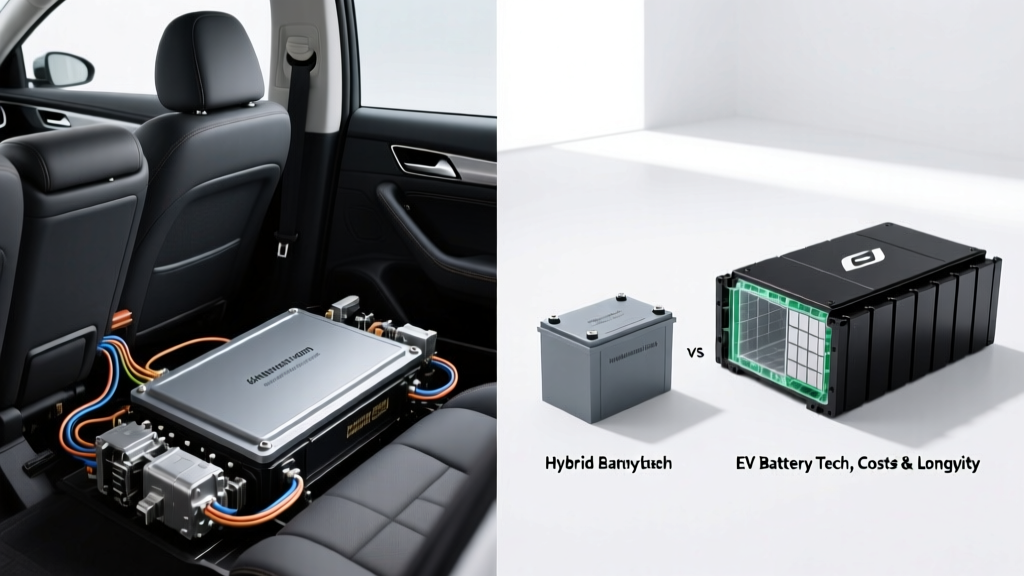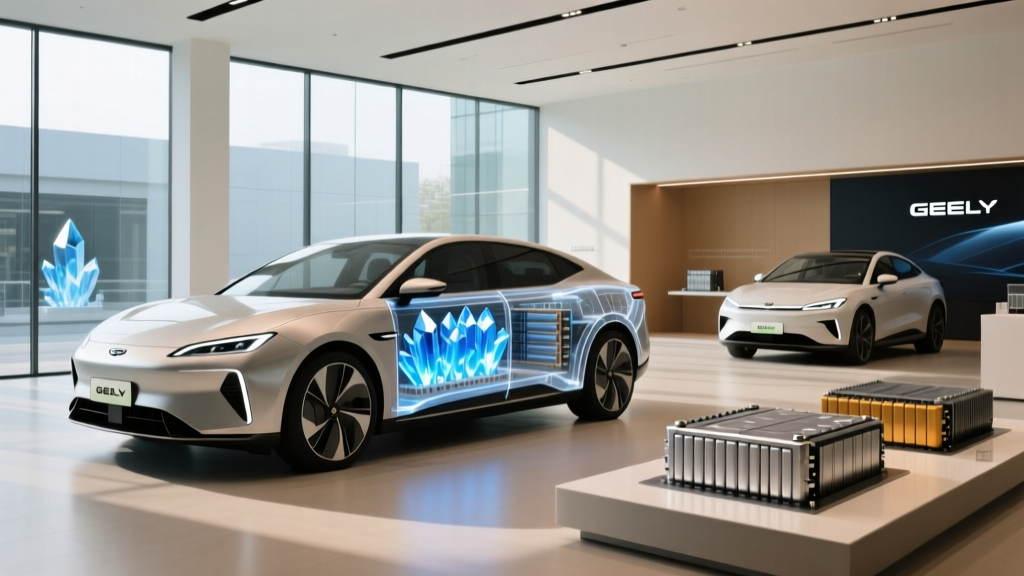
Geely's announcement of a solid-state battery targeting over 600 miles of range has captured attention across the EV industry. But between laboratory breakthroughs and vehicles you can actually buy at a dealership, there remains a significant gap. This guide breaks down what Geely's solid-state technology actually promises, realistic timelines for production, and—more importantly—how today's proven lithium-ion chemistries (LFP and NMC) stack up on the metrics that matter: degradation, warranty coverage, replacement cost, and daily usability.
What Geely's Solid-State Battery Actually Promises
Geely, the Chinese automotive conglomerate behind brands like Volvo, Polestar, Lotus, and Zeekr, has been developing solid-state battery technology through its battery subsidiary and research partnerships. The company's stated goals for solid-state cells include:
- Energy density: Targeting 400+ Wh/kg at the cell level (compared to roughly 250–300 Wh/kg for current NMC cells)
- Range: Projected 1,000+ km (roughly 620+ miles) on a single charge in a mid-size sedan platform
- Safety: Elimination of liquid electrolyte, reducing thermal runaway risk
- Charging speed: Potential for faster charge acceptance due to lithium-metal anode compatibility
Today's EV Battery Chemistries: LFP vs. NMC Compared
While solid-state batteries remain on the horizon, today's EV buyers choose between two dominant lithium-ion chemistries: Lithium Iron Phosphate (LFP) and Nickel Manganese Cobalt (NMC) or Nickel Cobalt Aluminum (NCA). Each has distinct trade-offs that affect range, longevity, cost, and cold-weather behavior.
| Attribute | LFP (Lithium Iron Phosphate) | NMC / NCA |
|---|---|---|
| Energy Density (cell-level) | 160–200 Wh/kg | 230–300 Wh/kg |
| Cycle Life | 3,000–6,000+ cycles to 80% SoH | 1,000–2,500 cycles to 80% SoH |
| Cold-Weather Performance | Weaker; more range loss below 32°F / 0°C | Better low-temp conductivity; less range penalty |
| Cost (per kWh) | Lower; no cobalt or nickel | Higher; commodity-sensitive metals |
| Thermal Stability | Excellent; higher thermal runaway threshold | Good but requires more active thermal management |
| Recommended SoC Range | Can charge to 100% regularly; periodic full charges help BMS calibration | 80–90% daily recommended; 100% for trips only |
| Common In (2026 US Models) | Tesla Model 3/Y RWD, Ford Mustang Mach-E Select (base), BYD models | Tesla LR/Performance, Hyundai Ioniq 5/6, Kia EV6/EV9, Rivian, most premium EVs |
Which is better? It depends on your use case. If you prioritize maximum range per charge and frequently drive in cold climates, NMC/NCA delivers higher energy density and better winter performance. If you plan to keep the vehicle 10+ years, charge at home nightly, and want lower upfront cost, LFP's superior cycle life and tolerance for 100% SoC charging make it the pragmatic choice. Neither chemistry is universally superior—the right answer depends on ownership horizon, climate, and driving patterns.
How Long Do EV Batteries Actually Last?
The most common fear among prospective EV buyers is catastrophic battery failure requiring a five-figure replacement. The data, however, tells a more reassuring story: modern EV batteries are outlasting initial expectations, and most will retain sufficient capacity to remain functional well beyond 150,000 miles.
Real-World Degradation Data
Degradation is measured as the loss of usable capacity relative to the battery's original state of health (SoH). A new battery starts at 100% SoH; when it drops below roughly 70–80%, range reduction becomes noticeable in daily driving.
- Tesla fleet data (2025 Impact Report): Model S/X batteries show approximately 12–15% degradation at 150,000 miles; Model 3/Y LFP packs show roughly 8–12% at the same mileage.
- Geotab fleet study (2024, ~6,300 EVs): Average annual degradation of 1.8% across all chemistries, implying ~82% SoH after 10 years of average use.
- Recurrent Auto data (2025): Chevrolet Bolt EVs (NMC) averaging 9–11% loss at 100,000 miles; Hyundai Kona Electric showing similar figures.
Key insight: degradation is non-linear. Most batteries lose 3–5% capacity in the first year or two (an initial "break-in" drop), then the curve flattens significantly. A battery at 90% SoH after 40,000 miles is not on a trajectory to fail at 120,000 miles—it will likely hold 82–85% at 200,000 miles.
Typical Battery Lifespan
Based on current degradation curves, a well-maintained EV battery should provide usable service (above 70% SoH) for 15–20 years or 200,000–300,000 miles under normal conditions. LFP chemistries skew toward the higher end of that range due to their longer cycle life. The battery will likely outlast other major vehicle components—suspension, interior, infotainment—and in many cases the car itself.
What Does the EV Battery Warranty Actually Cover?
Federal law in the United States mandates that EV batteries carry a minimum warranty of 8 years or 100,000 miles (whichever comes first). In California Air Resources Board (CARB) states, that extends to 10 years or 150,000 miles. Most manufacturers meet or exceed these minimums.
| Manufacturer | Warranty Period | Capacity Retention Threshold |
|---|---|---|
| Tesla (Model 3/Y) | 8 years / 100,000–120,000 mi | 70% |
| Hyundai / Kia | 10 years / 100,000 mi | 70% |
| Ford (Mach-E, F-150 Lightning) | 8 years / 100,000 mi | 70% |
| GM (Ultium-platform EVs) | 8 years / 100,000 mi | 70% |
| Rivian | 8 years / 175,000 mi | 70% |
| BMW | 8 years / 100,000 mi | 70% |
What triggers a warranty claim? The battery must fall below the stated retention threshold (typically 70% of original capacity) as measured by the manufacturer's diagnostic tools. The warranty covers defects and excessive degradation—it does not cover damage from accidents, improper charging equipment, flooding, or modifications. Importantly, the warranty covers the battery as a system; manufacturers may replace individual modules rather than the entire pack, which restores capacity without a full replacement.
How Much Does EV Battery Replacement Cost?
Out-of-warranty battery replacement is the scenario that generates the most anxiety. Here are realistic cost ranges based on 2025–2026 service data:
| Vehicle / Battery Size | Full Pack Replacement | Module-Level Repair |
|---|---|---|
| Tesla Model 3 RWD (~60 kWh, LFP) | $8,000–$12,000 | $2,500–$5,000 |
| Tesla Model Y LR (~82 kWh, NMC) | $12,000–$16,000 | $3,500–$6,000 |
| Hyundai Ioniq 5 (~77 kWh) | $11,000–$15,000 | $3,000–$5,500 |
| Ford F-150 Lightning (~131 kWh Extended) | $18,000–$25,000 | $5,000–$9,000 |
| Chevrolet Bolt EV (~65 kWh) | $9,000–$14,000 | $2,500–$4,500 |
| Rivian R1T / R1S (~149 kWh Max) | $20,000–$28,000 | $5,000–$10,000 |
Context matters here. Full pack replacements are rare. Most degradation-related issues are addressed through module-level repairs, where a technician replaces only the underperforming modules. Additionally, battery costs continue to decline—cell-level pricing has fallen from over $1,200/kWh in 2010 to roughly $100–$130/kWh in 2025, and this trend is expected to continue. By the time most 2026 EVs need out-of-warranty service (likely in the 2038–2042 timeframe), replacement costs will be substantially lower than today's figures.
For reference, a conventional vehicle's transmission replacement typically costs $4,000–$8,000, and an engine rebuild can exceed $7,000. Battery replacement is in the same general range for mid-size packs and is needed far less frequently.
Factors That Accelerate (or Slow) Battery Degradation
Battery longevity isn't random—it's heavily influenced by how you charge, drive, and store the vehicle. Understanding these factors lets you maximize your pack's useful life.
Habits That Accelerate Degradation
- Frequent DC fast charging: Regularly using 150+ kW chargers generates significant heat. Occasional road-trip fast charging is fine, but daily reliance on DCFC (instead of Level 2 home charging) can add 1–3% extra degradation over 100,000 miles.
- Sustained high SoC: Storing an NMC battery at 100% for days or weeks accelerates calendar degradation. LFP is more tolerant of full charges but still benefits from occasional cycling.
- Deep discharges: Regularly driving the battery below 10% SoC stresses the cells. Most manufacturers recommend keeping the battery between 20–80% for NMC daily use.
- Extreme heat exposure: Prolonged parking in desert-level heat (110°F+) without thermal management active is more damaging than cold exposure. Batteries degrade faster at sustained high temperatures.
- High-performance driving in heat: Repeated hard acceleration and high-speed driving generates internal cell heat, particularly when ambient temperatures are already elevated.
Habits That Extend Battery Life
- Home Level 2 charging (7–11 kW): Gentle, moderate-speed charging generates minimal heat and is the ideal daily charging method.
- Moderate SoC targets: Setting charge limits to 80% for NMC (or 100% for LFP, which benefits from periodic full charges for BMS calibration) extends cycle life.
- Preconditioning: Using the vehicle's battery preconditioning feature before fast charging warms the cells to optimal temperature, enabling faster charging and reducing stress.
- Garage parking: Keeping the vehicle in a temperature-moderate environment reduces calendar degradation from thermal extremes.
- Software updates: Manufacturers regularly refine battery management algorithms via OTA updates—keeping your vehicle current ensures you benefit from the latest optimization.
How to Check and Monitor Battery Health (SoH)
State of Health (SoH) is the percentage of your battery's original usable capacity that remains accessible. Monitoring it helps you track degradation trends and plan ahead.
Built-In Vehicle Tools
- Tesla: The Service menu (accessible via the touchscreen) provides a battery health test that returns a SoH percentage. Third-party apps like Tessie or TeslaFi also track estimated SoH over time using charging data.
- Hyundai/Kia: The EV-specific menu in the infotainment system shows battery condition. Dealers can run a full diagnostic via the KDS (Kia Diagnostic System) or GDS (Genesis/Hyundai tool).
- GM (Ultium): The myChevrolet/myCadillac app provides battery health metrics. OnStar diagnostics can also report SoH.
- Ford: The FordPass app includes battery state of health indicators. Dealership diagnostics provide a more detailed module-level report.
Third-Party and OBD-II Methods
For a more granular view, an OBD-II dongle paired with apps like Car Scanner, Leaf Spy (Nissan Leaf), or ABRP (A Better Route Planner) with OBD integration can read real-time cell voltage deltas, pack temperature, and calculated SoH. This data is particularly useful when evaluating a used EV purchase.
What to Watch For
- Cell imbalance: If individual cell voltages vary by more than 50–100 mV at rest, one or more modules may be degrading faster than the rest—warranting a dealer check.
- Sudden range drops: A gradual 1–2% annual loss is normal; a sudden 5–10% drop in a short period may indicate a module fault.
- Charging speed reduction: If your vehicle no longer accepts peak DC fast charge rates it previously handled, thermal management or cell-level issues may be at play.
Solid-State and Silicon-Anode Batteries: Realistic Timelines
Geely's solid-state ambitions sit within a broader industry push toward next-generation battery technology. Here's where things stand as of 2026:
Solid-State Batteries
Solid-state cells replace the liquid electrolyte in conventional lithium-ion batteries with a solid material (ceramic, sulfide, or polymer). This enables the use of a lithium-metal anode, dramatically increasing energy density and improving safety. However, manufacturing challenges—particularly achieving consistent solid-to-solid interfaces at scale and managing dendrite formation—remain significant hurdles.
- Toyota: Has announced pilot production with a target of limited commercialization by 2027–2028, initially in low-volume premium models.
- Samsung SDI: Targeting 2027 for initial solid-state production, supplying to undisclosed OEM partners.
- QuantumScape: Has delivered prototype cells to automotive partners (including Volkswagen's PowerCo) but has not announced a firm production vehicle timeline.
- Geely / Zeekr: Semi-solid-state cells have been tested in prototype vehicles. Full solid-state production is estimated for 2028–2030 at the earliest for premium Zeekr or Polestar models.
Silicon-Anode Batteries
A nearer-term evolution, silicon-anode technology (used by companies like Sila Nanotechnologies and Group14) replaces graphite anodes with silicon-dominant composites, boosting energy density by 20–40%. These cells are compatible with existing manufacturing lines:
- Mercedes-Benz G-Class EV (2025+): Uses silicon-anode cells from Sila Nanotechnologies in limited applications.
- Porsche (announced): Exploring silicon-anode adoption for future Taycan iterations.
- Timeline for mass adoption: 2027–2029 for mainstream premium EVs; 2030+ for affordable segments.
The honest assessment: solid-state batteries represent genuine progress in energy density and safety, but they will not be broadly available or affordable until the early 2030s. Silicon-anode technology is the more pragmatic near-term upgrade, offering meaningful gains without requiring entirely new manufacturing infrastructure.
Frequently Asked Questions
How long do EV batteries last in years and miles?
Based on fleet data from Tesla, Geotab, and Recurrent Auto, modern EV batteries typically retain 80–88% of original capacity after 10 years or 150,000 miles. LFP chemistries tend to degrade more slowly than NMC. Most batteries will provide usable service (above 70% SoH) for 15–20 years or 200,000–300,000 miles under normal conditions. Full battery failure is extremely rare; gradual capacity loss is the norm.
How much does an EV battery cost to replace?
Full pack replacement costs range from roughly $8,000 for a smaller pack (Tesla Model 3 RWD, ~60 kWh) to $25,000+ for large packs (Ford F-150 Lightning Extended Range, ~131 kWh). However, full replacements are uncommon—most issues are resolved through module-level repairs costing $2,500–$9,000. By the time most current EVs need out-of-warranty service (likely 2035+), cell costs are projected to be significantly lower than today.
What does the EV battery warranty cover?
Federal law mandates a minimum 8-year/100,000-mile battery warranty (10 years/150,000 miles in CARB states). The warranty covers capacity loss below a threshold (typically 70% of original capacity) and manufacturing defects. It does not cover accident damage, improper charging, or environmental damage. Manufacturers may repair via module replacement rather than full pack swap.
How do I check my EV battery's State of Health?
Most modern EVs provide SoH data through the infotainment system or companion app (Tesla's Service menu, FordPass, myChevrolet). For more detailed cell-level data, an OBD-II adapter paired with apps like Car Scanner or TeslaFi can provide real-time metrics. When buying used, request a dealer diagnostic report showing SoH percentage and cell voltage balance.
LFP vs. NMC — which battery chemistry should I choose?
Choose LFP if you plan long-term ownership (10+ years), charge primarily at home, live in a moderate climate, and want lower upfront cost. Choose NMC if you need maximum range per charge, frequently drive in cold weather, or prioritize fast-charging speed on road trips. Both chemistries are proven and reliable—neither is a wrong choice for most buyers.
When will Geely's solid-state battery be available in a production car?
Geely has not announced a firm production date for a full solid-state battery vehicle. Semi-solid-state technology may appear in limited Chinese-market models by 2027, but full solid-state at scale is realistically expected no earlier than 2028–2030 for premium Zeekr or Polestar applications, with US availability uncertain and likely later. For buyers shopping today, current LFP and NMC batteries offer proven reliability, comprehensive warranties, and well-understood degradation profiles.