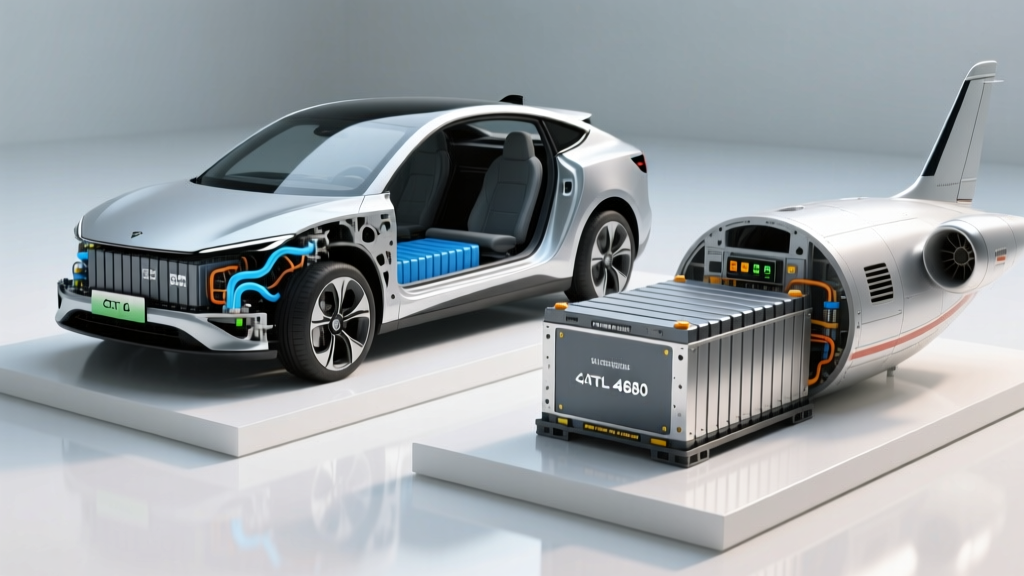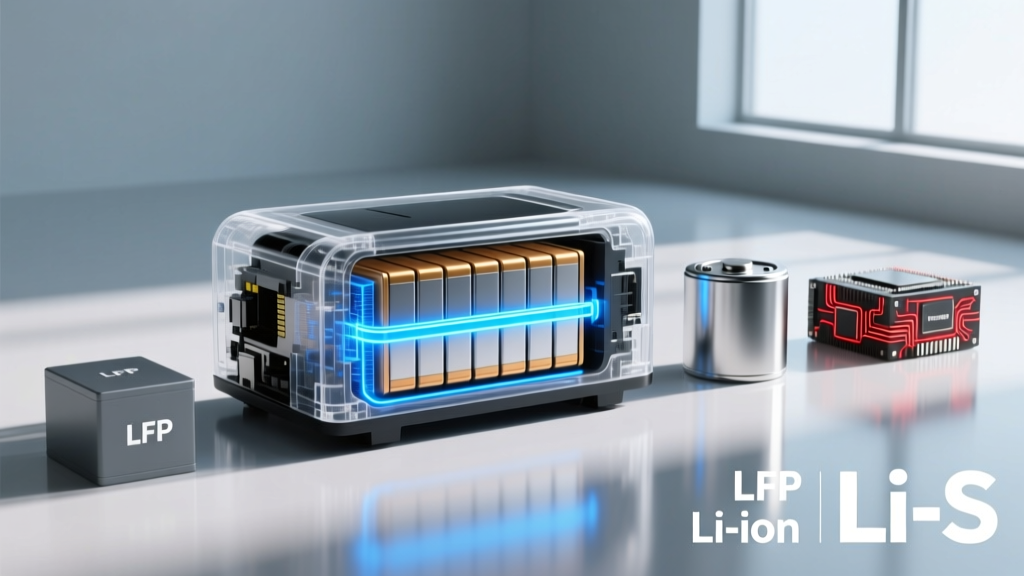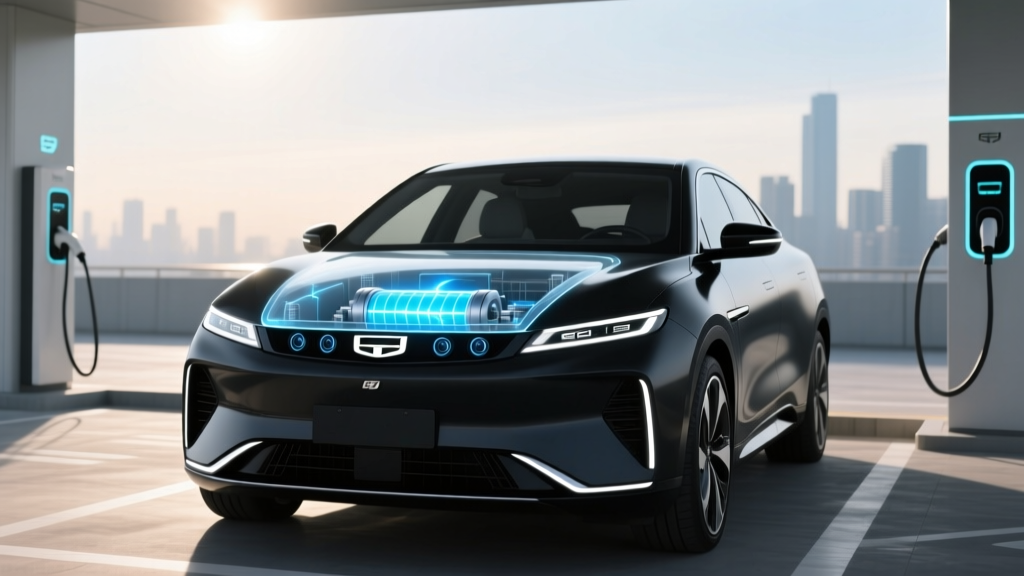
Solid-state batteries dominate EV headlines, and Geely is among the automakers pushing hardest to commercialize the technology. The Chinese conglomerate — parent of Volvo, Polestar, Lotus, Zeekr, and Lynk & Co — has announced partnerships and internal R&D aimed at bringing solid-state cells to production vehicles before the end of the decade. But for buyers shopping today, the real question is practical: how do current lithium-ion batteries actually perform, how long do they last, and what does a Geely solid-state battery change when it finally arrives?
This guide breaks down the battery technology you can buy right now, the degradation data that should inform your purchase, and where solid-state fits into a realistic timeline — no hype, just numbers.
Today's EV Battery Chemistry: LFP vs NMC Explained
Every EV on sale in 2026 uses one of two dominant lithium-ion chemistries in its high-voltage traction battery: LFP (lithium iron phosphate) or NMC/NCA (nickel manganese cobalt / nickel cobalt aluminum). The chemistry determines range, longevity, cold-weather behavior, and price — and understanding the trade-off is the single most important battery decision you'll make.
| Attribute | LFP (Lithium Iron Phosphate) | NMC / NCA (Nickel-Based) |
|---|---|---|
| Energy Density | ~160–180 Wh/kg (cell level) | ~220–300 Wh/kg (cell level) |
| Typical Cycle Life | 3,000–6,000+ cycles to 80% SoH | 1,000–2,500 cycles to 80% SoH |
| Cold-Weather Performance | Greater range loss below 32°F; slower cold charging | Better low-temp conductivity; less range penalty |
| Cost per kWh (pack level) | ~$80–$100/kWh | ~$110–$140/kWh |
| Recommended Daily SoC | Can charge to 100% regularly | Best kept at 80% daily; 100% for trips only |
| Thermal Stability | Excellent; very low thermal runaway risk | Good; requires more active thermal management |
| Common In 2026 Models | Tesla Model 3/Y RWD, BYD, standard-range Zeekr, base Volvo EX30 | Long-range/hyper variants, Hyundai Ioniq 5/6, Rivian, Lucid, Porsche |
The bottom line: LFP wins on longevity and cost but sacrifices energy density and cold-weather range. NMC wins on range-per-kWh and cold performance but degrades faster and costs more. Geely's current Zeekr and Volvo models use both chemistries depending on trim — the Zeekr 001 long-range uses NMC, while the base Volvo EX30 single-motor uses LFP.
The Geely Solid-State Battery: What We Know So Far
Geely has invested in solid-state battery development through its battery subsidiary and partnerships with Chinese cell manufacturers. In 2024–2025, Geely announced semi-solid-state cells in select Zeekr models — a transitional technology that replaces the liquid electrolyte with a gel or hybrid solid-liquid separator, offering modest energy-density gains (~10–15%) without the full manufacturing overhaul of true solid-state.
True solid-state batteries — using a fully solid electrolyte (sulfide, oxide, or polymer) — promise:
- Energy density of 350–500 Wh/kg at the cell level (roughly 50–80% more than today's NMC)
- Faster charging potential due to lithium-metal anode compatibility
- Improved safety (non-flammable solid electrolyte)
- Longer cycle life under high-rate discharge
Realistic timeline: Industry consensus places true solid-state batteries in limited premium production around 2027–2028 (Toyota, Samsung SDI, and QuantumScape have all targeted this window). Geely's public roadmap targets semi-solid-state at scale by 2026 and full solid-state in production vehicles by 2028–2030. No Geely vehicle on sale in 2026 uses a true solid-state traction battery.
For buyers, this means: if you need an EV now, current lithium-ion technology is mature, well-warrantied, and proven over billions of miles of real-world use. Solid-state is a reason to be optimistic about 2029 models — not a reason to delay a 2026 purchase.
How Long Do EV Batteries Actually Last?
The fear that EV batteries die at 100,000 miles is not supported by fleet data. Modern liquid-cooled battery packs with sophisticated thermal management routinely exceed 200,000 miles before reaching 70–80% of original capacity.
| Mileage | Average Capacity Retained (NMC) | Average Capacity Retained (LFP) |
|---|---|---|
| 30,000 mi / ~2 years | 94–96% | 97–99% |
| 60,000 mi / ~4 years | 90–93% | 95–97% |
| 100,000 mi / ~7 years | 85–90% | 92–95% |
| 150,000 mi / ~10 years | 80–86% | 88–93% |
| 200,000 mi / ~13 years | 75–82% | 84–90% |
Sources: Geotab fleet telemetry data, Recurrent Auto battery health reports, manufacturer warranty filings.
Key observations:
- Most degradation occurs in the first 1–2 years (typically 3–5%), then the curve flattens significantly.
- LFP cells degrade more slowly due to more stable cathode chemistry, but start with lower energy density — so a 90% LFP pack may deliver similar real-world range to an 85% NMC pack of the same original kWh.
- Thermal management matters enormously. Liquid-cooled packs (standard on virtually all 2026 Geely/Volvo/Zeekr/Polestar models) dramatically outperform older passive-cooled designs like the early Nissan Leaf.
What the Battery Warranty Actually Covers
Federal law in the United States mandates a minimum battery warranty of 8 years / 100,000 miles for EVs (10 years / 150,000 miles in California and states that follow CARB standards). Most automakers, including Geely-owned brands, meet or exceed this.
| Brand / Model | Warranty Period | Capacity Retention Threshold | Notes |
|---|---|---|---|
| Volvo EX90 / EX30 | 8 yr / 100,000 mi | 70% of original capacity | Extended in CARB states to 10/150,000 |
| Polestar 2 / 3 / 4 | 8 yr / 100,000 mi | 70% of original capacity | Includes thermal management components |
| Zeekr 001 / X | 8 yr / 100,000 mi (US models) | 70% of original capacity | China-market warranty: 8 yr unlimited km |
| Tesla Model Y (LFP) | 8 yr / 120,000 mi | 70% of original capacity | Longer mileage than most competitors |
| Hyundai Ioniq 5 | 10 yr / 100,000 mi | 70% of original capacity | Industry-leading duration |
What's covered: Defects in materials/workmanship AND capacity loss below the stated threshold. If your 82 kWh pack drops below ~57 kWh (70%) within the warranty period, the manufacturer must repair or replace it at no cost.
What's NOT covered: Damage from accidents, flooding, or unauthorized modifications; gradual range loss that stays above the threshold; 12V auxiliary battery (that's a separate, conventional lead-acid or lithium 12V battery covered under the standard vehicle warranty, not the traction battery warranty).
EV Battery Replacement Cost: What to Budget For
Here's the context that fear-driven headlines omit: the vast majority of EV batteries never need replacement during the vehicle's useful life. Geotab's fleet data shows fewer than 2% of packs require replacement due to premature failure, and most of those occur under warranty.
That said, if you plan to keep an EV for 15+ years or buy a used EV outside warranty, here's what out-of-pocket replacement looks like in 2026:
| Battery Size / Vehicle Class | Replacement Cost Range | Example Models |
|---|---|---|
| 50–65 kWh (compact / standard range) | $7,000 – $12,000 | Volvo EX30, Zeekr X, Tesla Model 3 RWD |
| 70–85 kWh (mid-size / long range) | $11,000 – $18,000 | Polestar 2, Volvo EX90, Tesla Model Y LR, Ioniq 5 |
| 90–115 kWh (large / performance) | $15,000 – $25,000 | Lucid Air, Porsche Taycan, Zeekr 001 (100 kWh), Rivian R1T |
| 120+ kWh (luxury / heavy-duty) | $20,000 – $35,000 | GMC Hummer EV, Lucid Air Grand Touring, Cadillac Celestiq |
Cell prices continue to fall. BloombergNEF reports pack-level pricing averaging ~$115/kWh in 2025, down from $200+/kWh in 2020. By the time most 2026 EVs need a battery swap (2038–2042, if ever), replacement costs will likely be 30–50% lower than today's figures.
Factors That Accelerate Battery Degradation
Battery longevity isn't random — it's largely determined by how you charge, store, and drive. Here are the five biggest degradation accelerators, ranked by impact:
Battery Care Checklist: Maximize Your Pack's Lifespan
- Avoid sustained 100% SoC (NMC only): If your EV has NMC chemistry, set daily charge limit to 80%. Reserve 100% for road trips. LFP owners can charge to 100% daily without significant harm — in fact, periodic 100% charges help LFP battery management systems recalibrate cell balancing.
- Minimize DC fast charging above 150 kW: Occasional fast charging is fine, but daily use of 250–350 kW chargers increases thermal stress. If you have home Level 2 access, use it for daily charging and save DCFC for road trips. Studies show packs with >80% DCFC usage degrade ~2–4% faster over 5 years vs. primarily L2-charged packs.
- Precondition before fast charging: Every modern Geely/Volvo/Polestar/Zeekr model preconditions the battery when you navigate to a charger. This brings cells to ~95–104°F (35–40°C), the optimal temperature for fast charging. Cold batteries charged at high power experience lithium plating — a permanent capacity-loss mechanism. Always use the vehicle's built-in navigation-to-charger feature.
- Avoid prolonged storage at extremes: Don't leave your EV sitting at 100% SoC in 100°F+ heat for weeks. If storing for 2+ weeks, set SoC to ~50% and keep the vehicle plugged in so the thermal management system can maintain battery temperature.
- Drive moderately in extreme cold: Below 20°F, battery internal resistance increases. Aggressive acceleration draws high current from cold cells, accelerating wear. Use seat/steering wheel heaters instead of cabin air heating to reduce overall energy draw.
How to Check Your Battery's State of Health (SoH)
State of Health (SoH) is the percentage of original capacity your battery retains. A new 82 kWh pack at 92% SoH holds ~75.4 kWh. Here's how to monitor it:
Built-In Vehicle Displays
Most 2026 Geely-group vehicles (Volvo, Polestar, Zeekr) display battery health in the settings menu under "Battery" or "Energy." Tesla shows SoH as a percentage in the service menu. Hyundai/Kia provides a battery health readout in the EV-specific settings screen.
OBD-II Diagnostic Tools
For more granular data, an OBD-II dongle paired with apps like Leaf Spy (originally for Nissan, now broader), OBDeleven, or brand-specific tools can read individual cell voltages, pack temperature, charge/discharge cycle counts, and precise SoH. This is especially useful when buying a used EV.
Third-Party Battery Health Reports
Services like Recurrent Auto provide battery health certificates based on telematics data — increasingly used by certified pre-owned programs and private sellers. If you're evaluating a used Zeekr or Polestar, ask for a battery health report before purchase.
Dealer Diagnostic Scan
Any authorized dealer can run a full battery diagnostic that checks cell balance, internal resistance, and capacity. This is typically free under warranty and costs $100–$200 out of warranty.
Silicon Anodes, Sodium-Ion, and Other Emerging Tech
Beyond Geely's solid-state battery efforts, several technologies are reshaping the battery landscape:
- Silicon-dominant anodes: Replacing graphite anodes with silicon can boost energy density by 20–40%. Group14 Technologies and Sila Nanotechnologies are supplying cells to Mercedes-Benz and others. Expect silicon-anode batteries in premium models by 2027.
- Sodium-ion (Na-ion): Cheaper, cobalt-free, and excellent in cold weather, but ~30% lower energy density than LFP. CATL and BYD are deploying Na-ion in budget Chinese-market EVs. US availability is unlikely before 2028 due to manufacturing scale-up requirements.
- LMFP (lithium manganese iron phosphate): An evolution of LFP that adds manganese for ~15–20% higher energy density while retaining LFP's safety and longevity. Gotion High-Tech and CATL are ramping LMFP production; expect it in Geely-group standard-range models by 2027.
None of these technologies are available in production vehicles sold in the US as of early 2026. They represent genuine progress, not vaporware — but they are 1–4 years from reaching American driveways.
FAQ: EV Battery Questions Answered
How long do EV batteries last in years and miles?
Modern liquid-cooled EV batteries typically retain 80–90% of original capacity at 150,000 miles and 10 years. LFP chemistry packs often exceed 90% at that milestone. Most EV batteries outlast the vehicle's body, suspension, and interior — battery failure before 200,000 miles is statistically uncommon (<2% of packs in fleet data).
How much does an EV battery cost to replace?
Between $7,000 and $25,000 depending on pack size, with most mid-size EVs (75–85 kWh) falling in the $11,000–$18,000 range including labor. However, the vast majority of EV batteries never require replacement during normal ownership. Cell pricing continues to decline ~8–12% annually, so future replacements will cost less.
What does the EV battery warranty cover?
Federal minimum is 8 years / 100,000 miles (10/150,000 in CARB states). Coverage includes defects and capacity loss below ~70% of original. It does NOT cover accident damage, the 12V auxiliary battery, or range loss that stays above the threshold. Geely-group brands (Volvo, Polestar, Zeekr) all meet or exceed these minimums.
How do I check my EV battery health?
Use the vehicle's built-in battery health display (in settings), an OBD-II scanner with EV-specific software for cell-level detail, a third-party service like Recurrent Auto for a health certificate, or a dealer diagnostic scan. Check SoH at least annually, and always before buying a used EV.
LFP vs NMC — which is better for me?
Choose LFP if you prioritize longevity, plan to keep the car 8+ years, mostly charge at home, and live in a moderate climate. Choose NMC if you need maximum range per charge, frequently drive in cold weather, or want the fastest possible DC charging speeds. Both chemistries are proven and well-warrantied — neither is a bad choice.
Will Geely's solid-state battery be available in the US?
Not before 2028 at the earliest. Geely's semi-solid-state cells may appear in Zeekr or Polestar models sold in China and Europe by 2027, but US-market availability depends on regulatory certification and supply chain localization. Current Geely-group EVs use proven LFP and NMC lithium-ion cells.
Does fast charging damage my battery?
Occasional DC fast charging causes negligible additional degradation. However, daily use of high-power (250+ kW) chargers without preconditioning can accelerate wear by 2–4% over 5 years compared to Level 2 home charging. Always use your vehicle's navigation-to-charger preconditioning feature, and rely on home L2 charging for daily needs.
Sources consulted: Geotab EV Battery Degradation Report, IRS §30D Clean Vehicle Credit guidelines, BloombergNEF Battery Price Survey 2025, Geely Holding Group technology briefings, Volvo Cars USA warranty documentation.