Battery Chemistry Basics: LFP vs NMC/NCA Trade-Offs
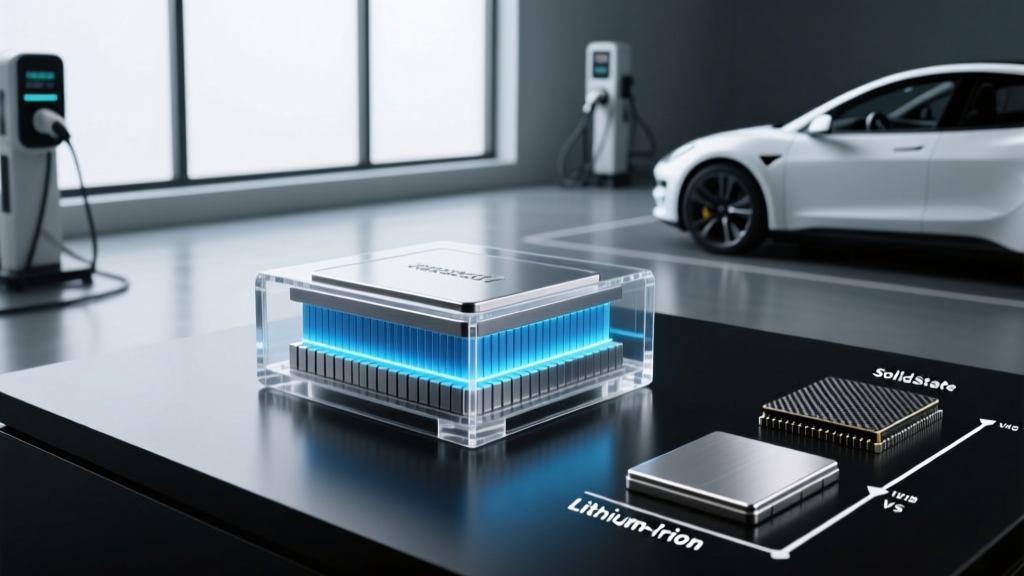
Every modern electric vehicle uses a high-voltage traction battery built from lithium-ion cells, but the cathode chemistry varies—and that choice shapes range, longevity, cost, and cold-weather behavior. In 2026, two families dominate the US market: lithium iron phosphate (LFP) and nickel-manganese-cobalt or nickel-cobalt-aluminum (NMC/NCA).
| Attribute | LFP (Lithium Iron Phosphate) | NMC/NCA (Nickel-Based) |
|---|---|---|
| Energy Density | Lower (~160–180 Wh/kg cell-level) | Higher (~220–260 Wh/kg cell-level) |
| Typical Use | Standard Range trims (Tesla Model 3 RWD, Model Y RWD, base Ford Mustang Mach-E) | Long Range / Performance trims, most Hyundai/Kia/GM EVs |
| Cycle Life | 3,000–5,000+ cycles to 80% capacity | 1,500–2,500 cycles to 80% capacity |
| Cold Performance | Weaker below 32°F; slower charge acceptance | Better low-temp conductivity |
| Cost per kWh | Lower (no cobalt or nickel) | Higher (nickel/cobalt commodity exposure) |
| State of Charge Tolerance | Can sit at 100% SoC regularly without harm | Best kept 20–80% for daily use |
| Thermal Stability | Higher (less prone to thermal runaway) | Requires more robust BMS/cooling |
Choose LFP if you prioritize longevity, lower cost, and daily 100% charging (useful for commute-heavy drivers). Choose NMC/NCA if you need maximum range per charge and better winter efficiency. Neither is universally "better"—it depends on your driving profile.
How Long Do EV Batteries Last? Degradation in Real Numbers
Industry data from sources like Recurrent Auto and manufacturer warranty claims consistently show that modern EV batteries lose roughly 5–10% of their original capacity in the first 100,000 miles, then degrade more slowly afterward. Most 2026-era packs are engineered to retain 70–80% of usable capacity at 150,000–200,000 miles.
Typical Degradation Curve (NMC, liquid-cooled, 75–100 kWh pack):
- Year 1 / 15,000 mi: ~3–5% loss (initial "break-in" drop)
- Year 3 / 45,000 mi: ~7–9% total loss
- Year 5 / 75,000 mi: ~9–11% total loss
- Year 8 / 120,000 mi: ~12–15% total loss
- Year 10 / 150,000 mi: ~15–20% total loss (varies widely by usage)
LFP packs typically show 2–4% less loss at equivalent mileage due to superior cycle life.
A 2024 Recurrent Auto study of over 15,000 vehicles found that 96% of EVs retained more than 85% of original range after five years. The fear of a battery "falling off a cliff" at 100,000 miles is not supported by fleet data. Degradation is gradual and logarithmic—it slows as the battery ages.
What Does the Battery Warranty Cover?
Federal law mandates that EV batteries carry a minimum warranty of 8 years / 100,000 miles (10 years / 150,000 miles in CARB states like California, New York, and Massachusetts). Most manufacturers exceed the floor. The warranty covers capacity loss below a defined threshold—typically 70% of original usable capacity—not just total failure.
| Manufacturer | Warranty Period | Capacity Retention Threshold |
|---|---|---|
| Tesla (Model 3/Y LFP) | 8 yr / 100,000 mi | 70% |
| Tesla (Model 3/Y LR NMC) | 8 yr / 120,000 mi | 70% |
| Hyundai / Kia (E-GMP) | 10 yr / 100,000 mi | 70% |
| GM (Ultium-based) | 8 yr / 100,000 mi | 70% |
| Ford (Mach-E, F-150 Lightning) | 8 yr / 100,000 mi | 70% |
| Rivian | 8 yr / 175,000 mi | 70% |
Key caveat: warranty claims require documented capacity loss measured via the vehicle's battery management system (BMS) or a dealer diagnostic. Normal range loss from cold weather or high-speed driving does not qualify. If your 85 kWh pack drops below ~59.5 kWh of usable capacity within the warranty window, you're covered for repair or replacement.
How Much Does an EV Battery Cost to Replace?
Out-of-warranty replacement remains expensive, but the scenario is rarer than most buyers assume. According to data compiled by fueleconomy.gov and industry repair databases, most traction batteries outlast the vehicle's economic life. When replacement is needed—typically after a collision, manufacturing defect outside warranty, or extreme degradation past 200,000 miles—costs scale with pack size.
| Vehicle Class | Pack Size | Part Cost | Labor + Total |
|---|---|---|---|
| Compact (Chevy Bolt, Nissan Leaf) | 60–65 kWh | $8,000–$11,000 | $10,000–$14,000 |
| Mid-size (Tesla Model 3, Ioniq 6) | 75–82 kWh | $11,000–$16,000 | $13,000–$19,000 |
| Large SUV / Truck (F-150 Lightning, Rivian) | 100–135 kWh | $18,000–$28,000 | $21,000–$32,000 |
Prices have fallen roughly 10–15% since 2023 as cell costs decline, but labor remains significant due to high-voltage safety protocols, coolant system re-service, and BMS recalibration. Refurbished or remanufactured packs are increasingly available from third-party shops for 30–50% less than OEM new.
Factors That Accelerate (or Preserve) Battery Life
Battery longevity is not random. The following habits have measurable impact on State of Health (SoH) over a 5–10 year ownership period:
- Avoid sustained 100% SoC (NMC/NCA): Store between 20–80% for daily use. Charge to 100% only before long trips. LFP owners can charge to 100% regularly without penalty.
- Minimize DC fast charging above 150 kW: Occasional use is fine, but daily reliance on 250–350 kW chargers generates thermal stress. Use Level 2 (7–19 kW) for routine charging.
- Precondition before fast charging: Cold batteries charge slower and experience more lithium plating. Use the vehicle's navigation-routed preconditioning (Tesla, Hyundai, GM all offer this).
- Avoid prolonged storage at 0% or 100%: If storing for 2+ weeks, set SoC to 50% and keep the vehicle plugged in if possible so the BMS can maintain thermal and voltage balance.
- Limit exposure to extreme heat: Parking in shade or a garage in summer reduces calendar aging. Battery degradation accelerates above 95°F ambient.
- Use regenerative braking moderately: Aggressive one-pedal driving in cold weather can stress cells; dial regen down below 40°F until the pack warms up.
How to Check Your Battery's State of Health (SoH)
Most 2026 EVs surface SoH data through the infotainment system or companion app. Tesla provides a battery health percentage in the Service menu. Hyundai and Kia include a battery condition screen under EV settings. GM's Ultium vehicles report via the myChevrolet/myCadillac app.
For a more granular view, OBD-II dongles paired with apps like EVbat or Scan My Tesla can read cell-level voltage delta, internal resistance, and calculated capacity from the BMS CAN bus. A healthy pack typically shows cell variance under 20 mV at rest. If one module group consistently reads 50+ mV below the others, it may signal an imbalance that warrants dealer attention.
Third-party services like Recurrent also offer battery health reports that compare your degradation curve against a fleet of identical vehicles—useful if you're buying or selling a used EV.
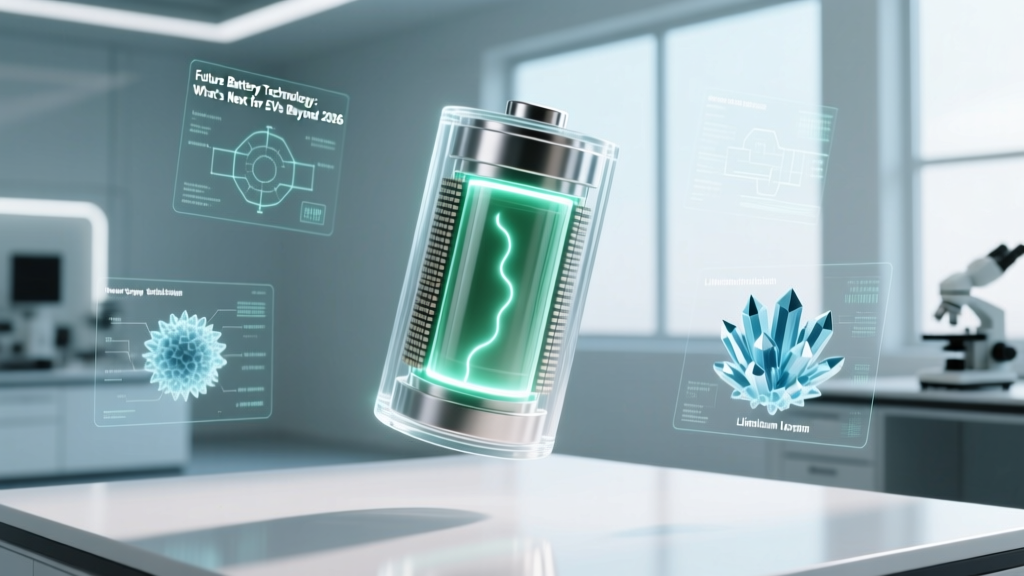
Future Battery Technology: Solid-State, Silicon Anodes, and Realistic Timelines
The next generation of EV batteries promises step-change improvements in energy density, charge speed, and safety. Here's where the leading candidates stand as of 2026:
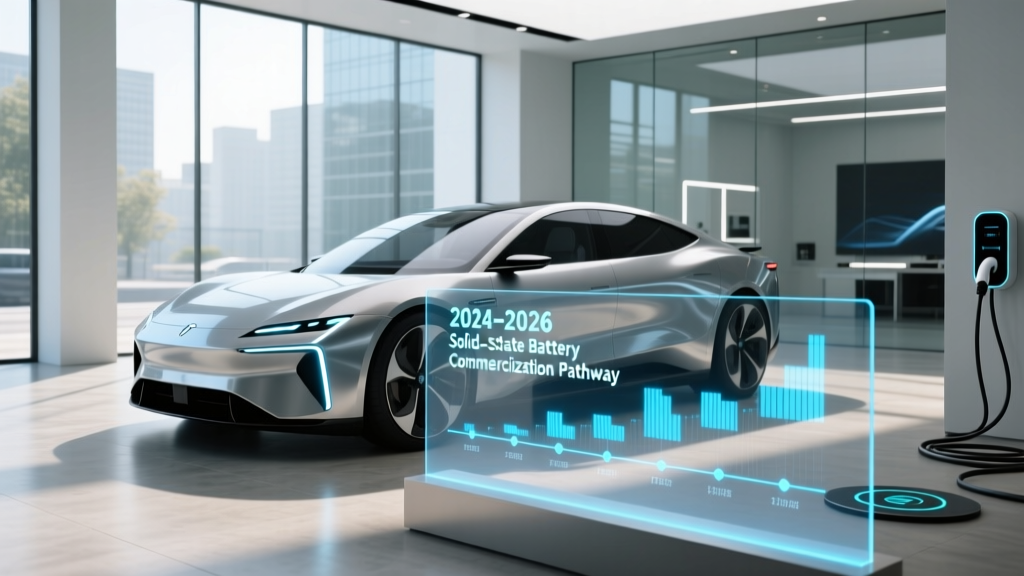
Solid-State Batteries: These replace the liquid electrolyte with a solid ceramic, sulfide, or polymer layer, enabling lithium-metal anodes and energy densities above 400 Wh/kg (roughly double today's NMC). Toyota has announced a solid-state pack targeting 750 km (~465 miles) of range with a 10-minute 10–80% charge, expected in limited production vehicles by 2027–2028. Samsung SDI and QuantumScape are also in pilot production, but manufacturing yield and cost remain barriers. Expect solid-state to appear first in premium vehicles above $80,000 MSRP before reaching mainstream pricing around 2030–2032.
Silicon-Dominant Anodes: Companies like Sila Nanotechnologies and Group14 are blending silicon into graphite anodes to boost capacity by 20–40%. The Mercedes G-Class 580e (2025) uses a silicon-anode pack from Sila, and Porsche has signaled adoption for future Taycan variants. This technology is commercially available now in limited applications and will scale through 2027–2028.
Sodium-Ion Batteries: CATL and BYD have begun shipping sodium-ion packs in Chinese-market vehicles. These offer lower energy density (~120–150 Wh/kg) but dramatically lower cost and better cold performance. Sodium-ion is unlikely to appear in US-market long-range EVs but could power affordable city cars and energy-storage systems by 2028.
Lithium-Sulfur (Li-S): Still in the research stage, Li-S offers theoretical energy densities above 500 Wh/kg but suffers from rapid cycle-life degradation. Commercial viability remains 8–12 years away.
Bottom line: solid-state is real but not imminent for most buyers. Silicon anodes are the nearest incremental leap, already shipping in niche applications. For anyone buying an EV in 2026–2028, today's LFP and NMC packs—paired with smart charging habits—will deliver 150,000+ miles of reliable service.
How long do EV batteries last in years and miles?
Most 2026-era EV batteries are designed to retain 70–80% of original capacity at 150,000–200,000 miles over 10–15 years. Fleet data from Recurrent Auto shows that the majority of EVs lose less than 15% of range in the first eight years of typical use.
How much does it cost to replace an EV battery?
Out-of-warranty replacement ranges from roughly $10,000 for a compact EV (60 kWh) to $30,000+ for a large truck or SUV (130+ kWh), including labor. However, most batteries outlive the vehicle's useful life, and warranty coverage (8–10 years / 100,000–175,000 miles) protects against premature failure.
What does the EV battery warranty actually cover?
Manufacturer warranties cover capacity loss below a defined threshold—typically 70% of original usable capacity—within 8 years / 100,000 miles (longer in CARB states). This includes cell defects, module imbalances, and BMS failures. It does not cover range loss from extreme temperatures or driving style.
How do I maximize my EV battery's health?
Charge NMC/NCA packs between 20–80% for daily use (LFP can sit at 100%). Use Level 2 home charging as your primary method, precondition before DC fast charging, avoid storing the vehicle at 0% or 100% SoC, and minimize prolonged exposure to extreme heat. Periodic SoH checks via the vehicle app or OBD-II tools help catch imbalances early.
LFP vs NMC — which battery chemistry is better for me?
LFP is better if you want maximum cycle life, lower cost, and the convenience of daily 100% charging (ideal for commuters and fleet use). NMC/NCA is better if you need the longest possible range per charge, better cold-weather performance, and faster DC charging speeds. Both chemistries will reliably last 150,000+ miles with proper care.