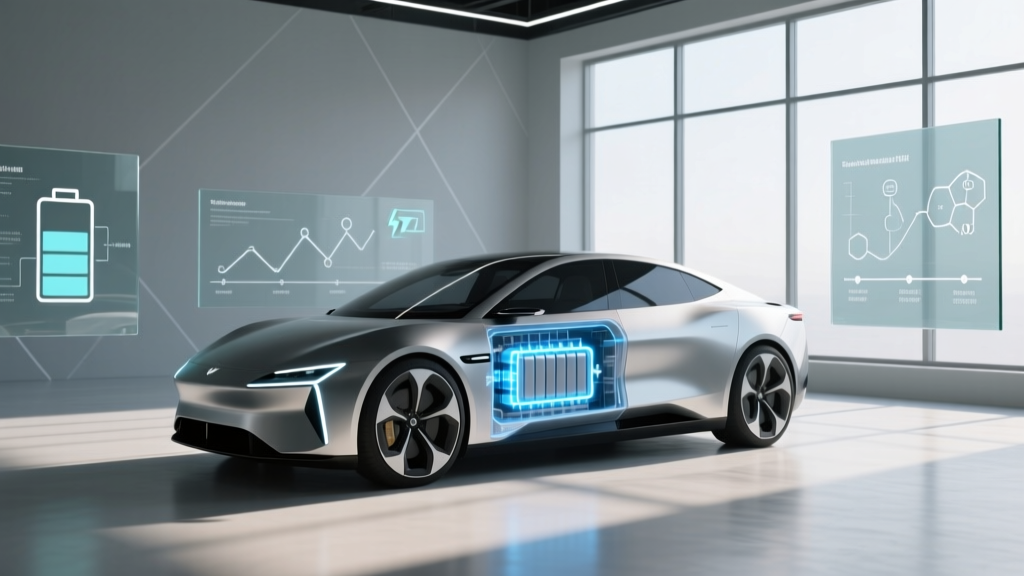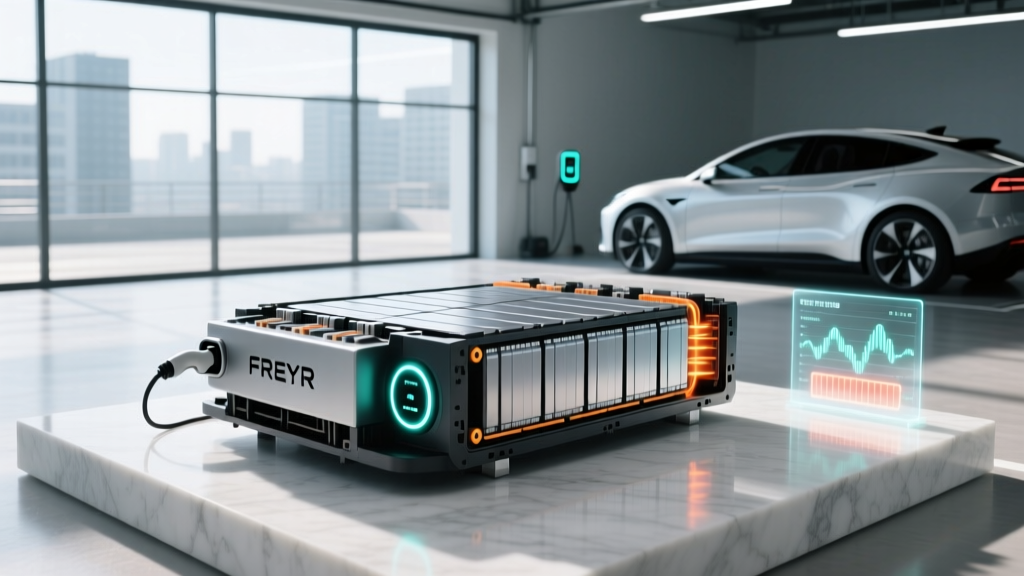
As the electric vehicle market matures, battery technology has become the single most scrutinized component of any EV purchase. Among the names surfacing in battery supply chain discussions is Freyr Battery, a Norway-based company developing large-scale lithium-ion cell production aimed at the European and global EV markets. While Freyr itself is not yet a household name on par with CATL or LG Energy Solution, understanding what Freyr Battery represents — and how its cell technology fits into the broader EV battery landscape — requires a solid grasp of the chemistry, degradation patterns, warranties, and costs that define modern traction batteries.
This guide breaks down everything EV owners and shoppers need to know about battery technology in 2026, using Freyr Battery's approach as a lens into where the industry is heading.
Freyr Battery: Who They Are and What They're Building
Freyr Battery, headquartered in Mo i Rana, Norway, has positioned itself as a manufacturer of sustainably produced lithium-ion cells for electric vehicles and energy storage. The company's stated goal is to produce battery cells with among the lowest carbon footprints in the industry, leveraging Norway's abundant hydroelectric power for manufacturing. Freyr has pursued partnerships and offtake agreements with European automakers, though as of early 2026, its Giga Arctic factory remains in the scaling and qualification phase rather than full-volume production.
For EV buyers, Freyr matters less as a brand you'd see on a window sticker and more as part of the expanding supply chain that will eventually feed cells into vehicles sold in Europe and potentially North America. The chemistry choices Freyr is making — primarily NMC (nickel manganese cobalt) for high-energy applications and potential LFP (lithium iron phosphate) for cost-sensitive segments — mirror the broader industry split that every EV buyer should understand.
LFP vs NMC/NCA: The Chemistry Decision That Shapes Your EV
Every EV battery pack is built from individual cells, and the chemical composition of those cells determines range, longevity, cost, and cold-weather behavior. In 2026, two chemistries dominate the market:
| Attribute | LFP (Lithium Iron Phosphate) | NMC/NCA (Nickel-based) |
|---|---|---|
| Energy Density | ~160-180 Wh/kg (lower) | ~220-300 Wh/kg (higher) |
| Cycle Life | 3,000-5,000+ cycles | 1,000-2,000 cycles typical |
| Cold Performance | More range loss below 32°F | Better cold-weather retention |
| Cost per kWh | Lower (~$80-100/kWh cell level) | Higher (~$110-140/kWh cell level) |
| Thermal Stability | Excellent — less prone to thermal runaway | Good, but requires more active management |
| Typical Use | Standard-range models (Tesla Model 3 RWD, BYD) | Long-range/performance models (most AWD trims) |
| Recommended Charge Habit | Can charge to 100% daily | Best kept 20-80% for daily use |
Which is better? Neither is universally superior. LFP wins on longevity and cost, making it ideal for daily commuting and budget-conscious buyers who don't need maximum range. NMC wins on energy density and cold-weather performance, making it the choice for long-range models and drivers in northern climates. Freyr Battery's focus on NMC aligns with the high-energy-density segment, where European automakers demand cells that can deliver 300+ miles of EPA range in midsize sedans and SUVs.
If you're choosing between two trims of the same vehicle — say a Tesla Model 3 Standard Range (LFP, ~60 kWh) versus a Model 3 Long Range (NMC, ~82 kWh) — the chemistry difference affects more than just range. The LFP pack will likely outlast the NMC pack in total cycle life, while the NMC pack will give you better winter usability and faster highway-passing power from its higher energy density.
How Long Do EV Batteries Actually Last?
The fear that an EV battery will need a $20,000 replacement at 100,000 miles is largely a myth rooted in early-generation EVs from 2011-2015. Modern battery packs are engineered to outlast most ownership periods.
Typical Degradation Curve (Based on Aggregate Fleet Data):
- Year 1 / 15,000 miles: ~2-3% capacity loss (initial formation loss)
- Year 3 / 45,000 miles: ~5-7% total loss
- Year 5 / 75,000 miles: ~8-10% total loss
- Year 8 / 120,000 miles: ~10-14% total loss
- Year 10 / 150,000 miles: ~12-18% total loss (varies significantly by chemistry and usage)
Data from Recurrent Auto, which tracks over 15,000 EVs in real-world conditions, shows that most modern EVs retain 90%+ of their original capacity at 100,000 miles. LFP packs tend to flatten their degradation curve earlier and hold steady, while NMC packs may show a slightly steeper initial drop before stabilizing.
A 2026 Tesla Model Y Long Range with an 82 kWh NMC pack might see real-world usable capacity drop from ~78 kWh (factoring in a small top/bottom buffer) to roughly 70-72 kWh at 120,000 miles. That translates to an EPA-rated 310-mile range declining to roughly 270-280 miles — still entirely functional for daily use and road trips.
The key insight: most EV batteries will outlast the vehicle's economic life. Cars are typically scrapped or retired at 15-20 years for reasons unrelated to the battery — body corrosion, electronics failures, accident damage, or simply owner upgrades.
What the Battery Warranty Actually Covers
Federal law in the United States mandates that EV battery warranties cover a minimum of 8 years or 100,000 miles. In California and states that follow CARB (California Air Resources Board) emissions standards, the requirement extends to 10 years or 150,000 miles. Most manufacturers meet or exceed these minimums.
| Manufacturer | Warranty Period | Mileage Cap | Capacity Retention Threshold |
|---|---|---|---|
| Tesla (Model 3/Y) | 8 years | 100,000-120,000 mi (trim dependent) | 70% |
| Hyundai/Kia | 10 years | 100,000 mi | 70% |
| Ford (Mustang Mach-E) | 8 years | 100,000 mi | 70% |
| Chevrolet (Equinox EV) | 8 years | 100,000 mi | 60-70% (trim dependent) |
| BMW | 8 years | 100,000 mi | 70% |
| Volkswagen (ID.4) | 8 years | 100,000 mi | 70% |
The critical detail is the capacity retention threshold. If your battery drops below 70% of its original capacity within the warranty period, the manufacturer must repair or replace it at no cost. In practice, this means a 75 kWh pack that falls below 52.5 kWh of usable capacity would qualify for a warranty claim. Very few modern EVs hit this threshold under normal use — it would require a defective cell module or extreme abuse.
Warranties typically do not cover damage from collisions, flooding, improper charging equipment, or modifications to the battery management system (BMS). They also generally exclude "cosmetic" capacity loss that stays above the threshold — if your pack retains 72% at year 8, you're outside warranty coverage even though range has noticeably decreased.
EV Battery Replacement Costs: What to Budget For
While most batteries will never need replacement during typical ownership, understanding the cost landscape is essential for long-term planning — especially if you buy a used EV outside warranty coverage.
| Vehicle / Pack Size | Battery Capacity | Estimated Replacement Cost (2026) | Notes |
|---|---|---|---|
| Tesla Model 3 Standard Range | ~60 kWh (LFP) | $10,000 - $14,000 | LFP packs less common to replace; high cycle life |
| Tesla Model Y Long Range | ~82 kWh (NMC) | $14,000 - $18,000 | Structural pack; labor-intensive |
| Hyundai Ioniq 5 | ~77.4 kWh (NMC) | $12,000 - $16,000 | E-GMP platform; module-level repair possible |
| Ford F-150 Lightning Extended | ~131 kWh (NMC) | $22,000 - $30,000 | Largest consumer pack; highest cost |
| Chevrolet Bolt EV | ~65 kWh (NMC) | $9,000 - $13,000 | Post-recall packs have improved thermal design |
| Nissan Leaf (40 kWh) | ~40 kWh | $6,500 - $9,000 | Passive cooling; older design; more common replacement |
Several important caveats apply to these figures. First, module-level repair is increasingly common — rather than replacing the entire pack, a technician can swap out a single degraded or failed module for $2,000-$5,000. Second, refurbished and remanufactured packs are becoming available from third-party suppliers at 30-50% below new OEM pricing. Third, cell prices continue their long-term decline; according to BloombergNEF, average lithium-ion pack prices fell below $130/kWh in 2025 and are expected to approach $100/kWh by 2027-2028.
The practical reality: if you're buying a new EV in 2026, the probability of paying out of pocket for a full battery replacement is extremely low. The pack will almost certainly outlast your ownership. For used EV buyers purchasing vehicles with 80,000+ miles outside warranty, a pre-purchase battery health check (see below) is the smartest investment you can make.
What Affects Battery Life — and What You Can Control
Battery degradation is not random. It follows predictable electrochemical patterns driven by temperature, charge habits, and charging speed. Here's what moves the needle:
High-Impact Factors (Manage These):
- State of Charge extremes: Sitting at 100% SoC for extended periods accelerates electrolyte decomposition. For NMC packs, daily charging to 80% and avoiding drops below 10% can add years of usable life. LFP packs are more tolerant of 100% charges and actually benefit from periodic full charges for BMS calibration.
- DC fast charging frequency: Occasional DC fast charging (1-2 times per week) has minimal impact. Daily reliance on 150+ kW DC fast charging can accelerate degradation by 1-3% over the pack's lifetime due to elevated cell temperatures and lithium plating risk. Preconditioning the battery before fast charging (a feature most modern EVs include) significantly mitigates this.
- Extreme heat exposure: Sustained ambient temperatures above 95°F, combined with high SoC, are the single worst condition for lithium-ion cells. Parking in shade or a garage during summer matters more than most owners realize.
- Extreme cold charging: Charging at full rate when the battery is below freezing can cause lithium plating on the anode — a permanent capacity loss mechanism. Always allow the vehicle's thermal management system to precondition the pack before charging in sub-freezing weather.
Lower-Impact Factors (Don't Obsess):
- Total miles driven: Calendar aging (time-based degradation) often matters more than cycle count. A 5-year-old EV with 30,000 miles may show similar degradation to one with 60,000 miles.
- Regenerative braking settings: High regen does not meaningfully accelerate battery degradation. The energy recaptured is well within the pack's charge-acceptance limits.
- Aftermarket accessories: Standard 12V accessories (dashcams, phone chargers) draw negligible power and don't affect the traction battery.
How to Check and Monitor Battery Health (SoH)
State of Health (SoH) is the metric that tells you what percentage of the battery's original capacity remains usable. Unlike your smartphone, most EVs don't display SoH as a simple percentage on the dashboard — but the data is accessible if you know where to look.
Method 1: In-Vehicle Diagnostics. Some manufacturers provide battery health readouts in the service menu. Tesla owners can access a battery health test via the service menu (Controls → Service → Battery Health Test on 2024+ software), which runs a controlled discharge cycle and reports estimated capacity. Hyundai and Kia include a battery health indicator in the EV-specific submenu on newer model years.
Method 2: OBD-II Apps. Third-party OBD-II dongles paired with apps like LeafSpy (for Nissan Leaf), Scan My Tesla, or Car Scanner ELM OBD2 can read the BMS-reported SoH directly. These tools pull the same data the manufacturer's service center sees. Expect to pay $25-$50 for a compatible OBD-II adapter.
Method 3: Dealer or Independent EV Shop Assessment. A service center can run a full-capacity discharge test, which is the most accurate SoH measurement but requires leaving the vehicle for several hours. This is the recommended approach for pre-purchase inspections on used EVs.
Method 4: Third-Party Battery Reports. Services like Recurrent offer battery health reports that compare your vehicle's degradation to a fleet of identical models, giving you a percentile ranking. Some used-EV marketplaces now include these reports in vehicle listings.
Beyond Lithium-Ion: Solid-State, Silicon Anodes, and Realistic Timelines
The battery industry is pursuing several next-generation technologies that promise step-change improvements in energy density, charging speed, and safety. As of 2026, here's where each stands:
Solid-State Batteries: These replace the liquid electrolyte with a solid ceramic, polymer, or sulfide material, theoretically enabling higher energy density (400+ Wh/kg), faster charging, and improved safety. Toyota has announced solid-state cells for limited production vehicles around 2027-2028, while Samsung SDI and QuantumScape are in the prototype and sampling phase with OEM partners. Realistic consumer availability at scale: 2029-2032. Early deployments will be in premium, low-volume models at significant price premiums.
Silicon Anode Technology: Replacing or supplementing graphite anodes with silicon can boost energy density by 20-40%. Companies like Sila Nanotechnologies and Group14 are already supplying silicon-dominant anode materials to battery makers. Mercedes-Benz's partnership with Sila is expected to appear in the G-Class electric SUV. Realistic timeline: already entering production in limited applications; broader adoption expected 2026-2028.
Sodium-Ion Batteries: CATL and BYD have begun deploying sodium-ion cells in entry-level EVs sold in China, offering lower cost and no reliance on lithium or cobalt, albeit with lower energy density (~140-160 Wh/kg). Realistic timeline for US-market vehicles: 2028+ at the earliest, likely in budget urban EVs or as a supplement within hybrid battery packs.
For Freyr Battery specifically, the company has indicated interest in next-generation cell architectures but remains focused on scaling proven NMC chemistry for near-term production volume. This is the pragmatic path — the EV market needs billions of cells per year now, and incremental improvements to existing chemistries (better electrolyte additives, improved electrode coatings, smarter BMS algorithms) continue to deliver 2-5% annual gains in energy density and cycle life.
Frequently Asked Questions
How long do EV batteries last in years and miles?
Modern EV batteries (2020 and newer) typically retain 85-90% of their original capacity at 150,000 miles or 10 years. LFP chemistry packs often exceed this, with some fleet data showing 92%+ retention at 100,000 miles. The vehicle will likely be retired for other reasons before the battery becomes unusable.
How much does it cost to replace an EV battery in 2026?
Full pack replacement ranges from approximately $9,000 for a 40-65 kWh pack (Nissan Leaf, Chevy Bolt) to $22,000-$30,000 for large packs like the F-150 Lightning's 131 kWh unit. Module-level repairs, which address a single failed section rather than the full pack, typically cost $2,000-$5,000. Most owners will never face this expense.
What does the federal battery warranty cover?
By federal mandate, EV batteries carry a minimum warranty of 8 years/100,000 miles (10 years/150,000 miles in CARB states). The warranty covers capacity loss below a defined threshold — typically 70% of original capacity. If your battery falls below this threshold within the warranty period, the manufacturer must repair or replace it at no cost. Damage from accidents, floods, or unauthorized modifications is excluded.
How can I maximize my EV battery's lifespan?
For NMC packs: charge to 80% daily, avoid leaving the car at 100% SoC for more than a few hours, precondition before DC fast charging, and park in shade during hot weather. For LFP packs: you can charge to 100% regularly (and should do so at least weekly for BMS calibration), but still avoid extreme heat exposure and unpreconditioned cold-weather fast charging. For all chemistries: Level 2 home charging is gentler on the pack than daily DC fast charging.
Is LFP or NMC better for my situation?
Choose LFP if: you commute daily under 150 miles, want maximum battery longevity, live in a moderate climate, and prioritize lower cost. Choose NMC if: you need 300+ miles of range, regularly drive in sub-freezing temperatures, take frequent road trips requiring fast DC charging, or want the highest performance. Neither chemistry is a bad choice — they're optimized for different use cases.
Is Freyr Battery a brand I can buy today?
Not directly. Freyr Battery is a cell manufacturer in the scaling phase as of 2026, not a consumer-facing battery brand. Their cells are intended for integration into EV battery packs by automakers. You won't see a "Freyr" badge on a vehicle, but their technology may eventually power EVs sold in European and potentially global markets as production ramps.
Understanding battery technology — whether the cells come from Freyr, CATL, LG, Panasonic, or SK On — comes down to the same fundamentals: chemistry determines your trade-offs, thermal management determines your longevity, and smart charging habits determine whether you'll ever need to think about replacement costs. For the vast majority of EV owners in 2026, the battery is the least problematic component of the vehicle.