Understanding the Ford F-150 Lightning's High-Voltage Battery
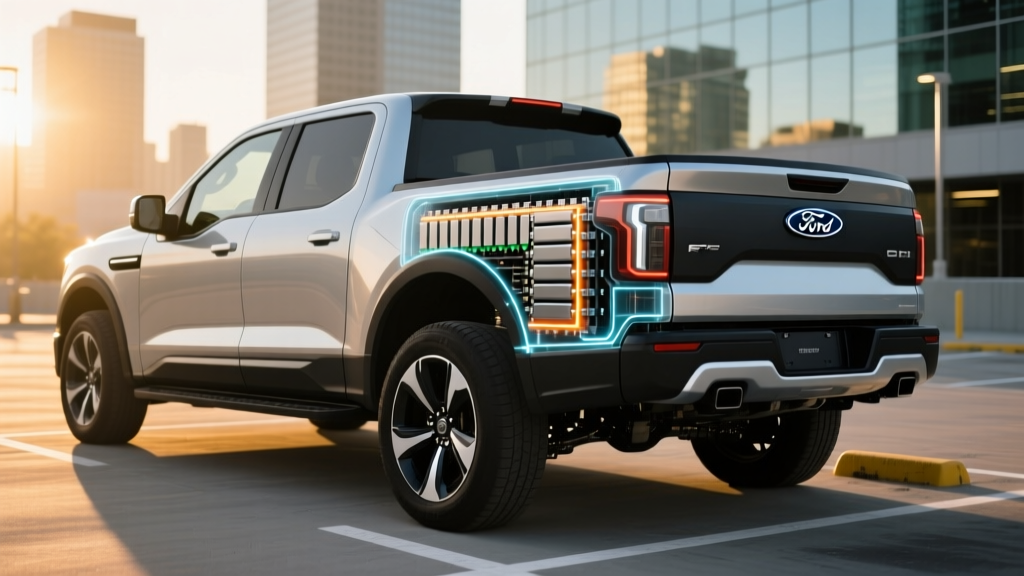
The Ford F-150 Lightning's battery pack is the single most expensive and most scrutinized component on the truck. Buyers searching for Ford Lightning battery range data are often trying to answer a cluster of related questions: How far will it really go? How long until the pack degrades? What does a replacement cost? This guide breaks down the chemistry, degradation curve, warranty protection, and real-world ownership factors that determine what Lightning owners actually experience over 100,000+ miles.
The 2025–2026 F-150 Lightning offers two battery options, both using lithium-ion NMC (nickel manganese cobalt) chemistry supplied primarily by SK On:
- Standard-Range: ~98 kWh usable capacity, EPA-estimated 240 miles (extended-range trims with this pack)
- Extended-Range: ~131 kWh usable capacity, EPA-estimated 320 miles (up to 320 mi on Lariat/Platinum; XLT Extended Range rated at 320 mi)
| Spec | Standard-Range | Extended-Range |
|---|---|---|
| Usable Capacity | ~98 kWh | ~131 kWh |
| Chemistry | NMC (SK On) | NMC (SK On) |
| EPA Range | 240 mi | 320 mi |
| Peak DC Fast Charge | 120 kW | 150 kW |
| 10–80% DC Charge Time | ~44 min | ~41 min |
| Level 2 Charge Rate | 10.5 kW (single) / 19.2 kW (dual) | 19.2 kW |
| 0–60 mph | ~4.5 sec (452 hp) | ~3.8 sec (580 hp) |
| Battery Warranty | 8 yr / 100,000 mi | 8 yr / 100,000 mi |
Source: fueleconomy.gov and Ford's official F-150 Lightning specification pages.
NMC Chemistry in the Lightning: Why Ford Chose It and What It Means
Both Lightning packs use NMC (nickel manganese cobalt oxide) cells manufactured by SK On, Ford's joint-venture battery partner under the BlueOval SK umbrella. NMC is the dominant chemistry in North American long-range EVs because it prioritizes energy density — more kWh per kilogram of cell weight — which is critical in a full-size truck where packaging space and payload matter.
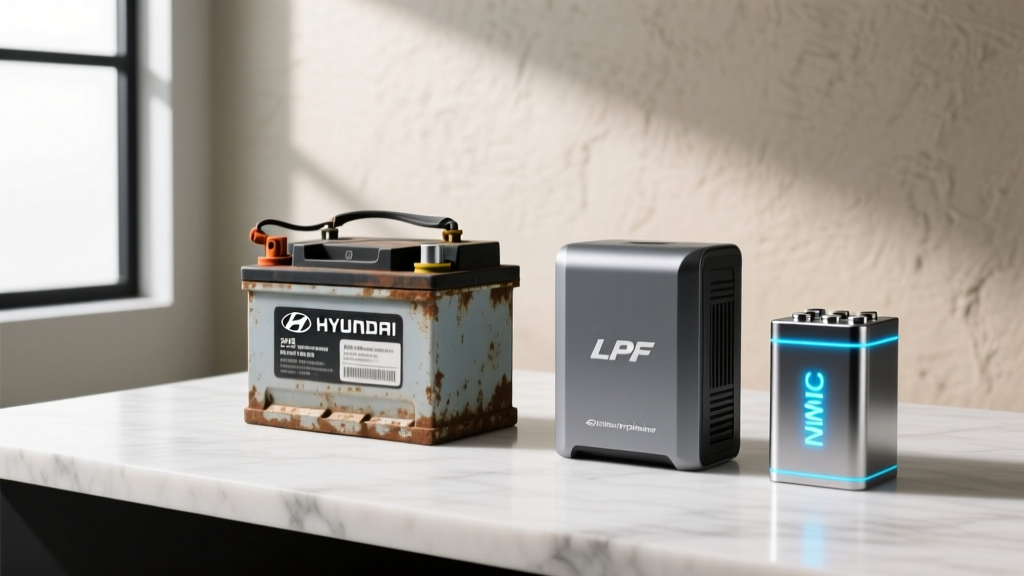
Here is how NMC compares to the other major EV chemistry, LFP (lithium iron phosphate), which is used in vehicles like the Tesla Model 3 RWD and some commercial fleet applications:
| Factor | NMC (Ford Lightning) | LFP (e.g., Tesla Model 3 RWD) |
|---|---|---|
| Energy Density | High (~220–260 Wh/kg cell-level) | Moderate (~160–180 Wh/kg cell-level) |
| Range per Pack Weight | Better — enables 320-mi pack without exceeding GVWR | Lower — requires heavier pack for same range |
| Cycle Life | ~1,000–1,500 full cycles to 80% SoH | ~2,500–4,000+ full cycles to 80% SoH |
| Cold-Weather Performance | Better low-temp discharge capability | More range loss in extreme cold; slower cold charging |
| Charging to 100% Regularly | Not recommended — accelerates degradation | Recommended periodically — LFP tolerates full SoC |
| Cost per kWh | Higher (cobalt/nickel commodity exposure) | Lower (~15–25% cheaper at cell level) |
| Thermal Stability | Good with active thermal management | Excellent — inherently more stable chemistry |
Which is better? For the F-150 Lightning's use case — a heavy, full-size truck needing maximum range in a constrained underfloor package — NMC is the correct engineering choice. LFP's cycle-life advantage matters less here because a Lightning owner driving 15,000 miles/year will accumulate roughly 1,200 full charge cycles over 200,000 miles, which is within NMC's rated lifespan. If Ford ever introduces a lighter commercial variant or a shorter-range fleet model, LFP could appear, but the current lineup is firmly NMC.
Ford Lightning Battery Degradation: What the Data Shows
Battery degradation is a fact of lithium-ion ownership, but the rate is slower than most first-time EV buyers expect. Based on fleet data from earlier SK On NMC packs, industry-wide telematics studies, and Ford's own engineering targets, here is the realistic degradation trajectory for the F-150 Lightning:
- Year 1 / 15,000 mi: ~2–4% capacity loss (initial formation loss)
- Year 3 / 45,000 mi: ~5–8% total loss
- Year 5 / 75,000 mi: ~8–12% total loss
- Year 8 / 100,000 mi: ~10–15% total loss (warranty threshold)
- Year 10 / 150,000 mi: ~12–18% total loss (projected, based on NMC fleet data)
At 15% loss on the Extended-Range pack, a truck originally rated at 320 EPA miles would deliver roughly 272 miles — still highly usable for daily driving and most road trips.
These figures align with broader industry data. A Geotab fleet study of over 10,000 EVs found an average annual degradation rate of approximately 1.8% per year across chemistries, with NMC packs showing slightly steeper initial loss but stabilizing after year three. Ford engineers have stated publicly that the Lightning's thermal management system — liquid cooling and heating across all cells — is designed to keep degradation within the warranty threshold even under heavy DC fast-charging use.
Factors that accelerate degradation in the Lightning's NMC pack include:
- Frequent DC fast charging above 150 kW: High charge rates generate heat; while the thermal management system mitigates this, habitual use of 350 kW chargers (even though the Lightning peaks at 150 kW) still stresses cells more than Level 2 charging
- Routinely storing at 100% SoC: NMC cells experience the most stress at full charge; Ford recommends setting daily charge limits to 80–90% and only charging to 100% before long trips
- Extreme heat exposure: Repeatedly parking in 100°F+ ambient heat without plugged-in thermal management accelerates calendar aging
- Deep discharge cycles: Regularly running the pack below 10% before recharging adds stress; the Lightning's buffer (roughly 3–5 kWh below "empty") protects against catastrophic damage, but habitual deep cycling still hastens wear
Ford's Battery Warranty: What's Covered and for How Long
Ford covers the Lightning's high-voltage battery under its Electric Vehicle Component Warranty, which is federally mandated to meet minimum standards but in Ford's case matches the industry norm for BEVs:
| Coverage Element | Terms |
|---|---|
| Duration | 8 years or 100,000 miles (whichever comes first) |
| Capacity Retention Threshold | 70% of original usable capacity |
| What Triggers a Claim | Battery falls below 70% SoH (e.g., Extended-Range pack dropping below ~91.7 kWh usable) |
| Remedy | Ford will repair or replace modules/pack to restore above 70% capacity |
| Transferable | Yes — warranty follows the vehicle, not the original owner |
| Exclusions | Damage from accidents, flooding, unauthorized modifications, or neglect (e.g., ignoring thermal management warnings) |
What does the battery warranty cover? In practical terms, Ford will replace failed modules or the entire pack if diagnostic scans confirm the battery has degraded below 70% of its original capacity within the warranty window. Ford's approach uses modular replacement where possible — swapping individual cell modules rather than the full pack — which can reduce downtime. The 70% threshold is industry-standard; Hyundai, GM, and Tesla use similar benchmarks.
Notably, the warranty is not a guarantee against any degradation — it's a guarantee against excessive degradation. A Lightning losing 15% capacity at 90,000 miles is within spec and would not trigger a claim. A Lightning losing 35% at 60,000 miles absolutely would.
Ford Lightning Battery Replacement Cost: When and How Much
This is the question that generates the most anxiety, so let's anchor it in data. Most EV batteries outlive their vehicles. The vast majority of Lightning owners will sell, trade, or retire the truck before the pack requires full replacement. But for those who plan to keep a Lightning past 150,000 miles — or who buy a high-mileage used example — here is the cost landscape:
| Component | Estimated Cost Range | Notes |
|---|---|---|
| Standard-Range Pack (~98 kWh) | $15,000 – $22,000 | Full pack replacement, parts + labor |
| Extended-Range Pack (~131 kWh) | $20,000 – $30,000 | Larger pack, more modules; labor similar |
| Single Module Replacement | $2,000 – $5,000 | If only one or two modules fail out of warranty |
| Typical Replacement Timeline | 150,000 – 200,000+ mi | Most packs never need full replacement in vehicle's life |
How much does an EV battery cost to replace? For the Lightning Extended-Range, a full out-of-warranty pack replacement will likely run $20,000–$30,000 at 2025–2026 parts pricing. However, several factors work in the owner's favor:
- Modular repair: SK On's pack architecture allows individual module replacement, so a single failed module (rare) costs $2,000–$5,000 rather than a full pack swap.
- Declining cell costs: NMC cell prices have dropped roughly 10–15% per year over the past decade. By the time a 2025 Lightning might need a pack at 180,000 miles (roughly 2037), replacement costs will likely be significantly lower.
- Aftermarket and remanufactured packs: As the Lightning fleet ages, third-party remanufactured packs will become available, similar to how remanufactured engines serve the ICE market today.
- The truck will likely be retired first: The average light-duty truck is scrapped or sold at roughly 200,000 miles. A Lightning reaching that milestone with 80–85% battery health still has enormous usable life remaining.
Maximizing Your Lightning's Battery Health: A Practical Care Guide
How do I check and maximize battery health? Ford provides battery State of Health (SoH) data through the FordPass app and the in-vehicle SYNC screen. Owners can view estimated remaining capacity as a percentage, and Ford dealerships can run a full diagnostic scan that provides cell-level voltage balance data and a precise SoH reading.
For ongoing monitoring, third-party tools like the OBDLink EX adapter paired with apps such as Torque Pro or ABRP (A Better Route Planner) can pull real-time battery data including individual cell voltages, pack temperature, and charge/discharge power — useful for tracking degradation trends over months rather than relying on a single annual dealer check.
- Set daily charge limit to 80–90%: Use the FordPass app to configure a charge limit. Only charge to 100% when you need the full range for a trip, and try to time it so the truck doesn't sit at 100% for extended periods.
- Precondition before DC fast charging: Navigate to a charger using the truck's built-in navigation (not a phone app) — this triggers battery preconditioning, warming the pack to optimal temperature for faster, less stressful charging.
- Favor Level 2 home charging: Overnight Level 2 charging at 10.5–19.2 kW generates far less heat than DC fast charging. Use DCFC for road trips, not as your daily routine.
- Plug in during extreme temperatures: When plugged in, the Lightning's thermal management system can maintain optimal battery temperature using grid power rather than pack energy. In summer heat or winter cold, staying plugged in is the single best thing you can do for longevity.
- Avoid repeated deep discharges: Try not to routinely run below 10–15% SoC. The truck's buffer protects against damage, but deep cycles still accelerate calendar aging.
- Update software regularly: Ford periodically releases battery management system (BMS) updates via OTA or dealer visits that optimize charge curves and thermal strategies. Keep your truck current.
- Check SoH annually: Request a battery health report at each service visit, or use an OBD2 adapter for self-monitoring between visits.
Emerging Battery Technology: What's Next Beyond the Lightning's NMC Pack
While the current Lightning uses proven NMC chemistry, Ford is investing heavily in next-generation battery technology through its BlueOval SK joint venture and partnerships. Here is what is on the horizon — with realistic timelines, not hype:
Silicon-dominant anode cells: Ford has invested in Solid Power, a Colorado-based company developing cells with silicon-dominant anodes that promise 20–40% higher energy density than current graphite-anode NMC cells. These are in pilot production as of 2025–2026, with automotive-grade validation expected by 2028–2030. If successful, a future Lightning variant could offer 400+ miles from a similar-size pack.
Solid-state batteries: Often described as the "holy grail," solid-state cells replace the liquid electrolyte with a solid conductor, offering higher energy density, faster charging, and improved safety. However, mass production at automotive scale remains unproven. Toyota, Nissan, and Samsung SDI have all announced pilot programs, but no automaker has yet delivered solid-state cells in a mass-market vehicle. Realistic availability in a production F-150: 2032 or later, and likely in a next-generation platform rather than a retrofit to the current Lightning.
Sodium-ion batteries: CATL and other manufacturers are producing sodium-ion cells for low-cost, lower-energy-density applications. These are unlikely to appear in a full-size truck like the Lightning (where range matters more than cost savings) but could power future compact EVs or commercial fleet vehicles in Ford's lineup.
None of these technologies are available today or in the 2026 model year. The Lightning's NMC pack represents the current state of production-ready, mass-manufactured battery technology — and it is more durable and more energy-dense than what was available even three years ago.
Frequently Asked Questions
How long do Ford Lightning EV batteries last in years and miles?
Based on NMC fleet data and Ford's engineering targets, expect the Lightning's battery to retain 80–85% of its original capacity at 150,000 miles (roughly 10 years at 15,000 miles/year). Many packs will exceed 200,000 miles before dropping to the 70% warranty threshold. The pack is liquid-cooled and thermally managed, which significantly extends life compared to passively cooled packs.
How much does a Ford Lightning battery cost to replace?
A full Extended-Range pack replacement runs an estimated $20,000–$30,000 at 2025–2026 pricing; the Standard-Range pack is roughly $15,000–$22,000. Individual module replacement (for isolated cell failures) costs $2,000–$5,000. Most Lightning owners will never need a replacement — the truck's useful life typically ends before the pack fails.
What does the Ford Lightning battery warranty cover?
Ford covers the high-voltage battery for 8 years or 100,000 miles against capacity loss below 70% of original. If the pack degrades beyond that threshold within the warranty period, Ford will repair or replace modules to restore it above 70%. The warranty is transferable to subsequent owners.
How do I check the Ford Lightning's battery State of Health?
Use the FordPass app for a basic SoH percentage, or visit a Ford dealer for a full diagnostic scan with cell-level data. Third-party OBD2 adapters (such as OBDLink EX) paired with apps like Torque Pro can provide real-time pack data for owners who want to track degradation trends between service visits.
Is NMC or LFP better for the Ford Lightning?
For the Lightning's requirements — maximum range in a heavy full-size truck — NMC is the better choice due to its higher energy density. LFP offers superior cycle life and lower cost but is heavier per kWh, making it impractical for a 320-mile truck pack. LFP may appear in future shorter-range or commercial Lightning variants.
Does frequent DC fast charging hurt the Lightning's battery?
Occasional DC fast charging on road trips has minimal impact thanks to the Lightning's active thermal management. However, daily reliance on DCFC (instead of Level 2 home charging) will accelerate degradation over time. Ford's BMS preconditioning and liquid cooling mitigate heat stress, but Level 2 remains the gentler option for routine use.
Does cold weather permanently damage the Lightning battery?
No. Cold weather causes temporary range loss (15–30% in sub-freezing temperatures) due to increased internal resistance and cabin heating demands, but this is not permanent degradation. The Lightning's battery heater protects the cells from damage during cold charging. Range returns to normal when temperatures rise.
Sources: U.S. Department of Energy / fueleconomy.gov, Ford Motor Company official specifications, Geotab EV Battery Health Study.