Inside the Ford F-150 Lightning Battery: Two Packs, One Chemistry
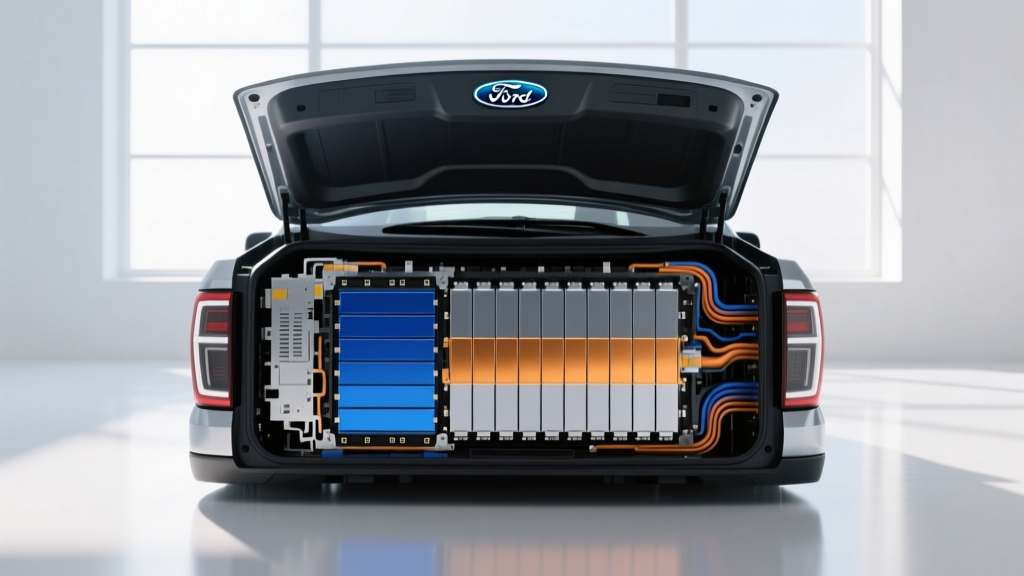
The Ford F-150 Lightning offers two high-voltage traction battery options: a Standard Range pack with approximately 98 kWh of usable capacity and an Extended Range pack with roughly 131 kWh usable. Both use nickel-manganese-cobalt (NMC) lithium-ion chemistry in pouch-format cells supplied by SK On (formerly SK Innovation). Ford does not currently offer a lithium iron phosphate (LFP) option in the Lightning lineup — a deliberate choice tied to the truck's towing, payload, and cold-weather requirements.
The Standard Range pack powers the Lightning to an EPA-estimated 240 miles of range (Pro and XLT trims), while the Extended Range pushes the EPA figure to 320 miles on the Platinum and 320 miles on the Lariat with the max-range option. Real-world highway driving at 70+ mph typically yields 200–220 miles from the Standard Range and 270–290 miles from the Extended Range. In sub-freezing temperatures, expect a further 15–30% reduction depending on cabin heating demand and whether the truck is preconditioned.
| Spec | Standard Range | Extended Range |
|---|---|---|
| Usable Capacity | ~98 kWh | ~131 kWh |
| Chemistry | NMC (pouch cells) | NMC (pouch cells) |
| Cell Supplier | SK On | SK On |
| EPA Range | 240 mi | 320 mi |
| Real-World Highway (70 mph) | ~200–220 mi | ~270–290 mi |
| Max DC Fast Charge Rate | ~150 kW peak | ~150 kW peak |
| 10–80% DC Fast Charge | ~44 min | ~49 min |
| Level 2 Charge Rate | 11.3 kW (single) / 19.2 kW (dual) | 19.2 kW |
| 0–60 mph | ~5.0 sec (563 hp) | ~3.8 sec (580 hp) |
| Base MSRP (2026 Pro) | ~$55,000 | N/A on Pro |
One critical note on charging: the Lightning's peak DC rate of approximately 150 kW is a ceiling, not a sustained rate. The charge curve tapers significantly above 80% State of Charge (SoC), which is why Ford and most EV analysts recommend DC fast charging to 80% for daily use. A 10–80% session takes roughly 44 minutes for the Standard Range and 49 minutes for the Extended Range at a functioning 150+ kW station. The larger pack takes slightly longer because there is more total energy to push through a similar peak rate.
NMC vs LFP: Why Ford Chose NMC for the Lightning
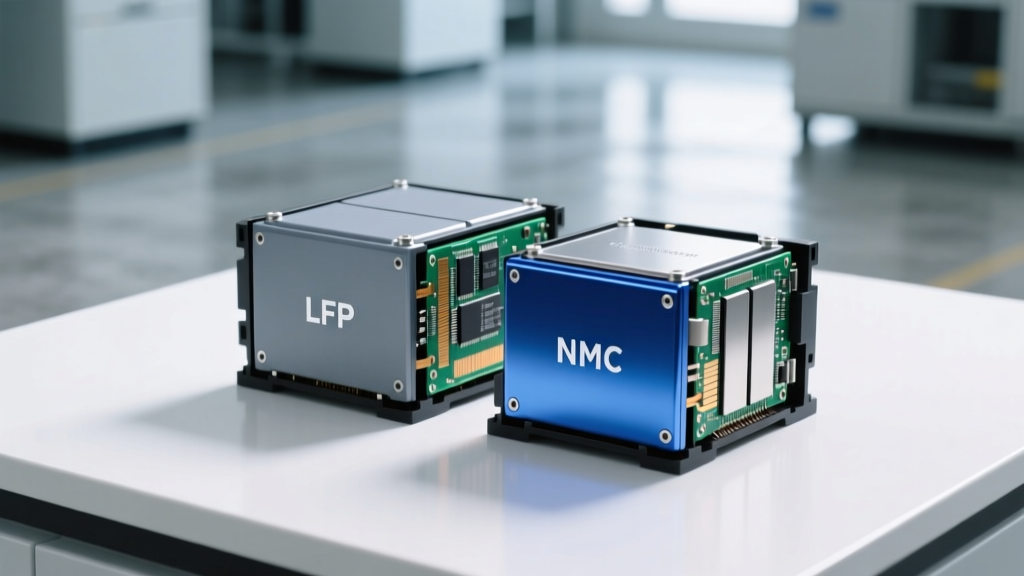
Understanding the Ford F-150 Lightning battery requires understanding the fundamental trade-off between NMC and LFP chemistries. Here's how they compare across the metrics that matter to truck owners:
| Factor | NMC (Lightning) | LFP (e.g., Tesla Model 3 RWD, some Ford Maverick) |
|---|---|---|
| Energy Density | Higher — more range per kg | Lower — heavier pack for same range |
| Cycle Life | ~1,000–1,500 full cycles before 80% SoH | ~3,000–5,000+ full cycles before 80% SoH |
| Cold-Weather Performance | Better low-temp power delivery | Reduced charge acceptance below freezing |
| Cost per kWh | Higher (cobalt, nickel) | Lower (iron, phosphate) |
| Recommended Daily SoC | 80% for longevity | 100% acceptable (periodic calibration) |
| Thermal Runaway Risk | Moderate | Very low |
| Best Suited For | Long-range, towing, cold climates | Daily commuting, mild climates, budget |
For a full-size pickup designed to tow up to 10,000 lbs and operate in Minnesota winters, NMC is the pragmatic choice. The higher energy density keeps pack weight manageable (the Extended Range pack weighs roughly 1,800 lbs), and the chemistry maintains better charge acceptance and power output in cold conditions. The trade-off is a shorter cycle life and the need to avoid routinely charging to 100% — a manageable compromise for most truck owners who aren't draining the pack daily.
If Ford eventually introduces an LFP-equipped Lightning variant — perhaps for a commercial fleet trim prioritizing cycle life over maximum range — it would likely appear first in a Standard Range configuration where the energy-density penalty is less consequential.
Ford F-150 Lightning Battery Degradation: What the Data Shows
Battery degradation — the gradual, irreversible loss of capacity — is the single most common concern among prospective Lightning buyers. Here's what real-world data and manufacturer testing indicate:
Typical NMC Degradation Curve for the Lightning (projected from fleet data and SK On cell testing):
- Year 1 / 15,000 mi: ~2–4% capacity loss (initial formation loss, steepest part of the curve)
- Year 3 / 45,000 mi: ~5–8% cumulative loss
- Year 5 / 75,000 mi: ~8–12% cumulative loss
- Year 8 / 100,000 mi: ~10–15% cumulative loss
- Year 10 / 150,000 mi: ~14–20% cumulative loss (approaching or at warranty threshold)
These figures assume a mix of Level 2 home charging (the majority), occasional DC fast charging (1–2 sessions per week), and moderate climate operation. Owners who rely heavily on DC fast charging daily, regularly charge to 100%, or operate in sustained extreme heat (Arizona summers, for instance) may see degradation at the higher end of these ranges or slightly beyond.
Importantly, degradation is non-linear. The most significant capacity loss occurs in the first year as the solid electrolyte interphase (SEI) layer forms and stabilizes on the anode. After that, the rate slows considerably. A Lightning that shows 5% loss at 30,000 miles is not on track to lose 25% by 150,000 miles — the curve flattens.
Fleet data from commercial Lightning operators (delivery and utility fleets that began taking delivery in 2022–2023) has generally aligned with these projections. According to Ford Pro fleet monitoring, trucks charged primarily via depot Level 2 chargers have shown mid-single-digit degradation at the 50,000-mile mark — consistent with expectations for well-managed NMC packs.
What the Ford Lightning Battery Warranty Actually Covers
Ford backs the Lightning's high-voltage battery with its standard EV powertrain warranty, which aligns with the federal minimum established under EPA and CARB guidelines:
| Coverage Element | Term |
|---|---|
| Duration | 8 years or 100,000 miles (whichever comes first) |
| Capacity Retention Threshold | 70% of original usable capacity |
| What's Covered | Defects in materials/workmanship; capacity loss below 70% |
| What's NOT Covered | Damage from accidents, flooding, unauthorized modifications, or failure to follow maintenance guidelines |
| Remedy | Repair, module replacement, or full pack replacement at Ford's discretion |
| Transferable? | Yes — warranty transfers to subsequent owners |
The 70% threshold means Ford considers the battery "failed" under warranty only if it drops below approximately 68.6 kWh (Standard Range) or 91.7 kWh (Extended Range) of usable capacity within the warranty window. Given the degradation data above, most Lightning batteries will remain well above this threshold at 100,000 miles — but the warranty provides a meaningful safety net for outlier cases involving cell imbalance, manufacturing defects, or accelerated degradation.
One nuance: Ford reserves the right to replace only failed modules rather than the entire pack. The Lightning's battery is divided into multiple modules, and a single degraded or defective module can sometimes be swapped individually. This reduces cost and downtime but means a warranty claim may not result in a "like-new" full pack. For full warranty details, consult the Ford Warranty Guide.
Ford Lightning Battery Replacement Cost: The $20,000+ Question
Out-of-warranty battery replacement is the nightmare scenario Lightning owners research at 2 a.m. Here's the current cost landscape as of 2026:
| Component | Standard Range (~98 kWh) | Extended Range (~131 kWh) |
|---|---|---|
| Battery Pack (parts) | $18,000–$22,000 | $25,000–$32,000 |
| Labor (dealership) | $2,000–$4,000 | $2,500–$4,500 |
| Estimated Total | $20,000–$26,000 | $28,000–$36,000 |
| Module-Level Repair (if applicable) | $3,000–$8,000 per module | $3,500–$9,000 per module |
Context matters enormously here. These figures represent worst-case, full-pack, out-of-warranty scenarios. In practice:
- Most Lightning batteries will never need replacement. NMC packs in liquid-cooled, thermally managed systems like the Lightning's routinely exceed 150,000 miles while retaining 80%+ capacity.
- Module-level repairs are increasingly common. If a single module fails or degrades disproportionately, a technician can often replace just that module for a fraction of the full-pack cost.
- The battery will likely outlast other major truck components. Electric motors, suspension components, and the 12V auxiliary battery are statistically more likely to need service before the traction battery.
- Third-party and remanufactured packs are emerging. By 2026, companies like Redwood Materials and others are beginning to offer remanufactured battery packs at 30–50% below OEM pricing, though availability for the Lightning is still limited.
The fear of a $30,000 battery bill is real but statistically unlikely within the typical ownership window. For buyers planning to keep a Lightning beyond 150,000 miles, budgeting for eventual module-level service (not a full pack swap) is the more realistic exercise.
Factors That Accelerate (or Preserve) Lightning Battery Health
The Lightning's battery management system (BMS) does substantial work behind the scenes — liquid cooling, cell balancing, charge-rate limiting — but owner habits still influence long-term State of Health (SoH). Here are the factors ranked by impact:
Habits That Preserve Battery Life
- Charge to 80% for daily use. Set the charge limit in the FordPass app. Reserve 100% charges for road trips. NMC chemistry degrades faster when held at high SoC for extended periods.
- Prioritize Level 2 home charging. A 240V Level 2 charger at 11.3–19.2 kW is gentler on cells than repeated DC fast charging. Install a home Level 2 station as your primary charging method.
- Precondition before DC fast charging. Use the FordPass navigation-to-charger feature, which automatically warms or cools the battery to optimal charging temperature. This reduces charge time and cell stress.
- Avoid prolonged storage at extreme SoC. If the truck will sit unused for weeks, aim for ~50% SoC. Storing at 100% or near 0% accelerates calendar degradation.
- Use scheduled charging in hot climates. Charge during overnight hours when ambient temperatures are lower, reducing thermal load on the BMS.
Habits That Accelerate Degradation
- Daily DC fast charging. Sustained high-current charging generates heat that accelerates SEI layer growth and electrolyte decomposition. Occasional road-trip fast charging is fine; daily reliance is not.
- Routinely charging to 100% and letting the truck sit. High SoC + high temperature is the worst combination for NMC longevity.
- Frequent deep discharges to near 0%. While the BMS maintains a buffer (the Lightning's "0%" displayed is not true zero), routinely running the pack to the buffer floor stresses cells.
- Towing heavy loads in extreme heat without preconditioning. Sustained high-discharge rates at elevated ambient temperatures push the thermal management system to its limits.
How to Check Your Lightning's Battery State of Health
Unlike some EVs that display a battery health percentage directly on the dash, Ford provides SoH information through several indirect and direct channels:
- FordPass App: The app shows estimated range, charging status, and battery alerts. While it doesn't display a raw SoH percentage, a noticeable drop in the displayed full-charge range over time (compared to the original EPA figure, adjusted for your driving conditions) is a practical proxy.
- Dealership Diagnostic Scan: A Ford EV-certified technician can pull the battery's internal SoH metric via the diagnostic port. This reads the BMS's calculated capacity versus original capacity. Request this at routine service intervals if you're tracking degradation.
- OBD-II Third-Party Tools: Apps like Torque Pro or dedicated EV diagnostic tools (e.g., Car Scanner EV) can read battery-related PIDs from the Lightning's CAN bus, including pack voltage, cell-level voltages, and estimated capacity. Accuracy varies, but these tools offer more granular data than the stock app.
- Range Tracking: The simplest method — log your displayed range at full charge over time. If your Extended Range Lightning consistently showed 310 miles at full charge when new and now shows 280 miles at the same charge level and similar temperatures, that's roughly 10% degradation. Track seasonally, as cold weather temporarily reduces displayed range without indicating permanent loss.
Looking Ahead: Solid-State and Silicon-Anode Batteries
Next-generation battery technologies are in active development, but none are available in production vehicles as of 2026. Here's the realistic timeline for technologies that could eventually benefit trucks like the Lightning:
- Silicon-dominant anodes: Companies like Sila Nanotechnologies and Group14 are scaling silicon-carbon composite anodes that boost energy density by 20–40%. Early production applications are appearing in limited premium vehicles. Widespread adoption in full-size truck packs is expected in the 2028–2030 timeframe.
- Semi-solid-state batteries: Manufacturers like Samsung SDI and Toyota are targeting semi-solid-state cells with improved energy density and safety. Toyota has announced production intent for 2027–2028, but scaling to the volumes needed for an F-Series truck will take additional years.
- Full solid-state batteries: True all-solid-state packs remain in the research and pilot-line stage. Realistic volume production for consumer vehicles is 2030+ at the earliest, according to U.S. Department of Energy assessments.
For current Lightning buyers, these timelines reinforce a practical reality: the NMC pack in today's truck is the technology you'll own for the next decade. It's mature, well-understood, and supported by a growing service infrastructure. Waiting for solid-state means waiting years — and paying a significant early-adopter premium when it finally arrives.
Frequently Asked Questions
How long do Ford F-150 Lightning batteries last?
Based on degradation data from NMC packs in thermally managed systems, most Lightning batteries will retain 80–85% of original capacity at 150,000 miles and 10 years. Many will exceed 200,000 miles before reaching the 70% warranty threshold. The battery is designed to outlast the typical ownership cycle of the truck.
How much does it cost to replace a Ford Lightning battery?
A full out-of-warranty pack replacement runs approximately $20,000–$26,000 for the Standard Range or $28,000–$36,000 for the Extended Range, including labor. Module-level repairs cost $3,000–$9,000 per module. Most owners will never face a full replacement — the warranty covers defects and capacity loss below 70% for 8 years/100,000 miles.
What does the Ford Lightning battery warranty cover?
The warranty covers defects in materials and workmanship, plus capacity loss below 70% of original usable capacity, for 8 years or 100,000 miles (whichever comes first). Ford may repair, replace individual modules, or replace the full pack at their discretion. The warranty is transferable to subsequent owners.
How do I check my Lightning's battery health?
Track your displayed full-charge range over time as a practical proxy. For precise SoH data, request a diagnostic scan at a Ford EV-certified dealership, or use an OBD-II EV diagnostic tool to read battery PIDs. The FordPass app provides charging status and alerts but does not show a raw SoH percentage.
Is NMC or LFP better for the Ford Lightning?
For the Lightning's use case — long range, heavy towing, cold-weather operation — NMC is the better fit today. It offers higher energy density and better cold-weather charge acceptance. LFP excels in cycle life and cost, making it ideal for daily-commuter vehicles, but its lower energy density and cold-weather limitations make it less suited to a full-size work truck. Ford may introduce LFP in future Lightning trims aimed at fleet buyers prioritizing longevity over range.
Does frequent DC fast charging damage the Lightning battery?
Occasional DC fast charging (road trips, a few times per month) has minimal impact on long-term health. Daily DC fast charging, however, generates sustained heat that accelerates degradation. For daily charging, a home Level 2 station at 11.3–19.2 kW is significantly gentler on the pack and also costs less per kWh than public DC stations.
Can I charge my Lightning to 100%?
Yes, but reserve it for when you need the full range (road trips, heavy towing days). For daily driving, set the charge limit to 80% in the FordPass app. NMC chemistry degrades faster when held at high SoC, especially in warm weather. Occasional 100% charges followed by immediate driving are fine — the issue is letting the truck sit at 100% for hours or days.
For official range and efficiency data, consult the EPA's fueleconomy.gov listing for the F-150 Lightning. For federal EV tax credit eligibility under IRS §30D — which includes MSRP caps, buyer income limits, and battery-sourcing requirements — refer to the IRS Clean Vehicle Credits page and consult a tax professional, as rules are subject to change.