Ford's EV Battery Strategy: Manufacturing, Repurposing, and What It Means for Owners
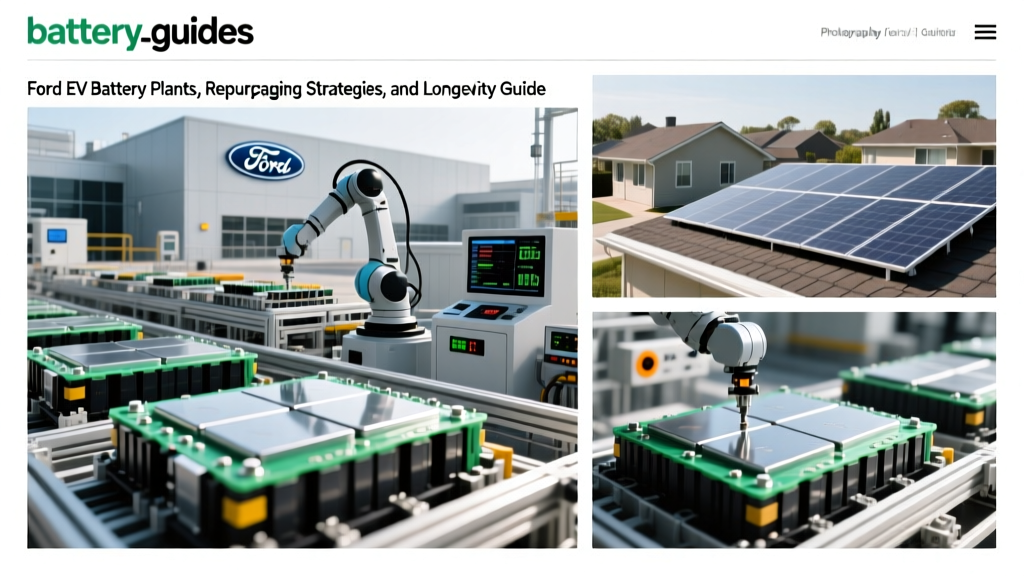
Ford's electrification push hinges on a massive buildout of domestic battery manufacturing and a forward-looking plan for what happens when those batteries retire from vehicle service. As of 2026, Ford operates or is commissioning multiple battery plants across the United States, including the BlueOval SK joint-venture facilities in Kentucky and Tennessee, producing NMC (nickel-manganese-cobalt) cells for vehicles like the F-150 Lightning and Mustang Mach-E. Simultaneously, Ford has invested heavily in an LFP (lithium iron phosphate) battery plant in Marshall, Michigan — a facility designed to produce lower-cost, longer-lasting cells for more affordable EV trims.
But battery production is only half the equation. Ford has publicly committed to battery repurposing and recycling programs, exploring second-life applications where degraded EV batteries — still holding 70-80% of original capacity — serve as stationary energy storage for commercial buildings, utility grid buffering, or solar farm stabilization. This repurposing strategy reduces the total lifecycle cost of battery packs and could eventually influence replacement pricing for out-of-warranty vehicles.
For current and prospective Ford EV owners — and EV buyers generally — understanding battery chemistry, degradation patterns, warranty coverage, and replacement economics is essential. This guide breaks down the data.
LFP vs NMC/NCA: Chemistry Trade-Offs Explained
The two dominant lithium-ion chemistries in Ford's lineup (and the broader EV market) are LFP and NMC/NCA. Each has distinct strengths, and Ford's dual-chemistry strategy reflects their different use cases.
| Attribute | LFP (Lithium Iron Phosphate) | NMC/NCA (Nickel-Manganese-Cobalt/Aluminum) |
|---|---|---|
| Energy Density | Lower (~160 Wh/kg cell-level) | Higher (~220-260 Wh/kg cell-level) |
| Cycle Life | 3,000-5,000+ cycles to 80% SoH | 1,000-2,000 cycles to 80% SoH |
| Cold-Weather Performance | More capacity loss below freezing; slower cold charging | Better low-temp conductivity and charge acceptance |
| Cost (per kWh) | ~$80-100/kWh (2026 pack-level est.) | ~$110-140/kWh (2026 pack-level est.) |
| Thermal Stability | Excellent — higher runaway threshold | Good, but requires more active thermal management |
| State of Charge (SoC) Habit | Can be charged to 100% daily without penalty | Best kept 20-80% for longevity; 100% for road trips only |
| Typical Ford Application | Standard-range Mach-E trims, future affordable models | F-150 Lightning Extended Range, Mach-E GT, long-range trims |
Which is better? It depends on your driving pattern. If you commute daily, charge at home, and want maximum cycle life with the simplicity of charging to 100%, LFP is the practical winner. If you need maximum range per charge, tow frequently, or live in a cold climate where winter range loss is a concern, NMC/NCA's higher energy density and better cold performance justify the trade-off in cycle life.
How Long Do EV Batteries Last? Degradation Data
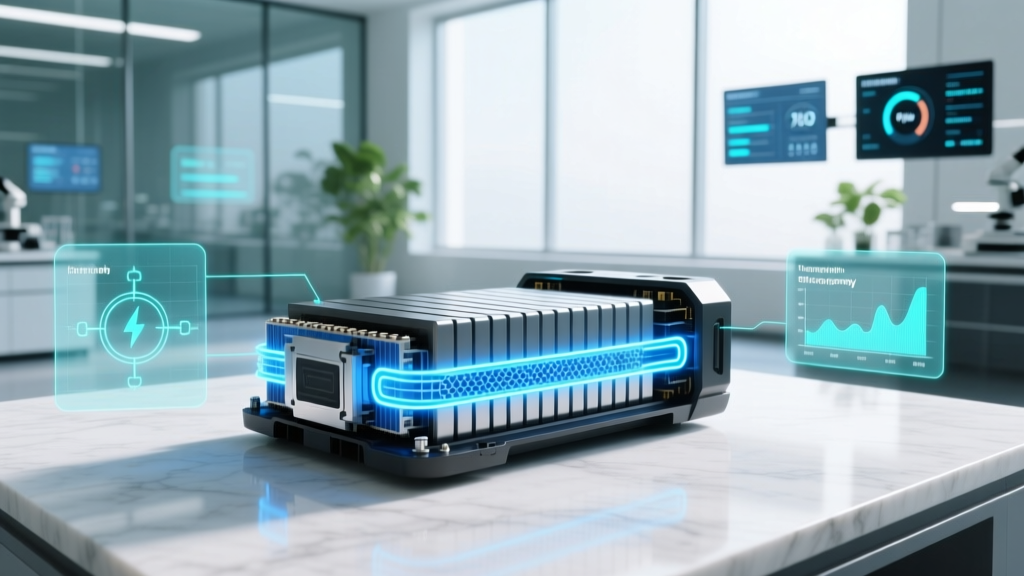
EV battery degradation is not linear. Most packs experience a steeper drop in the first 1-2 years (typically 2-5%), then settle into a gradual linear decline of roughly 1-2% per year thereafter. Based on fleet data and third-party analyses aggregated by sources like Geotab's EV battery health study, here is what typical degradation looks like:
Typical EV Battery Degradation Curve (NMC, liquid-cooled, average use):
- Year 1 / 15,000 mi: ~96-98% State of Health (SoH) — initial settling
- Year 3 / 45,000 mi: ~92-95% SoH
- Year 5 / 75,000 mi: ~88-92% SoH
- Year 8 / 120,000 mi: ~82-88% SoH
- Year 10 / 150,000 mi: ~78-85% SoH
LFP packs in similar service tend to retain 2-5% more capacity at equivalent age/mileage due to inherently longer cycle life. Real-world variables — frequent DC fast charging, sustained high SoC, extreme heat exposure — can accelerate loss by several percentage points over the same period.
For context, a 2026 F-150 Lightning Extended Range with a 131 kWh usable NMC battery losing 15% over 10 years still retains ~111 kWh — enough for roughly 260 miles of real-world range (down from ~310 EPA-rated). Most EV batteries outlast the vehicle's body, electronics, and suspension components.
What Does the Ford EV Battery Warranty Cover?
Ford's high-voltage battery warranty aligns with the federal mandate for emission-related components and matches or exceeds most competitors. Here are the specifics for current Ford EVs:
| Coverage Item | Term |
|---|---|
| Duration | 8 years or 100,000 miles (whichever comes first) |
| Capacity Retention Threshold | 70% of original usable capacity |
| What Triggers a Claim | Measured SoH drops below 70% under normal use during warranty period |
| Remedy | Module replacement, full pack replacement, or battery refurbishment at Ford's discretion |
| Exclusions | Damage from accidents, flooding, unauthorized modifications, or use outside normal operating parameters |
| Transferability | Yes — warranty transfers to subsequent owners automatically |
The 70% threshold is industry-standard (Tesla, Hyundai, GM use similar benchmarks). In practice, very few liquid-cooled EV batteries fall below 70% within 8 years/100,000 miles unless subjected to extreme abuse. Ford's warranty covers the high-voltage traction battery specifically — not the 12V auxiliary battery, which is a separate, conventional component with a standard 3-year/36,000-mile warranty.
EV Battery Replacement Cost: What to Expect
Out-of-warranty battery replacement is the most common anxiety among EV shoppers. Here is a realistic cost breakdown based on current 2026 pricing and Ford's pack architectures:
| Vehicle / Pack Size | Battery Chemistry | Estimated Replacement Cost (Parts + Labor) | Typical Replacement Timeline |
|---|---|---|---|
| Mustang Mach-E Standard Range (75.7 kWh usable) | LFP or NMC depending on model year | $12,000 - $16,000 | Rarely needed before 200,000+ mi |
| Mustang Mach-E Extended Range (91 kWh usable) | NMC | $15,000 - $20,000 | Rarely needed before 180,000+ mi |
| F-150 Lightning Standard Range (98 kWh usable) | NMC | $16,000 - $22,000 | Rarely needed before 180,000+ mi |
| F-150 Lightning Extended Range (131 kWh usable) | NMC | $20,000 - $28,000 | Rarely needed before 170,000+ mi |
Several factors mitigate these headline numbers. First, Ford — like most OEMs — can replace individual battery modules rather than the entire pack, reducing costs to $3,000-$8,000 for a localized failure. Second, Ford's repurposing and recycling infrastructure (including partnerships with companies like Redwood Materials) is recovering up to 95% of critical minerals from retired packs, which puts downward pressure on long-term replacement pricing. Third, by the time a 2026 Ford EV needs an out-of-warranty battery in the 2036-2040 timeframe, aftermarket refurbished packs and continued cost declines are expected to reduce prices substantially.
Factors That Accelerate or Preserve Battery Life
Battery longevity is not purely a function of time and mileage — how you charge, drive, and store your EV materially affects degradation rate.
Habits that preserve battery health:
- Charge to 80% daily (NMC): Sustained high SoC stresses NMC cathodes. Set your charge limit to 80% for daily use and reserve 100% for road trips. (LFP owners can charge to 100% regularly — this is one of LFP's key advantages.)
- Minimize DC fast charging frequency: Occasional DCFC is fine, but daily 150+ kW sessions generate sustained heat that accelerates electrolyte breakdown. Use Level 2 (7-19 kW AC) as your primary charge method.
- Precondition before fast charging: Ford's navigation-routed preconditioning warms the battery to optimal temperature (~25-35°C) before arriving at a DC fast charger, improving charge speed and reducing thermal stress.
- Avoid prolonged storage at extreme SoC: If leaving your EV for weeks, store at ~50% SoC. Storing at 100% or near 0% for extended periods accelerates calendar degradation.
- Park in shade or a garage during extreme heat: Sustained battery temperatures above 40°C (104°F) — common in desert climates — are the single largest degradation accelerator. Liquid cooling mitigates this but doesn't eliminate it.
- Use scheduled charging: Instead of plugging in at 6 PM and charging immediately, schedule charging to complete just before departure. This reduces time spent at high SoC.
How to Check and Monitor Battery State of Health (SoH)
Ford provides several ways for owners to track battery health:
- FordPass App: The app displays estimated battery health and available range. While not a precise SoH percentage, it flags notable capacity changes over time.
- OBD-II diagnostic tools: Third-party apps like LeafLogix or EV-specific OBD-II dongles (e.g., OBDLink MX+ paired with apps like ABRP or Car Scanner) can read the battery management system's (BMS) reported SoH percentage directly.
- Dealer diagnostic report: Ford dealerships can run a full battery health check that provides module-level voltage balance data, internal resistance readings, and a certified SoH figure — useful for pre-purchase inspections on used EVs.
- Manual range tracking: Charge to a known SoC (e.g., 100% on LFP, or 80% on NMC), record the displayed range, and compare to the vehicle's original EPA-rated range at the same SoC. A consistent 10% range drop at the same SoC roughly correlates to ~10% capacity loss.
Checking SoH every 3-6 months is sufficient for most owners. BMS-reported SoH can fluctuate slightly based on recent charge patterns and temperature, so track the trend over time rather than reacting to single readings.
Emerging Battery Tech: Solid-State and Silicon Anode
Next-generation battery technologies are advancing, but timelines remain measured. Here is a realistic outlook:
- Solid-state batteries: Promising 40-50% higher energy density, faster charging, and improved safety. Toyota, Samsung SDI, and QuantumScape have announced pilot production, but mass-market automotive deployment is expected no earlier than 2028-2030, with broad availability likely in the early 2030s. Ford has not announced a solid-state partnership as of early 2026.
- Silicon-dominant anodes: Replacing graphite anodes with silicon can boost energy density by 20-30%. Companies like Sila Nanotechnologies and Group14 are supplying early production cells, and silicon-blend anodes are already appearing in some 2025-2026 model-year EVs at modest blend ratios (5-10% silicon). Higher silicon content faces cycle-life and swelling challenges that are being resolved incrementally.
- Sodium-ion batteries: Lower-cost alternative to lithium-ion, suitable for budget EVs and stationary storage. CATL has begun production, but energy density is too low for long-range vehicles. Potential second-life application for Ford's repurposed battery programs.
These technologies are forward-looking and should not factor into current purchase decisions. Today's NMC and LFP batteries, properly maintained, will deliver well over a decade of reliable service.
Ford EV Battery Frequently Asked Questions
How long do Ford EV batteries last in years and miles?
Based on degradation data from liquid-cooled NMC and LFP packs, Ford EV batteries typically retain 78-88% of original capacity at 10 years / 150,000 miles. At that point, the vehicle is still fully functional — just with proportionally reduced range. Many EV batteries remain operational beyond 200,000 miles before reaching the 70% SoH threshold that would trigger a replacement recommendation.
How much does a Ford EV battery cost to replace?
Full pack replacement ranges from approximately $12,000 (Mach-E Standard Range) to $28,000 (F-150 Lightning Extended Range), including labor. However, module-level repairs for isolated cell failures cost $3,000-$8,000. Most batteries never require full replacement within the vehicle's practical lifespan.
Does the Ford battery warranty cover normal degradation?
Yes, but only if degradation exceeds the threshold: capacity drops below 70% of original within 8 years or 100,000 miles. Normal gradual degradation (e.g., dropping to 85% over 8 years) is expected behavior and is not a warranty claim.
Can I repurpose my Ford EV battery for home energy storage?
Ford is developing second-life battery programs through its repurposing partnerships, but as of 2026, direct consumer repurposing (e.g., using a retired F-150 Lightning pack as a home Powerwall-style system) is not available as a retail product. Ford's repurposing efforts currently focus on commercial and utility-scale applications. Third-party companies offer aftermarket repurposing kits, but these are not Ford-endorsed and may void remaining warranty coverage.
Is LFP or NMC better for my Ford EV?
Choose LFP if you prioritize longevity, lower cost, and daily charging simplicity (100% SoC is fine). Choose NMC if you need maximum range, better cold-weather performance, or plan to tow heavy loads. Ford offers both chemistries across different trims, so match the chemistry to your use case rather than seeking a universally "better" option.
How does Ford's battery plant strategy affect future replacement costs?
Ford's domestic manufacturing (BlueOval SK for NMC, Marshall for LFP) and recycling partnerships with Redwood Materials are designed to reduce supply-chain dependency and lower per-kWh costs over time. As these plants reach full capacity and recycling loops mature, replacement battery costs are expected to decline — potentially by 30-40% over the next decade — making out-of-warranty replacement more affordable than current estimates suggest.