The recent headlines around Ford BYD battery talks have stirred interest across the EV industry. The discussions between the Detroit automaker and China's BYD — the world's largest producer of lithium iron phosphate (LFP) batteries — represent more than a supply chain negotiation. They signal a structural shift in how mainstream EVs will be powered over the next decade. For buyers, understanding what this pivot means requires a working knowledge of EV battery chemistry, degradation realities, and long-term ownership economics.
This guide unpacks the battery technology at the center of these talks, compares LFP and NMC chemistries with hard data, and answers the questions every EV shopper should ask before signing a purchase agreement.
Why Ford and BYD Are Talking About LFP Batteries
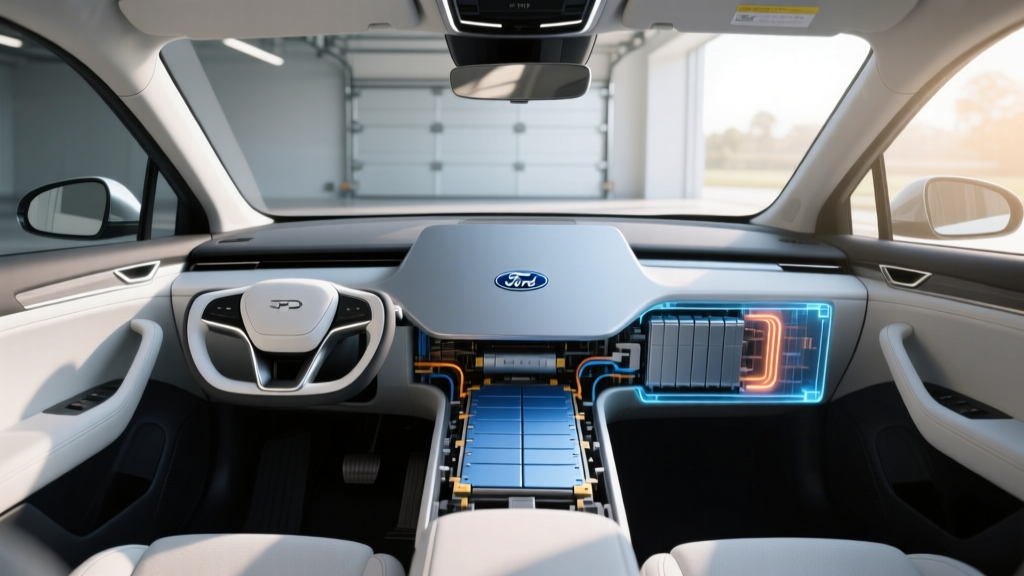
Ford has been working to reduce the cost of its electric vehicles while navigating complex IRS §30D tax credit sourcing requirements. BYD, headquartered in Shenzhen, manufactures the Blade Battery — an LFP cell renowned for its thermal stability, low cost per kWh, and long cycle life. A supply agreement would allow Ford to source affordable, durable cells for entry-level and mid-range models, potentially bringing base MSRPs down by several thousand dollars.
The strategic logic is clear: LFP chemistry eliminates cobalt and nickel from the cathode, reducing both raw material cost and supply chain exposure to volatile commodity markets. For consumers, this translates into cheaper EVs with batteries that last longer under typical use conditions — though with trade-offs we'll examine below.
LFP vs NMC/NCA: The Chemistry Breakdown
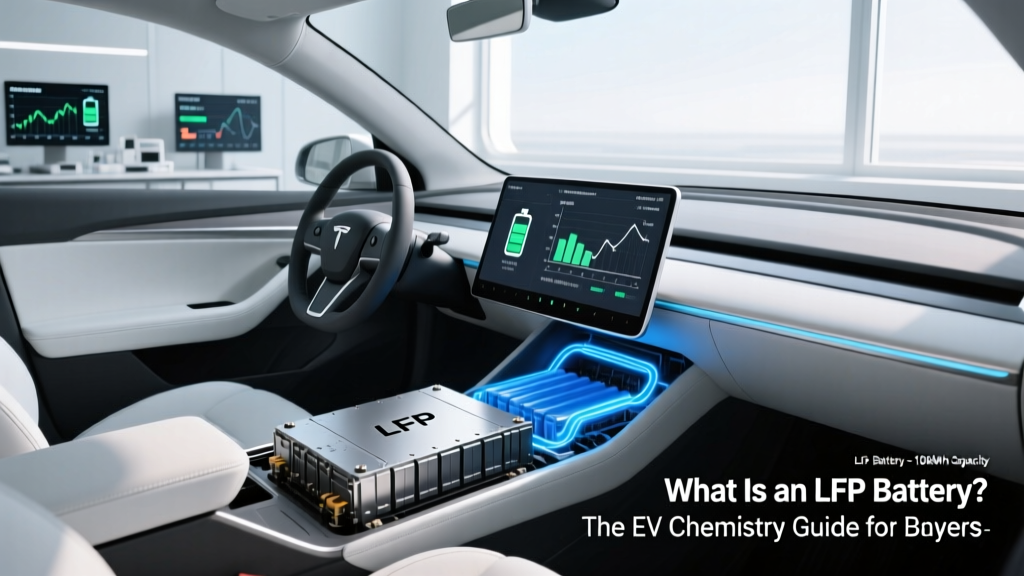
Every EV battery uses a specific cathode chemistry that determines its performance envelope. The two dominant chemistries in passenger EVs are LFP (lithium iron phosphate) and NMC/NCA (nickel manganese cobalt / nickel cobalt aluminum). Here's how they compare on the metrics that matter to owners:
| Attribute | LFP (LiFePO₄) | NMC/NCA |
|---|---|---|
| Energy Density (cell-level) | ~160–180 Wh/kg | ~220–300 Wh/kg |
| Cycle Life (to 80% capacity) | 3,000–6,000+ cycles | 1,000–2,500 cycles |
| Calendar Life | 15–20+ years typical | 10–15 years typical |
| Cold-Weather Performance | Moderate loss; slower charging below 32°F | Better low-temp discharge; preconditioning helps |
| Thermal Stability | Excellent (270°C+ thermal runaway threshold) | Good (requires more active BMS management) |
| Cost per kWh (cell) | ~$60–$80 (2025–2026) | ~$90–$120 (2025–2026) |
| Cobalt/Nickel Content | None | Significant (supply chain & ethical concerns) |
| State of Charge Tolerance | Can charge to 100% regularly without harm | Best kept 20–80% for longevity |
| Typical Use Case | Standard-range, fleet, cost-focused models | Long-range, performance, premium models |
The practical takeaway: LFP wins on cost, lifespan, and safety. NMC wins on energy density — meaning more range in the same physical pack size. If Ford sources BYD Blade cells, expect them in standard-range trims where 230–270 miles of EPA range is acceptable and a lower MSRP matters more than maximum distance per charge.
How Long Do EV Batteries Actually Last?
The fear of a dead battery at 80,000 miles is the single largest psychological barrier to EV adoption. The data tells a different story. Modern EV batteries — both LFP and NMC — are engineered with conservative usable buffers (typically 5–10% of gross capacity hidden from the owner) and sophisticated thermal management systems.
Real-World Degradation Benchmarks
Based on fleet data, owner surveys, and manufacturer testing, here is what degradation looks like across chemistries and timeframes:
- NMC (Tesla Model 3 Long Range, Hyundai Ioniq 5): Average ~5–8% capacity loss at 100,000 miles; ~10–14% at 200,000 miles. Data from fueleconomy.gov and third-party fleet analysis supports this curve.
- LFP (Tesla Model 3 RWD, BYD Atto 3): Average ~3–5% capacity loss at 100,000 miles; ~5–8% at 200,000 miles. LFP's slower degradation is well-documented in high-cycle fleet use (taxis, ride-hailing).
- Early-generation EVs (2012–2017 Nissan Leaf, passive air cooling): 15–25% loss at 80,000–100,000 miles — a cautionary tale that drove the industry toward liquid-cooled packs.
The degradation curve is non-linear: most loss occurs in the first 20,000–30,000 miles (the "break-in" period), then flattens significantly. A 2026-model LFP pack from BYD or CATL is projected to retain 90%+ capacity at 150,000 miles under normal use.
Bottom line: The vast majority of EV batteries outlast the vehicle's body, suspension, and interior. Total battery failure before 150,000 miles is statistically rare in liquid-cooled packs. Most owners will sell or trade the car before the battery reaches end-of-life (defined as 70–80% of original capacity).
What Does the EV Battery Warranty Cover?
Federal law mandates a minimum 8-year / 100,000-mile warranty on EV battery packs for emissions-related compliance, and every major automaker meets or exceeds this. Here's how warranty terms stack up across brands relevant to the Ford-BYD conversation:
| Manufacturer | Duration | Mileage | Capacity Retention Threshold |
|---|---|---|---|
| Ford (Mustang Mach-E, F-150 Lightning) | 8 years | 100,000 miles | 70% of original capacity |
| Tesla (Model 3/Y LFP) | 8 years | 100,000 miles (Standard Range) / 120,000 miles (Long Range) | 70% |
| Hyundai / Kia (Ioniq 5, EV6) | 10 years | 100,000 miles | 70% |
| BYD (global models) | 8 years | 100,000 miles (varies by market) | 70% |
| GM (Ultium-based: Equinox EV, Blazer EV) | 8 years | 100,000 miles | 70% |
What the warranty covers: If the battery's usable capacity drops below the stated threshold (typically 70%) within the warranty period, the manufacturer will repair, replace, or recondition the pack at no cost. This covers cell-level degradation and manufacturing defects. It does not cover damage from accidents, flooding, improper modifications, or use of non-approved charging equipment.
What it doesn't cover: Normal, gradual capacity loss above the 70% threshold is considered expected wear. A battery at 72% capacity at year 9 is functioning as designed — it simply holds less energy, which means reduced range.
EV Battery Replacement Cost: What to Expect
If a battery does fail outside warranty or degrades beyond acceptable levels after 12–15 years, replacement is expensive but increasingly rare. Costs vary dramatically by pack size, chemistry, and vehicle architecture:
| Vehicle Class | Pack Size (usable kWh) | Chemistry | Estimated Replacement Cost |
|---|---|---|---|
| Compact EV (e.g., Chevy Bolt, future Ford LFP model) | 58–65 kWh | NMC / LFP | $6,500 – $10,000 |
| Midsize crossover (e.g., Mustang Mach-E, Model Y) | 70–88 kWh | NMC / LFP | $9,000 – $16,000 |
| Full-size truck/SUV (e.g., F-150 Lightning, Rivian R1T) | 98–131 kWh | NMC | $15,000 – $25,000 |
| Luxury sedan (e.g., Mercedes EQS, Lucid Air) | 100–118 kWh | NMC/NCA | $18,000 – $30,000 |
Important context: LFP packs from BYD are expected to fall on the lower end of these ranges due to cheaper raw materials. As cell prices continue declining (industry analysts project sub-$60/kWh cell costs by 2027–2028), replacement economics improve further. Additionally, a growing ecosystem of third-party refurbishers now offers reconditioned packs at 40–60% of OEM pricing for popular models.
When replacement is typically needed: In practice, very few owners face out-of-pocket battery replacement. Most EVs are retired due to collision damage, body rust, or technology obsolescence before the pack reaches end-of-life. Fleet data from sources like NHTSA and independent EV analytics firms show battery replacement rates under 2% within the first 10 years of service for liquid-cooled vehicles.
Factors That Accelerate (or Protect) Battery Life
Battery longevity isn't purely a function of chemistry — owner behavior and environmental conditions play a measurable role. Here's what the data shows:
Practices That Protect Battery Health
- For NMC packs: Keep daily state of charge (SoC) between 20–80%. Reserve 100% charges for road trips.
- For LFP packs: Charge to 100% at least once per week — LFP's flat voltage curve requires full charges for accurate SoC calibration, and the chemistry tolerates it well.
- Precondition the battery before DC fast charging, especially in cold weather. Most EVs do this automatically when a charger is set as a navigation destination.
- Use Level 2 home charging (7–11 kW) as your primary method. It generates far less heat than repeated DC fast charging.
- Park in shade or a garage during extreme heat. Sustained battery temperatures above 95°F accelerate calendar degradation.
- Avoid prolonged storage at 100% or 0% SoC. If leaving the vehicle for more than two weeks, set the charge limit to ~50%.
Practices That Accelerate Degradation
- Exclusive reliance on DC fast charging (150–350 kW) — daily use can add 1–3% additional annual capacity loss versus Level 2 charging.
- Frequent deep discharges to 0% followed by extended periods at low SoC.
- Repeated exposure to extreme cold without preconditioning — charging a frozen battery causes lithium plating, which permanently reduces capacity.
- Aftermarket modifications to the battery management system (BMS) or charging hardware.
How to Check and Monitor Battery Health (SoH)
State of Health (SoH) is the percentage of a battery's original capacity that remains usable. Monitoring it helps you track degradation, plan for warranty claims, and assess value when buying or selling a used EV.
How to check SoH:
- In-vehicle displays: Some manufacturers (Tesla via the service menu, Hyundai via the infotainment diagnostics page) show estimated SoH directly. Ford's SYNC system on the Mach-E provides battery health metrics under the EV settings menu.
- OBD-II diagnostic tools: Devices like the OBDLink SX paired with apps such as LeafSpy (Nissan), TeslaFi (Tesla), or Car Scanner ELM (general) can read the BMS-reported SoH with reasonable accuracy.
- Dealer diagnostics: A service center can perform a full capacity test, which involves a controlled discharge cycle. This is the most accurate method but typically costs $100–$200 if outside warranty.
- Third-party reports: Services like Recurrent Auto provide battery health certificates based on telematics data, useful for used-EV transactions.
What SoH numbers mean in practice: A 2023 model showing 94% SoH at 30,000 miles is tracking normally. One showing 85% at the same mileage may have been subjected to excessive fast charging or extreme heat exposure and warrants investigation.
Emerging Battery Tech: Solid-State and Beyond
While LFP and NMC dominate today's market, next-generation chemistries are in active development. It's important to separate marketing timelines from engineering reality:
Solid-state batteries replace the liquid electrolyte with a solid ceramic, polymer, or sulfide material, promising 30–50% higher energy density, faster charging, and improved safety. Toyota has announced limited production in select models by 2027–2028, while QuantumScape continues testing with Volkswagen. However, manufacturing yield challenges and cost barriers mean widespread adoption in mainstream vehicles is not expected before 2030–2032. These should be considered forward-looking and preliminary.
Silicon-dominant anodes (from companies like Sila Nanotechnologies and Group14) increase the amount of lithium ions the anode can store, boosting energy density by 10–20% without changing cathode chemistry. Mercedes has begun integrating silicon-carbon anodes in the G-Class EV. Expect this technology to trickle into mid-market EVs by 2027–2029.
Sodium-ion batteries — championed by BYD and CATL — eliminate lithium entirely, using abundant sodium for the cathode. Energy density is lower (~120–140 Wh/kg), but cost is dramatically reduced. These are targeted at budget EVs and stationary storage, with initial vehicle deployments in China already underway. A US-market vehicle with sodium-ion cells is plausible by 2028–2030 but remains announced and speculative.
For buyers making decisions today, LFP and NMC are the chemistries that matter. The Ford-BYD talks, if finalized, will bring one of the best LFP cells on the market into Ford's lineup — likely lowering prices and improving battery longevity for cost-conscious buyers.
What Ford-BYD Battery Talks Mean for Your Next EV Purchase
If you're shopping for an EV now or in the next 12–18 months, here's how to process this development:
Choose an LFP-powered EV if:
- You want the lowest possible purchase price
- Your daily commute is under 200 miles round-trip
- You plan to keep the vehicle 8+ years and want maximum cycle life
- You charge primarily at home and can charge to 100% regularly
- You live in a moderate climate (LFP's cold-weather limitations are less relevant)
Choose an NMC-powered EV if:
- You need 300+ miles of EPA range for frequent road trips
- You live in a cold climate and need better low-temperature discharge performance
- You want maximum performance (higher energy density enables lighter packs for the same range)
- You're comfortable managing SoC between 20–80% for daily use
The Ford-BYD relationship, should it produce a US-market vehicle, will likely debut in a compact or midsize crossover priced aggressively to compete with the Chevy Equinox EV and Tesla Model Y. Expect a ~60–70 kWh LFP pack, 230–260 miles of EPA range, and a base MSRP potentially in the $28,000–$35,000 range before any applicable federal tax credits. Note: §30D credit eligibility depends on MSRP caps, buyer income limits, and battery component/critical mineral sourcing requirements that change annually — consult a tax professional for your specific situation.
Frequently Asked Questions
How long do EV batteries last in years and miles?
Modern liquid-cooled EV batteries (both LFP and NMC) typically last 15–20 years or 200,000–300,000 miles before degrading to 70% of original capacity. LFP chemistries, like BYD's Blade Battery, trend toward the upper end of this range due to superior cycle life (3,000–6,000+ cycles). Most vehicles are retired for other reasons before the battery reaches end-of-life.
How much does an EV battery cost to replace?
Replacement costs range from approximately $6,500 for a compact EV with a ~60 kWh pack to $25,000+ for a full-size truck with a 130+ kWh pack. LFP packs trend cheaper due to lower material costs. However, fewer than 2% of liquid-cooled EV batteries require replacement within the first 10 years, and all are covered by a minimum 8-year/100,000-mile warranty.
What does the EV battery warranty actually cover?
Battery warranties cover capacity loss below a defined threshold (usually 70% of original capacity) and manufacturing defects for 8 years/100,000 miles (10 years for Hyundai/Kia). They do not cover damage from accidents, improper charging equipment, or modifications. Normal gradual degradation above the threshold is expected wear.
How do I check my EV battery's State of Health?
You can check SoH through your vehicle's built-in diagnostics menu (availability varies by brand), an OBD-II scanner with an EV-compatible app, a dealer diagnostic test, or a third-party service like Recurrent Auto. Tracking SoH quarterly helps you identify abnormal degradation early and supports warranty claims if needed.
LFP vs NMC — which battery chemistry is better?
Neither is universally better. LFP excels in cost (~30–40% cheaper per kWh), cycle life (2–3× more charge cycles), thermal safety, and tolerance for regular 100% charging. NMC excels in energy density (more range per pound), cold-weather performance, and suitability for long-range and performance models. The "better" chemistry depends on your budget, range needs, climate, and ownership timeline.
Will a Ford-BYD battery qualify for the federal tax credit?
That depends on final sourcing arrangements. The IRS §30D credit requires that battery components and critical minerals meet specific domestic-content and free-trade-agreement thresholds. A battery cell manufactured by BYD in China would face significant hurdles under current sourcing rules. Ford would need to establish US or FTA-partner manufacturing to ensure credit eligibility — which may be part of what's under negotiation. Always verify current-year rules at IRS.gov and consult a tax professional.