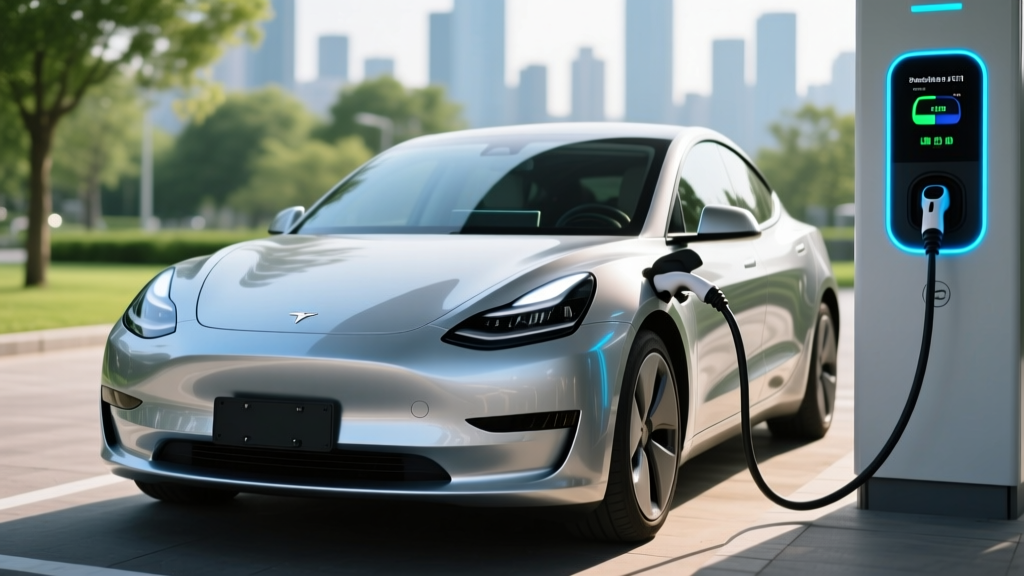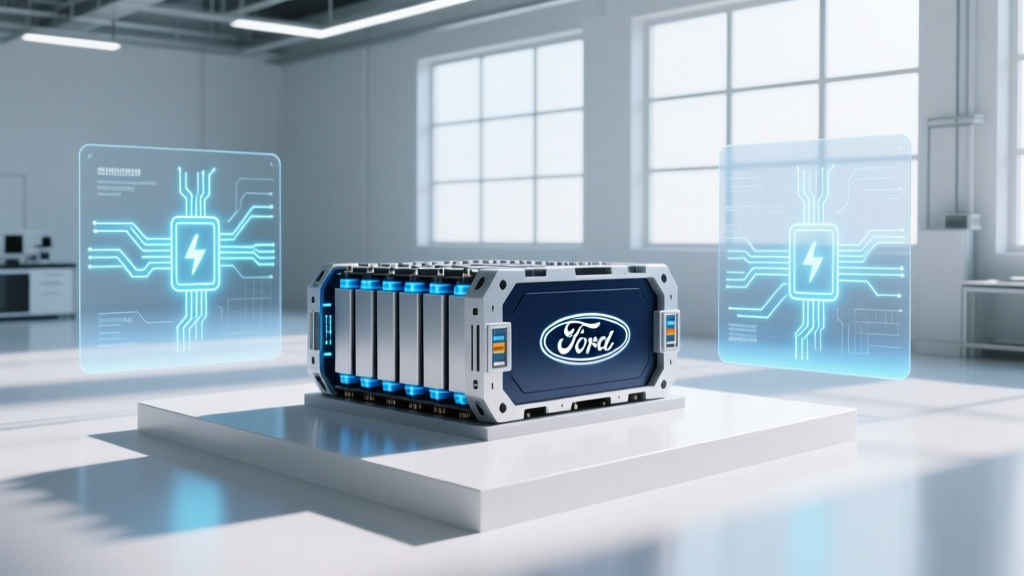
Ford's push into stationary battery storage isn't just an energy play — it's accelerating the same cell chemistry, manufacturing scale, and lifecycle management that determine how long your F-150 Lightning or Mustang Mach-E battery will last. As Ford scales its ford battery storage business through partnerships with CATL and investments in BlueOval Battery Park, the downstream effects on EV battery cost, chemistry availability, and second-life recycling are becoming tangible for consumers.
This guide breaks down everything you need to know about EV battery technology in 2026 — from LFP vs NMC trade-offs to real degradation data, warranty coverage, replacement costs, and how Ford's energy storage strategy could ultimately lower your total cost of ownership.
LFP vs NMC: The Chemistry Decision That Defines Your EV
Every EV battery uses one of two dominant lithium-ion chemistries: LFP (Lithium Iron Phosphate) or NMC (Nickel Manganese Cobalt). Ford has been a leader in offering LFP batteries in mainstream models — the Mustang Mach-E Select and F-150 Lightning Pro both offer LFP packs — and its battery storage division relies heavily on LFP for grid-scale installations due to its superior cycle life.
| Attribute | LFP (Lithium Iron Phosphate) | NMC/NCA (Nickel-Based) |
|---|---|---|
| Energy Density | ~160-180 Wh/kg (lower) | ~250-300 Wh/kg (higher) |
| Cycle Life | 3,000-6,000+ cycles to 80% SoH | 1,000-2,500 cycles to 80% SoH |
| Cold Weather Performance | Reduced — 15-25% range loss below 32°F | Better — 10-18% range loss below 32°F |
| Cost (per kWh) | ~$90-$110/kWh (2026 pack-level) | ~$120-$145/kWh (2026 pack-level) |
| Thermal Stability | Excellent — higher runaway threshold | Good — requires robust BMS |
| Cobalt/Nickel Content | None | Significant — supply chain risk |
| Typical Use | Standard-range EVs, stationary storage | Long-range EVs, performance models |
| Charging to 100% SoC | Recommended periodically for calibration | Avoid — 80% daily max recommended |
Which is better? It depends on your driving pattern. If you commute 30-50 miles daily, charge at home, and live in a moderate climate, LFP's lower cost and vastly superior cycle life make it the smarter financial choice. If you need maximum range for road trips or live in extreme cold, NMC's higher energy density delivers. Ford's dual-chemistry strategy — offering LFP in base trims and NMC in extended-range trims — reflects this reality.
EV Battery Degradation: What the Real Data Shows
The fear of sudden battery failure persists, but large-scale fleet data tells a different story. Modern EV batteries degrade slowly and predictably. According to data aggregated by Geotab from over 10,000 vehicles, the average EV battery retains approximately 90-94% of its original capacity after 5 years and 82-88% after 10 years of typical use.
Here's what degradation actually looks like across major platforms on the road in 2026:
| Model | Chemistry | Battery Size (usable) | Avg. Loss @ 50k mi | Avg. Loss @ 100k mi | Avg. Loss @ 150k mi |
|---|---|---|---|---|---|
| Tesla Model 3/Y (2020-2024) | NMC/NCA | 75-82 kWh | ~4-6% | ~8-12% | ~12-16% |
| Ford Mustang Mach-E (2021-2025) | NMC | 70-91 kWh | ~5-7% | ~10-14% | ~14-18% |
| Ford F-150 Lightning (2022-2025) | NMC / LFP | 98-131 kWh | ~4-7% | ~9-13% | ~13-17% |
| Hyundai Ioniq 5 (2022-2025) | NMC | 58-77.4 kWh | ~3-5% | ~7-11% | ~11-15% |
| Chevrolet Bolt EV/EUV (2020-2025) | NMC | 60-65 kWh | ~4-6% | ~8-12% | ~12-16% |
Note the pattern: degradation is fastest in the first 10,000-20,000 miles (the "break-in" period where SEI layer formation consumes some lithium inventory), then slows to a near-linear rate. Most batteries will retain well above 80% capacity through 150,000 miles — which is why manufacturers set their warranty thresholds there.
Ford's Battery Warranty: What's Actually Covered
Ford's high-voltage battery warranty is consistent with the federal minimum established under EPA and CARB guidelines: 8 years / 100,000 miles (whichever comes first), with a capacity retention threshold of 70% of original usable capacity. In California Air Resources Board (CARB) states, coverage extends to 10 years / 150,000 miles.
| Coverage Element | Federal (Non-CARB States) | CARB States (CA, NY, MA, etc.) |
|---|---|---|
| Duration | 8 years / 100,000 miles | 10 years / 150,000 miles |
| Capacity Threshold | Below 70% of original capacity | Below 70% of original capacity |
| Defect Coverage | Full — materials & workmanship | Full — materials & workmanship |
| What's NOT Covered | Normal degradation above 70%, cosmetic damage, aftermarket modifications | Same exclusions apply |
| Remedy | Repair, module replacement, or full pack replacement at Ford's discretion | Same |
This matters in context: a Mustang Mach-E Extended Range with a 91 kWh usable pack would need to drop below ~63.7 kWh of usable capacity to trigger a warranty claim. Given that real-world data shows most packs retain 82-88% after a decade, hitting 70% within the warranty period requires either a defective cell module or extreme usage patterns. Ford's battery storage business gives them additional incentive to engineer for longevity — cells that last 15+ years in vehicles can be repurposed for stationary storage, maximizing Ford's return on each manufactured cell.
EV Battery Replacement Costs: The Honest Numbers
Out-of-warranty battery replacement is the single biggest cost anxiety for EV buyers. Here's what it actually costs in 2026, based on dealer service data and third-party repair networks:
| Model | Battery Size | Chemistry | Full Pack Replacement | Module-Level Repair |
|---|---|---|---|---|
| Ford Mustang Mach-E | 70-91 kWh | NMC | $12,000 - $18,000 | $2,000 - $4,500 |
| Ford F-150 Lightning | 98-131 kWh | NMC / LFP | $15,000 - $25,000 | $2,500 - $6,000 |
| Tesla Model 3/Y | 60-82 kWh | NMC / LFP | $10,000 - $16,000 | $1,500 - $4,000 |
| Hyundai Ioniq 5 | 58-77.4 kWh | NMC | $11,000 - $17,000 | $2,000 - $4,500 |
| Chevrolet Equinox EV | 85 kWh | NMC | $13,000 - $19,000 | $2,000 - $5,000 |
Two critical context points. First, module-level repair is increasingly common. Most degradation or failure events affect individual modules (a pack contains 8-24 modules depending on the platform), and qualified EV service centers can swap a single module for a fraction of full-pack cost. Second, most EV batteries outlive their vehicles. The average EV on US roads in 2026 is scrapped at roughly 15-18 years — and at that point, a pack retaining 75-80% capacity still has substantial value in Ford's battery storage business or through third-party recyclers like Redwood Materials.
Pack-level costs have also declined steadily. According to BloombergNEF, average lithium-ion pack prices fell from ~$140/kWh in 2023 to approximately $95-$110/kWh in 2026, driven by LFP adoption and manufacturing scale. Ford's BlueOval Battery Park in Michigan — initially planned for LFP cells licensed from CATL — is a direct contributor to this cost reduction.
How to Maximize Battery Health: A Practical Checklist
Battery longevity isn't random. Five controllable factors drive the majority of accelerated degradation:
- Avoid sustained high State of Charge (SoC): For NMC batteries, daily charging to 100% accelerates electrolyte oxidation and cathode structural fatigue. Set your charge limit to 80% for daily use; charge to 100% only before long trips. LFP batteries are more tolerant — Ford recommends periodic 100% charges for LFP to calibrate the BMS.
- Minimize DC fast charging frequency: Occasional DC fast charging (150-350 kW) is fine, but daily use at peak rates generates sustained heat above 40°C at the cell level, accelerating SEI growth and lithium plating. If you have home Level 2 access, use it as your primary charging method.
- Precondition before fast charging: Modern EVs (including all current Ford EVs) will thermally precondition the battery when you navigate to a DC fast charger. This brings cells to the optimal 25-35°C window, enabling peak charge rates and reducing thermal stress. Always use the vehicle's built-in navigation to route to chargers — it triggers preconditioning automatically.
- Manage extreme temperature exposure: Parking in direct sunlight for extended periods at high SoC, or leaving the vehicle unplugged in sub-zero temperatures for weeks, both accelerate degradation. A garage or shaded parking spot measurably extends pack life.
- Don't store at 0% or 100% SoC: If leaving your EV unused for more than 2 weeks, set SoC to ~50% and plug into Level 1 or Level 2 to let the BMS maintain thermal management and prevent vampire drain from pushing cells into a dangerously low voltage state.
Monitoring Your Battery's State of Health (SoH)
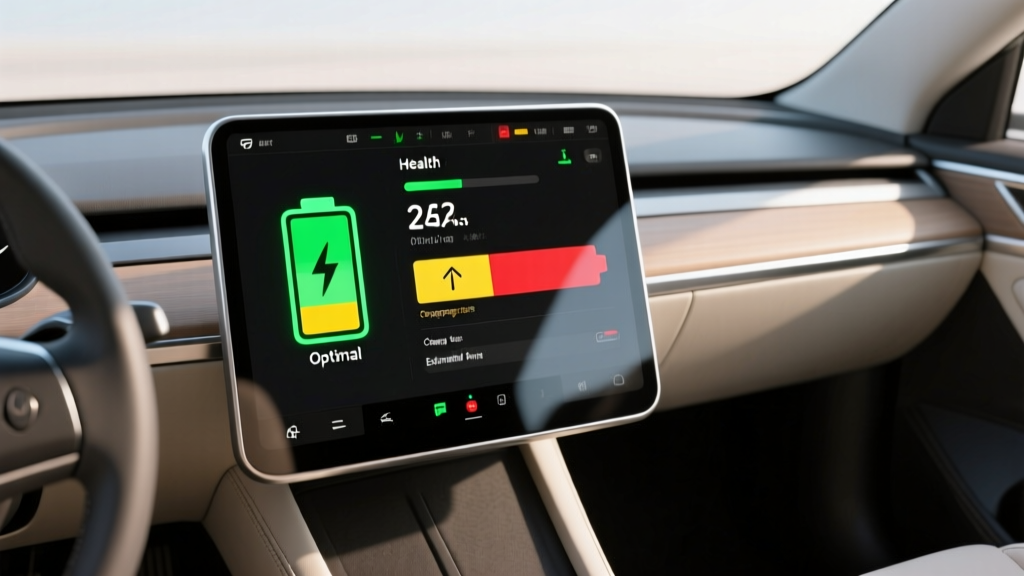
State of Health (SoH) is expressed as a percentage of original usable capacity. A new pack is 100% SoH; a pack that originally held 91 kWh and now holds 82 kWh is at ~90% SoH.
How to check SoH in 2026:
- FordPass App: Current Ford EVs (Mach-E, F-150 Lightning) display battery health status in the FordPass app under the vehicle diagnostics section. This provides a pass/fail indicator and estimated range relative to original.
- OBD-II diagnostic tools: Third-party tools like OBDLink SX paired with apps such as Car Scanner ELM OBD2 or LeafSpy (for Nissan) can read BMS-reported SoH, cell voltage delta, and individual module balance data.
- Dealer diagnostic scan: Ford dealerships can run a full battery health report that provides module-by-module capacity data, internal resistance measurements, and a certified SoH figure — useful for pre-purchase inspections on used EVs.
- Charge-discharge test (DIY): Charge to 100%, note the displayed kWh added (via charger app or vehicle telemetry), and compare to the pack's rated usable capacity. This gives a rough SoH estimate, though BMS buffer management means it's approximate.
A healthy battery in a 3-year-old EV should show SoH of 93-97%. If your SoH drops below 90% before 50,000 miles, that warrants a dealer diagnostic to check for defective modules that may be covered under warranty.
Factors That Accelerate Degradation: The Data Behind the Warnings
Not all miles are equal when it comes to battery wear. Research from the Idaho National Laboratory and real-world fleet data show measurable differences in degradation rates based on usage patterns:
- Exclusive DC fast charging vs. Level 2: Vehicles that DC fast-charge more than 80% of the time show approximately 2-4% additional capacity loss over 100,000 miles compared to vehicles primarily using Level 2 (7-19 kW AC). This is meaningful but not catastrophic.
- Hot climate operation: EVs operated in consistently hot climates (Phoenix, Las Vegas — ambient temps regularly above 95°F) show 1-3% additional loss over 5 years compared to moderate-climate vehicles, primarily due to elevated average cell temperature accelerating electrolyte decomposition.
- High SoC storage: Storing a vehicle at 100% SoC for extended periods (weeks to months) without driving causes more calendar degradation than a year of normal cycling. This is why fleet operators cap SoC at 80% for vehicles that may sit idle.
- Track/high-performance use: Sustained high-discharge events (repeated hard acceleration, track days) generate significant internal cell heating. While modern BMS systems will throttle power to protect cells, frequent thermal cycling does incrementally increase degradation.
Emerging Battery Technology: Solid-State, Silicon Anodes, and What's Real
Headlines promise revolution; the production timeline tells a more measured story. Here's where next-generation battery tech actually stands as of 2026:
Solid-state batteries: Toyota has announced limited production of solid-state-equipped vehicles for 2027-2028, targeting 450+ mile range and 10-minute fast charging. QuantumScape's cells are undergoing validation with Volkswagen. However, manufacturing yield, cost (currently estimated at 3-5x current lithium-ion per kWh), and scale remain significant barriers. Realistic mass-market availability: 2029-2032.
Silicon anode technology: Companies like Sila Nanotechnologies and Group14 are shipping silicon-dominant anode materials that increase energy density by 20-40% without the swelling issues that plagued earlier attempts. These are appearing in premium applications (Porsche, Mercedes-AMG) in 2025-2026 and will trickle to mainstream models by 2028-2029.
Sodium-ion batteries: CATL has begun mass production of sodium-ion cells for lower-cost, shorter-range EVs and stationary storage. Ford's battery storage business could adopt sodium-ion for grid applications where energy density is less critical than cost and cycle life. These won't appear in long-range EVs but could power future entry-level models or stationary systems.
LMFP (Lithium Manganese Iron Phosphate): An evolution of LFP that adds manganese to increase voltage and energy density by ~15-20% while retaining LFP's cost and safety advantages. CATL and BYD are producing LMFP cells in 2025-2026; expect adoption in Ford models by 2027-2028.
None of these technologies are currently available in production Ford vehicles. Any vehicle on sale today uses proven lithium-ion chemistry — and that's actually a positive for buyers, as these cells have millions of real-world miles of validation behind them.
How Ford's Battery Storage Business Affects EV Owners
Ford's investment in stationary energy storage creates a feedback loop that benefits EV buyers in three concrete ways:
- Cell cost reduction through scale: BlueOval Battery Park and Ford's grid-storage contracts create additional demand for LFP cells, driving per-kWh costs down across both storage and automotive applications. Every dollar/kWh reduction in cell cost translates directly to lower EV MSRP.
- Second-life battery value: When an EV battery is retired from automotive service (typically at 70-80% SoH), it still has 10-15 years of useful life in stationary storage applications. Ford's storage business creates a guaranteed buyer for retired packs, which increases your battery's residual value and reduces net ownership cost.
- Recycling infrastructure: Ford's partnership with Redwood Materials ensures that end-of-life cells are recycled into new cathode and anode material, reducing dependence on mined lithium, nickel, and cobalt. This matters for both cost stability and §30D tax credit battery sourcing requirements, which mandate increasing percentages of critical minerals from US or FTA-partner sources.
The practical implication: Ford's commitment to battery storage means the company is financially incentivized to build EV batteries that last longer, cost less, and retain value after automotive use — aligning manufacturer incentives with owner interests in a way that pure-play automakers without storage businesses cannot match.
How long do EV batteries actually last in years and miles?
Based on fleet data from 2020-2026 model-year EVs, most lithium-ion traction batteries retain 82-88% of original capacity after 10 years and 150,000 miles. Many will function adequately (above 70% SoH) for 15-20 years and 200,000+ miles. Complete failure before 150,000 miles is rare and typically covered under the 8-year/100,000-mile federal warranty.
How much does it cost to replace an EV battery in 2026?
Full pack replacement ranges from $10,000 to $25,000 depending on model and battery size, but module-level repairs (which address most real-world failures) typically cost $1,500-$6,000. Most EV batteries never require replacement during the vehicle's useful life.
What does the Ford EV battery warranty actually cover?
Ford covers the high-voltage battery for 8 years/100,000 miles (10 years/150,000 miles in CARB states) against capacity loss below 70% of original usable capacity and all defects in materials and workmanship. Normal degradation above the 70% threshold is not covered.
Is LFP or NMC better for my EV?
LFP is better if you prioritize lower cost, longer cycle life, and don't need maximum range. NMC is better if you need extended range, drive in extreme cold frequently, or want maximum performance. Ford offers both chemistries across its EV lineup to serve different use cases.
How do I check my EV battery's State of Health?
Use the FordPass app for a basic health indicator, an OBD-II scanner with EV-compatible software for detailed cell-level data, or visit a Ford dealer for a certified battery health report with module-by-module diagnostics.
Does frequent DC fast charging damage my battery?
Exclusive DC fast charging adds approximately 2-4% additional capacity loss over 100,000 miles compared to primarily Level 2 charging. Occasional fast charging (1-2 times per week) has minimal measurable impact. The BMS and thermal preconditioning protect cells, but sustained high-rate charging does generate more cumulative thermal stress.
Will solid-state batteries make current EVs obsolete?
Not in the near term. Solid-state batteries face manufacturing scale, cost, and yield challenges that put mass-market availability at 2029-2032 at the earliest. Current lithium-ion batteries (LFP and NMC) continue to improve incrementally and will remain the dominant chemistry through the late 2020s.