Ford's battery research pipeline has drawn significant attention as the automaker scales LFP (lithium iron phosphate) production in the U.S. and invests in next-generation chemistries. But for current and prospective EV owners, the real question isn't what's coming in 2030 — it's how today's battery technology affects range, longevity, and ownership cost right now. This guide unpacks the chemistry behind Ford's current and upcoming EV batteries, real-world degradation data, warranty protections, and what the company's R&D roadmap signals for buyers.
LFP vs NMC: The Chemistry Trade-Offs That Matter
Modern EV batteries primarily use one of two lithium-ion chemistries: NMC (nickel manganese cobalt) or LFP (lithium iron phosphate). Ford has deployed both across its EV lineup — NMC in the Mustang Mach-E and F-150 Lightning extended-range models, and LFP in the standard-range Mach-E and Lightning. Understanding the trade-offs is essential before choosing a trim.
| Attribute | NMC (Nickel Manganese Cobalt) | LFP (Lithium Iron Phosphate) |
|---|---|---|
| Energy Density | Higher (~250 Wh/kg cell-level) | Lower (~170 Wh/kg cell-level) |
| Typical EV Range | 300+ mi EPA common | 230–270 mi EPA typical |
| Cycle Life | ~1,000–1,500 full cycles | ~3,000–5,000+ full cycles |
| Cold-Weather Performance | Better at sub-freezing temps | Reduced range & slower charging below 32°F |
| Cost (per kWh) | Higher (cobalt/nickel commodity exposure) | Lower (~20–30% cheaper per kWh) |
| Thermal Stability | Good, but more prone to thermal runaway | Excellent — inherently more stable |
| Charging to 100% Regularly | Not recommended (accelerates degradation) | Recommended by most OEMs (calibrates BMS) |
| Ford Models Using | Mach-E Extended Range, Lightning Extended Range | Mach-E Standard Range, Lightning Standard Range |
The practical takeaway: If you need maximum range and live in a cold climate, NMC delivers. If you prioritize long-term durability, lower upfront cost, and don't mind ~50 fewer miles of EPA range, LFP is the stronger ownership play. Ford's own R&D has leaned heavily into LFP precisely because of its cycle-life advantage and lower reliance on cobalt — a key factor in meeting IRS §30D critical-mineral sourcing requirements for the federal tax credit.
How Long Do EV Batteries Actually Last?
The fear that EV batteries need replacement every few years is not supported by fleet data. Most modern EV batteries are engineered to outlast the vehicle's economic life.
Typical lifespan expectations:
- Years: 15–20 years before reaching 70–80% of original capacity
- Miles: 150,000–300,000 miles depending on chemistry and usage
- NMC degradation curve: ~2–3% loss in year one, then ~0.5–1% annually under normal use
- LFP degradation curve: ~1–2% loss in year one, then ~0.3–0.7% annually
Real-world degradation data points (aggregated from fleet and consumer reports):
| Milestone | NMC Avg. Capacity Retention | LFP Avg. Capacity Retention |
|---|---|---|
| 1 year / 15,000 mi | 97–98% | 98–99% |
| 3 years / 45,000 mi | 94–96% | 96–98% |
| 5 years / 75,000 mi | 91–94% | 94–97% |
| 8 years / 120,000 mi | 86–91% | 91–95% |
| 10 years / 150,000 mi | 82–88% | 88–93% |
Sources: Recurrent Auto fleet data, Geotab longitudinal study, manufacturer warranty thresholds. Individual results vary based on climate, charging habits, and DC fast-charging frequency.
At the 8-year mark — when most federal battery warranties expire — the vast majority of EV batteries retain well above the 70% capacity threshold that triggers a warranty claim. A Mach-E owner with an NMC pack who charges mostly at home on Level 2 can reasonably expect ~90% capacity at 100,000 miles. An LFP pack under similar conditions may retain 94% or more.
What the Battery Warranty Actually Covers
Federal law mandates that EV batteries carry a minimum warranty of 8 years or 100,000 miles (whichever comes first) in most states, and 10 years or 150,000 miles in California Air Resources Board (CARB) states. Ford meets or exceeds these thresholds.
| Warranty Term | Ford EV Battery Coverage |
|---|---|
| Duration | 8 years / 100,000 miles (all states) |
| Capacity Retention Threshold | 70% of original usable capacity |
| What's Covered | Battery cell/module defects, excessive capacity loss below threshold, BMS failures |
| What's NOT Covered | Damage from accidents, flooding, unauthorized modifications, or normal wear above 70% |
| Remedy | Repair, module replacement, or full pack replacement at Ford's discretion |
| Transferable? | Yes — transfers to subsequent owners automatically |
The 70% threshold is critical context. A Mach-E with a 91 kWh usable NMC battery that degrades to 63.7 kWh (70%) still delivers roughly 210–220 miles of real-world range — adequate for most daily driving. Warranty claims remain rare; Ford and other OEMs report claim rates well under 1% of vehicles in the warranty period.
EV Battery Replacement Cost: When and How Much
Battery replacement is the single biggest ownership-cost fear, but it's also the least likely event. Most EV batteries never need replacement during the vehicle's life. When they do, it's typically due to a manufacturing defect (covered by warranty) or physical damage (covered by insurance).
| Battery Pack / Model | Approx. Pack Size | Out-of-Warranty Replacement Cost (Parts + Labor) |
|---|---|---|
| Ford Mustang Mach-E Standard Range (LFP) | ~70 kWh | $12,000–$16,000 |
| Ford Mustang Mach-E Extended Range (NMC) | ~91 kWh | $16,000–$22,000 |
| Ford F-150 Lightning Standard Range (LFP) | ~98 kWh | $18,000–$24,000 |
| Ford F-150 Lightning Extended Range (NMC) | ~131 kWh | $24,000–$32,000 |
Costs are 2025–2026 estimates based on OEM parts pricing and independent shop labor rates. Module-level repairs (replacing 1–2 faulty modules rather than the full pack) can reduce costs by 60–80%.
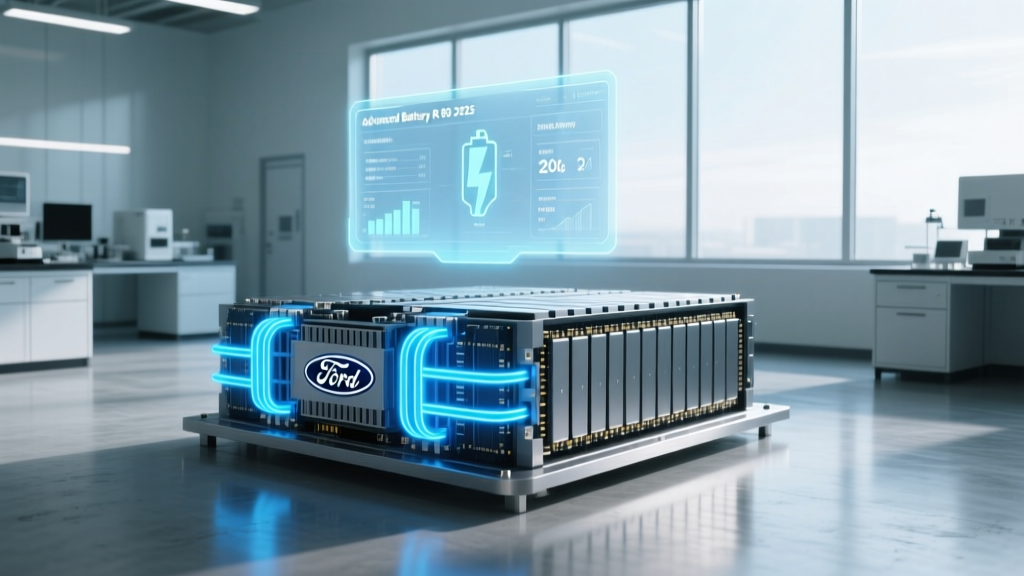
Ford's advanced battery R&D through 2025 and beyond is directly targeting these costs. By bringing LFP cell manufacturing to the U.S. (through its BlueOval SK joint venture and the Marshall, Michigan LFP plant), Ford aims to reduce per-kWh cell costs to below $80 — which would bring full-pack replacement costs down substantially by the late 2020s.
What Factors Affect EV Battery Longevity?
Not all miles are equal when it comes to battery wear. The following factors have the most measurable impact on long-term capacity retention:
Battery Care Best Practices
- Limit DC fast charging to road trips. Daily use of 150+ kW DC fast charging accelerates degradation by an estimated 0.5–1% additional per year vs. Level 2 home charging. Reserve it for when you need it.
- Avoid sitting at 100% or 0% SoC for extended periods. For NMC batteries, charge to 80% for daily use and only charge to 100% before long trips. LFP batteries are an exception — Ford and other OEMs recommend periodic 100% charges to calibrate the battery management system (BMS).
- Use preconditioning. Preconditioning warms or cools the battery to its optimal operating temperature (~70–85°F) before charging or driving. Ford's Mach-E and Lightning include preconditioning via the FordPass app or scheduled departure settings. This reduces stress on cells during fast charging in extreme temperatures.
- Minimize exposure to extreme heat. Sustained ambient temperatures above 95°F accelerate chemical degradation more than cold temperatures do. Garage parking in hot climates measurably extends battery life.
- Don't baby it too much. Modern BMS systems actively manage cell balancing, thermal limits, and charge buffers (typically 5–10% of gross capacity is unusable by design). Driving normally and charging at home on Level 2 is sufficient for excellent longevity.
State of Charge (SoC) habits matter most for NMC. Research from Geotab's longitudinal EV battery study shows that vehicles kept between 20–80% SoC daily degrade roughly 30% slower over 5 years than those regularly charged to 100% and discharged to near-zero. LFP chemistry is more tolerant of 100% SoC, which is why Ford recommends it for LFP-equipped models.
How to Check and Monitor Battery Health (SoH)
State of Health (SoH) is the percentage of a battery's original usable capacity that remains. Monitoring it helps you track degradation and identify potential warranty claims early.
Ways to check your EV battery SoH:
- FordPass App: Ford provides battery health indicators within the FordPass connected-services app for Mach-E and Lightning owners. This shows estimated range relative to original capacity and flags any anomalies.
- OBD-II diagnostic tools: Third-party tools like OBDLink paired with apps such as Car Scanner or LeafSpy (for other brands) can read raw BMS data including pack voltage, cell deviation, and calculated SoH percentage.
- Dealer diagnostic report: Ford dealerships can run a full battery health report that documents capacity retention — useful for warranty claims or pre-purchase inspections on used EVs.
- Recurrent Auto (free enrollment): This service connects to your vehicle's telematics and provides monthly SoH reports benchmarked against a fleet of identical vehicles. It's a reliable, data-driven way to spot abnormal degradation.
If your SoH drops below 70% within the 8-year/100,000-mile warranty window, contact your Ford dealer with the diagnostic data to initiate a warranty claim. Document everything — SoH readings, mileage, and dates.
Ford Advanced Battery R&D 2025: What's Next
Ford's battery R&D strategy, as articulated through 2025, centers on three pillars: domestic LFP scaling, next-generation NMC with reduced cobalt, and early-stage solid-state partnerships. Here's what's realistic and what's still years away:
LFP scaling (happening now): Ford's Marshall, Michigan LFP battery plant (announced 2023, production targeted for 2026) uses licensed CATL technology to produce LFP cells domestically. This reduces reliance on Chinese supply chains and positions Ford to qualify more models for the §30D federal EV tax credit, which has strict battery-component and critical-mineral sourcing requirements. LFP packs are also structurally simpler and cheaper to manufacture, which flows through to lower vehicle MSRPs.
Silicon anode and advanced NMC (2027–2030 timeline): Ford has invested in startups exploring silicon-dominant anodes, which can increase energy density by 20–40% over current graphite anodes. This could enable smaller, lighter packs with equivalent range — or longer range in the same physical pack. However, cycle-life and swelling challenges remain unsolved at production scale. Expect pilot programs, not production vehicles, before 2028.
Solid-state batteries (2030+ realistically): Solid-state cells replace the liquid electrolyte with a solid material, promising higher energy density, faster charging, and improved safety. Ford has participated in solid-state research partnerships (including with Solid Power), but no production timeline has been committed. Industry-wide, solid-state remains in pilot and validation phases. Toyota, Samsung SDI, and QuantumScape target limited production in the 2028–2030 window, but widespread, affordable solid-state EVs are a 2030s proposition. Any source claiming solid-state EVs are "available now" or "launching next year" should be treated with skepticism.
For buyers shopping today, the relevant takeaway from Ford's R&D pipeline is this: LFP is the near-term winner for cost and longevity in standard-range models, NMC remains the choice for maximum range, and meaningful next-gen chemistry improvements are still 3–5 years from dealership floors.
FAQ: Ford EV Battery Ownership Questions
How long do Ford EV batteries last in real-world use?
Based on fleet data, Ford's NMC packs (Mach-E Extended Range, Lightning Extended Range) retain approximately 86–91% capacity at 8 years / 120,000 miles. LFP packs (Standard Range models) retain 91–95% over the same period. Most batteries will remain functional well beyond 200,000 miles before dropping below 70% capacity.
How much does it cost to replace a Ford EV battery?
Full pack replacement ranges from approximately $12,000 (Mach-E Standard Range LFP) to $32,000 (Lightning Extended Range NMC) out of warranty, including parts and labor. However, module-level repairs — replacing only the degraded or defective modules — cost 60–80% less. The vast majority of owners never pay for a battery replacement.
What does the Ford EV battery warranty cover?
Ford covers its EV batteries for 8 years or 100,000 miles, whichever comes first. The warranty guarantees the battery will retain at least 70% of its original usable capacity. If it falls below that threshold due to normal use or manufacturing defects, Ford will repair or replace the battery at no cost. The warranty is fully transferable to subsequent owners.
How do I check my Ford EV battery health?
Use the FordPass app for a quick health indicator, visit a Ford dealer for a detailed diagnostic report, or enroll in a third-party service like Recurrent Auto for ongoing SoH monitoring. OBD-II diagnostic tools can also read raw BMS data for a more granular view of cell-level health.
LFP vs NMC — which Ford battery is better for me?
Choose LFP (Standard Range) if you prioritize lower cost, longer cycle life, and the ability to charge to 100% regularly without degradation concerns. Choose NMC (Extended Range) if you need maximum EPA range (300+ miles), better cold-weather performance, or faster DC charging speeds. For most daily commuters charging at home, LFP is the more economical long-term choice.
Does frequent DC fast charging damage my Ford EV battery?
Exclusive reliance on DC fast charging (150+ kW) can add approximately 0.5–1% additional annual degradation compared to primarily Level 2 home charging. Occasional DC fast charging on road trips has negligible impact. Ford's BMS includes thermal management and charge-rate tapering to protect cells during fast charging, especially above 80% SoC where the charge curve slows significantly.
Will Ford's solid-state battery research benefit current EV owners?
Not directly in the near term. Solid-state technology is realistically a 2030s production reality. Current owners benefit most from Ford's LFP scaling, which reduces vehicle prices and improves tax-credit eligibility for new models. If you're buying now, today's LFP and NMC batteries offer proven, data-backed longevity that doesn't require waiting for next-generation chemistry.