If you've ever searched "can you fly with batteries" while packing for a trip, you've brushed up against one of the most misunderstood topics in modern energy storage. Lithium-ion batteries power everything from smartphones to electric vehicles, but they're classified as hazardous materials in aviation — and the rules differ sharply depending on the battery type, size, and whether it's installed in a device or carried loose.
This guide answers the air-travel question directly, then zooms out to the bigger picture: how the lithium-ion (and lithium iron phosphate) batteries in your EV actually work, how long they last, what replacement costs, and what emerging chemistry might change the equation by the end of the decade.
Can You Fly With Batteries? FAA and IATA Rules for Lithium Batteries
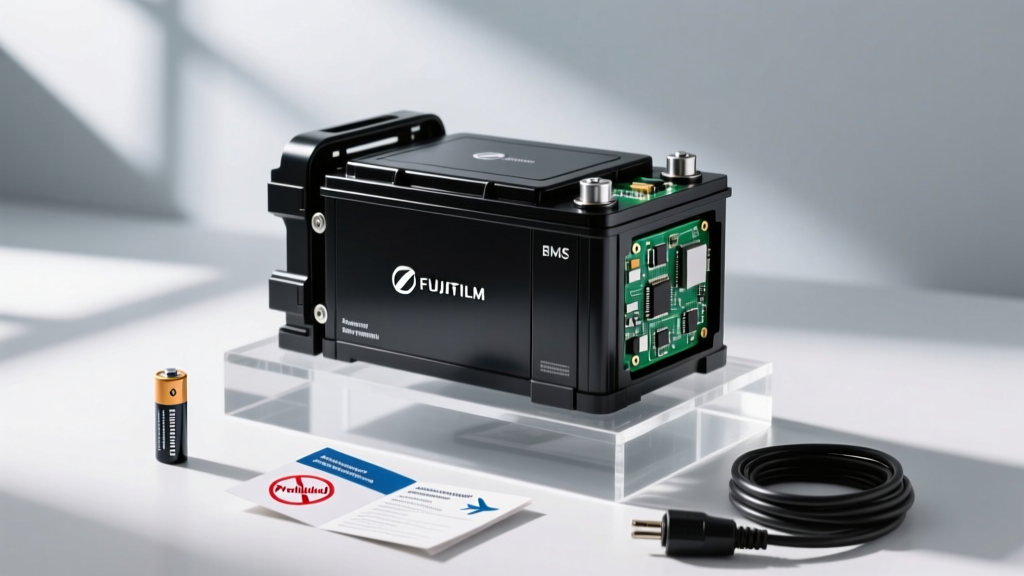
The short answer: yes, you can fly with most consumer batteries, but with strict limits on watt-hours (Wh), quantity, and how they're packed. The FAA's PackSafe guidelines and IATA Dangerous Goods Regulations govern what's allowed on commercial aircraft.
- Under 100 Wh (phones, laptops, most power banks): Allowed in carry-on without airline approval. No limit on quantity for personal use.
- 100–160 Wh (larger laptop batteries, some portable power stations): Allowed in carry-on with airline approval, maximum 2 spare batteries.
- Over 160 Wh (e-bike batteries, large power stations, EV modules): Forbidden on passenger aircraft as carry-on or checked luggage.
- Installed batteries (inside a device like a laptop or phone): Allowed in carry-on or checked bags, but the device must be powered off and protected from damage.
- Spare/loose lithium batteries: Carry-on only. Never in checked baggage due to fire-risk in the cargo hold.
The key metric is watt-hours (Wh), not just mAh. To convert: Wh = (mAh × V) ÷ 1,000. A typical 20,000 mAh power bank at 3.7V = 74 Wh — fine to carry. A 99 Ah EV battery module at 400V = nearly 40,000 Wh — obviously not boarding with you.
For EV owners specifically: you cannot fly with any EV battery component. The high-voltage traction battery (typically 50–120 kWh, or 50,000–120,000 Wh) exceeds aviation limits by orders of magnitude. This is purely a consumer-electronics and small-device question.
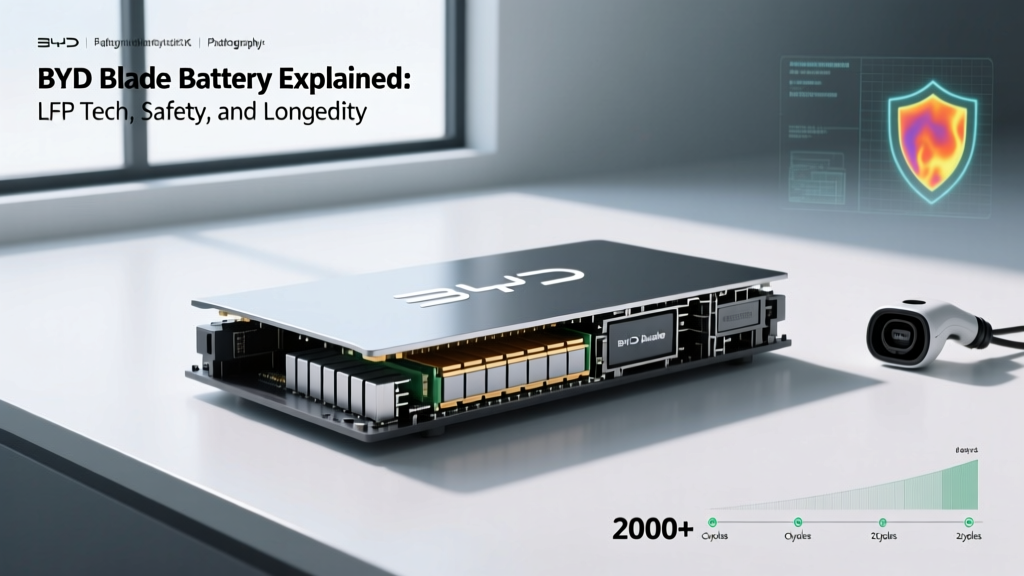
EV Battery Chemistry: LFP vs. NMC vs. NCA
The batteries you can't bring on a plane are the same ones propelling the EV industry forward. Understanding the chemistry inside your vehicle matters for range, longevity, cost, and even how you should charge at home.
| Attribute | LFP (Lithium Iron Phosphate) | NMC (Nickel Manganese Cobalt) | NCA (Nickel Cobalt Aluminum) |
|---|---|---|---|
| Energy Density | 140–180 Wh/kg | 200–260 Wh/kg | 220–270 Wh/kg |
| Cycle Life | 3,000–6,000+ cycles | 1,000–2,000 cycles | 1,000–1,500 cycles |
| Cold-Weather Performance | Moderate (15–25% range loss below 32°F) | Better (10–20% loss below 32°F) | Better (10–20% loss below 32°F) |
| Thermal Stability | Excellent (no cobalt, resists thermal runaway) | Good (requires active thermal management) | Fair (more sensitive to overheating) |
| Cost per kWh | ~$90–$110 (2026 pack-level) | ~$120–$145 | ~$130–$155 |
| Recommended Charge Habit | Can charge to 100% regularly | Daily limit 80%; 100% for trips only | Daily limit 80%; 100% for trips only |
| Notable 2026 Users | Tesla Model 3 RWD, BYD, Ford Mustang Mach-E Select (LFP option) | Hyundai Ioniq 5/6, VW ID.4, Chevy Equinox EV | Tesla Model S/X/3 LR, Rivian, Lucid Air |
Which is better? There is no universal winner. LFP excels in cycle life, safety, and cost — making it ideal for standard-range vehicles where the driver charges at home and wants to plug in to 100% without anxiety. NMC and NCA deliver higher energy density, which translates to more range in a lighter, smaller pack — critical for long-range and performance trims. If you live in a cold climate and prioritize maximum winter range, NMC/NCA packs retain an edge. If you want a battery that can outlast the car itself and don't need 350+ miles of range, LFP is increasingly the pragmatic choice.
How Long Do EV Batteries Last? Real Degradation Data
EV battery degradation follows a nonlinear curve: a steeper drop in the first 1–2 years (typically 2–5%), then a slow, nearly linear decline for the remainder of the pack's life. This initial drop is called the "break-in" phase, where the solid-electrolyte interphase (SEI) layer stabilizes on the anode.
- Tesla Model 3/Y (NMC/NCA, 2020–2023): Average 5–7% capacity loss at 100,000 miles; ~8–12% at 150,000 miles. (Tesla Impact Report)
- Hyundai Ioniq 5 (NMC, 2022–2025): ~3–5% loss at 60,000 miles in moderate climates; up to 8% in hot-climate fleet data.
- Chevrolet Bolt EV/EUV (NMC, 2017–2023): Early models saw 10–15% degradation by 80,000 miles, partly due to thermal management limitations. GM's recall and battery replacement program addressed defective modules.
- LFP packs (Tesla Model 3 RWD, BYD): Early fleet data suggests 2–4% loss at 100,000 miles — consistent with LFP's higher cycle-life rating.
To put this in perspective: a 75 kWh battery with 10% degradation after 120,000 miles still holds 67.5 kWh of usable energy. If the vehicle originally delivered 310 miles of EPA range, you'd expect roughly 279 miles — still more than adequate for daily driving and road trips with DC fast-charging stops.
Most EV batteries outlast the vehicle they're installed in. The average age of a scrapped car in the U.S. is roughly 12 years (S&P Global Mobility). At 12,000–15,000 miles per year, that's 144,000–180,000 miles — well within the expected life of a modern EV battery pack.
What Does the EV Battery Warranty Actually Cover?
Federal law mandates a minimum 8-year/100,000-mile warranty on EV battery packs for emissions-related compliance, and most manufacturers exceed this baseline. The critical detail is the capacity retention threshold — the percentage of original capacity below which the manufacturer will repair or replace modules.
| Manufacturer | Warranty Period | Mileage Cap | Retention Threshold | Notes |
|---|---|---|---|---|
| Tesla | 8 years | 100,000–120,000 mi (by model) | 70% | Module-level replacement, not always full pack |
| Hyundai / Kia | 10 years | 100,000 mi | 70% | Strongest mainstream warranty |
| Ford | 8 years | 100,000 mi | 70% | Covers battery and hybrid components |
| General Motors | 8 years | 100,000 mi | 70% | Ultium packs; module serviceable |
| Volkswagen | 8 years | 100,000 mi | 70% | ID.4 and ID.7 models |
| BMW | 8 years | 100,000 mi | 70% | i4, iX, i7 |
| Rivian | 8 years | 175,000 mi | 70% | Highest mileage cap among mainstream OEMs |
What's covered: Defects in materials and workmanship, plus capacity loss below the stated threshold. If your 82 kWh pack drops below 57.4 kWh (70% of 82) within the warranty window, the manufacturer must restore capacity — typically by replacing degraded modules, not necessarily the entire pack.
What's NOT covered: Damage from accidents, flooding, improper charging equipment, or aftermarket modifications. Normal degradation above the threshold (e.g., losing 15% over 9 years) is also not a warranty claim. Read your specific warranty booklet — terms vary by model year.
How Much Does an EV Battery Replacement Cost?
This is the question that generates the most fear — and the most misinformation. Let's anchor the discussion in actual numbers.
| Vehicle | Battery Size | Chemistry | Full Pack Replacement (Parts + Labor) | Module-Level Repair |
|---|---|---|---|---|
| Tesla Model 3 RWD | ~60 kWh | LFP | $12,000–$16,000 | $3,000–$6,000 |
| Tesla Model Y LR | ~75 kWh | NMC | $14,000–$18,000 | $4,000–$7,000 |
| Hyundai Ioniq 5 | 77.4 kWh | NMC | $15,000–$20,000 | $4,000–$8,000 |
| Ford F-150 Lightning (Extended Range) | ~131 kWh | NMC | $22,000–$30,000 | $6,000–$12,000 |
| Chevy Equinox EV | ~85 kWh | NMC (Ultium) | $16,000–$21,000 | $4,000–$8,000 |
| BMW iX xDrive50 | ~105 kWh usable | NMC | $20,000–$28,000 | $5,000–$10,000 |
Context matters. First, most EV batteries never need a full replacement. The degradation data above shows that even at 150,000 miles, most packs retain 85–92% of original capacity. Second, when service is needed, it's increasingly a module-level repair rather than a full pack swap. Modern packs are designed with 8–16 individually serviceable modules; replacing one or two degraded modules costs a fraction of a full pack.
Third, pack-level pricing is declining. In 2015, battery packs cost roughly $350/kWh at the cell level. By 2026, that figure has dropped to approximately $100–$130/kWh for NMC and under $100/kWh for LFP at the cell level (BloombergNEF). Installed costs at the dealer include labor, diagnostics, and markup, which is why the table above shows higher figures.
When is replacement typically needed? Outside of manufacturing defects (covered by warranty), full pack replacement is most common after 200,000+ miles, in vehicles subjected to extreme heat without adequate thermal management, or in high-mileage fleet/commercial use. For the average owner driving 12,000–15,000 miles annually, the battery will likely outlast the rest of the vehicle's useful life.
How to Maximize EV Battery Health: A Practical Care Checklist
Battery degradation is inevitable, but the rate is largely within your control. Here's what the data supports:
- Limit DC fast charging when possible. Frequent use of 150+ kW DCFC accelerates degradation through heat and lithium plating. Use Level 2 (7–19 kW) for daily charging; reserve DCFC for road trips. Studies show vehicles that DCFC more than 3x/week degrade ~1–2% faster over 4 years than those primarily using Level 2.
- Avoid sustained 100% SoC (NMC/NCA only). Set your daily charge limit to 80%. Charge to 100% only when you need the full range for a trip, and drive it down promptly. LFP owners can charge to 100% regularly — in fact, periodic 100% charges help LFP's BMS recalibrate.
- Don't let the battery sit at 0% or below 10% for extended periods. Deep discharge stresses the cathode. If storing the vehicle for weeks, set charge to 50–60%.
- Precondition before fast charging in cold weather. Most modern EVs do this automatically when you navigate to a charger. A cold battery (below 50°F) charges much slower and is more susceptible to lithium plating at high charge rates.
- Park in shade or a garage in extreme heat. Sustained battery temperatures above 95°F accelerate calendar aging. Thermal management systems help, but reducing exposure is the simplest intervention.
- Use the vehicle's scheduled charging feature. If you plug in at 6 PM but don't leave until 7 AM, schedule charging to finish near departure time. This minimizes time spent at high SoC.
How to Check Your EV Battery's State of Health (SoH)
State of Health (SoH) is the percentage of your battery's current maximum capacity relative to its original capacity when new. A brand-new pack is 100% SoH; a pack that can only hold 65 kWh out of an original 75 kWh is at ~87% SoH.
Built-in methods:
- Tesla: The mobile app and in-car service menu show estimated range at 100%, which you can compare to the original EPA figure. Third-party tools like TeslaFi and Stats for Tesla calculate SoH from logged charge data.
- Hyundai/Kia: The infotainment system's EV menu displays a battery health indicator (percentage-based on newer models).
- General Motors (Ultium): The myChevrolet/myCadillac app includes a battery health screen showing estimated capacity.
- OBD-II dongles: Tools like the OBDeleven (VW/Audi/BMW) or generic ELM327 adapters paired with apps like EV Health or Car Scanner can read BMS-reported SoH values from the CAN bus.
DIY calculation: Charge to 100%, note the energy delivered (kWh) from your charger's app or meter, and account for charging losses (~5–10% for Level 2). If your 77 kWh pack draws only 68 kWh from 5% to 100%, your usable capacity is roughly 68 ÷ 0.92 ≈ 74 kWh — about 96% SoH.
For a definitive assessment, request a battery health report from a certified dealer. This is especially important when buying a used EV.
Emerging Battery Tech: Solid-State, Silicon Anode, and What's Realistic
The next generation of EV batteries promises step-change improvements in energy density, charging speed, and safety. Here's where the leading technologies stand as of 2026:
Solid-state batteries replace the liquid electrolyte with a solid ceramic, polymer, or sulfide conductor. Benefits include higher energy density (potentially 400–500 Wh/kg at the cell level), faster charging, and near-zero fire risk. Toyota has announced a solid-state battery targeting 2027–2028 production with a claimed 745 km (~463 mi) WLTP range, though WLTP figures are typically 10–15% higher than EPA equivalents. Samsung SDI and QuantumScape are also advancing solid-state cells, with pilot production underway but mass-market availability still estimated for 2028–2030 at the earliest. Cost remains the primary barrier — current solid-state cells are 2–4x more expensive than equivalent NMC cells.
Silicon anode technology replaces graphite anodes with silicon, which can store roughly 10x more lithium ions per gram. Companies like Sila Nanotechnologies and Group14 are already shipping silicon-dominant anodes in limited production. Expect 10–20% energy density improvements in NMC cells using partial silicon anodes by 2027, with broader adoption by 2028–2029. This is an incremental improvement, not a revolution, but it meaningfully extends range without changing pack dimensions.
Sodium-ion batteries are entering the market for lower-cost, shorter-range EVs, particularly in China (BYD, CATL). Energy density is lower (~120–160 Wh/kg), but sodium is abundant and cheap. Don't expect sodium-ion in U.S.-market long-range vehicles, but it may appear in affordable city EVs and as a buffer layer in hybrid battery packs by 2027–2028.
Bottom line on future tech: None of these are available in vehicles you can buy today. If you're shopping now, current NMC, NCA, and LFP packs are mature, well-understood, and backed by 8–10 year warranties. Waiting for solid-state means waiting at least 2–4 years for limited availability, likely at a premium price point.
Frequently Asked Questions
Can you fly with an EV battery or EV battery module?
No. EV traction batteries range from 40 kWh to over 130 kWh — that's 40,000 to 130,000+ watt-hours. FAA regulations cap spare lithium batteries at 160 Wh on passenger aircraft. Even individual EV battery modules (typically 2–8 kWh each) far exceed this limit. Only small consumer batteries under 100 Wh (phones, laptops, power banks) are freely allowed in carry-on luggage.
Can I bring a lithium power bank on a plane?
Yes, if it's under 100 Wh (roughly 26,800 mAh at 3.7V). Power banks between 100–160 Wh require airline approval and are limited to 2 spare units. Anything over 160 Wh is prohibited. All spare lithium batteries must be in carry-on luggage — never checked bags.
How long do EV batteries last in years and miles?
Most modern EV batteries are designed to last 15–20 years or 150,000–200,000+ miles before dropping below 70% capacity. Real-world fleet data shows typical degradation of 5–10% over the first 100,000 miles for NMC/NCA packs, and 2–5% for LFP packs. Many packs will outlast the vehicle they're installed in.
How much does it cost to replace an EV battery?
Full pack replacement ranges from roughly $12,000 for a smaller LFP pack (Tesla Model 3 RWD) to $30,000 for a large pack (F-150 Lightning Extended Range). However, most service events are module-level repairs at $3,000–$12,000. The vast majority of EV batteries never need replacement within the vehicle's normal lifespan.
LFP vs. NMC — which battery is better for me?
Choose LFP if you prioritize longevity, safety, lower cost, and the convenience of charging to 100% daily. Choose NMC/NCA if you need maximum range in cold weather, higher energy density (more range in a lighter package), or are buying a long-range/performance trim. Neither is universally "better" — the right choice depends on your driving patterns and climate.
Does fast charging damage my EV battery?
Occasional DC fast charging is fine and won't meaningfully impact longevity. However, frequent use (3+ times per week) of high-power DCFC (150 kW+) accelerates degradation by approximately 1–2% over several years compared to primarily Level 2 charging. The main culprits are heat and lithium plating at high charge rates. Preconditioning the battery and avoiding fast charging above 80% SoC mitigate most of this effect.
What voids an EV battery warranty?
Typical exclusions include: damage from collisions, flooding, or fire; use of non-approved charging equipment; aftermarket modifications to the battery or BMS; racing or commercial abuse; and failure to follow the manufacturer's maintenance schedule. Normal degradation above the retention threshold (usually 70%) is not a warranty claim. Always consult your specific warranty booklet.