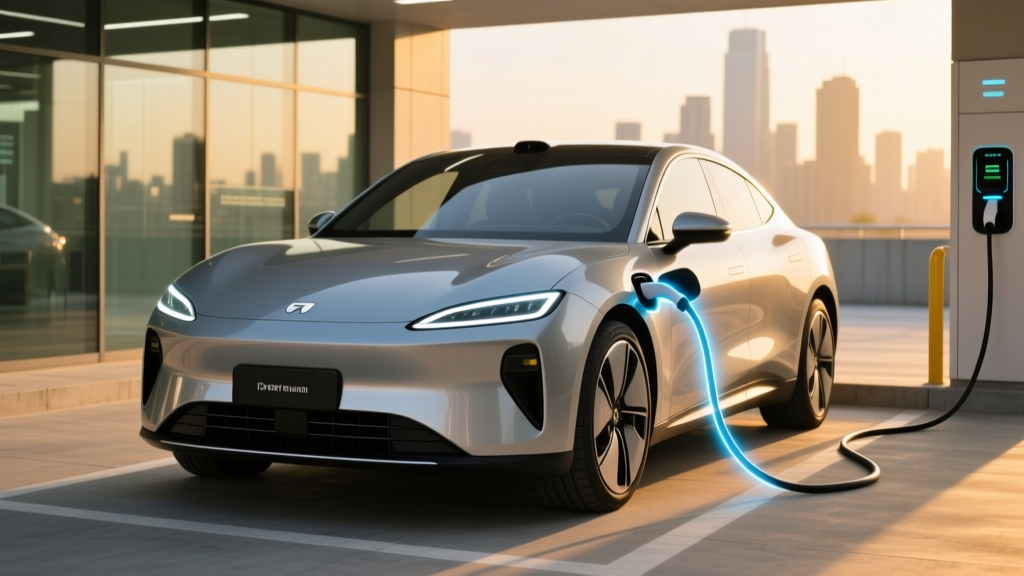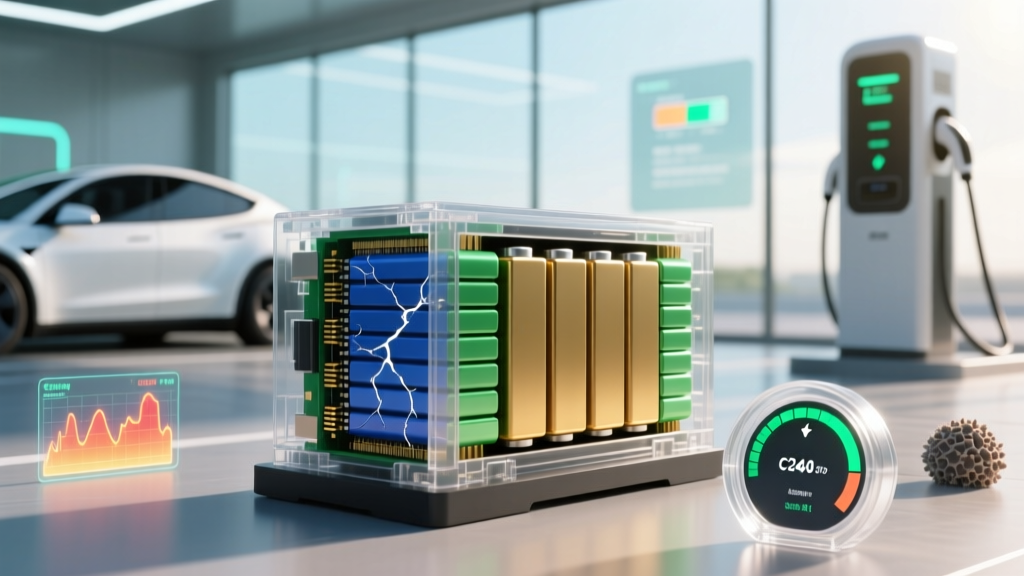
Why "Fly Lithium Batteries" Keeps Coming Up in EV Conversations
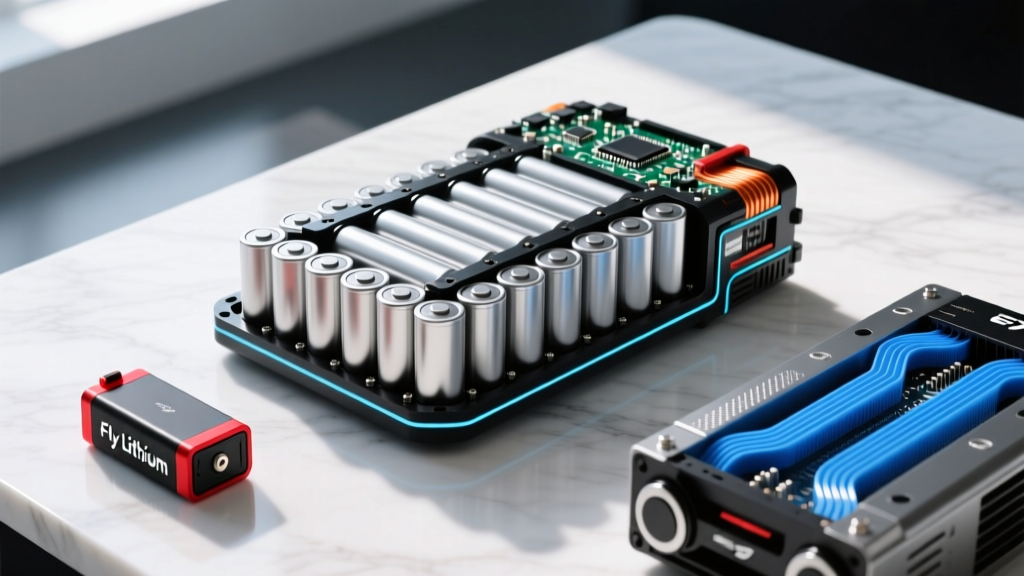
If you've been researching electric vehicles, you may have encountered the term fly lithium batteries — a phrase that surfaces in forums, parts catalogs, and consumer electronics discussions. While "fly lithium" isn't a formal battery chemistry classification, it typically refers to lightweight, high-discharge-rate lithium cells used in drones, RC models, and portable power systems. These cells share core lithium-ion principles with automotive traction batteries, but the engineering priorities diverge sharply.
Drone and hobby batteries prioritize weight savings and burst power (high C-rates for short durations). EV traction batteries prioritize energy density, cycle life, thermal stability, and cost per kWh over thousands of charge cycles. Understanding this distinction matters because the same lithium-ion fundamentals — cathode chemistry, electrolyte composition, thermal management — apply across both domains, just optimized differently.
This guide translates those fundamentals into what EV buyers and owners actually need: which chemistry your car uses, how long the pack will last, what degradation looks like in real data, and what replacement actually costs if you ever need it.
LFP vs. NMC/NCA: The Chemistry That Defines Your EV
Every EV sold in the US today uses one of two dominant lithium-ion cathode chemistries: LFP (lithium iron phosphate, LiFePO4) or NMC/NCA (nickel manganese cobalt / nickel cobalt aluminum). The choice affects your range, charging habits, longevity, and even the car's price.
| Attribute | LFP (Lithium Iron Phosphate) | NMC / NCA (Nickel-Based) |
|---|---|---|
| Energy Density | Lower (~160 Wh/kg cell-level) | Higher (~250-300 Wh/kg cell-level) |
| Typical Cycle Life | 3,000-6,000+ cycles to 80% SoH | 1,000-2,500 cycles to 80% SoH |
| Cold-Weather Performance | Reduced charge acceptance below 32°F; range loss ~25-35% | Better cold tolerance; range loss ~15-25% |
| Thermal Stability | Excellent — higher thermal runaway threshold (~500°F) | Good but lower threshold (~400°F) |
| Cost per kWh | Lower (no cobalt or nickel) | Higher (commodity nickel/cobalt pricing) |
| Recommended Daily SoC | Can charge to 100% daily | Best kept 20-80% for longevity |
| Common In 2026 EVs | Tesla Model 3/Y RWD, Ford Mustang Mach-E Select, Rivian Standard | Tesla Long Range, Hyundai Ioniq 5/6, BMW iX, GM Ultium-based models |
Which is better? Neither is universally superior. If you want maximum range per charge and don't mind managing state of charge, NMC/NCA delivers. If you prioritize longevity, lower cost, and simpler daily habits (charge to 100% without worry), LFP is the pragmatic pick. For "fly lithium" hobby batteries, the equivalent trade-off is LiPo (high energy, shorter life) vs. LiFePO4 packs (heavier, far more cycles).
How Long Do EV Batteries Actually Last?
The short answer: most EV traction batteries outlast the vehicles they're installed in. Modern liquid-cooled packs are engineered for 150,000-300,000+ miles before reaching 70-80% of original capacity — the threshold most manufacturers use to define "end of life" for warranty purposes.
Here's what real degradation data shows across major platforms:
Typical EV Battery Degradation Curve (Real-World Fleet Data)
- Year 1 / 15,000 mi: 2-5% capacity loss (initial formation loss, then stabilizes)
- Year 3 / 45,000 mi: 5-8% total loss; degradation rate slows significantly
- Year 5 / 75,000 mi: 8-12% total loss on NMC; 5-8% on LFP in moderate climates
- Year 8 / 120,000 mi: 10-15% total loss (NMC); 7-10% (LFP) — still above warranty threshold
- Year 10+ / 150,000+ mi: 15-20% loss typical; many packs remain functional at 80%+ SoH
Sources: Recurrent Auto fleet data (2025 report), Geotab longitudinal study of 10,000+ EVs, Tesla Impact Report. Cold-climate and frequent DC fast-charging use cases trend toward the higher end of these ranges.
For context, a 2026 Tesla Model 3 Long Range with its 82 kWh (usable) NMC pack losing 12% over 8 years still delivers roughly 290 miles of its original 330-mile EPA-rated range — more than adequate for most daily driving.
What the Battery Warranty Actually Covers
Federal law mandates a minimum EV battery warranty of 8 years / 100,000 miles (10 years / 150,000 miles in California Air Resources Board states). Most manufacturers meet or exceed this baseline. Here's how major brands structure coverage in 2026:
| Manufacturer | Warranty Term | Capacity Retention Threshold | Notes |
|---|---|---|---|
| Tesla | 8 yr / 120,000 mi (LR/AWD); 8 yr / 100,000 mi (RWD) | 70% | Covers defects and excessive degradation below threshold |
| Hyundai / Kia | 10 yr / 100,000 mi | 70% | Among the longest coverage terms in the industry |
| GM (Ultium) | 8 yr / 100,000 mi | 70% | Applies to Chevrolet, Cadillac, GMC EVs on Ultium platform |
| Ford | 8 yr / 100,000 mi | 70% | Covers Mustang Mach-E, F-150 Lightning traction batteries |
| Rivian | 8 yr / 175,000 mi | 70% | Highest mileage threshold among major OEMs |
| BMW | 8 yr / 100,000 mi | 70% | Includes i4, i5, i7, iX models |
Key distinction: These warranties cover the high-voltage traction battery — not the 12V auxiliary battery that powers accessories and onboard computers. The 12V battery follows standard automotive warranty terms (typically 3 years / 36,000 miles) and is a separate, much smaller component.
If your pack degrades below the stated threshold within the warranty period, the manufacturer must repair or replace it at no cost. In practice, very few owners hit this threshold. Recurrent Auto's 2025 fleet analysis found fewer than 1.5% of EVs required warranty battery replacements.
EV Battery Replacement Costs: The Real Numbers
This is the question that generates the most anxiety — and the most misinformation. Let's ground it in actual data.
| Vehicle / Pack Size | New OEM Pack Cost | Refurbished / Remanufactured | When Typically Needed |
|---|---|---|---|
| Tesla Model 3 RWD (60 kWh LFP) | $10,000 - $13,000 | $6,500 - $9,000 | Rarely before 200,000+ mi |
| Tesla Model Y LR (82 kWh NMC) | $14,000 - $18,000 | $9,000 - $13,000 | Rarely before 180,000+ mi |
| Hyundai Ioniq 5 (77.4 kWh NMC) | $13,000 - $16,000 | $8,500 - $12,000 | Rarely before 175,000+ mi |
| Ford F-150 Lightning Ext. Range (131 kWh NMC) | $22,000 - $30,000 | $15,000 - $20,000 | Rarely before 150,000+ mi |
| Chevrolet Equinox EV (85 kWh Ultium NMC) | $14,000 - $17,000 | $9,000 - $12,500 | Rarely before 175,000+ mi |
The critical context most headlines omit: the vast majority of EV owners will sell or trade the vehicle before the traction battery needs replacement. Battery costs per kWh have fallen from ~$1,200/kWh in 2010 to roughly $115-$130/kWh at the cell level in 2026 (per BloombergNEF). Module-level repairs — replacing individual degraded modules rather than the entire pack — are increasingly available for $2,000-$5,000 depending on the vehicle.
For comparison, a "fly lithium" hobby battery (say, a 6S 5000mAh LiPo pack for a drone) costs $80-$150 and lasts 200-400 cycles before significant capacity loss. The per-cycle cost of an EV traction battery is dramatically lower despite the higher upfront price.
Factors That Accelerate (or Preserve) Battery Health
Battery degradation isn't random — it follows predictable electrochemical patterns. Here's what moves the needle most:
Battery Longevity: Do's and Don'ts
- DO charge NMC to 80% daily and save 100% for road trips. LFP owners can charge to 100% regularly — in fact, periodic full charges help the BMS recalibrate cell balancing.
- DO use Level 2 (home) charging as your primary method. Slow, steady charging generates less heat and stress on cells than repeated DC fast charging.
- DO precondition your battery before DC fast charging, especially in cold weather. Most EVs do this automatically when you navigate to a charger.
- DON'T rely exclusively on DC fast charging. Occasional use is fine, but daily 150-350 kW sessions accelerate degradation by 1-3% over the pack's life compared to Level 2-primary charging.
- DON'T leave the car at 0% or 100% SoC for extended periods (weeks). If storing, set charge limit to 50-60%.
- DON'T ignore extreme heat. Parking in shade or a garage in hot climates (Arizona, Texas) measurably reduces calendar degradation. Liquid-cooled packs handle this far better than passively cooled ones.
- DO keep tire pressure optimized and reduce unnecessary weight — lower energy demand per mile means less stress on the battery over time.
The single biggest factor? Temperature management. EVs with active liquid thermal management (Tesla, Hyundai E-GMP, GM Ultium, Ford) show dramatically less degradation than older passively cooled packs (early Nissan Leaf, early Fiat 500e). If you're shopping used, prioritize liquid-cooled platforms.
How to Check Your Battery's State of Health (SoH)
State of Health (SoH) is the percentage of your battery's current maximum capacity relative to its original factory capacity. A new pack is 100% SoH; a pack that can only store 85 kWh of its original 100 kWh is at 85% SoH.
Methods to Monitor SoH
1. In-Vehicle Displays: Some manufacturers (Tesla, BMW, Hyundai) show estimated range that adjusts as the pack ages, though most don't display a direct SoH percentage on the dashboard.
2. OBD-II Diagnostic Apps: Tools like Scan My Tesla, Leaf Spy (Nissan), or Car Scanner read BMS (Battery Management System) data through the OBD-II port, giving you real-time SoH, cell voltage variance, and pack temperature.
3. Third-Party Reports: Services like Recurrent provide battery health reports that compare your pack's degradation to fleet averages for your specific model and climate zone.
4. Dealer Diagnostics: Any authorized service center can pull a full battery health report. Request this during routine service visits — it's typically free and takes minutes.
5. Charging Data Analysis: Track how many kWh your car accepts during a full charge (from 5% to 100%) over time. If your 82 kWh pack used to accept 80 kWh usable and now accepts 72, you're at roughly 90% SoH. Apps like Tessie or Stats automate this tracking.
What's Next: Solid-State, Silicon Anodes, and Realistic Timelines
The battery landscape is evolving, but separating marketing promises from production reality matters.
Solid-State Batteries: These replace the liquid electrolyte with a solid conductor, promising higher energy density (~400-500 Wh/kg), faster charging, and improved safety. Toyota, Samsung SDI, and QuantumScape have announced production timelines. However, as of 2026, no mass-market EV sells with a full solid-state pack. Toyota's first limited-production solid-state EV is announced for 2027-2028 with low volumes. Widespread, cost-competitive solid-state adoption remains a 2029-2032 outlook.
Silicon Anode Technology: Companies like Sila Nanotechnologies and Group14 are integrating silicon into graphite anodes to boost energy density by 10-20%. This is already appearing in limited applications (Mercedes G-Class EV uses silicon-dominant anode cells from Enovix for auxiliary systems). Expect broader traction-battery adoption by 2027-2028.
Sodium-Ion Batteries: CATL and BYD have begun producing sodium-ion cells for lower-cost, shorter-range EVs in China. These trade energy density for raw material cost reduction (no lithium, cobalt, or nickel). US-market availability is preliminary — likely 2027+ for fleet/entry-level models.
None of these technologies will make today's EVs obsolete. Lithium-ion packs in 2026 vehicles are mature, reliable, and well-supported. If you're deciding whether to buy now or wait for next-gen batteries: the data consistently shows that waiting costs more in missed fuel savings, tax incentives, and depreciation benefits than any future battery upgrade would recoup.
Frequently Asked Questions
Are "fly lithium batteries" the same as EV batteries?
No. "Fly lithium" typically refers to lightweight, high-discharge lithium-polymer (LiPo) or LiFePO4 cells used in drones, RC vehicles, and portable electronics. While they share lithium-ion fundamentals with EV traction batteries, they're optimized for different priorities: burst power and minimal weight vs. long cycle life and energy density. You cannot use hobby batteries in an EV, and EV batteries are far too heavy and complex for hobby applications.
How long do EV batteries last in years and miles?
Most modern liquid-cooled EV batteries last 150,000-300,000+ miles before degrading to 70-80% of original capacity. In years, that translates to 12-20+ years for the average driver covering 12,000-15,000 miles annually. LFP chemistry packs generally show slower degradation than NMC, particularly in moderate climates.
How much does it cost to replace an EV battery?
Full OEM pack replacements range from $10,000 to $30,000 depending on pack size and vehicle. Refurbished packs cost 30-50% less. Module-level repairs (replacing individual degraded modules) can cost $2,000-$5,000. However, fewer than 2% of EVs require out-of-warranty battery replacement, and most packs outlast the vehicle's useful economic life.
What does the EV battery warranty cover?
Federal law requires a minimum 8-year/100,000-mile warranty on EV traction batteries (10 years/150,000 miles in CARB states). Coverage includes manufacturing defects and capacity degradation below a stated threshold — typically 70% of original capacity. The warranty does not cover the 12V auxiliary battery, which follows standard vehicle warranty terms.
How do I maximize my EV battery's lifespan?
For NMC/NCA packs: charge to 80% daily, use Level 2 home charging as your primary method, precondition before DC fast charging, and avoid leaving the car at extreme SoC levels for extended periods. For LFP packs: regular 100% charges are fine and help BMS calibration. For all chemistries: minimize exposure to extreme heat, keep up with software updates (which optimize charging algorithms), and avoid daily DC fast charging when Level 2 is available.
LFP vs NMC — which chemistry should I choose?
Choose LFP if you want lower cost, longer cycle life, simpler charging habits (100% daily OK), and don't need maximum range. It's ideal for commuters and daily drivers. Choose NMC/NCA if you need the longest possible single-charge range, frequently drive in cold climates (better cold performance), or take regular road trips where every mile of range matters. Both chemistries are proven and reliable in 2026 EVs.
Can I check my battery health myself?
Yes. OBD-II apps like Scan My Tesla, Leaf Spy, or Car Scanner read BMS data directly. You can also track kWh accepted during full charges over time or request a battery health report from your dealer during service visits. Third-party services like Recurrent provide comparative fleet data for your model.
Battery technology data sourced from manufacturer specifications, EPA fueleconomy.gov, Recurrent Auto fleet studies, and IRS §30D clean vehicle credit guidelines. Individual results vary based on climate, charging habits, and driving patterns. Consult your vehicle's owner manual for chemistry-specific care recommendations.