Understanding EV Battery Chemistry: The Foundation of Range and Longevity
When evaluating any EV — whether it uses cells from CATL, LG Energy Solution, Panasonic, or an emerging player like Flint Battery — the first question is always chemistry. The two dominant lithium-ion chemistries in 2026 passenger EVs are NMC (Nickel Manganese Cobalt) and LFP (Lithium Iron Phosphate). Each has distinct trade-offs that affect your real-world range, charging behavior, and long-term ownership cost.
| Attribute | NMC / NCA | LFP |
|---|---|---|
| Energy Density (cell-level) | 220–300 Wh/kg | 150–180 Wh/kg |
| Typical Cycle Life | 1,000–2,000 cycles | 3,000–5,000+ cycles |
| Cold-Weather Performance | Better at -10°C and below | Reduced; requires preconditioning |
| Cost per kWh (2026 avg) | $110–$135 | $75–$100 |
| Thermal Stability | Good, with active cooling | Excellent; inherently safer |
| Recommended Daily SoC | 80% (to limit degradation) | 100% acceptable for daily use |
| Common in 2026 Models | Tesla Model S/X, Rivian R1S, Hyundai Ioniq 5 (Long Range) | Tesla Model 3/Y RWD, BYD Atto 3, Ford Mustang Mach-E Select (base) |
LFP vs NMC — which is better and why? There is no universal winner. If you prioritize maximum range in a single charge and live in a cold climate, NMC's higher energy density and better low-temperature discharge give it the edge. If you want a battery that can be charged to 100% daily without accelerated degradation, lasts 3,000+ cycles, and costs less upfront, LFP is the pragmatic choice — especially for commuter-duty EVs. Flint Battery, an emerging cell manufacturer, has been investing in both LFP and advanced NMC formulations aimed at bridging this gap, though their cells are currently more common in commercial and energy-storage applications than in mainstream US-market passenger EVs as of early 2026.
How Long Do EV Batteries Actually Last?
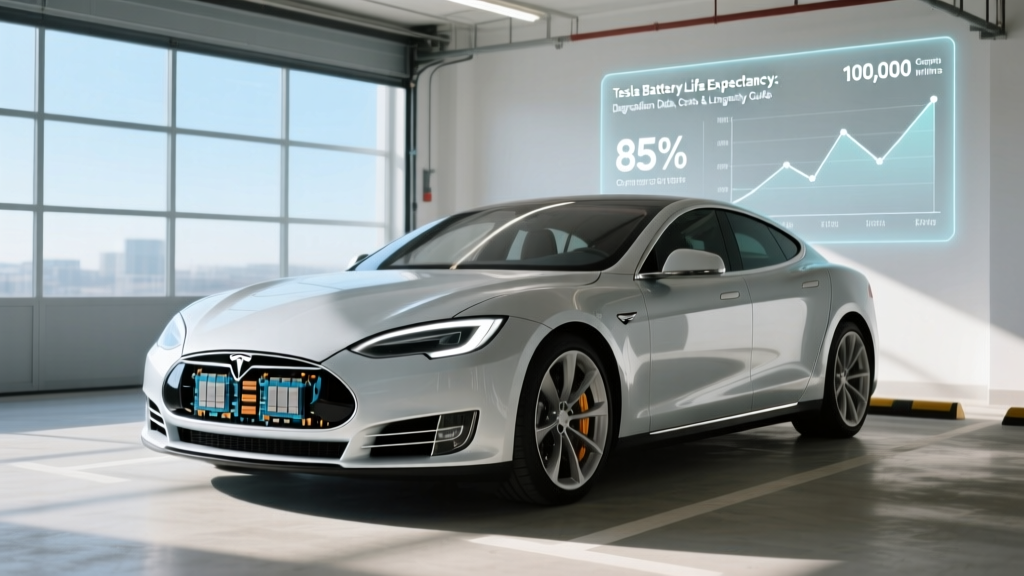
The short answer: far longer than most first-time EV buyers assume. Based on fleet data and long-term owner reports, the average EV battery in 2026 retains roughly 85–92% of its original capacity after 8 years or 100,000 miles. Catastrophic failure requiring full replacement is rare — well under 2% of vehicles, according to warranty claim data from major manufacturers.
Typical Degradation Curve (NMC 75–82 kWh pack, temperate climate, mixed charging):
- Year 1 / 15,000 mi: 2–4% loss (initial formation loss)
- Year 3 / 45,000 mi: 6–9% total loss
- Year 5 / 75,000 mi: 8–12% total loss
- Year 8 / 120,000 mi: 10–16% total loss
- Year 10+ / 150,000+ mi: 12–20% total loss (highly dependent on usage patterns)
LFP packs typically lose 1–3% less capacity at each interval above, owing to their inherently slower calendar aging. Data sourced from fleet analyses by Recurrent Auto and Geotab's long-term degradation studies.
The key insight is that degradation is non-linear. Most capacity loss occurs in the first 12–18 months (the "formation" period), after which the curve flattens considerably. A 2023 Tesla Model 3 Long Range with an NMC pack that showed 5% loss in its first year will likely show only another 5–8% loss over the next six years under normal use.
EV Battery Warranties: What's Covered and What Isn't
Federal law mandates a minimum 8-year / 100,000-mile warranty on EV battery packs for emissions-related compliance, but most manufacturers exceed this baseline. The critical detail is the capacity retention threshold — the point at which the manufacturer considers the battery "defective" and obligated to repair or replace.
| Manufacturer (2026 MY) | Battery Warranty | Capacity Threshold | Notes |
|---|---|---|---|
| Tesla (Model 3/Y) | 8 yr / 120,000 mi (LR/AWD); 8 yr / 100,000 mi (RWD) | 70% retention | LFP RWD covered to 100k mi |
| Hyundai / Kia (E-GMP) | 10 yr / 100,000 mi | 70% retention | Among the longest coverage terms |
| Ford (Mach-E, F-150 Lightning) | 8 yr / 100,000 mi | 70% retention | Battery components covered separately |
| GM (Ultium platform) | 8 yr / 100,000 mi | 70% retention | Includes module-level replacement option |
| Rivian (R1T / R1S) | 8 yr / 175,000 mi | 70% retention | Higher mileage cap reflects truck duty cycle |
| BMW (Neue Klasse) | 8 yr / 100,000 mi | 70% retention | Cylindrical cell format; module serviceable |
What does the battery warranty cover? In practical terms, the warranty covers defects in materials and workmanship, plus capacity loss that exceeds the stated threshold within the warranty period. It does not cover damage from accidents, flooding, improper charging equipment, or modifications. Importantly, normal degradation below the threshold (e.g., losing 25% capacity at year 9) is simply the expected lifecycle behavior, not a warranty claim.
How Much Does an EV Battery Replacement Cost?
This is the question that generates the most anxiety — and the most misinformation. Here are the real 2026 figures, based on out-of-warranty replacement quotes and manufacturer service bulletins.
| Vehicle / Pack Size | Battery kWh (usable) | Replacement Cost Range (2026) | When Typically Needed |
|---|---|---|---|
| Tesla Model 3 RWD (LFP) | 57.5 kWh | $8,000–$12,000 | 15+ years / 200,000+ mi |
| Tesla Model Y Long Range (NMC) | 75 kWh | $12,000–$16,000 | 15+ years / 200,000+ mi |
| Hyundai Ioniq 5 (Long Range) | 77.4 kWh | $11,000–$15,000 | 15+ years / 180,000+ mi |
| Ford F-150 Lightning (Extended) | 131 kWh | $20,000–$28,000 | 15+ years / 180,000+ mi |
| Chevrolet Equinox EV | 85 kWh | $12,000–$16,500 | 15+ years / 180,000+ mi |
| Nissan Leaf (40 kWh pack) | 40 kWh | $6,500–$9,000 | 10–14 years / 120,000+ mi |
Context matters enormously here. Most EV batteries never need replacement during original ownership. The average American keeps a car for 8.4 years and drives roughly 115,000 miles in that time — well within the warranty period and well before meaningful end-of-life degradation. Battery replacement is typically a concern for second or third owners of vehicles with 150,000+ miles, and even then, module-level repairs (replacing a few degraded modules rather than the entire pack) are increasingly available for $2,000–$5,000.
Cell prices continue to decline. According to BloombergNEF, average lithium-ion pack prices fell below $120/kWh in late 2025, meaning replacement costs in 2030 and beyond will be meaningfully lower than today's figures.
Factors That Accelerate — or Preserve — Battery Health
Not all miles are created equal when it comes to battery wear. Here are the variables that have the largest measurable impact on long-term State of Health (SoH):
Battery Care Best Practices for Maximum Longevity
- Minimize DC fast charging to <25% of total charging sessions. Frequent 150+ kW charging generates sustained heat that accelerates electrolyte decomposition. Home Level 2 (7–11 kW) is ideal for daily use.
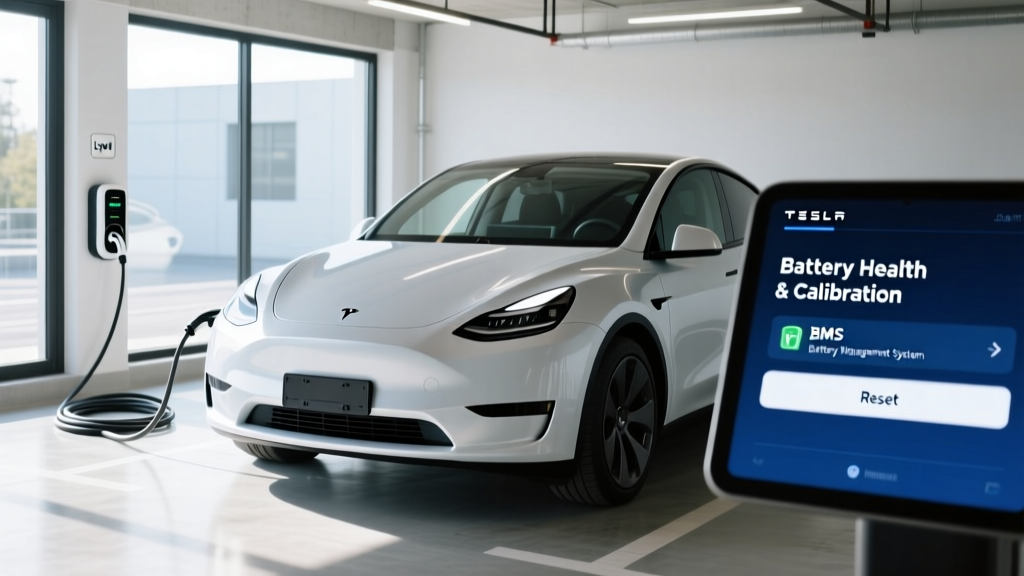
- Avoid storing at 100% SoC for extended periods. For NMC packs, keep daily charging to 80% and only charge to 100% immediately before long trips. LFP packs tolerate 100% daily charging without significant penalty — in fact, periodic 100% charges help LFP battery management systems recalibrate.
- Precondition before fast charging. A cold battery charged at high power suffers lithium plating. Use your vehicle's navigation-to-charger preconditioning feature (standard on Tesla, Hyundai E-GMP, GM Ultium, Ford) to warm the pack to 25–35°C before DC charging begins.
- Avoid prolonged exposure to extreme heat. Parking in direct sun in 100°F+ climates for weeks without thermal management active is more damaging than cold weather. Garage parking helps.
- Don't let SoC sit below 10% for days. Deep discharge stresses cells and can cause copper dissolution in the anode current collector.
- Use scheduled charging. Set your car to finish charging just before you leave in the morning rather than sitting at full charge overnight.
Fast-charging frequency deserves emphasis. Data from Geotab's study of 6,300 EVs showed that vehicles using DC fast charging more than three times per month in hot climates showed an average of 2–3% additional capacity loss over four years compared to vehicles that primarily used Level 2. This is not catastrophic, but it's measurable and avoidable for most owners with home charging access.
How to Check and Monitor Your Battery's State of Health
State of Health (SoH) is the percentage of your battery's original capacity that remains usable. A new pack is 100% SoH; a pack that originally held 75 kWh and now holds 67.5 kWh is at 90% SoH.
How do I check battery health? Methods vary by manufacturer:
- Tesla: No native SoH display in the vehicle UI. Use third-party tools like TeslaFi or Tessie to log charge data and calculate SoH from energy-in vs. rated-range correlations. Service centers can pull a battery health report.
- Hyundai / Kia: The infotainment system's EV menu includes a battery health percentage. The Bluelink / Kia Connect app also displays SoH.
- GM (Ultium): The myChevrolet / myCadillac app provides a battery health indicator. OnStar diagnostics can generate a detailed report.
- Ford: The FordPass app shows battery health status. Dealers can pull a full Battery State of Health report via FDRS (Ford Diagnostic and Repair System).
- Nissan Leaf: The dashboard displays "battery bars" out of 12 (each bar = ~8.3% capacity). Third-party tools like LeafSpy provide precise SoH percentage via OBD-II.
- OBD-II universal tools: Devices like OBDeleven (VW Group) or generic ELM327 adapters with apps like ABRP or EVNotify can read SoH from the BMS on most EVs.
For prospective used-EV buyers, requesting a battery health report from a certified dealer is the single most important pre-purchase step. A 2022 EV showing 93% SoH at 35,000 miles is a strong indicator of careful ownership and predicts excellent remaining life.
Emerging Battery Technologies: Solid-State, Silicon Anode, and What's Next
While NMC and LFP dominate 2026 production vehicles, several next-generation technologies are in active development:
- Solid-state batteries: Replace the liquid electrolyte with a solid ceramic or polymer layer, promising 40–50% higher energy density and faster charging. Toyota has announced a solid-state EV for 2027–2028 (preliminary), and Samsung SDI is targeting 2027 for limited production. These are not yet available in any production vehicle as of 2026.
- Silicon anode cells: Companies like Sila Nanotechnologies and Group14 are replacing graphite anodes with silicon-dominant composites, boosting energy density by 15–25%. Early deployments are appearing in high-performance applications (Mercedes G-Class electric, announced for 2026–2027).
- Sodium-ion batteries: Lower-cost alternative to lithium for entry-level and urban EVs. CATL and BYD have begun production, primarily for the Chinese domestic market. US availability remains limited.
- LMFP (Lithium Manganese Iron Phosphate): A hybrid chemistry that adds manganese to LFP for ~15% higher energy density while retaining LFP's cycle-life and safety advantages. Expected in several 2027 model-year vehicles.
For buyers in 2026, these technologies are forward-looking context, not purchase-decision factors. The NMC and LFP cells in today's vehicles are mature, well-understood, and supported by robust warranty infrastructure. Waiting for solid-state is a choice to delay EV ownership by 3–5+ years with no guarantee of initial pricing or availability.
The Role of Cell Suppliers: From CATL and Panasonic to Flint Battery
EV buyers rarely think about who manufactured the cells inside their battery pack, but the cell supplier significantly affects performance characteristics. Major suppliers in 2026 include:
- CATL (China): World's largest cell maker; supplies Tesla, BMW, Ford (LFP), and others. Dominates LFP production.
- LG Energy Solution (South Korea): Major NMC supplier for GM (Ultium), Hyundai, and Ford.
- Panasonic (Japan): Long-time Tesla partner; produces 2170 and 4680-format NMC/NCA cells.
- SK On (South Korea): Supplies Ford and Hyundai NMC cells.
- BYD (China): Vertically integrated; produces Blade-format LFP cells for its own vehicles and external customers including Tesla (for some markets).
- Flint Battery: An emerging manufacturer focused on scalable LFP and advanced NMC cell production. While not yet a primary supplier for major US-market OEMs in 2026, Flint Battery represents the expanding global cell-supply chain that is driving down costs and increasing competition — factors that directly benefit EV buyers through lower pack prices and improved availability.
Diversification of the cell supply chain is one of the most important trends for EV affordability. When more manufacturers like Flint Battery enter the market with competitive LFP and NMC cells, pack pricing drops, and OEMs have more flexibility to offer lower-MSRP trims that qualify for the IRS §30D federal tax credit (which has strict battery-sourcing and critical-mineral requirements).
Frequently Asked Questions
How long do EV batteries last in years and miles?
Most modern EV batteries (2022 and later) are engineered to retain 70–85% of original capacity at 150,000–200,000 miles or 15+ years. Catastrophic failure is rare (<2% of vehicles). LFP chemistries typically outlast NMC by 20–40% in cycle life. According to fueleconomy.gov, the EPA assumes a 15-year / 150,000-mile vehicle lifespan for emissions and efficiency calculations, and most 2026 EV batteries are designed to outlast that benchmark.
How much does an EV battery cost to replace in 2026?
Out-of-warranty replacement costs range from approximately $6,500 for a small pack (Nissan Leaf 40 kWh) to $20,000–$28,000 for large packs (Ford F-150 Lightning 131 kWh). However, most batteries never need full replacement during typical ownership. Module-level repairs, where available, cost $2,000–$5,000. Cell pricing continues to decline, so future replacement costs will be lower.
What does the EV battery warranty actually cover?
Manufacturer warranties typically cover 8 years / 100,000 miles (minimum) with a 70% capacity retention threshold. This means if your battery degrades below 70% of original capacity within the warranty period, the manufacturer will repair or replace it at no cost. Warranties cover defects and abnormal degradation, not accident damage, improper charging, or normal end-of-life wear beyond the warranty term.
How do I check and maximize my EV battery's health?
Check SoH through your vehicle's app (FordPass, Bluelink, myChevrolet), infotainment system, or third-party tools like TeslaFi, LeafSpy, or OBDeleven. Maximize longevity by primarily using Level 2 home charging, limiting DC fast charging to road trips, keeping NMC packs between 20–80% SoC for daily use (LFP can be charged to 100%), preconditioning before fast charging, and avoiding prolonged storage at extreme SoC levels.
LFP vs NMC — which battery chemistry is better for me?
Choose LFP if: you want the longest cycle life, lower cost, the ability to charge to 100% daily, and you live in a moderate climate. Choose NMC if: you need maximum range per charge, regularly drive in sub-freezing temperatures, or prioritize performance (higher discharge rates). For most commuters with home charging, LFP is the more practical and economical choice in 2026.
Will solid-state batteries make current EVs obsolete?
Not in the near term. Solid-state batteries are expected to reach limited production in 2027–2028, likely in premium vehicles first, with mass-market availability not expected before 2030. Current NMC and LFP batteries are mature, reliable, and cost-effective. Buying an EV now does not risk near-term obsolescence — just as buying a gas car in 2010 didn't become a poor decision when turbocharged engines improved in 2015.