Every few months a new battery company makes headlines with promises that sound almost too good to be true. Factorial Energy is one of those names. Backed by Mercedes-Benz, Hyundai, and Stellantis, the Massachusetts-based startup is developing solid-state batteries that claim dramatic improvements in energy density, safety, and charging speed over today's lithium-ion cells. But what does a Factorial battery actually deliver, and when — if ever — will it reach a production vehicle you can buy?
This guide uses Factorial's technology as a lens to examine the full landscape of EV battery tech in 2026: the chemistries powering today's cars, real-world degradation data, warranty structures, replacement costs, and the habits that will keep your pack healthy for the long haul.
What Is a Factorial Battery and How Does Solid-State Differ?
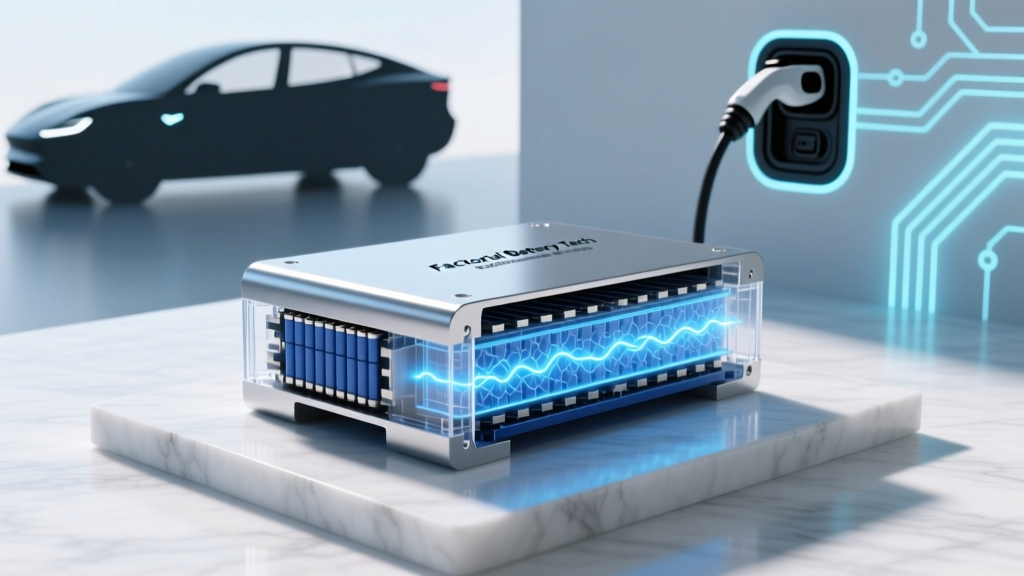
Factorial Energy's core product is a solid-state battery cell built on what the company calls its FEST (Factorial Electrolyte System Technology) platform. Instead of the liquid or gel electrolyte found in conventional lithium-ion cells, Factorial uses a solid polymer electrolyte. The theoretical advantages are substantial:
- Higher energy density: Factorial has demonstrated prototype cells exceeding 350 Wh/kg at the cell level — roughly 40-50% more energy-dense than the best NMC cells in production today (around 230-260 Wh/kg).
- Safety: Solid electrolytes are far less flammable than liquid organic electrolytes, reducing thermal runaway risk.
- Lithium metal anodes: Solid-state architecture can accommodate lithium metal anodes, unlocking the energy-density gains above, whereas today's cells use graphite or graphite-silicon composites.
- Potentially faster charging: Solid electrolytes may tolerate higher C-rates without dendrite formation, though sustained real-world charge curves remain unproven at scale.
Factorial delivered A-sample cells to Mercedes-Benz in late 2024 and has been progressing through B-sample validation. Hyundai received prototype cells for testing as well. However, as of mid-2026, no production vehicle on sale uses a Factorial battery. The company targets initial low-volume production around 2027-2028, with broader availability likely not before 2029-2030. Treat all specs as preliminary until a production-spec vehicle is independently tested.
Today's EV Battery Chemistries: LFP vs NMC vs NCA
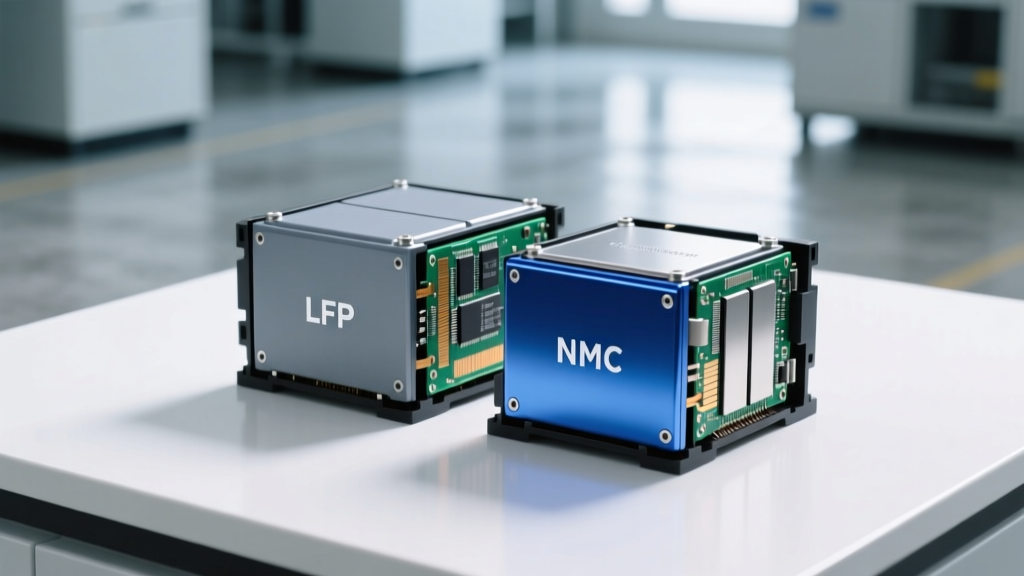
While solid-state batteries remain on the horizon, every EV sold in the U.S. in 2026 uses one of two dominant lithium-ion chemistries: LFP (lithium iron phosphate) or NMC/NCA (nickel manganese cobalt / nickel cobalt aluminum). Understanding the trade-offs is essential because chemistry determines your real-world range, charging behavior, longevity, and even how you should manage your state of charge.
| Attribute | LFP (Lithium Iron Phosphate) | NMC / NCA |
|---|---|---|
| Energy density (cell-level) | 160-200 Wh/kg | 230-260 Wh/kg |
| Typical EPA range (same vehicle platform) | ~10-15% less than NMC equivalent | Higher range per kWh of pack weight |
| Cycle life | 3,000-5,000+ cycles to 80% SoH | 1,000-2,500 cycles to 80% SoH |
| Cold-weather performance | Greater range loss below 32°F; slower charge acceptance when cold | Better low-temp conductivity; preconditioning helps both |
| Recommended daily SoC | 100% is fine (BMS calibration benefits from periodic full charges) | 80% for daily use; 100% only before long trips |
| Cost per kWh (pack-level, 2026 est.) | $90-$110/kWh | $120-$145/kWh |
| Cobalt/nickel content | None — lower supply-chain and ethical concerns | Contains cobalt and nickel — price and sourcing volatility |
| Common in (2026 U.S. models) | Tesla Model 3/Y RWD, base Ford Mustang Mach-E Select, BYD (where available) | Hyundai Ioniq 5/6, Kia EV6/EV9, Chevy Equinox EV, BMW iX, most Long Range/AWD trims |
Which is better? There is no universal winner. If you want maximum range and are willing to manage SoC carefully, NMC/NCA delivers. If you prioritize longevity, lower cost, and the simplicity of charging to 100% daily — and can accept slightly less range — LFP is the stronger choice. For fleet and high-mileage drivers, LFP's cycle-life advantage is particularly compelling.
How Long Do EV Batteries Last? Real-World Degradation Data
The most common question from prospective EV buyers: "When will I need a new battery?" The short answer, supported by mounting field data, is that most modern EV batteries will outlast the vehicle's useful economic life. But the numbers vary by chemistry, climate, and usage patterns.
Here's what real-world degradation data shows across major platforms:
- Tesla Model 3/Y (NMC, 2020-2023): ~90% SoH at 50,000 miles; ~85% SoH at 100,000 miles (source: Tesla Impact Reports, Recurrent Auto fleet data)
- Tesla Model 3 RWD (LFP, 2022-2025): ~93-95% SoH at 50,000 miles; minimal measurable degradation at 100,000 miles in fleet samples
- Hyundai Ioniq 5 / Kia EV6 (NMC, 2022-2025): ~91% SoH at 50,000 miles; ~86% at 100,000 miles (Recurrent data, owner forums)
- Chevrolet Bolt EV/EUV (NMC, 2017-2023): Post-recall replacement packs showing ~95%+ SoH at 30,000 miles; original pre-recall packs varied widely
- Nissan Leaf (LMO/NMC, 2013-2023): Earlier air-cooled packs showed 75-80% SoH at 80,000 miles in hot climates — a cautionary example of inadequate thermal management
Sources: Recurrent Auto, Tesla 2024 Impact Report, manufacturer warranty data. Individual results vary by climate, charging habits, and mileage.
At these rates, an NMC pack starting at 250 miles EPA would retain roughly 210-215 miles of range at 100,000 miles — still eminently usable. LFP packs, with their superior cycle life, may retain 90%+ capacity well beyond 150,000 miles under normal conditions.
The key insight: battery degradation is not linear. Most packs lose 3-5% capacity in the first year or two (the "early settle" phase), then degradation slows to roughly 0.5-1.5% per year thereafter. This is why the fear of a sudden "cliff" is largely unfounded for modern, liquid-cooled packs.
What Does the EV Battery Warranty Cover?
Federal law mandates a minimum 8-year / 100,000-mile warranty on EV battery packs for emissions-related compliance, and nearly every manufacturer meets or exceeds this baseline. California Air Resources Board (CARB) states require 10 years / 150,000 miles, and many automakers apply the CARB standard nationwide for simplicity.
| Manufacturer | Duration | Mileage | Capacity Retention Threshold |
|---|---|---|---|
| Tesla | 8 years | 100,000-120,000 mi (varies by model) | 70% |
| Hyundai / Kia / Genesis | 10 years | 100,000 mi | 70% |
| General Motors (Chevy/Cadillac) | 8 years | 100,000 mi | 70% (some models 60%) |
| Ford | 8 years | 100,000 mi | 70% |
| BMW | 8 years | 100,000 mi | 70% |
| Volkswagen | 8 years | 100,000 mi | 70% |
What triggers a warranty claim? If your battery's State of Health drops below the stated threshold (typically 70% of original capacity) within the warranty period, the manufacturer must repair or replace the pack at no cost to you. In practice, most warranty replacements involve swapping defective modules rather than the entire pack, which is faster and less expensive for the automaker.
What's NOT covered: Damage from accidents, flooding, improper modifications, or using non-approved charging equipment. Gradual degradation that stays above the threshold is considered normal wear — a pack at 72% SoH at year 8, while disappointing, does not qualify for a warranty replacement.
How Much Does an EV Battery Replacement Cost?
This is where fear-mongering runs rampant, so let's anchor the conversation in data. Out-of-warranty battery replacement is expensive — but it's also increasingly rare, and costs are declining.
| Vehicle / Pack Size | Battery Chemistry | Pack Capacity (kWh) | Estimated Replacement Cost |
|---|---|---|---|
| Tesla Model 3 RWD | LFP | ~60 kWh | $8,000 - $12,000 |
| Tesla Model Y Long Range | NMC | ~75 kWh | $12,000 - $16,000 |
| Hyundai Ioniq 5 | NMC | 77.4 kWh | $13,000 - $18,000 |
| Ford F-150 Lightning Extended Range | NMC | ~131 kWh | $20,000 - $28,000 |
| Chevrolet Equinox EV | NMC | ~85 kWh | $14,000 - $19,000 |
When is replacement actually needed? Based on current degradation trajectories, most liquid-cooled EV batteries will retain 75-85% capacity at 150,000-200,000 miles. Many will never need replacement during the vehicle's first-owner lifespan. The packs most likely to require out-of-warranty replacement are:
- Early-generation EVs with passive (air) cooling — e.g., 2011-2017 Nissan Leaf
- High-mileage fleet vehicles exceeding 200,000+ miles
- Packs that suffered physical damage, water intrusion, or manufacturing defects discovered after warranty expiration
A growing ecosystem of third-party EV battery repair shops can now replace individual modules rather than full packs, reducing costs to $3,000-$7,000 in many cases. This is an option worth exploring before committing to a full pack swap.
Factors That Affect Battery Life — and How to Maximize It
Not all miles and charges are created equal. The following factors have the most measurable impact on long-term battery health:
- ✅ Limit DC fast charging frequency: Occasional road-trip fast charging is fine. Daily reliance on 150+ kW DC charging accelerates degradation due to sustained heat. Aim for Level 2 home charging as your daily routine.
- ✅ Avoid extreme SoC for extended periods: For NMC/NCA, don't sit at 100% for days. For LFP, periodic 100% charges help the BMS calibrate cell balancing.
- ✅ Precondition before fast charging: Use your vehicle's navigation-routed preconditioning (Tesla, Hyundai, Ford, BMW all offer this) to warm the battery to optimal temperature before arriving at a DC charger. This protects the cells and dramatically improves charge speed.
- ✅ Park in shade or a garage in extreme heat: Sustained battery temperatures above 95°F (35°C) accelerate calendar aging. Thermal management systems help, but they can't fully offset weeks of 110°F outdoor parking.
- ✅ Don't obsess over shallow cycles: Modern BMS systems manage charge/discharge well. Driving from 80% to 30% and back is perfectly healthy. You don't need to baby the battery — just avoid the extremes (prolonged 0% or 100% on NMC, extreme heat).
- ❌ Don't leave the car at 0% SoC for days: Deep discharge below the BMS buffer can cause copper dissolution in the anode. If you must store the car, leave it at 40-60%.
- ❌ Don't skip software updates: OEMs regularly refine BMS algorithms, thermal management, and charge curves via OTA updates. These often improve longevity.
How to Monitor Your Battery's State of Health (SoH)
State of Health (SoH) is expressed as a percentage of your battery's current maximum capacity relative to its original capacity when new. A pack at 90% SoH that originally held 77.4 kWh now holds roughly 69.7 kWh usable.
How to check SoH by brand:
- Tesla: The infotainment system shows a "Battery Health" percentage under Service menu (added in 2023 software updates). Third-party apps like Tessie or TeslaFi can also estimate SoH from charge logs.
- Hyundai / Kia: The EV-specific menu in the cluster or infotainment shows battery condition. OBD-II scanners with EV PIDs (like the OBDeleven or dedicated Hyundai/Kia tools) can read detailed cell voltage and SoH data.
- General Motors: The myChevrolet/myCadillac app provides a battery health indicator. Dealer diagnostic tools provide module-level detail.
- Universal method: OBD-II dongles paired with apps like Recurrent, LeafSpy (Nissan), or ABRP's data logger can pull SoH estimates from the BMS. For the most accurate reading, a dealer service department can run a full capacity test — charging from 0 to 100% under controlled conditions and measuring actual kWh delivered.
If your SoH is declining faster than the benchmarks listed above (e.g., dropping below 90% before 30,000 miles), it may indicate a defective module, a thermal management issue, or a BMS calibration error — all of which are typically covered under warranty.
Beyond Factorial: Solid-State, Silicon Anodes, and What's Realistic
Factorial is one of several companies pursuing next-generation battery technology. Here's where the broader landscape stands as of mid-2026:
- Toyota: Has announced a solid-state battery targeting 750 km (~466 miles) of range with 10-minute 10-80% charging. Production is slated for 2027-2028, initially in limited volumes for Lexus models. Independent verification of production-spec cells is not yet available.
- QuantumScape: Continues to ship prototype solid-state cells to Volkswagen's PowerCo division. The company claims 800+ cycle tests with >80% retention. Commercialization timeline: 2028-2029 at the earliest.
- Samsung SDI: Targeting 2027 for solid-state production. Demonstrated cells at 900+ Wh/L volumetric energy density.
- Silicon anode (near-term, already shipping): Companies like Sila Nanotechnologies and Group14 are supplying silicon-dominant anode materials to battery manufacturers. These boost energy density 10-20% over graphite and are appearing in 2025-2026 model-year cells (e.g., some Mercedes-Benz and Panasonic applications). This is the most immediately impactful advancement.
- Sodium-ion: CATL and BYD have begun producing sodium-ion cells for lower-cost, shorter-range applications. Energy density is 20-30% lower than LFP, but raw material costs are dramatically lower. Not expected in U.S.-market vehicles before 2028.
The realistic timeline for solid-state batteries in mainstream, affordably priced EVs is 2030 or later. Early adoption will be in premium vehicles with price tags reflecting the technology cost. For buyers shopping today, current LFP and NMC chemistries offer proven, durable, and increasingly affordable options.
Frequently Asked Questions
How long do EV batteries last in years and miles?
Most modern, liquid-cooled EV batteries retain 80-90% of their original capacity at 100,000-150,000 miles (roughly 10-15 years of average driving). LFP chemistries typically outlast NMC in cycle count. Catastrophic failure is rare; gradual capacity loss is the norm.
How much does it cost to replace an EV battery?
Out-of-warranty full-pack replacement ranges from approximately $8,000 for a smaller LFP pack (e.g., Tesla Model 3 RWD, ~60 kWh) to $28,000 for a large NMC pack (e.g., F-150 Lightning Extended Range, ~131 kWh). However, most batteries never need full replacement — module-level repairs cost $3,000-$7,000, and most packs outlast the vehicle's first ownership period.
What does the battery warranty actually cover?
Manufacturer battery warranties cover defects and excessive degradation — typically defined as falling below 70% State of Health within 8 years / 100,000 miles (or 10 years / 100,000 miles for Hyundai/Kia). The warranty does not cover damage from accidents, flooding, or unauthorized modifications. Normal gradual degradation above the threshold is not warrantable.
How can I check my EV battery's health?
Most modern EVs display battery health information in the infotainment system or companion app. For more detailed data, OBD-II scanners with EV-specific software can read cell voltages and SoH estimates from the BMS. A dealer can perform a full capacity test for the most accurate measurement.
Is LFP or NMC better for my situation?
Choose LFP if you want lower cost, longer cycle life, the ability to charge to 100% daily without concern, and don't mind slightly less range. Choose NMC/NCA if you need maximum range, better cold-weather performance, and are willing to manage daily SoC to 80%. For high-mileage drivers and fleet use, LFP's longevity advantage is significant.
Will solid-state batteries like Factorial's make my current EV obsolete?
Not for many years. Solid-state batteries remain in prototype and pilot phases. Even when they reach production (likely 2028-2030 for premium vehicles), they will debut at high price points. Your current EV's battery will remain functional and supported for well over a decade. The used-EV market will continue to value well-maintained packs regardless of what comes next in labs.
Does frequent DC fast charging damage my battery?
Occasional DC fast charging (road trips, a few times per month) has minimal measurable impact on modern liquid-cooled packs. Daily reliance on 150+ kW charging does accelerate degradation due to cumulative heat exposure. If you can charge at home on Level 2 (7-11 kW) for daily use and reserve DC fast charging for road trips, your battery will thank you over the long term.