The promise of solid-state batteries has hovered over the EV industry for a decade. In 2025 and 2026, companies like Factorial Energy have moved from lab prototypes to pilot production lines, raising a practical question for current and prospective EV owners: does this technology change what you should buy today, or is it still years away from your driveway?
This guide breaks down where Factorial solid-state battery production actually stands, then grounds you in the battery chemistry, degradation data, warranty terms, and ownership costs that matter for the EVs you can buy right now. The goal is simple: separate forward-looking promise from present-day reality so you can make a spec-driven purchase decision.
Factorial Solid-State Battery Production: Where Things Stand
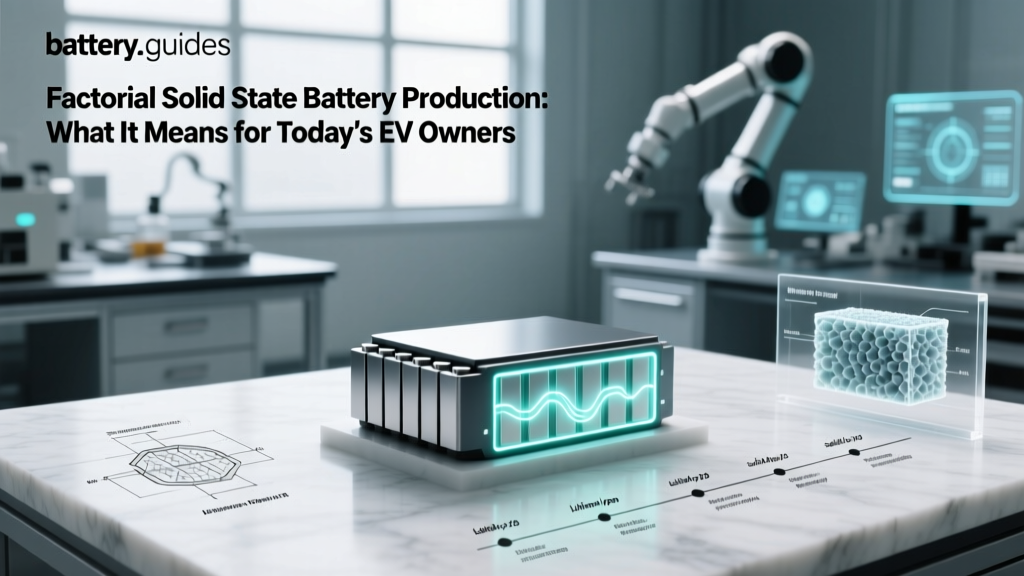
Factorial Energy, based in Massachusetts, has been developing a solid-state lithium-metal battery it calls "FEST" (Factorial Electrolyte System Technology). The company has partnered with automakers including Mercedes-Benz, Stellantis, and Hyundai to develop and validate cells for future EV platforms.
As of early 2026, Factorial has delivered B-sample cells to automotive partners and is operating a pilot production facility. The company claims energy density exceeding 350 Wh/kg at the cell level — roughly 40-60% higher than today's best NMC (nickel manganese cobalt) cells, which sit around 220-260 Wh/kg. That translates to potentially 500+ miles of EPA range in a midsize sedan without increasing battery pack weight.
Why does this matter to you now? Because understanding where battery technology is headed helps you weigh whether to wait or buy today's proven chemistries. For most buyers, current NMC and LFP batteries already offer strong longevity and declining costs. Let's examine those in detail.
LFP vs. NMC: The Chemistry Trade-Offs That Matter
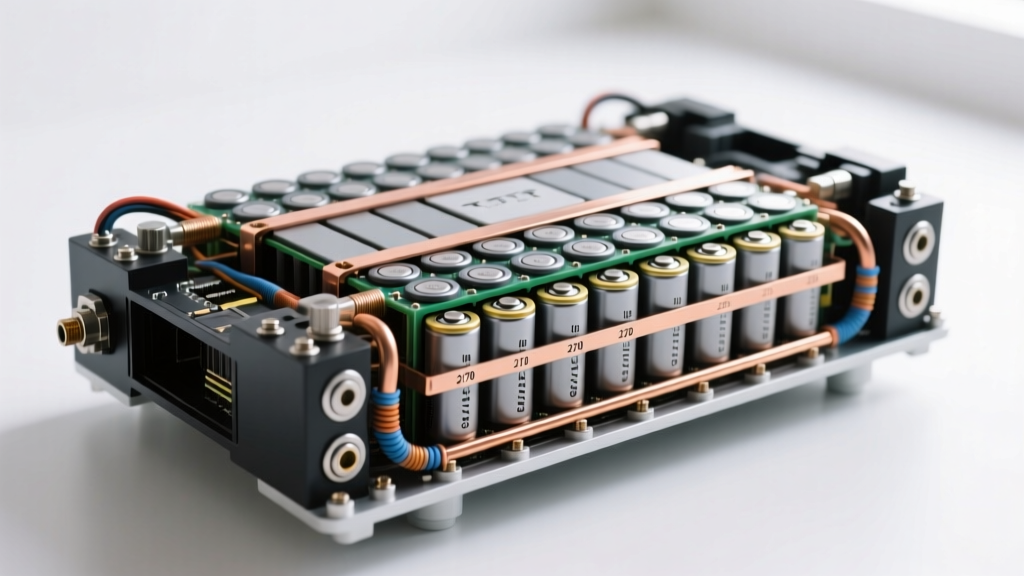
Every EV sold in the US today uses one of two dominant lithium-ion cathode chemistries: NMC/NCA (nickel manganese cobalt / nickel cobalt aluminum) or LFP (lithium iron phosphate). The choice between them affects your range, charging habits, cold-weather performance, and long-term degradation.
| Attribute | LFP (Lithium Iron Phosphate) | NMC / NCA (Nickel-Based) |
|---|---|---|
| Energy Density | ~160-180 Wh/kg (cell level) | ~220-260 Wh/kg (cell level) |
| Typical Range per Pack Size | Lower range for same kWh; heavier pack needed for 300+ mi | Higher range per kg; common in 300-400 mi vehicles |
| Cycle Life | 3,000-5,000+ cycles before 80% capacity | 1,500-2,500 cycles before 80% capacity |
| Recommended SoC Range | Can charge to 100% daily; no upper-limit stress | Best kept 20-80% daily; 100% for trips only |
| Cold-Weather Performance | More range loss in freezing temps (~30-40% reduction) | Better cold performance (~20-30% reduction with heat pump) |
| Fast-Charging Tolerance | Handles frequent DCFC well; slower degradation | Frequent DCFC accelerates wear; preconditioning critical |
| Cost per kWh | ~$85-100/kWh (2026 pack-level estimates) | ~$110-130/kWh (2026 pack-level estimates) |
| Key Vehicle Examples | Tesla Model 3 RWD, Model Y RWD, Ford Mustang Mach-E Select (LFP option) | Hyundai Ioniq 5, BMW i4, Rivian R1T, most long-range trims |
The bottom line: If you charge at home nightly, drive under 50 miles daily, and live in a mild climate, LFP is arguably the superior choice — it lasts longer, costs less, and you can charge to 100% without guilt. If you need maximum range, tow frequently, or regularly face sub-freezing winters, NMC's higher energy density and better cold-weather output make it the better fit.
How Long Do EV Batteries Actually Last?
The short answer: longer than most buyers expect. Real-world fleet data from sources like fueleconomy.gov and long-term ownership studies show that modern liquid-cooled EV batteries lose roughly 1-2% of total capacity per year under normal use. Here's what the degradation curve actually looks like:
- Year 1: ~2-3% loss (initial formation drop, then stabilizes)
- Year 3 / 45,000 miles: ~5-7% total loss
- Year 5 / 75,000 miles: ~8-10% total loss
- Year 8 / 120,000 miles: ~10-15% total loss
- Year 10 / 150,000 miles: ~12-18% total loss (varies heavily by chemistry and use)
Sources: Recurrent Auto fleet data (2025 report), Geotab fleet study, Tesla Impact Report. Figures represent averages — individual results vary by charging habits, climate, and thermal management quality.
An EV with an EPA-rated 300-mile range that loses 12% over a decade will still deliver roughly 264 miles per charge. For the vast majority of owners, the battery will outlast the vehicle's useful economic life. The fear of a sudden "dead battery" at 80,000 miles is not supported by data from any major manufacturer's current fleet.
LFP chemistries tend to degrade more slowly than NMC, often retaining 90%+ capacity at 100,000 miles. Tesla's LFP-equipped Model 3 RWD vehicles have shown particularly strong retention in fleet data, with many units above 95% State of Health (SoH) at 50,000 miles.
Battery Warranty Terms: What's Actually Covered
Federal law mandates a minimum 8-year / 100,000-mile battery warranty for EVs sold in the US, and most manufacturers meet or exceed this. Here's how the major players structure their coverage:
| Manufacturer | Warranty Period | Mileage Limit | Capacity Retention Threshold |
|---|---|---|---|
| Tesla (Model 3/Y LFP) | 8 years | 120,000 miles | 70% minimum SoH |
| Tesla (Model 3/Y Long Range) | 8 years | 120,000 miles | 70% minimum SoH |
| Hyundai / Kia | 10 years | 100,000 miles | 70% minimum SoH |
| Ford (Mustang Mach-E, F-150 Lightning) | 8 years | 100,000 miles | 70% minimum SoH |
| BMW (i4, iX) | 8 years | 100,000 miles | 70% minimum SoH |
| Rivian | 8 years | 175,000 miles (R1T/R1S) | 70% minimum SoH |
| GM (Ultium-based: Equinox EV, Blazer EV) | 8 years | 100,000 miles | 70% minimum SoH |
Critical detail: The warranty triggers only if your battery falls below the stated threshold (typically 70% State of Health) within the time and mileage window. A battery at 72% SoH at year 8 is not a warranty claim — it's functioning within spec. In practice, very few EVs from major manufacturers have triggered battery warranty replacements under normal use conditions.
The warranty covers defects and abnormal degradation. It does not cover damage from accidents, flooding, or aftermarket modifications to the high-voltage system. Always read your specific owner's manual warranty section for exclusions.
EV Battery Replacement Costs: The Real Numbers
If your battery does need replacement — typically outside the warranty period at 12-15+ years of age, or due to physical damage — here's what the market looks like in 2026:
| Vehicle Class | Pack Size | Estimated Replacement Cost (Parts + Labor) |
|---|---|---|
| Compact (e.g., Chevrolet Bolt EV/EUV) | 65 kWh | $10,000 - $14,000 |
| Midsize sedan (e.g., Tesla Model 3, Hyundai Ioniq 6) | 75-82 kWh | $12,000 - $18,000 |
| Midsize SUV (e.g., Tesla Model Y, Ford Mach-E) | 75-91 kWh | $13,000 - $20,000 |
| Full-size truck/SUV (e.g., F-150 Lightning, Rivian R1T) | 100-135 kWh | $18,000 - $30,000 |
| Luxury (e.g., BMW iX, Mercedes EQS) | 100-108 kWh | $20,000 - $35,000 |
These costs have been declining steadily — roughly 8-12% per year as cell manufacturing scales and chemistries simplify. For context, a comparable engine and transmission replacement on an ICE vehicle can run $5,000-$10,000, but those failures are statistically more common than EV battery failures within the first 15 years.
Most EV owners will never face an out-of-warranty battery replacement. The vehicle is typically retired, traded in, or sold before the pack drops below usable capacity. This is a critical piece of context often missing from replacement-cost fear narratives.
What Actually Degrades Your EV Battery (And What Doesn't)
Not all miles and charges are equal. Based on fleet data and electrochemistry fundamentals, here are the factors that materially accelerate or slow battery degradation:
- Avoid sustained 100% SoC (NMC only): Store and charge between 20-80% for daily use. Charge to 100% only when departing for a road trip. LFP owners can charge to 100% regularly — the chemistry tolerates it.
- Minimize DC fast-charging frequency: Occasional DCFC (road trips) is fine. Daily DCFC at 150+ kW accelerates wear on NMC cells. Home Level 2 at 7-11 kW is the gentlest charging method.
- Precondition before fast charging: Use your car's built-in preconditioning (navigate to a charger in the Tesla/Ford/Hyundai nav system) to warm the pack. Charging a cold battery at high kW causes lithium plating — permanent capacity loss.
- Extreme heat is worse than extreme cold: Sustained ambient temperatures above 95°F accelerate chemical degradation. Park in shade or a garage when possible. Cold reduces range temporarily but causes less permanent damage.
- Don't store at 0% or 100% for extended periods: If leaving your EV for 2+ weeks, set the charge limit to 50-60%. Both extremes under storage stress the cells.
- Use regenerative braking normally: Moderate regen does not harm the battery. The BMS (battery management system) manages charge acceptance rates automatically.
The single biggest degradation accelerator for NMC owners is the combination of frequent DC fast-charging and high ambient temperatures. Fleet data from hot-climate states (Arizona, Texas) shows 2-4% additional capacity loss at 100,000 miles compared to temperate-climate fleets, particularly for vehicles that DCFC more than 3 times per week.
How to Check Your Battery's State of Health
State of Health (SoH) is the percentage of your battery's original capacity that remains usable. A new EV has 100% SoH; a pack at 88% SoH holds 88% of its original kWh.
Manufacturer apps and in-car displays:
- Tesla: The mobile app does not display a direct SoH percentage, but you can estimate it by charging to 100% and comparing the displayed range to the original EPA rating. Third-party tools like Tessie or TeslaFi calculate SoH from charge logs.
- Hyundai/Kia: The EV app and dealer diagnostic tools can pull SoH data. Some models display battery health in the service menu.
- Ford: The FordPass app provides battery health status. Dealers can run a full SoH diagnostic report.
- BMW: The My BMW app includes a battery health certificate feature, and dealers can provide detailed SoH readouts.
- General: Most OBD-II dongles paired with apps like Car Scanner or ABRP can read SoH data from the BMS on supported vehicles.
If you're buying a used EV, always request a battery health report from the dealer or use a service like Recurrent's battery report (available for many models) before purchase. A 3-year-old EV with 40,000 miles should show 93-96% SoH under normal conditions. Anything below 90% at that age warrants investigation.
Solid-State, Silicon Anodes, and What Comes Next
Beyond Factorial's solid-state production efforts, several battery technologies are in development that could reshape EV ownership in the 2028-2032 timeframe:
- Solid-state batteries (Factorial, Toyota, QuantumScape, Samsung SDI): Replace the liquid electrolyte with a solid material, enabling lithium-metal anodes. Promises 350-500 Wh/kg, faster charging (10-80% in under 10 minutes claimed), and improved safety (no flammable electrolyte). Volume production for consumer vehicles remains targeted for 2028-2030.
- Silicon-dominant anodes (Sila Nanotechnologies, Group14): Replace graphite anodes with silicon to boost energy density 20-40% without changing cathode chemistry. Already in limited production for consumer electronics; automotive cells expected 2026-2028.
- Sodium-ion batteries (CATL, BYD): Lower-cost alternative to lithium for budget EVs and stationary storage. Lower energy density (~140-160 Wh/kg) but uses abundant materials. Already in production in China for city cars; US availability uncertain.
- LFP improvements: CATL's second-generation LFP cells are closing the energy-density gap with NMC, reaching ~190 Wh/kg. This could make LFP viable for 350+ mile vehicles by 2027-2028.
For buyers shopping today, these technologies are relevant only as context. The EVs on sale now use mature, well-understood chemistries with extensive real-world longevity data. Waiting for solid-state means waiting at minimum 3-4 years for initial production vehicles, likely at premium price points, with unproven long-term degradation profiles.
Frequently Asked Questions
How long do EV batteries last in years and miles?
Modern liquid-cooled EV batteries typically retain 85-90% of their original capacity at 100,000 miles (roughly 8-10 years of average use). Many packs reach 200,000+ miles before dropping below the 70% warranty threshold. LFP chemistries tend to last longer than NMC, often exceeding 90% SoH at 100,000 miles. The battery will almost certainly outlast the car's economic life.
How much does it cost to replace an EV battery?
Out-of-warranty replacement costs range from $10,000 for compact EVs to $30,000+ for full-size trucks and luxury vehicles, including parts and labor. However, most EVs never need a battery replacement — the pack typically retains sufficient capacity for the vehicle's entire useful life. Costs continue to decline 8-12% annually as manufacturing scales.
What does the EV battery warranty actually cover?
Federal law requires a minimum 8-year / 100,000-mile warranty covering defects and abnormal degradation below a stated capacity threshold (usually 70% SoH). Hyundai/Kia extend this to 10 years. The warranty does not cover accident damage, flooding, or aftermarket modifications. In practice, very few warranty claims are filed — most packs stay well above the threshold.
LFP vs. NMC — which battery chemistry should I choose?
Choose LFP if you charge at home, drive under 50 miles daily, want maximum cycle life, and live in a mild climate. Choose NMC if you need the longest possible range, tow frequently, drive in extreme cold, or take regular road trips. LFP is cheaper and longer-lasting; NMC is denser and better in cold weather. Both are excellent choices for their intended use cases.
When will Factorial's solid-state batteries be available in a car I can buy?
Factorial has delivered B-sample cells to partners including Mercedes-Benz, Stellantis, and Hyundai, with pilot production underway. However, no consumer vehicle with Factorial cells is currently on sale. Volume production for automotive integration is estimated for 2028-2030 based on company statements and partner timelines. Treat all pre-production claims as preliminary until vehicles are EPA-certified.
Does fast charging damage my EV battery?
Occasional DC fast-charging (road trips, a few times per month) has minimal impact on battery health. However, daily DCFC at high power (150+ kW) does accelerate degradation, particularly for NMC cells and in hot climates. The biggest risk is fast-charging a cold battery without preconditioning, which can cause lithium plating. For daily charging, a home Level 2 charger at 7-11 kW is the gentlest option.
Sources consulted: fueleconomy.gov (EPA range and efficiency data), IRS §30D clean vehicle credit guidance, manufacturer battery warranty documentation, Recurrent Auto fleet degradation reports, Geotab EV battery health studies.