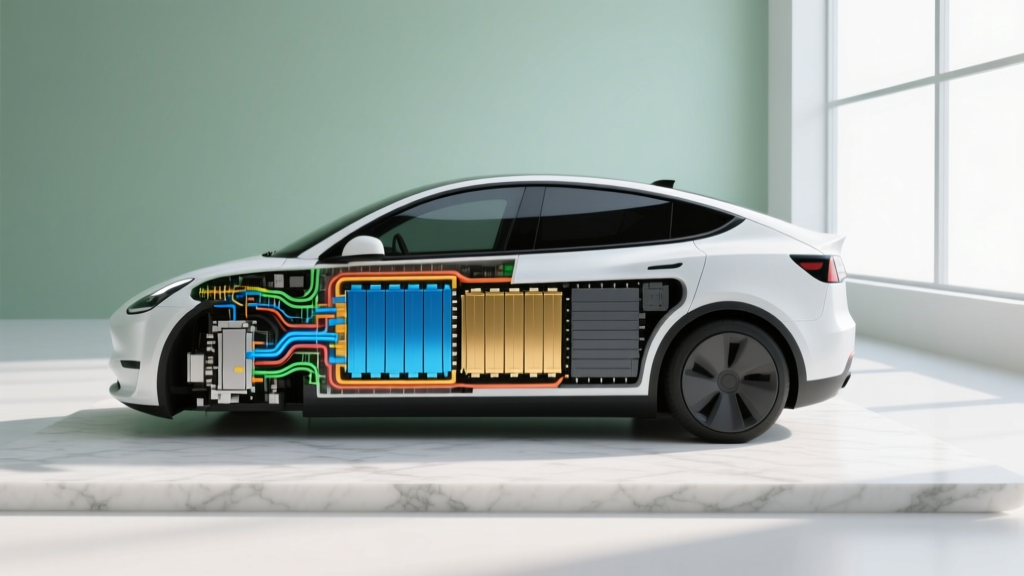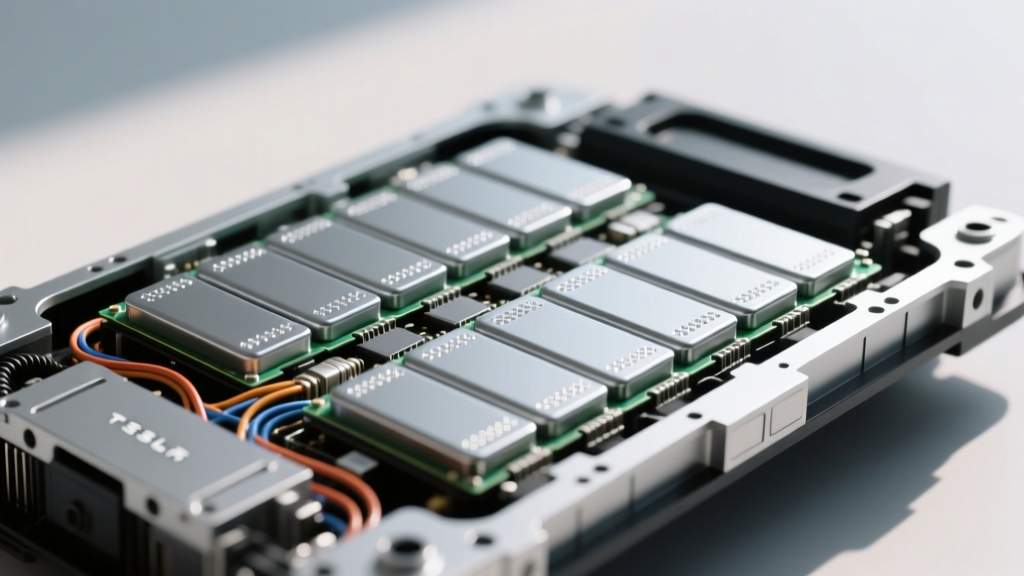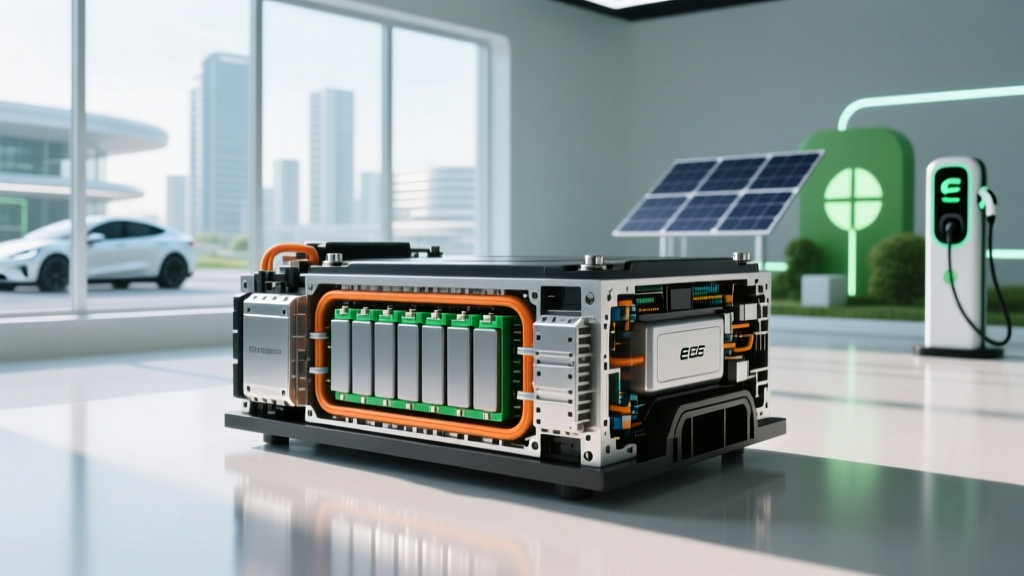
The recent Factorial POSCO battery partnership signals a shift in how next-generation EV batteries will be sourced, manufactured, and ultimately delivered to consumers. Factorial Energy — the Massachusetts-based solid-state battery developer backed by Mercedes-Benz, Stellantis, and Hyundai — has deepened its supply-chain ties with POSCO Holdings, the South Korean metals and materials conglomerate. For EV shoppers and current owners, this collaboration matters not because it changes what you can buy today, but because it clarifies the trajectory of battery cost, energy density, and longevity over the next five to eight years.
Before we look at what's coming, let's ground this in what you need to know right now: how current lithium-ion batteries actually perform, degrade, and cost to replace — with real numbers, not marketing promises.
LFP vs NMC/NCA: The Chemistry Decision You Make When You Buy
Every EV sold in 2026 uses one of two dominant cathode chemistries: LFP (lithium iron phosphate) or NMC/NCA (nickel manganese cobalt / nickel cobalt aluminum). The chemistry determines your range, charging behavior, longevity, and even how you should manage daily state of charge. Here's how they compare on the metrics that matter:
| Attribute | LFP (Lithium Iron Phosphate) | NMC / NCA (Nickel-based) |
|---|---|---|
| Energy Density | ~160–180 Wh/kg (cell level) | ~220–300 Wh/kg (cell level) |
| Typical Cycle Life | 3,000–6,000+ cycles | 1,000–2,500 cycles |
| Cold-Weather Performance | Weaker below 32°F; ~15–25% range loss | Better low-temp conductivity; ~10–20% range loss |
| Cost per kWh | ~$85–100/kWh (2026 cell pricing) | ~$110–140/kWh (2026 cell pricing) |
| Daily Charging Recommendation | 100% SoC fine daily | 80% SoC for daily; 100% only for trips |
| Thermal Stability | Superior — higher runaway threshold | Good but requires more active cooling |
| Common in (2026 U.S.) | Tesla Model 3 RWD, Ford Mustang Mach-E Select (some trims), BYD models | Hyundai Ioniq 5, Kia EV6, Tesla Model Y LR/Perf, Rivian, GM Ultium vehicles |
Which is better? Neither — it depends on your use case. If you commute daily, charge at home, and want maximum cycle life with minimal babysitting, LFP is the practical choice. If you need maximum range per charge, tow, or live in a cold climate where every mile counts in January, NMC/NCA delivers the energy density to make that work. The Factorial POSCO battery partnership is largely focused on advancing NMC-compatible solid-state technology, which aims to close this gap by offering NMC-level energy density with LFP-level safety.
How Long Do EV Batteries Actually Last?
The short answer: longer than most buyers expect, and typically longer than the rest of the car remains economically viable. Data from fueleconomy.gov, manufacturer warranty filings, and fleet studies consistently show modern EV batteries lasting 200,000–300,000+ miles before reaching the 70% capacity retention threshold that defines "end of life" in warranty terms.
Here's what degradation actually looks like in practice, based on aggregated fleet and owner-reported data for 2020–2025 model-year vehicles:
Typical EV Battery Degradation Curve (NMC, liquid-cooled)
- Year 1 / 15,000 mi: ~2–4% capacity loss (initial formation loss)
- Year 3 / 45,000 mi: ~5–8% total loss
- Year 5 / 75,000 mi: ~8–12% total loss
- Year 8 / 120,000 mi: ~12–18% total loss (warranty threshold territory)
- Year 10 / 150,000 mi: ~15–22% total loss (varies heavily by use pattern)
Source: Geotab fleet battery health study (2024), Recurrent Auto battery data report, manufacturer warranty claims data.
LFP batteries typically show slower degradation — often 1–2% less total loss at each interval — but start from a lower energy density, so the real-world range gap narrows over time rather than widening.
What Does the Battery Warranty Actually Cover?
Federal law mandates a minimum 8-year / 100,000-mile warranty on EV battery packs for emissions-related compliance, but most manufacturers exceed this baseline. The critical number is the capacity retention threshold — the point at which the manufacturer considers the battery "failed" and will replace or repair it.
| Manufacturer | Warranty Period | Mileage Limit | Capacity Threshold |
|---|---|---|---|
| Tesla (Model 3/Y NMC) | 8 years | 120,000 mi (LR/AWD) | 70% |
| Tesla (Model 3 LFP) | 8 years | 100,000 mi | 70% |
| Hyundai / Kia | 10 years | 100,000 mi | 70% |
| GM (Ultium platform) | 8 years | 100,000 mi | 70% |
| Ford (Mach-E / F-150 Lightning) | 8 years | 100,000 mi | 70% |
| Rivian | 8 years | 175,000 mi (R1T/R1S) | 70% |
| BMW | 8 years | 100,000 mi | 70% |
Key nuance: the warranty covers defects and excessive degradation, not gradual capacity loss above the threshold. If your 8-year-old Ioniq 5 shows 72% SoH (State of Health), you're technically within spec and won't get a replacement. Most owners never hit the threshold — but the warranty provides a floor that protects against outlier early failures.
How Much Does an EV Battery Cost to Replace?
This is the single most fear-driven question in EV ownership, and it deserves an honest, number-backed answer. Yes, battery replacement is expensive. No, most owners will never need one. Here's the current cost landscape for 2026:
| Vehicle / Battery Size | Battery kWh | Estimated Replacement Cost | Typical Replacement Timeline |
|---|---|---|---|
| Tesla Model 3 Standard Range (LFP) | ~60 kWh | $8,000–$12,000 | Rarely needed; 250k+ mi expected |
| Hyundai Ioniq 5 / Kia EV6 (NMC) | ~77.4 kWh | $12,000–$16,000 | Rarely needed; 200k+ mi expected |
| Ford F-150 Lightning Extended Range | ~131 kWh | $18,000–$25,000 | Rarely needed; 200k+ mi expected |
| Tesla Model S / X (NMC) | ~100 kWh | $14,000–$20,000 | Some early units at 150k–200k mi |
| Chevrolet Bolt EV/EUV (discontinued) | ~65 kWh | $9,000–$14,000 | Recall replacements completed; 200k+ mi expected |
| Rivian R1T / R1S (Large Pack) | ~128 kWh | $18,000–$24,000 | Too new for data; 200k+ mi projected |
Context that matters: these are out-of-warranty costs. Within the 8–10 year warranty window, a defective or excessively degraded pack is replaced at no cost to the owner. And refurbished/remanufactured packs are increasingly available at 30–50% below new-pack pricing for older models. The vast majority of EV batteries outlive the economic life of the vehicle — you're more likely to total the car in a collision or retire it for mechanical reasons than to need a battery swap.
Factors That Accelerate (or Preserve) Battery Life
Battery degradation isn't random — it's driven by specific, controllable behaviors. Here's what actually moves the needle on long-term State of Health:
Battery Longevity Checklist
- Avoid sustained 100% SoC (NMC/NCA): Daily charging to 80% reduces calendar aging significantly. Charge to 100% only when you'll drive immediately.
- LFP exception: LFP batteries tolerate (and benefit from) regular 100% charges — it helps the BMS recalibrate cell balancing.
- Minimize DC fast charging frequency: Occasional road-trip fast charging is fine. Daily reliance on 150+ kW DCFC adds thermal stress and accelerates degradation by ~1–3% over 5 years vs. Level 2-only charging.
- Precondition before fast charging: Most EVs do this automatically when a charger is navigated to. A cold battery forced to accept 150 kW suffers more stress than a preconditioned one.
- Avoid extreme SoC storage: Don't leave the car at 100% or below 10% for weeks. For long storage, target 50–60% SoC.
- Extreme heat is worse than extreme cold: Sustained ambient temps above 95°F accelerate chemical degradation more than winter cold. Garage parking in hot climates meaningfully extends battery life.
- Use scheduled charging: Set your car to finish charging right before you leave — minimizes time spent at high SoC.
How to Check and Monitor Battery Health (SoH)
State of Health (SoH) is the percentage of original battery capacity remaining. A new EV starts at 100% SoH; at 70%, it's considered at end-of-first-life for warranty purposes. Here's how you can actually check it:
Built-in vehicle displays: Some manufacturers (notably Tesla, Hyundai, and BMW) provide SoH or degradation indicators in the vehicle settings menu, though the granularity varies. Tesla's "Battery Health" screen in service mode shows estimated capacity.
Third-party apps and OBD-II tools: Apps like Recurrent, Tessie (Tesla-specific), and OBD-II readers with EV-compatible firmware (like OBDeleven for some platforms) can read battery management system data and estimate SoH with reasonable accuracy.
Dealer diagnostic reports: Request a battery health report during routine service. Most dealerships can pull a detailed SoH readout, cell voltage variance, and cooling system performance log. This is especially useful pre-purchase on a used EV.
Manual tracking method: Charge to 100% (on an LFP or periodically on NMC), note the displayed range, and compare to original EPA sticker range adjusted for the car's age. A 2022 Ioniq 5 that originally displayed 303 miles at 100% but now shows 268 miles has roughly 88% SoH — right in line with expected degradation at ~45,000 miles.
The Factorial POSCO Battery Partnership: Solid-State Context
Factorial Energy has been developing solid-state batteries using its proprietary FEST (Factorial Electrolyte System Technology) platform, which uses a dry cathode and solid electrolyte to achieve higher energy density and improved safety compared to conventional liquid-electrolyte cells. The partnership with POSCO Holdings — one of the world's largest producers of cathode precursor materials and lithium compounds — secures Factorial's upstream supply chain for the critical minerals needed to scale production.
What this means concretely:
- Factorial's Solstice battery (announced, not yet in production vehicles) targets 350+ Wh/kg at the cell level — roughly 40–60% more energy density than current NMC cells.
- POSCO's role includes supplying lithium metal anode materials and cathode precursors optimized for solid-state manufacturing.
- Timeline: Factorial has indicated B-sample delivery to OEM partners (Mercedes-Benz, Hyundai, Stellantis) with potential production vehicle integration in the 2028–2030 timeframe. This is forward-looking and not available in any 2026 model-year vehicle.
For current buyers, this partnership matters as a signal: the industry is investing heavily in solving the energy-density and safety limitations of today's lithium-ion cells. But solid-state batteries are not here yet, and they won't be in production vehicles for at least 2–4 more years. Buy based on today's chemistry, not tomorrow's press releases.
Emerging Battery Tech: What's Real and What's Not (Yet)
Beyond the Factorial POSCO battery partnership, several next-generation technologies are in various stages of development. Here's a reality check on timelines:
Silicon-dominant anodes: Companies like Sila Nanotechnologies and Group14 are already shipping silicon-enhanced anode materials that boost energy density by 10–20% over graphite. The Mercedes G-Class 580e (2025+) uses a Sila-supplied anode. This tech is real and in production now, though at limited scale.
Semi-solid-state batteries: NIO's 150 kWh semi-solid pack (available in China) and WeLion's cells represent an interim step — using a gel or hybrid electrolyte rather than a true solid. These offer modest density improvements with easier manufacturing, but aren't the full solid-state leap.
Sodium-ion batteries: CATL and BYD are producing sodium-ion cells for lower-cost, lower-range applications. Energy density is ~120–150 Wh/kg — suitable for city EVs and micro-vehicles, but not long-range U.S. highway driving. Expect these in budget segments by 2027–2028.
True solid-state (Toyota, Samsung SDI, QuantumScape, Factorial): Still targeting 2027–2030 for initial production vehicle integration. Promises 400+ Wh/kg, faster charging, and superior safety — but manufacturing scale and cost remain unsolved challenges. Treat any claim of "solid-state available now" with extreme skepticism.
Frequently Asked Questions
How long do EV batteries last in years and miles?
Modern liquid-cooled EV batteries (2020+ models) typically last 200,000–300,000 miles or 15–20 years before reaching 70% capacity retention. Most batteries outlive the economic life of the vehicle. Early Nissan Leafs (passive-cooled, 2011–2017) were outliers with faster degradation; modern thermal management has largely solved this.
How much does it cost to replace an EV battery in 2026?
Out-of-warranty replacement costs range from ~$8,000 for a 60 kWh pack (Tesla Model 3 LFP) to ~$25,000 for a 131 kWh pack (F-150 Lightning Extended Range). Most owners never pay this — the battery is covered under the 8–10 year / 100,000–175,000 mile warranty for defects and excessive degradation. Refurbished packs are increasingly available at lower cost for older models.
What does the EV battery warranty actually cover?
Battery warranties cover defects in materials/workmanship and excessive capacity loss — typically defined as falling below 70% State of Health within the warranty period (usually 8 years / 100,000 miles, though Hyundai/Kia offer 10 years and Rivian offers 175,000 miles). Gradual degradation above the threshold is normal and not covered. Check your specific owner's manual for exact terms.
How do I check my EV battery's State of Health?
Use the vehicle's built-in battery health screen (if available), third-party apps like Recurrent or Tessie, OBD-II diagnostic tools with EV firmware, or request a dealer diagnostic report. You can also manually track by comparing your displayed range at 100% SoC to the original EPA range — the ratio approximates your SoH.
LFP vs NMC — which battery chemistry should I choose?
Choose LFP if you want maximum cycle life (3,000–6,000+ cycles), lower cost, can charge to 100% daily without worry, and don't need maximum range per charge. Choose NMC/NCA if you need higher energy density (more range in a smaller pack), better cold-weather performance, or tow frequently. Neither is universally "better" — the right choice depends on your driving pattern and climate.
Does the Factorial POSCO battery partnership affect cars I can buy today?
Not directly. Factorial's solid-state technology is in the B-sample and validation phase, with production vehicle integration targeted for 2028–2030. Today's EVs use conventional lithium-ion cells with liquid electrolytes. The partnership signals long-term industry direction toward higher-density, safer batteries, but current purchasing decisions should be based on today's proven chemistry and warranty terms.
Will solid-state batteries make my current EV obsolete?
Unlikely in the near term. Solid-state batteries will initially appear in premium vehicles at high cost, and the existing charging infrastructure, service networks, and software ecosystems will remain compatible with current EVs. Depreciation from new battery tech is gradual — similar to how phones with better chips didn't instantly zero-out the value of last year's model. Your current EV will remain functional, chargeable, and practical for years after solid-state vehicles debut.