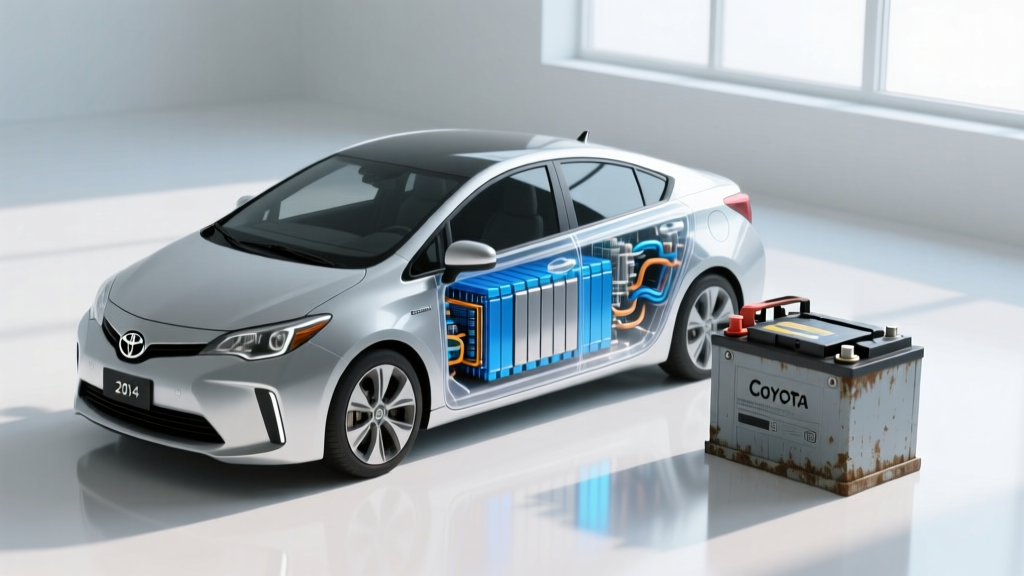
The single biggest fear for prospective EV buyers isn't range or charging speed — it's the battery. Specifically, the worry that one day the high-voltage traction pack will "expire," leaving you with a $15,000+ repair bill on a depreciated car. The term "expired EV batteries" gets tossed around forums and comment sections, but it rarely matches reality. Modern lithium-ion and lithium iron phosphate packs are engineered to outlast the vehicles they power, and the data increasingly proves it.
This guide dissects what actually happens to EV batteries over time, what warranties cover, what replacement really costs in 2026, and the chemistry choices that determine how your pack ages. We'll separate data from dread.
How Long Do EV Batteries Actually Last?
Let's start with the headline number: the vast majority of EV batteries sold today are designed to retain at least 70–80% of their original capacity after 150,000–200,000 miles or 8–10 years. "Expired" is the wrong framing — batteries don't die suddenly like a 12V lead-acid auxiliary battery. They gradually lose capacity, the same way a smartphone battery holds less charge after two years.
Real-world fleet data paints a reassuring picture. Tesla's 2025 Impact Report showed its Model 3 and Model Y packs retained approximately 85% of original capacity at 150,000 miles. Hyundai and Kia have reported similar degradation curves on their E-GMP platform vehicles (Ioniq 5, Ioniq 6, EV6), with most owners seeing 90%+ State of Health (SoH) after three years and 40,000 miles. A Geotab fleet study tracking over 10,000 EVs found an average annual capacity loss of just 1.8% across all chemistries — meaning a 15-year usable lifespan is realistic for most packs.
LFP vs NMC/NCA: Chemistry Determines Longevity
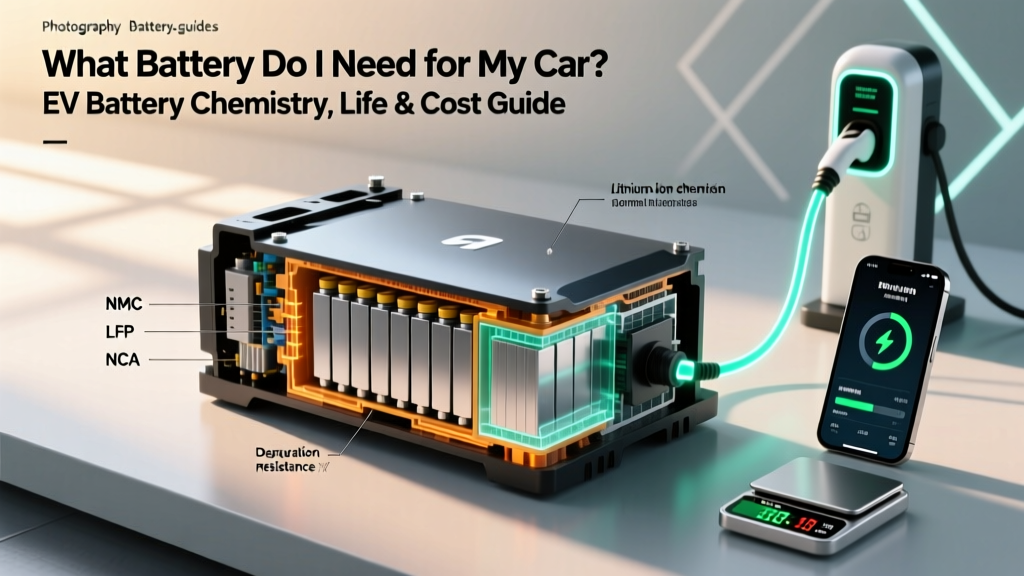
Not all EV batteries are created equal. The two dominant chemistries in 2026 — Lithium Iron Phosphate (LFP) and Nickel Manganese Cobalt / Nickel Cobalt Aluminum (NMC/NCA) — age differently and suit different owners.
| Attribute | LFP (Lithium Iron Phosphate) | NMC / NCA |
|---|---|---|
| Energy Density | Lower (~160 Wh/kg cell-level) | Higher (~250–300 Wh/kg cell-level) |
| Cycle Life | 3,000–5,000+ full cycles | 1,000–2,000 full cycles |
| Calendar Life | Excellent — slower degradation at rest | Good — slightly faster calendar aging |
| Cold-Weather Performance | Weaker — more range loss below 32°F | Better low-temp discharge capability |
| Cost | Lower — no cobalt or nickel | Higher — commodity-sensitive pricing |
| Charging to 100% | Recommended periodically for BMS calibration | Generally limited to 80% daily for longevity |
| Typical Use | Standard-range models (Tesla Model 3 RWD, base Chevy Equinox EV) | Long-range / performance models (Model 3 LR, Ioniq 5 LR, F-150 Lightning Extended) |
Which is better? It depends on your ownership plan. If you plan to keep your EV for 10+ years and 150,000+ miles, LFP's superior cycle life is a significant advantage — you can charge to 100% daily without accelerating degradation. If you need maximum range in a smaller, lighter pack and live in a cold climate, NMC/NCA delivers better energy density and winter performance. Neither chemistry is "bad" — they're engineering trade-offs.
Degradation Data: What the Numbers Show
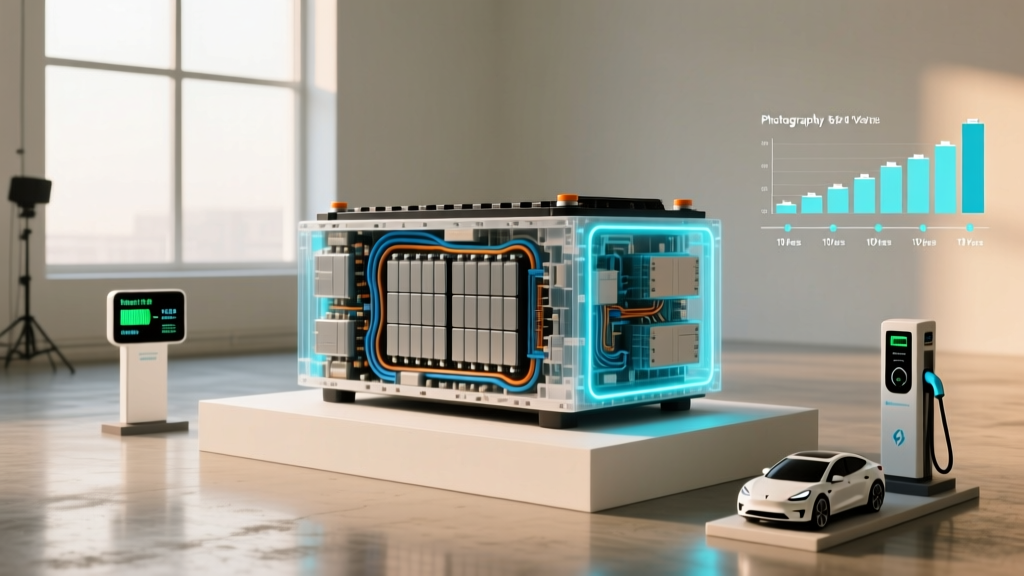
Degradation is not linear. Most packs experience a steeper drop in the first 1–2 years (roughly 2–5% loss) as the solid electrolyte interphase (SEI) layer stabilizes, then settle into a slow, nearly linear decline of 1–2% per year. Here's what that looks like across popular 2025–2026 models based on fleet telemetry and owner reports:
| Model (Year) | Battery (kWh usable) | Chemistry | SoH at 50k mi | SoH at 100k mi | SoH at 150k mi (projected) |
|---|---|---|---|---|---|
| Tesla Model 3 RWD (2025) | 57.5 kWh | LFP (CATL) | ~96% | ~93% | ~88–90% |
| Tesla Model Y Long Range (2025) | 75 kWh | NMC (Panasonic/LG) | ~95% | ~90% | ~84–87% |
| Hyundai Ioniq 5 Long Range (2025) | 77.4 kWh | NMC (SK On) | ~96% | ~91% | ~85–88% |
| Chevrolet Equinox EV 3RS (2026) | 85 kWh | NMC (Ultium/LG) | ~95% | ~90% | ~84–87% |
| Ford F-150 Lightning Extended (2025) | 131 kWh | NMC (SK On) | ~95% | ~89% | ~82–85% |
Notice that even the "worst" projection above — the F-150 Lightning at ~82% after 150,000 miles — still leaves roughly 260 miles of range from its original 320-mile EPA estimate. That's more usable range than most gas cars get on a tank.
What the Battery Warranty Actually Covers
Federal law mandates that EV battery warranties last a minimum of 8 years / 100,000 miles (10 years / 150,000 miles in CARB states like California, New York, and Massachusetts). Most manufacturers exceed these minimums. Here's how the major warranties stack up in 2026:
| Manufacturer | Warranty Period | Capacity Threshold | What Triggers a Claim |
|---|---|---|---|
| Tesla | 8 yr / 120,000 mi (Model 3/Y RWD); 8 yr / 120,000 mi (LR/Perf) | 70% retention | SoH drops below 70% within period |
| Hyundai / Kia | 10 yr / 100,000 mi | 70% retention | SoH below 70% confirmed by dealer diagnostic |
| GM (Chevrolet/Cadillac) | 8 yr / 100,000 mi | 70% retention (60% for Bolt EV/EUV legacy) | Capacity below threshold via OnStar/dealer scan |
| Ford | 8 yr / 100,000 mi | 70% retention | SoH below 70% at certified dealer |
| Rivian | 8 yr / 175,000 mi | 70% retention | Confirmed via telemetry or service center |
| BMW | 8 yr / 100,000 mi | 70% retention | Dealer high-voltage diagnostic |
Critical nuance: Warranty replacement does not mean you get a brand-new battery. Most manufacturers replace with a refurbished or remanufactured pack that meets the 70% threshold — not 100%. Also, warranties typically exclude damage from accidents, flooding, improper modifications, or unauthorized repair attempts. Always check the specific terms in your owner's manual. For federal warranty enforcement context, see the EPA's vehicle emissions and durability standards.
EV Battery Replacement Costs: The Real Numbers
When a battery falls outside warranty coverage and needs replacement, costs vary dramatically by pack size, chemistry, and vehicle. Here's the 2026 landscape for out-of-warranty replacements:
| Model | Battery Size | Chemistry | Battery Cost (parts) | Labor + Total Est. |
|---|---|---|---|---|
| Tesla Model 3 RWD | 57.5 kWh | LFP | $8,000–$10,000 | $10,000–$13,000 |
| Tesla Model Y Long Range | 75 kWh | NMC | $12,000–$15,000 | $14,000–$18,000 |
| Hyundai Ioniq 5 LR | 77.4 kWh | NMC | $11,000–$14,000 | $13,000–$17,000 |
| Chevy Equinox EV | 85 kWh | NMC (Ultium) | $12,000–$16,000 | $15,000–$20,000 |
| Ford F-150 Lightning Ext. | 131 kWh | NMC | $18,000–$25,000 | $22,000–$30,000 |
| Rivian R1T (Large Pack) | 128 kWh | NMC | $17,000–$22,000 | $20,000–$27,000 |
Those numbers look alarming — until you contextualize them. A Consumer Reports analysis found that fewer than 5% of EVs require a full battery replacement during the warranty period, and the majority of replacements are covered. Out-of-warranty replacements are most common on vehicles at 200,000+ miles, at which point the car's resale value may not justify the repair. Many owners at that stage opt for a trade-in or a module-level repair (replacing only degraded modules for $3,000–$7,000 rather than the full pack).
Prices are also falling. Battery pack costs dropped below $120/kWh at the cell level in 2025 (per BloombergNEF), and that trajectory continues. A replacement pack in 2030 will cost significantly less than today's estimates.
Factors That Accelerate (or Slow) Battery Aging
Not all "expired EV batteries" got there the same way. How you charge, drive, and store your EV has a measurable impact on long-term health:
- Daily charging limit: Set to 80% for NMC/NCA; 100% is fine for LFP (and recommended weekly for BMS calibration).
- DC fast charging: Occasional use is fine. Exclusive reliance on DCFC (3+ times per week) can add ~2–3% extra degradation over 100k miles vs. Level 2 home charging.
- Avoid extreme SoC storage: Don't leave the car at 100% or below 10% for weeks. If storing, set to 50%.
- Precondition before fast charging: Use the car's nav-to-charger feature to warm the battery. Cold batteries charge slower and experience more lithium plating stress.
- Extreme heat is worse than cold: Sustained ambient temps above 95°F accelerate calendar aging. Garage parking helps significantly in hot climates.
- Regen braking settings: Standard regen is fine. Extreme one-pedal modes don't meaningfully impact battery health.
- Software updates: Keep the BMS firmware current — OEMs routinely refine charge algorithms to reduce stress.
The single most impactful habit? Avoiding prolonged storage at high state of charge in hot weather. A car sitting at 100% SoC in a 100°F driveway for a week undergoes more calendar degradation than a month of normal driving and charging.
How to Check Your Battery's State of Health
State of Health (SoH) is the percentage of original capacity your battery can still hold. A new pack is 100%; a pack that held 75 kWh when new but now holds 67.5 kWh is at 90% SoH. Here's how to check it:
- In-car displays: Tesla shows battery health in the service menu (or via the Tesla app on newer software). Hyundai/Kia provides SoH via the dealer diagnostic tool, accessible during service visits.
- OBD-II dongles + apps: Tools like OBDeleven, ABRP-linked OBD adapters, or the Leaf Spy app (for Nissan Leaf) can read SoH directly from the BMS.
- Dealer diagnostic: Any authorized service center can pull a high-voltage battery health report. Request this at every annual service.
- Third-party services: Companies like Recurrent Auto offer free battery health reports using connected-car data, comparing your pack against a fleet of identical vehicles.
- Manual calculation: Charge to 100%, note the displayed range, and compare to the original EPA figure (adjusted for the car's displayed efficiency). This is approximate but useful for trend-tracking.
Check SoH at least twice a year and before any long road trip. A sudden drop in SoH (more than 2–3% in a month) warrants a service visit — it could indicate a failing module rather than normal degradation.
What Comes After Lithium-Ion? Forward-Looking Tech
Current lithium-ion and LFP batteries will dominate through at least 2030, but several next-generation technologies are in advanced development:
- Solid-state batteries: Toyota, Samsung SDI, and QuantumScape are targeting limited production in 2027–2029. These promise 30–40% higher energy density, faster charging, and improved safety (no liquid electrolyte). Realistic mass-market availability: 2029–2031 at earliest. These are not available in any 2026 production vehicle.
- Silicon-dominant anodes: Companies like Sila Nanotechnologies and Group14 are replacing graphite anodes with silicon composites, boosting energy density 15–25%. Early versions are appearing in 2025–2026 models (Mercedes EQG uses a Sila anode). Expect broader adoption by 2028.
- Sodium-ion batteries: CATL has begun shipping sodium-ion packs in Chinese-market EVs. Lower energy density than LFP but cheaper and better in extreme cold. US-market availability is likely 2028+ and initially limited to budget/urban vehicles.
None of these technologies make today's EV batteries obsolete. They represent incremental improvements, not overnight revolutions. If you're buying an EV in 2026, current chemistries are mature, well-understood, and backed by robust warranties.
Frequently Asked Questions
Do EV batteries just "expire" and stop working?
No. EV traction batteries degrade gradually, losing 1–2% capacity per year on average. A battery at 70% SoH still functions — it just provides less range. Sudden, total failure is extremely rare and usually tied to manufacturing defects (covered under warranty) or physical damage.
Is it worth replacing an out-of-warranty EV battery?
It depends on the vehicle's value and your plans. A $15,000 battery replacement on a 7-year-old EV worth $18,000 rarely makes financial sense. However, module-level repairs ($3,000–$7,000) can extend the car's life economically. If the rest of the car is in great shape and you plan to keep driving it 5+ more years, replacement may be justified.
Does frequent DC fast charging destroy the battery?
"Destroy" is too strong, but exclusive reliance on DCFC does accelerate degradation slightly. Studies show 2–4% additional capacity loss over 100,000 miles compared to predominantly Level 2 charging. For most owners who fast-charge on road trips and use Level 2 at home, the impact is negligible.
Can I extend my EV battery warranty?
Some manufacturers offer extended warranty packages (Tesla and BMW both have options). Third-party extended warranties exist but read the fine print carefully — some exclude battery capacity degradation and only cover catastrophic failure. Check IRS guidelines on clean vehicle credits if you're considering a replacement, as battery replacement costs may interact with your tax situation.
What happens to old EV batteries?
Most "expired" EV batteries still hold 60–70% capacity — enough for second-life applications like grid energy storage (Tesla Megapack uses recycled modules), solar farm buffering, or backup power. Companies like Redwood Materials and Li-Cycle recover 95%+ of critical minerals (lithium, cobalt, nickel) for new battery production. Very few EV batteries end up in landfills.
Should I buy a used EV with an older battery?
Yes, but verify SoH before purchase. Request a dealer battery health report or use an OBD-II tool. A 5-year-old EV with 90% SoH is an excellent value. Avoid vehicles with SoH below 80% unless the price reflects an imminent replacement cost. Always check whether the original battery warranty is still active — it transfers to subsequent owners.