Why LFP Batteries Are Reshaping the EV Market
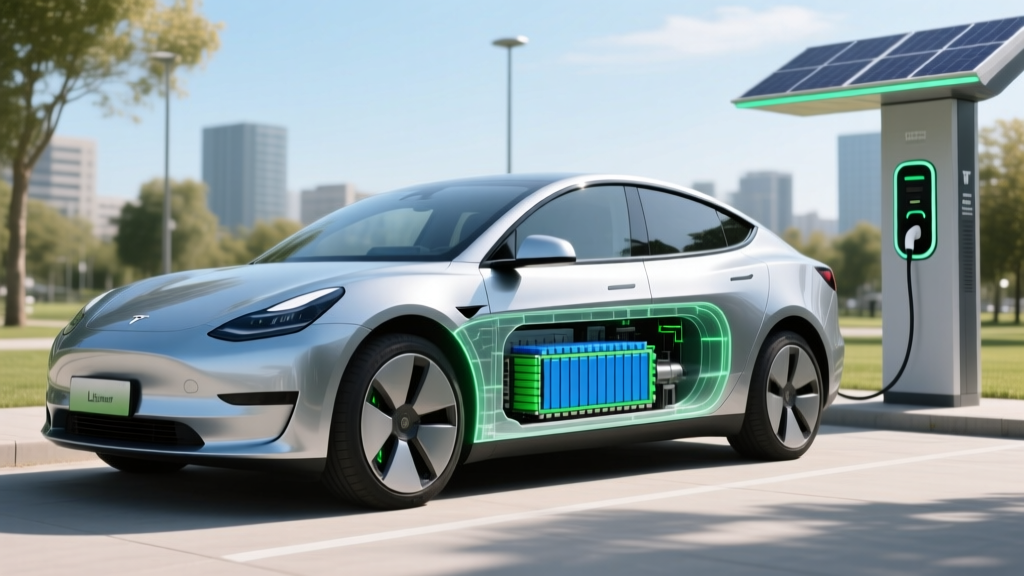
Lithium iron phosphate (LFP) chemistry has moved from a niche choice to a mainstream staple in the EV industry. As of 2026, electric vehicles with LFP batteries span affordable compacts, mid-range SUVs, and even some premium sedans. Tesla, BYD, Ford, Rivian, and several other automakers now offer LFP-equipped trims, drawn by lower raw-material costs, longer cycle life, and reduced reliance on cobalt and nickel.
But LFP isn't universally superior. It trades energy density and cold-weather performance for durability and cost savings. Understanding that trade-off is essential before you choose your next EV's battery chemistry.
LFP vs NMC/NCA: The Chemistry Trade-Offs Explained
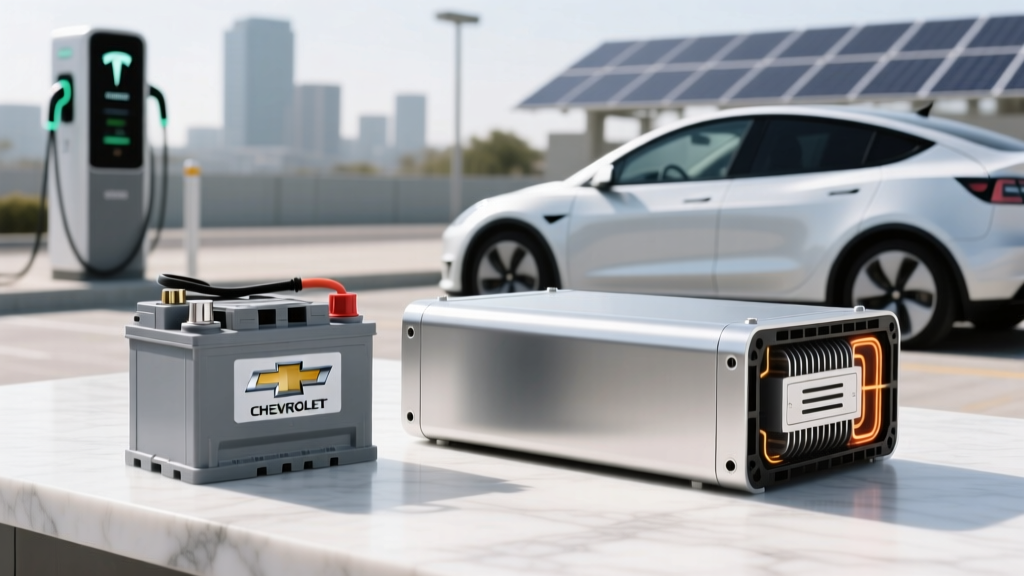
The two dominant lithium-ion chemistries in today's EVs are LFP (lithium iron phosphate) and NMC (nickel manganese cobalt) or NCA (nickel cobalt aluminum). Both store and release energy through lithium-ion movement between cathode and anode, but their material differences produce distinctly different ownership experiences.
| Attribute | LFP (LiFePO₄) | NMC / NCA |
|---|---|---|
| Energy Density (cell-level) | ~160–180 Wh/kg | ~220–300 Wh/kg |
| Typical Cycle Life | 3,000–6,000+ cycles | 1,000–2,500 cycles |
| Cold-Weather Performance | Moderate — greater range loss below 32°F | Better low-temp conductivity |
| Thermal Stability | Excellent — higher runaway threshold (~270°C) | Good — but lower thermal runaway threshold (~210°C) |
| Cost (per kWh, pack-level) | ~$90–$110 | ~$120–$150 |
| Cobalt/Nickel Content | None | Significant |
| State-of-Charge Recommendation | Can charge to 100% regularly | Best kept 20–80% for daily use |
| Weight Penalty (same kWh) | Heavier pack | Lighter pack |
What this means in practice: An LFP pack will typically be heavier for the same usable kWh, which can slightly reduce vehicle efficiency (Wh/mile). However, LFP's longer cycle life and tolerance for 100% daily charging make it ideal for commuters who want maximum calendar life and minimal charging-habit anxiety. NMC/NCA remains the choice for long-range and performance models where packing maximum kWh into minimal weight is paramount.
Electric Vehicles with LFP Batteries: 2026 Lineup Snapshot
Here's a selection of current-model-year EVs offering LFP battery options. Specs reflect manufacturer data and EPA figures where published.
| Vehicle | Trim(s) with LFP | Battery (usable kWh) | EPA Range | Peak DC Charge kW | 10–80% Time | Base MSRP |
|---|---|---|---|---|---|---|
| Tesla Model 3 | RWD (Standard Range) | ~57.5 kWh | 272 mi | 170 kW | ~25 min | $38,990 |
| Tesla Model Y | RWD (Standard Range) | ~60 kWh | 260 mi (est.) | 170 kW | ~27 min | $44,990 |
| Ford Mustang Mach-E | Select RWD | ~75.7 kWh | 250 mi | 150 kW | ~38 min | $42,995 |
| BYD Atto 3 (global) | All trims (Blade Battery) | ~58.56 kWh | 260 mi (WLTP) | 88 kW | ~44 min | Varies by market |
| Rivian R2 (announced) | Standard Range (prelim.) | TBD | ~270 mi (est.) | TBD | TBD | ~$45,000 (est.) |
Note: The Rivian R2 with LFP Standard Range is announced for late 2026 production; specs are preliminary. WLTP range figures (BYD) are typically 10–15% higher than EPA equivalents.
Real-World Range Reality: LFP batteries tend to lose a larger percentage of range in cold weather compared to NMC. In sub-freezing testing, expect 20–35% range reduction on LFP-equipped EVs versus 15–25% on NMC — due to higher internal resistance at low temperatures. Highway driving at 75+ mph also hits LFP packs harder because of the additional weight. A Tesla Model 3 RWD rated at 272 mi EPA may deliver ~220–240 mi in mixed real-world driving, and ~180–200 mi in cold-weather highway use.
Battery Degradation: What the Data Actually Shows
Degradation is the gradual loss of a battery's ability to hold its original charge, measured as a decline in State of Health (SoH). All lithium-ion batteries degrade through two mechanisms: calendar aging (time and temperature) and cycle aging (charge-discharge cycles).
LFP chemistry holds a clear advantage here. Independent fleet data and manufacturer disclosures show the following patterns:
Typical Degradation Trajectories (median fleet data):
- LFP packs: ~2–3% loss in year 1, then ~0.5–0.8% per year thereafter. At 150,000 miles / 8 years, many LFP packs retain 90–94% SoH.
- NMC packs: ~3–5% loss in year 1, then ~1–1.5% per year. At 150,000 miles / 8 years, typical NMC packs retain 82–89% SoH.
Sources: Geotab fleet battery health study, Recurrent Auto battery data reports, Tesla Impact Reports.
CATL, the world's largest LFP cell supplier, rates its latest LFP cells for over 6,000 cycles to 80% remaining capacity. At an average of 250 miles per full cycle, that's 1.5 million miles of theoretical cycle life — far exceeding any vehicle's structural lifespan.
Factors That Accelerate Degradation
- Frequent DC fast charging above 150 kW: High charge rates generate heat, the primary driver of lithium-ion wear. Occasional fast charging is fine; daily 250 kW sessions will accelerate degradation on any chemistry.
- Sustained high State of Charge (NMC only): Storing an NMC pack at 100% SoC for days stresses the cathode. LFP tolerates 100% storage far better — Tesla recommends periodic 100% charges on LFP for BMS calibration.
- Extreme heat exposure: Parking in 100°F+ ambient temperatures regularly, especially at high SoC, accelerates calendar aging. LFP's higher thermal stability provides a buffer, but doesn't eliminate the effect.
- Deep discharges to 0%: Letting any lithium-ion pack sit at or near 0% SoC can cause copper dissolution in the anode current collector. Keep the pack above 10% when possible.
- Cold charging without preconditioning: Charging an LFP pack below freezing without battery preconditioning risks lithium plating on the anode — a permanent capacity loss mechanism. Always use your EV's preconditioning feature before fast-charging in cold weather.
Battery Warranty Terms: What's Actually Covered
Federal law mandates a minimum 8-year / 100,000-mile warranty on EV battery packs (10 years / 150,000 miles in CARB states like California). Most manufacturers exceed this baseline. Here's how warranties stack up for popular LFP-equipped models:
| Manufacturer | Duration | Mileage | Capacity Retention Threshold | Notes |
|---|---|---|---|---|
| Tesla (Model 3/Y RWD) | 8 years | 100,000 mi | 70% | Covers defect + excessive degradation below threshold |
| Ford (Mach-E) | 8 years | 100,000 mi | 70% | Includes battery components; CARB states get 10 yr / 150k mi |
| BYD | 8 years | 100,000 mi (varies by market) | 70% | Blade Battery LFP; some markets offer lifetime warranty to first owner |
| Rivian (projected) | 8 years | 120,000 mi | 70% | Based on existing Rivian warranty structure for R1T/R1S |
Critical detail: Warranties cover degradation below the stated threshold — not normal, gradual capacity loss above it. If your LFP pack retains 72% SoH at year 7, the warranty won't trigger a replacement even though you've lost 28% of original range. In practice, LFP packs rarely approach the 70% threshold within the warranty period based on current fleet data.
EV Battery Replacement Cost: When and How Much
The fear of a $20,000 battery replacement looms large in EV purchase decisions. Context matters: based on current degradation data, the vast majority of EV batteries — especially LFP — outlast the vehicle's useful life or the owner's holding period. Full pack replacement is typically needed only after a manufacturing defect, physical damage, or extreme mileage (200,000+ miles).
| Vehicle | Battery Size (kWh) | Chemistry | Estimated Pack Cost (parts) | Labor + Total Estimate |
|---|---|---|---|---|
| Tesla Model 3 RWD | ~57.5 | LFP | $5,500–$7,500 | $7,000–$10,000 |
| Tesla Model Y RWD | ~60 | LFP | $6,000–$8,000 | $7,500–$10,500 |
| Ford Mach-E Select | ~75.7 | NMC (LFP on some) | $8,000–$12,000 | $10,000–$15,000 |
| BYD Atto 3 | ~58.56 | LFP (Blade) | $5,000–$7,000 | $6,500–$9,000 |
LFP packs are notably cheaper to replace than NMC equivalents because they contain no cobalt or nickel — the two most expensive and volatile raw materials in lithium-ion cells. Pack-level LFP pricing has fallen to roughly $90–$110/kWh in 2026, compared to $120–$150/kWh for NMC, according to BloombergNEF battery price surveys.
Additionally, many service centers now perform module-level repairs — replacing only the degraded or defective modules within a pack rather than the entire assembly. This can cut costs by 50–70%, bringing a repair to $2,000–$4,000 depending on the number of modules replaced.
Monitoring and Maximizing Battery Health
Most modern EVs provide at least some battery health visibility through the infotainment system or companion app. Here's how to stay on top of your pack's State of Health (SoH):
How to Check Battery SoH
- In-vehicle displays: Tesla's app shows estimated range at 100% charge; comparing this to the original EPA rating gives a rough SoH proxy. Some BYD models display SoH percentage directly in the settings menu.
- OBD-II diagnostic tools: Third-party apps like OBDeleven, LeafSpy (for Nissan), or manufacturer-specific tools can read the Battery Management System (BMS) for precise SoH percentage, cell voltage variance, and cycle count.
- Dealer diagnostics: A service center can pull a full battery health report, including individual module balance and internal resistance measurements.
- Third-party services: Companies like Recurrent Auto offer free battery health reports by connecting to your EV's telematics data, providing degradation trend lines over time.
Best Practices for LFP Battery Longevity
- Charge to 100% at least once per week. Unlike NMC, LFP's flat voltage curve makes it difficult for the BMS to estimate SoC without regular full charges. Tesla explicitly recommends this for LFP vehicles.
- Use Level 2 (AC) charging for daily needs. Reserve DC fast charging for road trips. A home Level 2 charger at 7–11.5 kW generates far less heat than a 150+ kW DC session.
- Enable battery preconditioning. When navigating to a DC fast charger, your EV will warm the pack to optimal charging temperature (~77–95°F), reducing stress and improving charge speed.
- Avoid prolonged storage at 0% SoC. If storing the vehicle for weeks, leave it plugged in at 50–70% (or 100% for LFP) to prevent deep discharge.
- Park in shade or a garage during summer. Every 18°F above 77°F roughly doubles the calendar aging rate of lithium-ion cells.
Beyond LFP: Emerging Battery Technologies
While LFP dominates the affordable EV segment today, several next-generation chemistries are in development. It's important to distinguish what's available now from what's still years away:
- Sodium-ion batteries: CATL and BYD have begun limited production of sodium-ion packs for low-range city EVs in China. Energy density (~120–150 Wh/kg) is lower than LFP, but raw materials are abundant and cheap. Expect sodium-ion in US-market EVs no earlier than 2028–2029.
- Solid-state batteries: Toyota, Samsung SDI, and QuantumScape are targeting 2027–2030 for initial commercialization. Solid-state promises 350–500 Wh/kg energy density, faster charging, and improved safety. However, manufacturing scale-up and cost reduction remain significant hurdles. No solid-state EV is currently available for purchase in the US.
- Silicon-dominant anodes: Companies like Sila Nanotechnologies and Group14 are integrating silicon into anodes to boost energy density by 20–40%. Early deployments are appearing in premium EVs and are expected to expand through 2027–2028. These pair with existing NMC cathodes rather than replacing them.
- LMFP (lithium manganese iron phosphate): An evolution of LFP adding manganese to raise the voltage plateau and boost energy density by ~15–20%. CATL and Gotion have announced LMFP cells, with initial vehicle integration expected in 2026–2027 models from Chinese OEMs.
Bottom line: For buyers shopping today, LFP and NMC are the two proven, mass-produced chemistries worth considering. Emerging technologies will take 3–5+ years to reach scale and competitive pricing in the US market.
LFP vs NMC: Which Should You Choose?
Choose an LFP-equipped EV if:
- You want the longest possible battery lifespan (6,000+ cycle capability)
- You charge at home daily and prefer the simplicity of charging to 100%
- You live in a moderate climate (mild winters) where cold-weather range loss is manageable
- You prioritize lower purchase price and lower replacement cost
- You're a high-mileage commuter who will rack up cycles quickly
Choose an NMC/NCA-equipped EV if:
- You need maximum range per charge (300+ miles EPA)
- You regularly drive in cold climates where every mile of range matters
- You want the lightest possible vehicle for performance or efficiency
- You're buying a long-range or performance trim (these rarely come with LFP)
- You fast-charge frequently on road trips and value faster charge-curve speeds
Frequently Asked Questions
How long do EV batteries last in years and miles?
Based on fleet data from Geotab and Recurrent Auto, the median EV battery retains 85–94% of original capacity at 8 years / 150,000 miles, depending on chemistry and usage. LFP packs typically outperform NMC in longevity, with many projected to exceed 300,000 miles before reaching 70% SoH. Catastrophic failure (sudden death) is rare — most packs degrade gradually and remain usable well beyond warranty periods.
How much does an EV battery cost to replace?
Full pack replacement for an LFP-equipped EV currently ranges from approximately $6,500 to $10,500 including labor, depending on pack size. NMC packs cost more — typically $10,000–$18,000+. Module-level repairs can reduce costs to $2,000–$4,000. However, replacement is rarely needed within the vehicle's normal ownership period; most packs outlast 200,000 miles.
What does the EV battery warranty actually cover?
Federal law requires at minimum 8 years / 100,000 miles of coverage (extended in CARB states). Warranties cover manufacturing defects and degradation below a stated threshold — typically 70% of original capacity. If your battery drops below 70% SoH within the warranty period, the manufacturer must repair or replace it at no cost. Normal degradation above 70% is not covered.
How do I check my EV battery's State of Health?
Methods vary by vehicle. Tesla owners can compare current max range at 100% charge against the original EPA rating. Many EVs offer BMS data through OBD-II diagnostic tools or third-party telematics services like Recurrent Auto. Your dealer can also pull a comprehensive health report showing individual cell balance and internal resistance.
Is LFP better than NMC for daily driving?
For most daily-driving scenarios — commuting, errands, home charging — LFP offers clear advantages: longer cycle life, tolerance for 100% charging, lower cost, and better thermal safety. The trade-offs are lower energy density (heavier pack, slightly less range) and worse cold-weather performance. If your daily driving is under 200 miles and you live in a temperate climate, LFP is arguably the superior choice.
Can I get the federal tax credit on an LFP battery EV?
Eligibility for the IRS §30D clean vehicle credit depends on multiple factors beyond chemistry: vehicle MSRP caps ($55,000 for sedans, $80,000 for SUVs/trucks), buyer income limits, battery component manufacturing origin, and critical mineral sourcing requirements. LFP's lack of cobalt and nickel can actually complicate critical-mineral sourcing compliance depending on supply chain origin. Always verify current-year eligibility on the IRS website or consult a tax professional before relying on the credit in your purchase decision.
Does frequent DC fast charging damage an LFP battery?
Occasional DC fast charging is fine. However, frequent sessions at 150+ kW generate sustained heat that accelerates degradation on any lithium-ion chemistry, including LFP. For daily charging, a Level 2 home charger at 7–11.5 kW is gentler and more cost-effective. Use DC fast charging for road trips and rely on AC charging for routine needs.
This article reflects 2026 model-year data and current market pricing. Battery technology, warranty terms, and federal incentive rules are subject to change. Always verify specifications with the manufacturer and consult fueleconomy.gov and irs.gov for the latest official figures.