Hyundai's Battery Strategy: From E-GMP to Next-Generation Cells
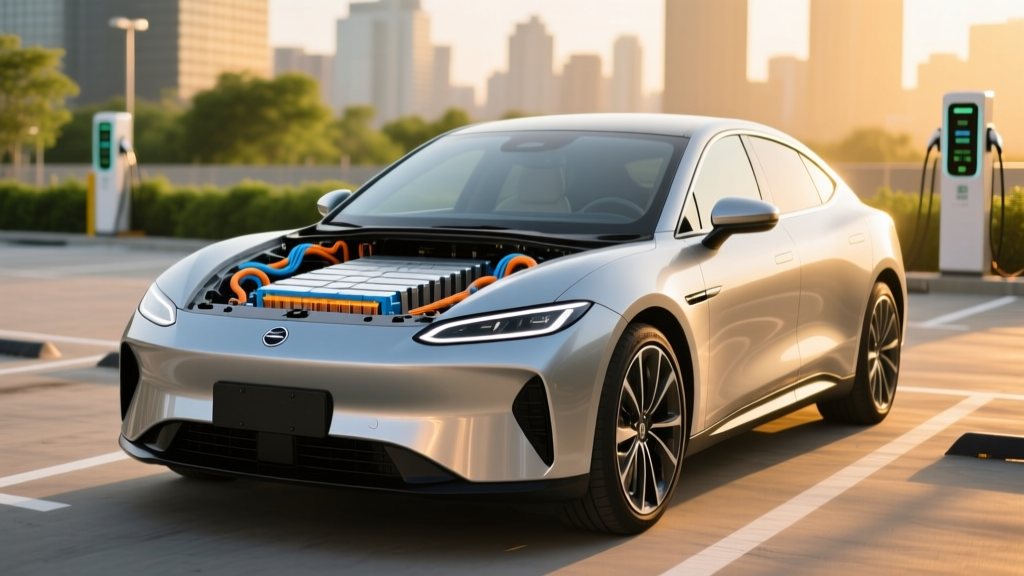
Hyundai Motor Group — encompassing Hyundai, Kia, and Genesis — has emerged as one of the most technically sophisticated battery integrators in the EV market. Rather than manufacturing cells in-house at scale, Hyundai engineers battery packs around cells sourced from SK On, LG Energy Solution, and CATL, then applies proprietary thermal management, pack architecture, and software-defined battery management. The result is a lineup spanning the Ioniq 5, Ioniq 6, Ioniq 9, and Kona Electric that consistently delivers competitive range, fast charging, and long-term durability.
If you're researching Hyundai's battery credentials before purchasing, this guide breaks down the chemistry choices, real-world degradation patterns, warranty protections, and emerging technology roadmap you need to make an informed decision.
NMC vs LFP: Hyundai's Chemistry Choices Explained
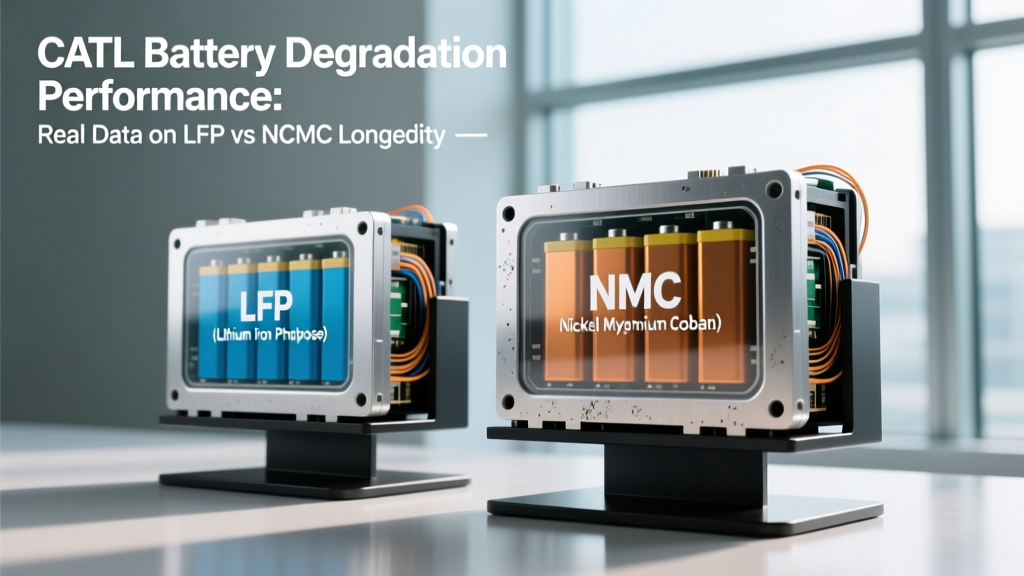
Hyundai currently deploys two primary lithium-ion chemistries across its global EV lineup, each with distinct engineering trade-offs. Understanding these is essential when evaluating any Hyundai EV.
| Attribute | NMC (Nickel Manganese Cobalt) | LFP (Lithium Iron Phosphate) |
|---|---|---|
| Models using | Ioniq 5 (Long Range), Ioniq 6, Ioniq 9, Kona Electric (Long Range) | Ioniq 5 (Standard Range in select markets), Kona Electric (Standard Range) |
| Energy density | Higher (~250 Wh/kg cell-level) | Lower (~170 Wh/kg cell-level) |
| Typical pack size | 77.4 kWh (Ioniq 5/6 LR), 84.0 kWh (Ioniq 6 LR), 110.3 kWh (Ioniq 9) | 58.0 kWh (Ioniq 5 SR), 48.6 kWh (Kona SR) |
| Cycle life | ~1,500–2,000 full cycles to 80% SoH | ~3,000–5,000+ full cycles to 80% SoH |
| Cold-weather performance | Better low-temp conductivity; ~15–25% range loss at 20°F | More sensitive to cold; ~25–35% range loss at 20°F without preconditioning |
| Peak charge rate | Up to 240 kW (Ioniq 5/6 on 800V) | Up to 150 kW (lower C-rate tolerance) |
| Cost per kWh | Higher (~$120–140/kWh at pack level) | Lower (~$85–105/kWh at pack level) |
| Recommended SoC range | 20–80% for daily; 100% OK for trips | Can be charged to 100% daily without accelerated degradation |
| Cobalt content | Contains cobalt (supply chain concern) | Cobalt-free |
Which is better? For buyers prioritizing maximum range and fast DC charging, Hyundai's NMC packs in the Long Range Ioniq 5 and Ioniq 6 deliver 300+ EPA miles and 10–80% charging in approximately 18 minutes on a 350 kW charger. For buyers who want maximum cycle life and plan to charge to 100% daily — such as rideshare drivers or high-mileage commuters — LFP's superior cycle longevity and tolerance for full-state-of-charge storage make it the pragmatic choice, despite the range trade-off.
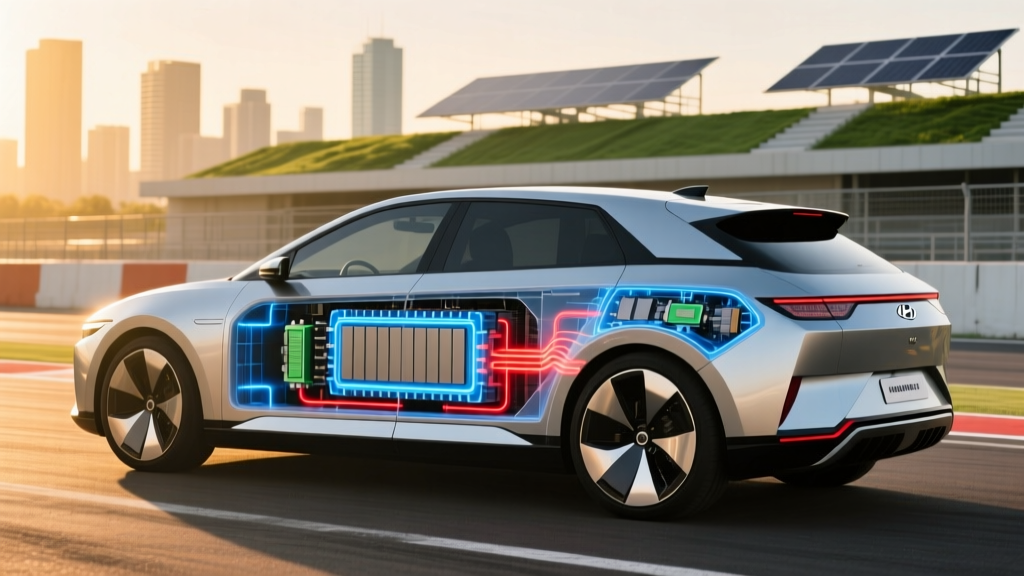
Hyundai's 800-volt E-GMP architecture, standard on Ioniq 5/6/9, is a significant differentiator. This platform enables the ultra-fast NMC charging curves that competitors on 400V systems (most non-Tesla, non-Porsche EVs) cannot match. At a 350 kW DC fast charger, the Ioniq 5 Long Range sustains above 200 kW through roughly 50% SoC before tapering — a charging curve that translates to real-world convenience on road trips.
Real-World Degradation: What Hyundai Owners Actually See
Battery degradation — the gradual loss of usable capacity over time — is the single most common concern among EV shoppers. Hyundai's track record, particularly on the E-GMP platform, provides reassuring data.
Observed Degradation Patterns (Hyundai E-GMP Vehicles, NMC Packs):
- Year 1 / ~15,000 miles: 1–3% capacity loss (initial formation loss, normal)
- Year 3 / ~45,000 miles: 4–7% total capacity loss
- Year 5 / ~75,000 miles: 6–10% total capacity loss
- Year 8 / ~100,000 miles: 8–14% total capacity loss (varies with climate and charging habits)
These figures align with broader industry data from Geotab's large-scale battery health study, which found that modern liquid-cooled EV batteries lose an average of 1.8% per year under typical use. Hyundai's liquid-cooled thermal management system on the E-GMP platform keeps cells within an optimal temperature window, reducing the thermal stress that accelerates degradation.
Key real-world context: An Ioniq 5 Long Range with a 77.4 kWh pack and 303 EPA miles of range that experiences 10% degradation after 5 years would still deliver approximately 273 miles of EPA-equivalent range. For most owners, this remains more than adequate for daily driving and road trips alike.
The earlier-generation Kona Electric (2019–2023, 64 kWh pack) showed slightly higher degradation rates in some owner surveys — approximately 10–15% loss over 5 years — partly due to less advanced thermal management. The 2024+ redesigned Kona Electric on the updated platform shows improved degradation curves closer to the Ioniq family.
Hyundai's Battery Warranty: Coverage and Thresholds
Hyundai provides one of the more straightforward battery warranties in the industry, and it applies across all current EV models sold in the United States.
| Coverage Element | Term |
|---|---|
| Duration | 10 years / 100,000 miles (whichever comes first) |
| Capacity retention threshold | 70% of original usable capacity |
| What's covered | Defects in materials/workmanship; capacity loss below 70% |
| What's NOT covered | Damage from accidents, flooding, improper modifications, or unauthorized repairs |
| Transferable to second owner? | Yes, remainder of warranty transfers (reduces to 5yr/60,000mi in some states for subsequent owners — verify with dealer) |
| Remedy | Module replacement, full pack replacement, or equivalent restoration at Hyundai's discretion |
The 70% threshold is industry-standard, matching warranties from Kia, Volkswagen, and Ford. Tesla uses a slightly higher 70% threshold over 8 years/120,000 miles (Model 3/Y) or 8 years/150,000 miles (Model S/X). Hyundai's 10-year/100,000-mile term is among the longest in the market by duration, though some competitors offer more miles.
Practical reality: Based on the degradation data above, most Hyundai EVs will retain well above 85% capacity at the 10-year/100,000-mile mark under normal use. A warranty claim for dropping below 70% would require either a manufacturing defect or extremely abusive charging patterns. The warranty is best understood as a safety net, not a prediction of typical performance.
For full warranty documentation, refer to the Hyundai America warranty guide.
EV Battery Replacement Cost: What Hyundai Owners Face
This is the question that dominates online forums and headlines. Here are the actual numbers for Hyundai's current EV lineup.
| Model | Pack Size | Full Pack Replacement (est.) | Module-Level Repair (est.) |
|---|---|---|---|
| Kona Electric (Standard Range) | 48.6 kWh | $8,000–$11,000 | $1,500–$3,000 per module |
| Kona Electric (Long Range) | 64.8 kWh | $10,000–$14,000 | $1,800–$3,500 per module |
| Ioniq 5 (Standard Range) | 58.0 kWh | $9,500–$13,000 | $1,600–$3,200 per module |
| Ioniq 5 (Long Range) | 77.4 kWh | $12,000–$17,000 | $2,000–$4,000 per module |
| Ioniq 6 (Long Range) | 77.4 kWh | $12,000–$17,000 | $2,000–$4,000 per module |
| Ioniq 9 | 110.3 kWh | $16,000–$22,000 | $2,500–$5,000 per module |
Important context on when replacement is actually needed: Full battery pack replacement due to degradation alone is extremely rare in modern liquid-cooled EVs. The vast majority of Hyundai EV batteries will outlast the vehicle's economic life. When battery issues do arise, they are more commonly isolated module failures — a single weak cell group that can be diagnosed and swapped without replacing the entire pack. Hyundai's modular E-GMP pack architecture facilitates this type of targeted repair, which is significantly less expensive than a full replacement.
These costs are expected to decline. BloombergNEF's battery price survey shows pack-level lithium-ion prices falling from ~$140/kWh in 2023 to approximately $100–110/kWh by 2026, driven by manufacturing scale and LFP adoption. A replacement pack for an Ioniq 5 Long Range in 2030 will likely cost meaningfully less than today's estimate.
Factors That Accelerate (or Preserve) Hyundai EV Battery Life
Battery longevity is not purely a function of time and miles — how you charge and drive matters significantly.
What Accelerates Degradation
- Exclusive DC fast charging: Daily reliance on 150–350 kW DC fast charging generates sustained heat. Hyundai's liquid cooling mitigates this, but frequent sessions above 150 kW still accelerate wear versus Level 2 charging.
- Sustained high SoC storage: Leaving an NMC pack at 100% SoC for days or weeks (especially in hot climates) stresses cathode materials. LFP is more tolerant of 100% storage.
- Deep discharge cycles: Regularly driving to 0–5% SoC and leaving the battery depleted stresses the anode. Hyundai's battery management system (BMS) maintains a buffer, but habitually running the pack to empty is still inadvisable.
- Extreme heat exposure: Prolonged parking in 100°F+ ambient temperatures without thermal management activation accelerates calendar aging. Hyundai's BMS runs cooling even when parked, but this draws from the pack.
- High-performance driving in heat: Repeated hard acceleration and high-speed driving in hot weather generates internal cell heat beyond what cooling can fully offset.
What Preserves Battery Health
- Level 2 home charging as primary: 7–11 kW AC charging generates minimal heat and is the gentlest charging method for daily use.
- 20–80% SoC for NMC daily use: Hyundai's infotainment system allows you to set charge limits — use them. Charge to 80% daily, 100% before road trips.
- 100% SoC for LFP is fine: If your Hyundai has an LFP pack, periodic 100% charges actually help the BMS calibrate cell balance.
- Preconditioning before DC fast charging: Hyundai's navigation-routed preconditioning warms or cools the battery to optimal temperature before you arrive at a fast charger, improving charge speed and reducing thermal stress.
- Moderate climates or garage parking: Keeping the vehicle in temperature-moderate environments reduces calendar aging.
Monitoring Battery Health: How to Check SoH on a Hyundai EV
State of Health (SoH) represents the battery's current maximum capacity as a percentage of its original capacity. Hyundai provides several ways to monitor this:
In-vehicle display: The Ioniq 5, Ioniq 6, and newer Kona Electric include a battery health indicator in the EV settings menu. This displays estimated SoH, though Hyundai does not expose a precise percentage in all markets — some models show a bar-graph or categorical status rather than an exact number.
Hyundai Bluelink app: Connected services through Bluelink provide charging status, range estimates, and in some model years, a battery condition report. The app's data granularity varies by model year and region.
OBD-II diagnostic tools: Third-party tools such as the Car Scanner app paired with an OBD-II Bluetooth dongle can read the BMS-reported SoH with greater precision than the in-car display. Many Hyundai EV owners use this method to track degradation monthly.
Dealer diagnostic: Hyundai dealerships can perform a full battery health check using factory diagnostic equipment. Request this during scheduled service visits, particularly if you suspect abnormal degradation or are purchasing a used Hyundai EV and want verification.
What to watch for: A sudden drop in displayed range that does not correlate with temperature changes may indicate a module imbalance rather than normal degradation. This is typically covered under warranty and can often be resolved with a BMS recalibration or module replacement.
Hyundai's Battery Technology Roadmap: Solid-State and Beyond
Hyundai Motor Group has publicly committed to next-generation battery technology, but it is critical to separate announced timelines from currently available products.
Solid-state batteries (announced — not yet available): Hyundai has invested in solid-state battery development through partnerships and internal R&D. The company has indicated a target for initial solid-state EV production in the 2027–2028 timeframe, likely debuting in a Genesis or flagship Hyundai model. Solid-state technology promises higher energy density (potentially 400+ Wh/kg at the cell level), faster charging, and improved safety due to the elimination of flammable liquid electrolyte. However, manufacturing scale-up remains the primary challenge, and no Hyundai vehicle currently on sale uses solid-state cells.
Silicon anode technology (in development): Hyundai has explored silicon-dominant anode materials that could increase energy density by 20–40% over current graphite anodes. Companies like Group14 Technologies and Sila Nanotechnologies are supplying development-stage materials to multiple automakers. Expect this technology to appear incrementally — possibly as a silicon-blend anode in NMC cells — before any full silicon-anode production vehicle.
LFP expansion (currently happening): Hyundai is actively expanding LFP adoption in standard-range trims to reduce costs and improve supply chain resilience. The 2025–2026 Kona Electric and certain Ioniq 5 trims in global markets already use LFP. Expect LFP to become the default chemistry for base trims across Hyundai's EV lineup by 2027, with NMC reserved for Long Range and performance variants.
CTP/CTC pack architecture: Hyundai is evaluating cell-to-pack (CTP) and cell-to-chassis (CTC) designs that eliminate module-level housing, reducing pack weight and increasing volumetric energy density. These architectures are already in production at competitors like BYD and Tesla, and Hyundai's next-generation EV platform (expected ~2027) is likely to incorporate similar approaches.
Frequently Asked Questions
How long do Hyundai EV batteries last in years and miles?
Based on observed degradation data, Hyundai's liquid-cooled NMC packs in the Ioniq 5, Ioniq 6, and Ioniq 9 are projected to retain 85–92% of original capacity at 10 years / 100,000 miles under typical use. LFP packs may retain 90–95%+ over the same period due to superior cycle life. Most Hyundai EV batteries will functionally outlast the vehicle's economic lifespan. Complete failure before 200,000 miles is rare absent physical damage or manufacturing defect.
How much does it cost to replace a Hyundai EV battery?
Full pack replacement ranges from approximately $8,000 for a Kona Electric Standard Range (48.6 kWh) to $22,000 for an Ioniq 9 (110.3 kWh). However, full replacement due to degradation is extremely uncommon. Module-level repairs — addressing a single degraded cell group — typically cost $1,500–$5,000 depending on the model. If the battery drops below 70% capacity within the 10-year/100,000-mile warranty period, Hyundai covers the repair or replacement at no cost to the owner.
What does Hyundai's battery warranty actually cover?
Hyundai warrants the high-voltage traction battery for 10 years or 100,000 miles against defects and capacity loss below 70% of original capacity. This covers cell degradation, module failures, and BMS defects. It does not cover damage from collisions, flooding, aftermarket modifications, or unauthorized service. The warranty is transferable to subsequent owners, though terms may reduce in some jurisdictions. Verify current terms at Hyundai's warranty page.
How do I check and maximize my Hyundai EV's battery health?
Monitor SoH through the in-vehicle EV settings menu, the Bluelink connected app, or an OBD-II diagnostic tool for greater precision. To maximize longevity: use Level 2 home charging as your primary method, set charge limits to 80% for NMC daily driving (100% is fine for LFP), use navigation-routed preconditioning before DC fast charging, avoid leaving the vehicle at 0% or 100% SoC for extended periods, and minimize exclusive reliance on DC fast charging.
LFP vs NMC in a Hyundai — which should I choose?
Choose NMC (Long Range trims) if you need maximum EPA range (300+ miles), the fastest DC charging (10–80% in ~18 minutes at 350 kW), and regularly take road trips. Choose LFP (Standard Range trims) if you want lower purchase cost, superior long-term cycle life, the ability to charge to 100% daily without concern, and your daily driving is under 200 miles. For most single-vehicle households that road trip more than twice a year, NMC Long Range is the more versatile choice. For high-mileage commuters or second-vehicle duty, LFP offers compelling total-cost-of-ownership advantages.
Does fast charging damage my Hyundai's battery?
Occasional DC fast charging does not meaningfully accelerate degradation thanks to Hyundai's liquid-cooled thermal management. However, exclusive reliance on 150–350 kW DC charging (zero Level 2 charging) will produce measurably higher degradation over 5+ years compared to predominantly Level 2 charging. The practical recommendation: fast charge on road trips and when needed, but use Level 2 at home for daily replenishment. Preconditioning via navigation routing further mitigates thermal stress during fast charging sessions.
Verdict: Where Hyundai Stands on Battery Technology
Hyundai's battery technology strategy earns strong marks across the criteria that matter to buyers: competitive chemistry choices (NMC for range, LFP for longevity), industry-leading 800V fast charging on the E-GMP platform, a 10-year/100,000-mile warranty with a 70% retention threshold, and degradation data that suggests most packs will outlive the vehicles they power. The modular pack architecture enables targeted repairs rather than full-pack replacements, and the company's roadmap — LFP expansion, solid-state development, and next-generation pack designs — positions it well for the next decade.
The honest limitations: Hyundai does not manufacture its own cells at scale, relying on SK On, LG Energy Solution, and CATL. This means cell-level innovation depends partly on supplier roadmaps. In-vehicle SoH reporting could be more granular — competitors like Tesla expose more precise degradation data. And the large-pack Ioniq 9, while impressive in range, carries a replacement cost that exceeds $20,000 out of warranty, a figure buyers of any large-battery EV should factor into long-term ownership planning.
For the buyer evaluating Hyundai specifically on battery technology: the data supports confidence. Hyundai's packs are engineered for longevity, charged faster than most competitors, and backed by one of the longest warranties available. The technology is proven, the degradation is manageable, and the replacement risk — while real — is statistically low for the vehicle's usable life.