Why "Plane Battery" Searches Land on EV Driveways
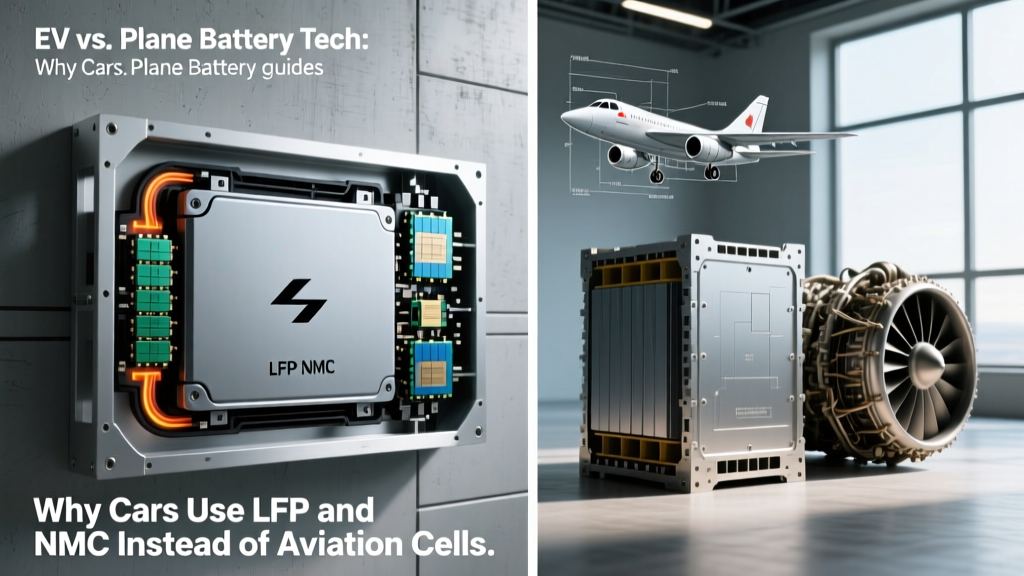
When shoppers search for plane battery, they're usually hunting for one of two things: the lightweight lithium-polymer packs that power drones and experimental electric aircraft, or a simple way to understand how the high-voltage traction battery in an EV compares to aviation-grade cells. The short answer is that electric vehicles and electric aircraft optimize for opposite extremes. A Cessna 172 still uses a 24V lead-acid or NiCad aviation battery to crank a piston engine, while experimental e-planes like the Pipistrel Velis Electro rely on energy-dense NMC pouch cells that weigh under 155 lb. EVs, by contrast, carry 1,000–2,200 lb of cells and prioritize cycle life, cost per kWh, and thermal safety over raw gravimetric energy density.
This guide translates that aviation-vs-automotive divide into the practical questions EV buyers actually ask: Which chemistry should I choose, how fast will it degrade, what does warranty really cover, and what does replacement cost in 2026? All figures below reference current model-year data from fueleconomy.gov, OEM warranty PDFs, and peer-reviewed degradation studies.
LFP vs. NMC vs. NCA: The Chemistry That Separates Cars from Planes
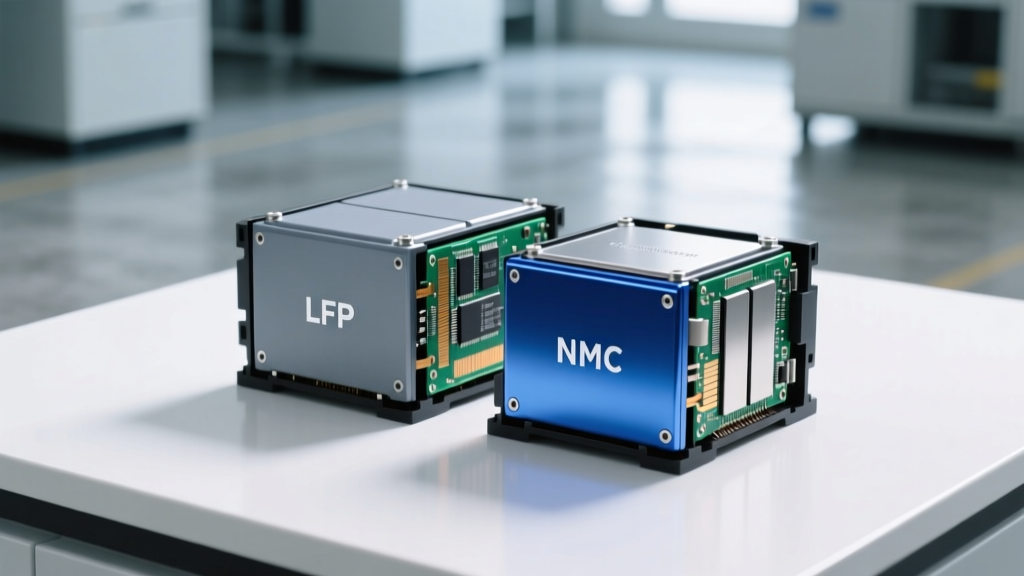
Aviation battery engineers chase watt-hours per kilogram because every extra pound costs climb rate and payload. EV engineers chase watt-hours per dollar and cycle count, because a sedan's battery must survive 1,500+ full cycles and a decade of -10°F to 110°F swings. That's why the two dominant EV chemistries — lithium iron phosphate (LFP) and nickel-manganese-cobalt / nickel-cobalt-aluminum (NMC/NCA) — look nothing like the high-nickel pouch cells used in eVTOL prototypes.
| Attribute | LFP (e.g., Tesla Model 3 RWD, BYD Blade) | NMC / NCA (e.g., Hyundai Ioniq 5, Ford F-150 Lightning ER) |
|---|---|---|
| Cell-level energy density | 160–180 Wh/kg | 230–290 Wh/kg |
| Pack-level cost (2026) | ~$95–$115 / kWh | ~$125–$155 / kWh |
| Typical cycle life to 80% SoH | 3,000–5,000 cycles | 1,000–2,000 cycles |
| Cold-weather range loss (20°F) | ~30–35% vs. EPA | ~20–28% vs. EPA |
| Thermal runaway onset | ~270°C (more stable) | ~170–210°C |
| Recommended daily SoC | 100% OK; periodic full charge calibrates BMS | 80% daily, 100% for trips only |
| Weight penalty for same kWh | Heavier pack (~+80–120 lb) | Lighter pack |
| Best fit | Standard-range, fleet, high-mileage, hot climates | Long-range, AWD, cold climates, towing |
So which is "better"? Neither. LFP wins on longevity and price; NMC/NCA wins on range-per-pound and cold performance. That's the exact opposite of aviation, where plane battery packs almost always use high-nickel NMC or experimental lithium-sulfur to save grams.
How Long Do EV Batteries Actually Last?
The fear that an EV battery will die like a phone battery at year three is the single biggest misconception in electrification. Real-world fleet data tells a different story. Geotab's analysis of over 10,000 EVs shows an average capacity loss of roughly 2.3% per year across chemistries — meaning a typical 2026 EV should still hold 85–88% of its original kWh at the 8-year mark.
Typical degradation curve (NMC 75–85 kWh pack, mixed use):
- Year 1 / 15,000 mi: ~95–97% State of Health (SoH)
- Year 3 / 45,000 mi: ~91–93% SoH
- Year 5 / 75,000 mi: ~88–90% SoH
- Year 8 / 120,000 mi: ~82–86% SoH
- Year 10 / 150,000 mi: ~78–83% SoH (still above most warranty thresholds)
LFP packs typically flatten out earlier but degrade more slowly afterward, often ending year 10 at 88–92% SoH in moderate climates.
The takeaway: most EV traction batteries will outlast the car's body, suspension, and infotainment system. A full pack replacement before 150,000 miles remains the exception, not the rule.
What the Battery Warranty Actually Covers (and Doesn't)
Federal law effectively mandates an 8-year / 100,000-mile minimum on EV batteries, but the fine print varies. Most OEMs guarantee the pack will retain 65–70% of original capacity; if it drops below that threshold within the term, they replace or refurbish at no cost. Some brands in CARB states extend coverage to 10 years / 150,000 miles.
| Vehicle | Chemistry | Term | Minimum SoH |
|---|---|---|---|
| Tesla Model 3 RWD | LFP | 8 yr / 100,000 mi | 70% |
| Tesla Model Y Long Range | NMC | 8 yr / 120,000 mi | 70% |
| Hyundai Ioniq 5 / Kia EV6 | NMC | 10 yr / 100,000 mi | 70% |
| Ford F-150 Lightning (ER) | NMC | 8 yr / 100,000 mi | 70% |
| BYD Seal (where sold) | LFP Blade | 8 yr / 100,000 mi | 70% |
| Chevrolet Equinox EV | NMC (Ultium) | 8 yr / 100,000 mi | 65–70% |
What's not covered: cosmetic issues, 12V auxiliary battery failures (those are separate lead-acid or small lithium units), damage from collisions, flood, improper charging equipment, or aftermarket modifications. Always read the warranty booklet — not the brochure.
EV Battery Replacement Cost: The Honest 2026 Numbers
Out-of-warranty replacements are rare, but they happen after high-mileage use, flood damage, or manufacturing defects discovered late. Prices have fallen steadily as pack-level costs approach $120/kWh at the cell level.
| Vehicle / Pack Size | Reman Pack Cost | New Pack Cost | Labor | Typical Trigger |
|---|---|---|---|---|
| Tesla Model 3 RWD, ~60 kWh LFP | $7,500–$9,500 | $11,000–$13,500 | $1,200–$1,800 | Flood, cell imbalance post-200k mi |
| Hyundai Ioniq 5, 77.4 kWh NMC | $10,000–$13,000 | $15,000–$18,000 | $1,500–$2,200 | Rare; usually under warranty |
| Ford F-150 Lightning ER, 131 kWh | $18,000–$22,000 | $25,000–$30,000 | $2,000–$2,800 | Fleet high-cycle use |
| Chevrolet Bolt EV/EUV (legacy), 65 kWh | $9,000–$12,000 | $14,000–$16,500 | $1,400–$1,900 | Post-recall aging |
Two context points that matter more than the sticker: (1) most owners trade or sell before a replacement is needed, and (2) module-level repair — replacing only the weak modules rather than the full pack — is increasingly available through independent EV shops for $3,000–$6,000. Always get a module-level diagnosis before authorizing a full pack swap.
Five Factors That Actually Move the Degradation Needle
Battery chemistry sets the ceiling, but your habits decide where you land on the curve. Based on fleet telemetry and OEM engineering guidance, these five inputs dominate:
- State of Charge ceiling. Parking an NMC pack at 100% for days at a time accelerates electrolyte oxidation. Daily 80% limit, 100% only before trips. LFP tolerates 100% better and actually needs a monthly full charge to recalibrate the BMS.
- DC fast-charging frequency. Occasional 150–350 kW sessions are fine; daily reliance on DCFC adds roughly 0.5–1.0% extra annual degradation vs. Level 2 home charging, mostly from heat. Precondition the pack (most EVs do this automatically when you navigate to a charger).
- Temperature extremes. Sustained ambient heat above 95°F is more damaging than cold. Garage parking and avoiding repeated 0–100% cycles in summer are the two highest-leverage habits.
- Depth of discharge. Shallow cycles (20–80%) are dramatically easier on NMC cells than full 0–100% swings. Treat your EV like a plug-in hybrid: frequent top-ups beat deep drains.
- Calendar aging. Even a parked EV loses capacity. Store at ~50% SoC in a cool place if the car will sit for more than two weeks.
How to Check State of Health Without a Scan Tool
Every modern EV exposes a rough SoH reading, though OEMs label it differently:
- Tesla: Service menu → Battery Health test (runs a ~2-hour controlled cycle, returns a %). Also track kWh added vs. miles driven over 10 fill-ups.
- Hyundai / Kia: EV-specific service screen in the cluster or via the OEM app; third-party OBD-II apps like Car Scanner pull the BMS-reported SoH directly.
- Ford / GM: Dealer scan tool reports SoH; owners can approximate by logging full-charge kWh vs. original usable capacity.
- Universal method: Charge from 10% to 100% on a Level 2 charger with a metered outlet, record kWh delivered, subtract ~5% for charger losses, and divide by the pack's original usable kWh. Repeat quarterly to spot trends.
Write the numbers down. A single SoH reading is less valuable than a 12-month trend line.
Plane Battery Tech Coming to Cars? The Solid-State Reality Check
The same high-energy-density cells aviation programs chase — solid-state, lithium-metal anode, silicon-dominant anode — are also the automotive holy grail. But timelines differ sharply.
As of 2026:
- Silicon-anode cells (e.g., Sila Nanotechnologies, Group14) are in limited production for performance EVs, adding roughly 10–15% energy density over graphite anodes. Expect broader rollout by 2028.
- Semi-solid-state packs from suppliers like WeLion are shipping in low volumes in China-market sedans with ~360 Wh/kg cells. U.S. availability remains limited and premium-priced.
- True solid-state (Toyota, Samsung SDI, QuantumScape) remains in pilot and validation. OEMs publicly target 2028–2030 for limited production; mass-market scale is 2031+.
Translation: solid-state is real but not something to delay a 2026 purchase for. The LFP and NMC packs shipping today already deliver 250,000+ mile service lives for the vast majority of owners.
EV Battery FAQ
How long do EV batteries last in years and miles?
Most 2026 EV traction batteries reach 200,000–300,000 miles before falling to 70–80% State of Health, which corresponds to roughly 12–18 years for an average driver at 12,000 miles/year. LFP packs trend toward the upper end of that range.
How much does an EV battery cost to replace in 2026?
Out-of-warranty replacement typically runs $9,000–$18,000 for a passenger car and $18,000–$30,000 for a large truck pack, including labor. Most owners never pay this — the failure rate inside the 8-year / 100,000-mile warranty window is under 2% across major OEMs.
What does the battery warranty actually cover?
Capacity loss below a stated threshold (usually 65–70% SoH) within the term — typically 8 years / 100,000 miles, extended to 10 years / 150,000 miles in CARB states. It does not cover the 12V auxiliary battery, collision damage, flood, or abuse from non-approved chargers.
LFP vs. NMC — which is better for me?
Choose LFP if you drive standard-range distances, live in a hot climate, plan to keep the car past 150,000 miles, or want the lowest cost per kWh. Choose NMC/NCA if you need maximum range, tow frequently, regularly drive in sub-freezing weather, or want the lightest possible pack.
How do I maximize battery health day to day?
Set an 80% daily charge limit on NMC, precondition before DC fast charging, avoid repeated 0% and 100% SoC, park in shade or a garage in summer, and log SoH quarterly. LFP owners can charge to 100% but should still avoid leaving the pack at 0% for extended periods.
Why don't EVs use the same cells as electric planes?
Aviation cells optimize for Wh/kg at the expense of cycle life, cost, and thermal margin. An eVTOL pack might tolerate 500 cycles because the airframe itself has a short service life; an EV pack must survive 1,500+ cycles, cost under $130/kWh at the pack level, and remain stable after a side-impact crash. Different missions, different chemistries.