The rise of humanoid robots like Tesla's Optimus, Figure 02, and Agility Robotics' Digit has introduced a new question for battery-curious consumers: how do the batteries powering these bipedal machines compare to the high-voltage traction packs in modern electric vehicles? While the term humanoid battery is still emerging in search and industry lexicons, the underlying cell chemistries, degradation physics, and cost structures share deep roots with EV battery technology — and diverge in critical ways.
This guide breaks down what you need to know about EV battery technology in 2026, with direct comparisons to the smaller, high-discharge packs used in humanoid robots. Whether you're evaluating long-term EV ownership costs or tracking the battery supply chain that serves both cars and robots, the data below provides the full picture.
LFP vs NMC/NCA: The Chemistry Divide in EVs and Robots
Both electric vehicles and humanoid robots rely on lithium-ion cells, but the specific cathode chemistry chosen has enormous implications for energy density, lifespan, thermal behavior, and cost. In 2026, the two dominant chemistries in EVs are LFP (lithium iron phosphate) and NMC (nickel manganese cobalt), with NCA (nickel cobalt aluminum) still used by select manufacturers like Tesla in certain performance trims.
Humanoid robots, which demand high burst-current for joint actuators and have strict weight budgets, have largely standardized on high-nickel NMC or NCA pouch cells — prioritizing energy density and discharge rate over the 3,000+ cycle life that LFP offers. Here's how the two chemistries stack up for automotive and robotic applications:
| Attribute | LFP (LiFePO4) | NMC / NCA |
|---|---|---|
| Energy Density (cell-level) | 160–180 Wh/kg | 230–300 Wh/kg |
| Typical Cycle Life | 3,000–6,000 cycles | 1,000–2,500 cycles |
| Cold-Weather Performance | Moderate (15–25% range loss at 20°F) | Better (10–20% range loss at 20°F) |
| Thermal Stability | Excellent (no thermal runaway to ~270°C) | Good (runaway risk above ~210°C) |
| Cost per kWh (2026 pack-level) | ~$85–$100/kWh | ~$110–$140/kWh |
| Recommended Daily Charge Limit | 100% SoC (no buffer needed) | 80% SoC for daily use |
| Primary EV Applications | Tesla Model 3/Y RWD, Ford Mustang Mach-E Select, Rivian Standard | Long-range/performance trims, most Hyundai/Kia/GM EVs |
| Humanoid Robot Use | Rare (too heavy for bipedal form factor) | Standard (Tesla Optimus, Figure 02) |
The trade-off is straightforward: LFP gives you a longer-lasting, cheaper, safer battery that you can charge to 100% daily — ideal for standard-range EVs. NMC/NCA delivers more range per pound and better cold-weather output, making it the choice for long-range EVs and weight-sensitive applications like humanoid robots where a 2.3 kWh pack needs to fit inside a compact torso.
How Long Do EV Batteries Actually Last?
One of the most persistent fears among prospective EV buyers is that the traction battery will need a costly replacement within a few years. The data from 2026 tells a very different story. According to aggregated fleet data and studies referenced by fueleconomy.gov, the average EV battery in 2026 loses approximately 5–8% of its original capacity over the first 100,000 miles, with degradation slowing significantly after the initial break-in period.
Real-world degradation benchmarks from major fleets and third-party testers show:
- Tesla Model 3/Y (NMC, 2020–2023): ~8–10% loss at 100,000 miles; ~12–15% loss at 200,000 miles (Source: Tesla Impact Reports, Recurrent Auto fleet data)
- Tesla Model 3 RWD (LFP, 2022–2025): ~5–7% loss at 100,000 miles; projected 8–10% at 200,000 miles based on cycle-life modeling
- Hyundai Ioniq 5 (NMC, 77.4 kWh): ~6–9% loss at 80,000 miles per owner-reported data on Ioniq forums and Recurrent
- Chevrolet Bolt EV/EUV (NMC, 65 kWh): Early 2017–2019 models showed ~10–12% at 100,000 miles; post-2022 Ultium-based packs show improved retention
- Ford Mustang Mach-E (NMC, 91 kWh extended): ~7–9% at 80,000 miles per fleet telematics
For context, a humanoid robot battery — typically 2.0–2.5 kWh in a platform like Tesla Optimus — undergoes far more aggressive charge/discharge cycles (often 1.5–2 full cycles per day) and higher C-rates during dynamic movement. Humanoid battery packs are projected to reach 80% State of Health (SoH) in approximately 3–5 years of daily industrial use, compared to the 12–20 year functional lifespan of most EV traction batteries.
What Does the EV Battery Warranty Cover?
Federal law in the United States mandates that EV batteries carry a minimum warranty of 8 years or 100,000 miles (whichever comes first). In California Air Resources Board (CARB) states, that mandate extends to 10 years or 150,000 miles. Most automakers meet or exceed these minimums, and the warranty typically guarantees that the battery will retain at least 70% of its original capacity over the warranty period.
| Manufacturer (2026 Models) | Warranty Period | Capacity Threshold | Notes |
|---|---|---|---|
| Tesla (Model 3/Y RWD, LFP) | 8 yr / 100,000 mi | 70% retention | Shorter miles limit vs Long Range |
| Tesla (Model 3/Y LR/Perf, NMC) | 8 yr / 120,000 mi | 70% retention | — |
| Hyundai / Kia (Ioniq 5, EV6, EV9) | 10 yr / 100,000 mi | 70% retention | Industry-leading duration |
| GM (Ultium: Equinox EV, Blazer EV, Silverado EV) | 8 yr / 100,000 mi | 70% retention | — |
| Ford (Mach-E, F-150 Lightning) | 8 yr / 100,000 mi | 70% retention | — |
| Rivian (R1T, R1S) | 8 yr / 120,000 mi | 70% retention | — |
| BMW (i4, iX, i7) | 8 yr / 100,000 mi | 70% retention | — |
What triggers a warranty claim? If your battery's State of Health (SoH) drops below the threshold — usually 70% — during the warranty window, the manufacturer must repair or replace the pack at no cost. In practice, very few EVs hit this threshold within 8 years. Most degradation-related warranty claims arise from defective modules or cell imbalances rather than normal wear.
EV Battery Replacement Costs: What You'll Actually Pay
If your battery falls outside the warranty window and requires replacement, costs in 2026 remain significant but have dropped substantially from the early 2020s. Pack-level pricing has declined to roughly $100–$140/kWh depending on chemistry, with labor adding $1,000–$3,000 depending on the vehicle platform.
| Vehicle | Battery Size | Chemistry | Estimated Replacement Cost (2026) |
|---|---|---|---|
| Tesla Model 3 RWD | 60 kWh | LFP | $7,000–$9,500 |
| Tesla Model Y Long Range | 82 kWh | NMC | $11,000–$15,000 |
| Hyundai Ioniq 5 | 77.4 kWh | NMC | $10,000–$14,000 |
| Ford Mustang Mach-E ER | 91 kWh | NMC | $12,000–$17,000 |
| Chevrolet Equinox EV | 85 kWh | NMC (Ultium) | $10,000–$14,500 |
| Ford F-150 Lightning ER | 131 kWh | NMC | $18,000–$25,000 |
| Rivian R1T (Max Pack) | 149 kWh | NMC | $20,000–$28,000 |
When is replacement typically needed? For the vast majority of EV owners, the answer is never. Data from Recurrent Auto and other fleet aggregators shows that fewer than 1.5% of EVs require a full battery replacement within the first 10 years. When replacements do occur outside warranty, they're most common in early-generation EVs (2012–2017 Nissan Leafs with passive air cooling, early Chevy Bolts pre-recall) or vehicles subjected to extreme conditions — daily DC fast charging in desert heat, for example.
For comparison, a humanoid robot battery replacement — say, the ~2.3 kWh pack in a Tesla Optimus unit — would cost an estimated $500–$1,200 at current cell pricing, but may need replacement every 3–5 years under continuous industrial duty cycles. The per-kWh cost is higher for robot packs due to custom form factors, integrated BMS, and lower production volumes.
Factors That Accelerate Battery Degradation
Not all EV miles are created equal when it comes to battery wear. The following factors have the most measurable impact on long-term State of Health:
- Frequent DC fast charging: Occasional road-trip fast charging has negligible impact. But owners who rely on DC fast charging (>50 kW) as their primary fueling method — charging daily at 150–350 kW — can see an additional 2–4% degradation over 100,000 miles compared to Level 2 home charging. The heat generated during high-C-rate charging stresses cell chemistry.
- Extreme heat exposure: Batteries parked or charged in sustained ambient temperatures above 95°F (35°C) without active thermal management degrade faster. Vehicles with robust liquid cooling (Tesla, Hyundai E-GMP, GM Ultium) handle this far better than passively cooled packs.
- Sustained high State of Charge: For NMC/NCA batteries, storing the vehicle at 100% SoC for extended periods (days to weeks) accelerates calendar aging. LFP batteries are immune to this concern and can be stored at 100% without penalty.
- Deep discharge cycles: Regularly draining the battery below 10% SoC stresses both chemistries. Most modern BMS systems include a bottom buffer (typically 2–5% of gross capacity) to protect against true zero, but habitual deep cycling still counts against cycle life.
- Cold-weather fast charging without preconditioning: Charging a cold NMC battery at high power causes lithium plating on the anode — a permanent, irreversible capacity loss mechanism. Always use your vehicle's battery preconditioning feature before DC fast charging in temperatures below 40°F.
How to Monitor and Maximize Your Battery's Health
Modern EVs provide several pathways for owners to track State of Health and make informed decisions about charging habits:
In-Vehicle SoH Indicators
Most 2026 EVs display estimated range that adjusts dynamically based on recent driving efficiency and battery condition. Some vehicles — including Tesla models (via the service menu), Hyundai/Kia EVs, and GM Ultium-platform vehicles — offer a more direct battery health percentage or "degradation indicator" in the settings or service screens.
Third-Party Apps and OBD-II Tools
Apps like Tessie (Tesla-specific), ABRP (A Better Route Planner), and OBD-II dongles paired with EV Notify or Car Scanner can read the BMS-reported SoH directly. These tools compare your battery's current maximum capacity (in kWh) against its original nameplate capacity to calculate a precise degradation percentage. Many EV owners check SoH quarterly to establish a trend line.
Best Practices for Maximizing Lifespan
- NMC/NCA owners: Set daily charge limit to 80%; charge to 100% only when needed for long trips. Use scheduled charging to minimize time spent at high SoC.
- LFP owners: Charge to 100% at least once per week to allow the BMS to perform cell balancing. Daily 100% charging is fine.
- All chemistries: Prefer Level 2 home charging (7–11 kW) for daily use. Reserve DC fast charging for road trips or when time-constrained.
- In hot climates: Park in shade or a garage when possible. Precondition the battery before fast charging.
- In cold climates: Always enable battery preconditioning before arriving at a DC fast charger. Plug in when parked to let the thermal system maintain optimal temperature using grid power rather than battery energy.
Humanoid Robot Batteries vs EV Batteries: Key Differences
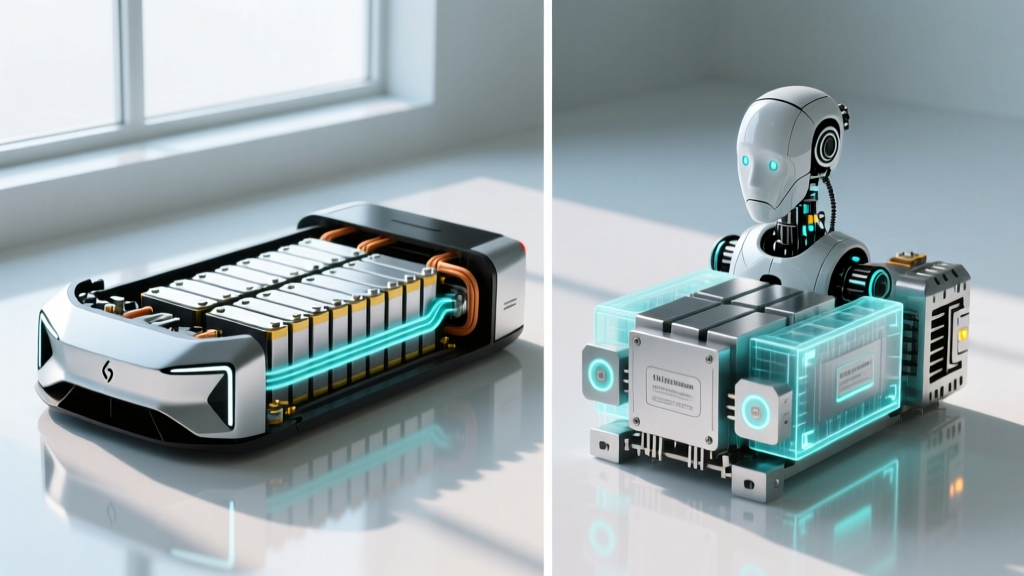
While the cell-level chemistry overlaps, the engineering constraints for humanoid batteries diverge sharply from automotive applications:
- Capacity: EV packs range from 50–150+ kWh; humanoid robots like Tesla Optimus use approximately 2.3 kWh — roughly the energy content of a single Tesla Powerwall module.
- Voltage: EVs operate at 400V (most platforms) or 800V (Hyundai E-GMP, Porsche Taycan, GM Ultium trucks). Humanoid robots typically run at 48–52V to reduce arcing risk and simplify power electronics within the compact body.
- Discharge rate: A humanoid robot performing dynamic tasks (walking, lifting, climbing stairs) can draw 2–5C burst currents from its pack — far higher than the typical 0.3–1C sustained draw of an EV cruising at highway speed.
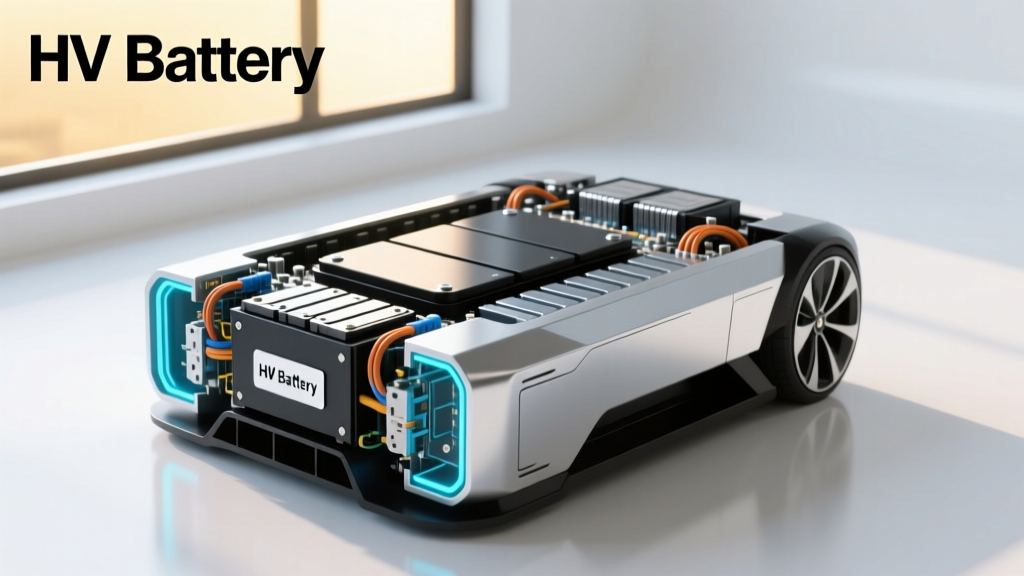
- Form factor: EV battery packs are skateboard-mounted structural elements. Humanoid battery packs must fit inside a human-proportioned torso, requiring custom pouch or cylindrical cell arrangements with integrated cooling channels in a space roughly the size of a laptop.
- Replacement cadence: An EV battery is designed to last the life of the vehicle (15–20 years). A humanoid robot battery in industrial service may require replacement every 3–5 years due to the higher cycle count and aggressive discharge profiles.
The supply chain implications are notable: both EVs and humanoid robots compete for the same NMC/NCA cells from suppliers like CATL, LG Energy Solution, Samsung SDI, and Panasonic. As humanoid robot production scales through the late 2020s, this shared demand could influence cell pricing and availability across both sectors.
Emerging Battery Technology: Solid-State and Silicon Anodes
Several next-generation battery technologies are in active development that could reshape both EV and humanoid robot power systems — but none are commercially available in production vehicles as of 2026.
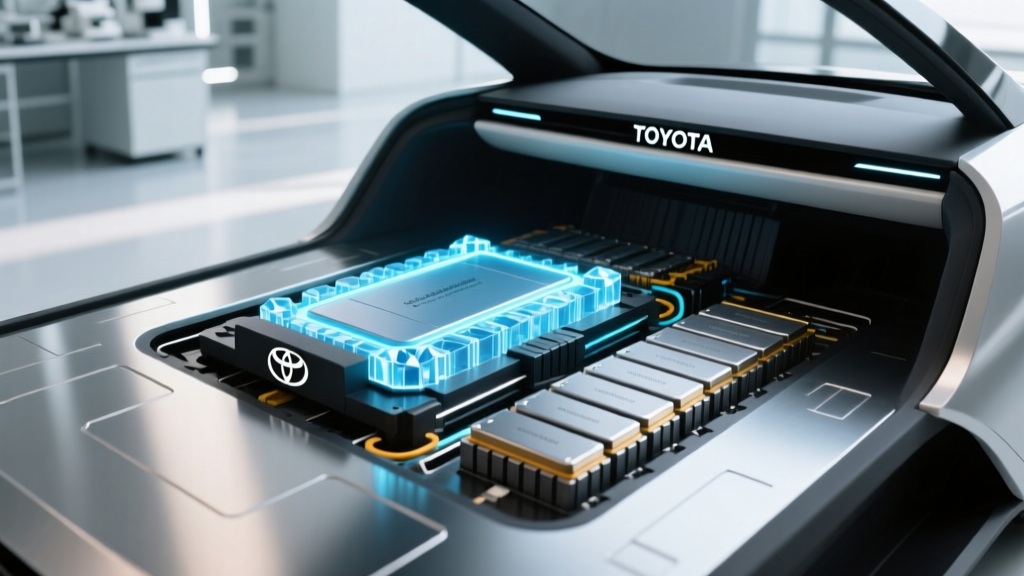
Solid-state batteries replace the liquid electrolyte with a solid ceramic, polymer, or sulfide-based conductor, promising energy densities of 350–500 Wh/kg (roughly double current NMC cells), faster charging, and improved safety. Toyota has announced a solid-state EV prototype targeting 2027–2028 production, while QuantumScape continues to validate its cells with Volkswagen's PowerCo. Samsung SDI aims for mass production by 2027. Realistically, solid-state EVs will be limited to premium, low-volume models through the end of the decade, with broad market availability not expected until the early 2030s.
Silicon-dominant anodes (replacing graphite) offer 30–50% more energy density at the cell level. Companies like Sila Nanotechnologies and Group14 Technologies are supplying early silicon-anode cells to Mercedes-Benz (for the G-Class electric) and other OEMs. This technology is closer to mainstream adoption — appearing in select 2026–2027 model-year EVs — and could also benefit humanoid robots by reducing pack weight for the same runtime.
Sodium-ion batteries are entering the market for budget EVs (notably in China via CATL and BYD) and could serve as a low-cost, cobalt-free option for stationary humanoid robot charging docks. Energy density (~140 Wh/kg) makes sodium-ion impractical for long-range EVs or weight-sensitive robots, but the cost advantage is substantial.
Frequently Asked Questions
How long do EV batteries last in years and miles?
Most modern EV batteries (2022 and newer) are designed to retain 70–85% of their original capacity after 150,000–200,000 miles and 12–15 years of use. Fleet data from Tesla, Hyundai, and GM shows that catastrophic battery failure is rare — fewer than 1.5% of vehicles need a full pack replacement within the first decade. LFP chemistries generally outlast NMC in cycle count, though NMC offers better range per pound.
How much does an EV battery cost to replace in 2026?
Replacement costs range from approximately $7,000 for a Tesla Model 3 RWD (60 kWh LFP) to $25,000+ for a Ford F-150 Lightning Extended Range (131 kWh NMC), including parts and labor. These costs have dropped roughly 30–40% since 2020 due to declining cell prices. Most owners will never need a replacement — the battery typically outlasts the vehicle's economic life.
What does the EV battery warranty actually cover?
Federal law mandates at least 8 years/100,000 miles of battery coverage (10 years/150,000 miles in CARB states). The warranty guarantees the battery will retain at least 70% of its original capacity. If SoH drops below this threshold within the warranty period, the automaker must repair or replace the pack at no cost. The warranty covers defects and excessive degradation but not damage from accidents, flooding, or unauthorized modifications.
How do I check my EV battery's State of Health?
You can check SoH through your vehicle's service menu (Tesla, Hyundai/Kia), third-party apps like Tessie or Car Scanner paired with an OBD-II dongle, or by having a dealer run a battery health diagnostic. The most accurate method is reading the BMS-reported maximum capacity in kWh and comparing it to the original nameplate figure. Check quarterly to track your degradation trend.
LFP vs NMC — which battery chemistry is better?
Neither is universally "better." LFP wins on cycle life (3,000–6,000 cycles vs 1,000–2,500), cost ($85–100/kWh vs $110–140/kWh), thermal safety, and the ability to charge to 100% daily without degradation penalty. NMC wins on energy density (230–300 Wh/kg vs 160–180 Wh/kg), cold-weather performance, and fast-charge acceptance. For a standard-range commuter EV, LFP is the practical choice. For maximum range or cold-climate driving, NMC is preferable. Humanoid robots almost exclusively use NMC/NCA due to weight constraints.
Do humanoid robot batteries use the same cells as EVs?
At the cell level, yes — humanoid robots like Tesla Optimus use the same 2170 or 4680 cylindrical NMC/NCA cells found in EVs. However, the pack architecture is entirely different: robots use a compact, low-voltage (48–52V) pack of ~2.3 kWh with aggressive thermal management to handle high burst-current demands from joint actuators. The shared cell supply chain means that scaling humanoid robot production will compete with EV demand for the same battery cells.
Will solid-state batteries make current EVs obsolete?
Not in the near term. Solid-state batteries remain in pre-production validation as of 2026, with limited commercial availability expected in premium models around 2028–2030. Current NMC and LFP batteries already deliver 250–400+ miles of EPA range with 10–80% DC fast charging in 18–25 minutes — sufficient for the vast majority of drivers. Solid-state will eventually offer meaningful improvements in energy density and charge speed, but the transition will take a decade or more to reach mainstream price points.
For the latest federal EV tax credit eligibility rules — which can offset up to $7,500 of a new EV purchase and are subject to MSRP caps, buyer income limits, and battery sourcing requirements — consult the IRS Clean Vehicle Credits page. Battery technology and incentive rules evolve rapidly, so always verify current-year specifications with your dealer and a qualified tax professional.