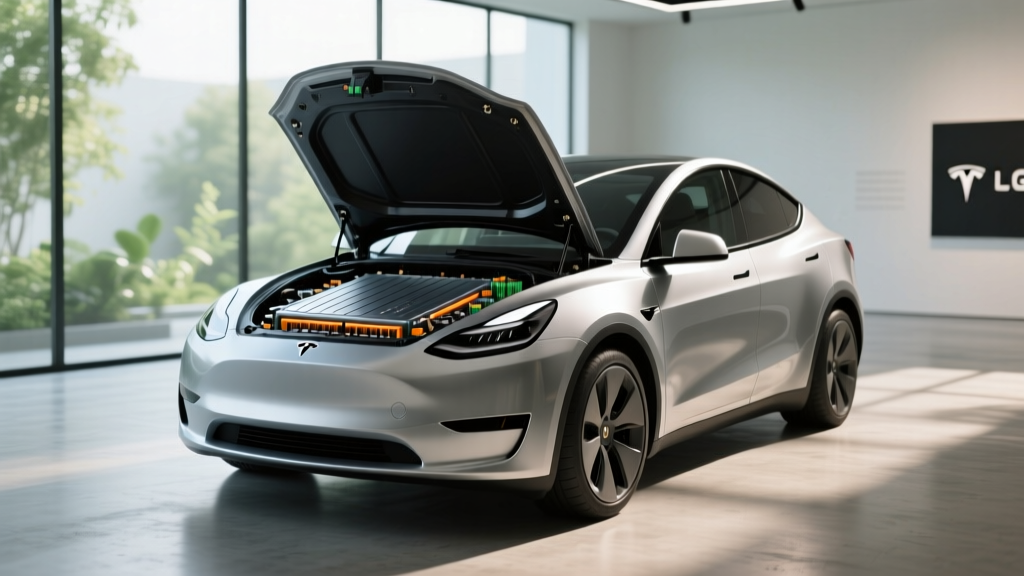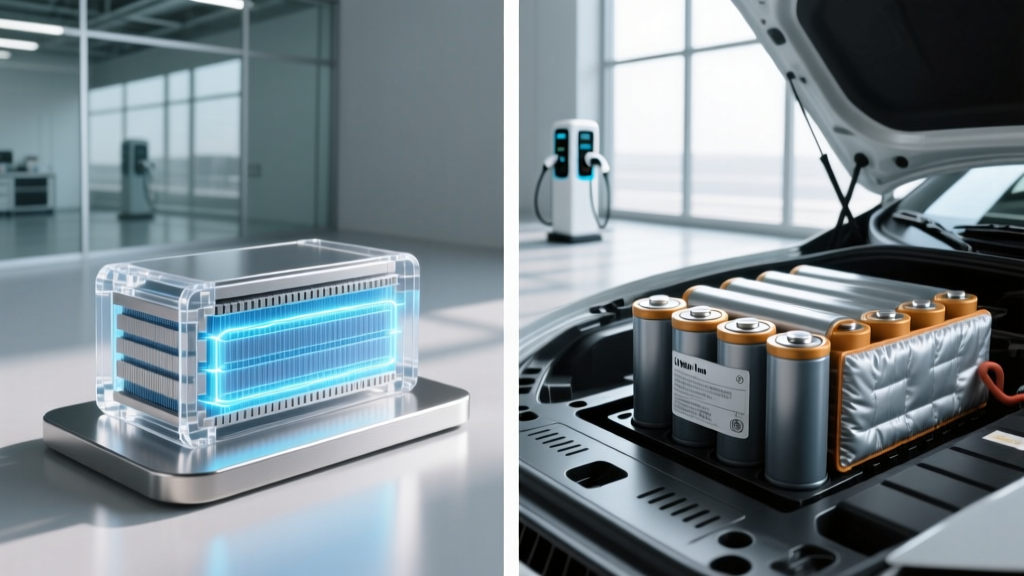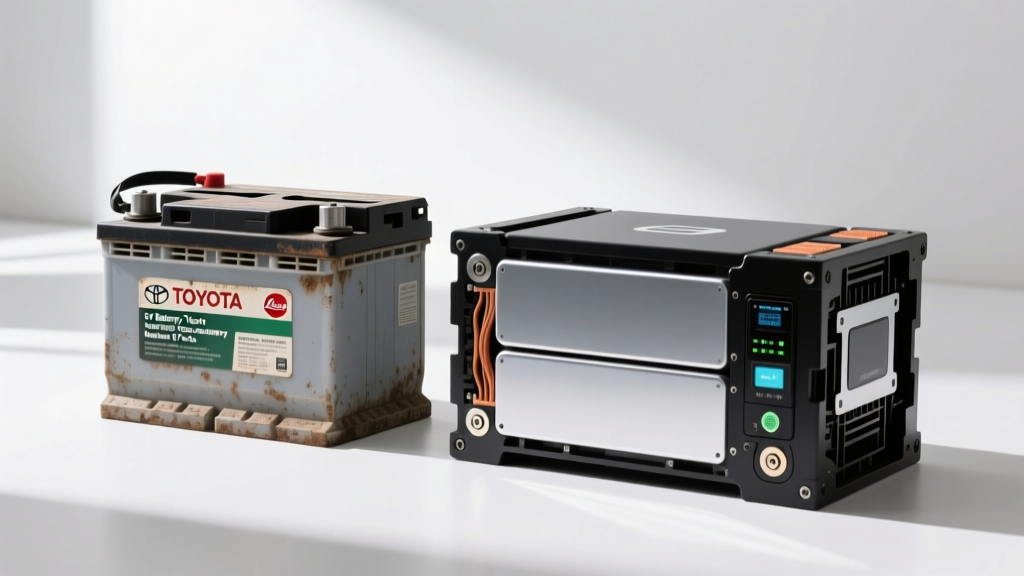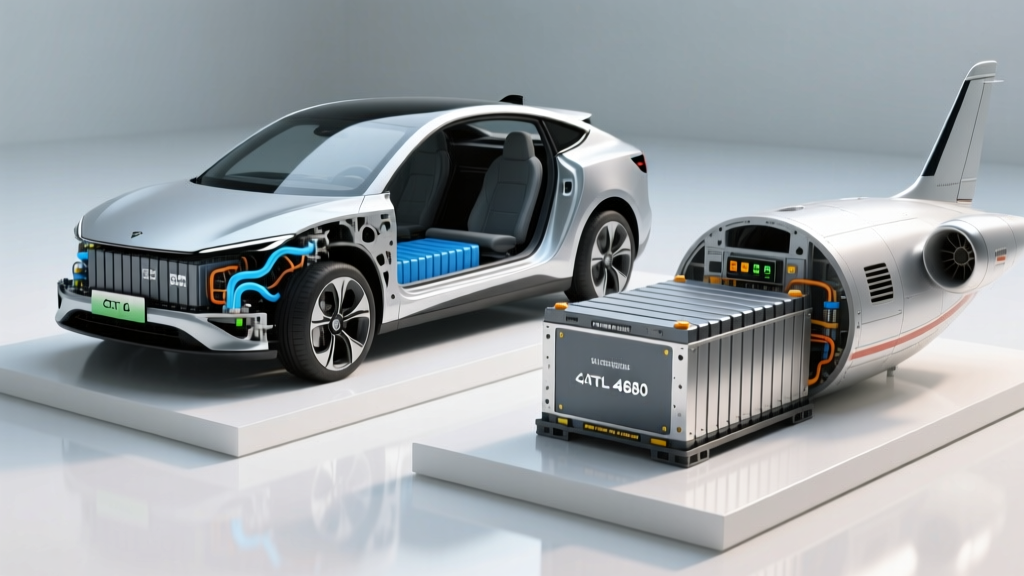
When people search for "aircraft battery pack" technology, they're often surprised to discover how much crossover exists between aviation and automotive lithium-ion engineering. Both industries demand extreme energy density, rigorous thermal management, and uncompromising safety — but the operating profiles, chemistries, and economics diverge sharply. This guide unpacks what EV buyers and owners need to know about high-voltage traction battery packs, using aviation battery standards as a comparative lens to illuminate what makes EV batteries tick, how long they last, and what they cost to replace.
LFP vs NMC/NCA: The Chemistry Trade-Offs That Matter
Every EV battery pack — and indeed every modern aircraft battery pack — relies on a specific lithium-ion cathode chemistry. In 2026, two families dominate the EV market:
- NMC (Nickel Manganese Cobalt) / NCA (Nickel Cobalt Aluminum): Higher energy density, better cold-weather performance, and the standard for long-range models. Used by Hyundai/Kia (E-GMP platforms), BMW, Mercedes, Rivian, and most performance-oriented EVs.
- LFP (Lithium Iron Phosphate): Lower energy density but superior cycle life, lower cost, no cobalt, and better thermal stability. Standard-range Tesla Model 3/Y, Ford Mustang Mach-E Select, and many Chinese-market EVs use LFP.
| Attribute | LFP (Lithium Iron Phosphate) | NMC / NCA |
|---|---|---|
| Energy density (cell-level) | ~160–180 Wh/kg | ~220–300 Wh/kg |
| Cycle life (to 80% SoH) | 3,000–5,000+ cycles | 1,000–2,500 cycles |
| Cold-weather performance | Moderate — more range loss below 32°F | Better — retains more capacity in cold |
| Thermal runaway risk | Very low — inherently stable | Low but higher than LFP; requires robust BMS |
| Cost per kWh (pack-level, 2026) | ~$90–$110 | ~$115–$145 |
| Recommended charge habit | Can charge to 100% daily | 80% daily; 100% only for trips |
| Cobalt/nickel content | None | Significant — supply chain & ethical concerns |
So which is better? Neither is universally superior. If you drive in cold climates, take frequent road trips, or need maximum range from a smaller pack, NMC/NCA is the practical choice. If you commute daily, charge at home, want the longest possible cycle life, and don't mind a slightly heavier pack, LFP offers compelling economics. Tesla's decision to use LFP in Standard Range models while reserving NMC for Long Range and Performance trims reflects exactly this calculus.
Aviation battery packs face a different optimization: weight is paramount (every kilogram costs fuel or reduces payload), so NMC and NCA chemistries dominate in FAA-certified applications where energy density trumps cycle count. EV engineers have the luxury of prioritizing longevity and cost because vehicle weight tolerances are more forgiving.
How Long Do EV Batteries Actually Last?
The short answer: most EV traction batteries outlast the vehicle they're installed in. Real-world fleet data consistently shows that modern liquid-cooled battery packs retain 85–95% of original capacity after 100,000 miles.
Here's what the data actually shows, drawn from fleet studies, manufacturer disclosures, and independent testing:
| Mileage | Typical Capacity Retained (NMC) | Typical Capacity Retained (LFP) | Source / Context |
|---|---|---|---|
| 25,000 mi (Year 1–2) | 95–98% | 97–99% | Initial formation loss; steepest early drop |
| 50,000 mi (Year 3–4) | 92–96% | 95–98% | Degradation curve flattens significantly |
| 100,000 mi (Year 5–7) | 87–93% | 92–96% | Tesla fleet data; fueleconomy.gov range estimates |
| 150,000 mi (Year 8–10) | 82–90% | 88–94% | Approaching warranty threshold for some |
| 200,000+ mi | 75–85% | 83–90% | High-mileage fleet / taxi data |
A few important nuances:
- The degradation curve is nonlinear. Most capacity loss occurs in the first 10,000–20,000 miles as the solid electrolyte interphase (SEI) layer forms. After that, loss slows dramatically.
- Calendar aging matters too. A garage-kept EV driven 5,000 miles/year still degrades — roughly 1–2% per year from chemistry alone, accelerated by high state of charge and heat.
- "End of life" for an EV battery is typically defined as 70–80% capacity. At that point, the pack still functions — you just have less range. Many packs continue operating well below 70%.
What the Battery Warranty Actually Covers
Federal law in the United States mandates that EV battery packs carry a minimum warranty of 8 years or 100,000 miles (whichever comes first) in most states, with California Air Resources Board (CARB) states requiring 10 years or 150,000 miles. Most manufacturers exceed these minimums.
| Manufacturer | Warranty Period | Capacity Retention Threshold | Notes |
|---|---|---|---|
| Tesla | 8 yr / 120,000 mi (Model 3/Y RWD); 8 yr / 150,000 mi (LR/Perf) | 70% | LFP packs on RWD; NMC on LR |
| Hyundai / Kia | 10 yr / 100,000 mi | 70% | Among the longest coverage |
| Ford | 8 yr / 100,000 mi | 70% | Mach-E, F-150 Lightning |
| BMW | 8 yr / 100,000 mi | 70% | i4, i5, iX platforms |
| Rivian | 8 yr / 175,000 mi | 70% | Higher mileage cap for R1T/R1S |
| GM (Ultium) | 8 yr / 100,000 mi | 70% (60% for commercial) | Equinox EV, Blazer EV, Silverado EV |
What the warranty covers: If your battery's usable capacity falls below the stated threshold (typically 70%) within the warranty period, the manufacturer will repair or replace the pack — or individual modules — at no cost. This covers defects and abnormal degradation. It does not cover damage from collisions, flooding, unauthorized modifications, or using non-approved charging equipment.
What it doesn't cover: Normal gradual degradation above the threshold. A pack at 72% capacity at year 9 is functioning "within spec" even though you've lost 28% of your range. This is why understanding your battery's chemistry and care habits matters.
EV Battery Replacement Cost: What You'll Actually Pay
Replacement cost is the single biggest anxiety among prospective EV buyers — and the area where misinformation runs most rampant. Here's the reality:
| Vehicle / Pack Size | Pack Capacity | Full Pack Replacement Cost | Module-Level Repair |
|---|---|---|---|
| Tesla Model 3 RWD (LFP) | ~60 kWh | $10,000–$14,000 | $2,500–$4,500 |
| Tesla Model Y LR (NMC) | ~75 kWh | $13,000–$18,000 | $3,000–$5,500 |
| Hyundai Ioniq 5 (NMC) | 77.4 kWh | $14,000–$19,000 | $3,500–$6,000 |
| Ford F-150 Lightning Ext. Range | 131 kWh | $22,000–$32,000 | $4,000–$8,000 |
| BMW iX xDrive50 | 111.5 kWh | $20,000–$28,000 | $4,500–$7,500 |
| Chevrolet Equinox EV | ~85 kWh | $14,000–$18,000 | $3,000–$5,000 |
Context that matters:
- Full pack replacement is rare. Most degradation issues involve individual modules or the battery management system (BMS), not the entire pack. Module-level repair is increasingly common and dramatically cheaper.
- Pack costs are falling. According to BloombergNEF battery price surveys, pack-level pricing has dropped from over $1,200/kWh in 2010 to roughly $100–$140/kWh in 2026 — a decline of nearly 90%.
- Most owners never need a replacement. The average American keeps a car 8.4 years and drives ~14,000 miles/year (roughly 117,000 miles total). At that mileage, most packs still retain 87–93% capacity.
- Third-party rebuilders are emerging. Independent shops can now source replacement modules and refurbish packs for 40–60% less than OEM pricing, though this may void remaining warranty.
For comparison, an aircraft battery pack of similar capacity (say, 60 kWh for an electric trainer aircraft) can cost $40,000–$80,000+ due to FAA certification requirements, redundant safety systems, and lower production volumes. The automotive scale advantage is massive.
Factors That Accelerate Battery Degradation
Not all miles are created equal. The same battery pack can degrade 5% or 15% over 100,000 miles depending on how it's treated. Here are the primary accelerants, ranked roughly by impact:
- High state of charge + heat (worst combination). Storing an NMC pack at 100% SoC in 95°F+ ambient temperatures accelerates electrolyte decomposition and cathode degradation. This is why manufacturers recommend 80% daily charge limits for NMC.
- Frequent DC fast charging at high power. Occasional fast charging is fine — modern BMS systems manage heat well. But daily 250 kW+ DC fast charging sessions generate sustained thermal stress. Data from Idaho National Laboratory testing showed that exclusively DC fast-charged packs degraded ~4–5% more over 50,000 miles than Level 2-charged packs.
- Deep discharge cycles (0% SoC regularly). Letting the pack sit at or near 0% stresses the anode. Try to keep SoC above 10% for storage.
- Extreme cold charging without preconditioning. Charging an ice-cold battery — especially at DC fast-charging speeds — can cause lithium plating on the anode, a permanent capacity loss mechanism. Always use your vehicle's battery preconditioning feature when navigating to a charger.
- Time (calendar aging). Even a perfectly stored pack degrades ~1–2% per year from internal chemical reactions. This is unavoidable but relatively minor.
Battery Care Best Practices — Maximize Your Pack's Life
- ✅ NMC owners: Set daily charge limit to 80%. Charge to 100% only when departing on a trip.
- ✅ LFP owners: Charge to 100% at least once per week (the BMS needs full-charge calibration, and LFP tolerates it well).
- ✅ Precondition the battery before every DC fast-charging session — use the car's built-in navigation-to-charger feature.
- ✅ Use Level 2 home charging as your primary method. It's gentler on the pack and cheaper per kWh.
- ✅ Avoid prolonged storage at 100% or below 10%. For long trips away from the car, leave it at ~50% SoC.
- ✅ Don't obsess over DC fast charging occasionally. Road-trip fast charging is fine — it's the daily pattern that matters.
- ❌ Don't leave the car at 100% SoC in hot weather for extended periods (days).
- ❌ Don't ignore battery warning lights — have the pack diagnosed promptly if the BMS flags an issue.
How to Check and Monitor Battery Health (SoH)
State of Health (SoH) is the percentage of your battery's current maximum capacity relative to its original factory capacity. A new pack starts at 100% SoH; a pack that held 75 kWh when new but now holds 67.5 kWh is at 90% SoH.
Methods to check SoH:
- In-vehicle display: Some manufacturers (BMW, Mercedes, Hyundai) show a battery health indicator in the settings menu. This is typically a simplified bar graph or percentage.
- Manufacturer app: Tesla, Ford, and others provide battery health data through their companion apps, though granularity varies.
- OBD-II diagnostic tools: Devices like the OBDLink SX paired with apps such as EVBatMon (for Hyundai/Kia) or Scan My Tesla can read the BMS directly and report actual vs. nominal kWh capacity.
- Dealer diagnostic report: Request a battery health printout during service visits. The dealer can pull the BMS log showing capacity, cell voltage spread, and any flagged modules.
- Manual calculation: Charge to 100%, note the displayed range, and compare to the original EPA range. Factor in that displayed range is affected by recent driving efficiency. This is imprecise but free.
What to watch for: Increasing cell voltage imbalance (one module group consistently lower than others) is often an early indicator of a failing module. If your SoH drops sharply rather than gradually — say, 5% in a month — that suggests a specific cell or module issue warranting diagnostic attention under warranty.
Emerging Battery Technology: What's Coming (and When)
The EV battery landscape is evolving rapidly, but it's essential to separate lab announcements from production reality. Here's a realistic timeline for next-generation technologies as of 2026:
Solid-State Batteries
Solid-state cells replace the liquid electrolyte with a solid ceramic, glass, or polymer separator. Benefits include higher energy density (projected 400–500 Wh/kg at cell level), faster charging, and dramatically reduced fire risk. Toyota has announced limited solid-state production for 2027–2028, initially in small volumes for premium models. QuantumScape (backed by Volkswagen) continues prototype validation. Realistic mass-market availability: 2029–2032. Early packs will be expensive and reserved for flagship vehicles.
Silicon Anode Technology
Replacing graphite anodes with silicon (or silicon-carbon composites) can boost energy density 20–40%. Companies like Sila Nanotechnologies and Group14 are shipping silicon anode materials in limited production. The Mercedes-Benz G-Class electric (2025+) uses silicon anode cells from Sila. Realistic broader adoption: 2026–2028, with incremental energy density gains rather than step-change improvements.
Sodium-Ion Batteries
Sodium-ion chemistry eliminates lithium entirely, using abundant and cheap sodium. Energy density is lower (~120–160 Wh/kg), making it best suited for budget city cars and stationary storage. CATL began mass production in China in 2024–2025. US-market vehicles: unlikely before 2028–2030, and primarily in entry-level segments.
Frequently Asked Questions
How long do EV batteries last in years and miles?
Most modern liquid-cooled EV battery packs retain 85–93% capacity at 100,000 miles and 80–90% at 150,000 miles. In calendar years, expect 15–20+ years of usable service before the pack falls below 70% capacity — the point most manufacturers define as "end of life." Many packs continue functioning below that threshold, just with reduced range. LFP packs generally last longer due to superior cycle life.
How much does an EV battery cost to replace?
Full pack replacement ranges from roughly $10,000 for a 60 kWh pack (Tesla Model 3 RWD) to $32,000 for a 131 kWh pack (F-150 Lightning Extended Range). However, full pack replacement is uncommon — most issues involve individual modules, which cost $2,500–$8,000 to replace. Costs continue to decline as pack-level pricing drops and third-party rebuilders enter the market. If the failure occurs within the 8-year/100,000-mile warranty window, replacement is free.
What does the EV battery warranty cover?
Federal law mandates a minimum 8-year/100,000-mile warranty (10 years/150,000 miles in CARB states). The warranty guarantees the pack will retain at least 70% of original usable capacity. If it falls below that threshold within the warranty period, the manufacturer repairs or replaces the pack at no cost. The warranty covers manufacturing defects and abnormal degradation but not collision damage, flooding, or unauthorized modifications.
How do I check and maximize my EV battery health?
Check SoH via your vehicle's settings menu, companion app, an OBD-II diagnostic tool, or a dealer service report. To maximize longevity: charge NMC packs to 80% daily (100% only for trips), charge LFP packs to 100% weekly, always precondition before DC fast charging, rely primarily on Level 2 home charging, avoid prolonged storage at extreme SoC levels, and don't ignore battery warning indicators.
LFP vs NMC — which battery chemistry is better for me?
Choose LFP if: you commute daily, charge at home, want maximum cycle life (3,000–5,000+ cycles), prefer cobalt-free sourcing, and don't need the longest possible range. Choose NMC/NCA if: you drive in cold climates, need maximum range from a lighter pack, take frequent road trips, or prioritize fast-charging speed in cold weather. Neither is universally better — it depends on your driving profile.
How is an EV battery pack different from an aircraft battery pack?
Both use lithium-ion cells, but aircraft battery packs prioritize energy density above all else (weight is critical in aviation) and must meet rigorous FAA/EASA certification standards including DO-311A. This makes them far more expensive per kWh ($700–$1,500+/kWh vs. $100–$145/kWh for EVs). Aircraft packs also typically use NMC/NCA exclusively, operate in wider temperature ranges, and include redundant safety systems. EV packs prioritize longevity, cost, and manufacturability at massive scale.
Sources: EPA fueleconomy.gov, IRS §30D clean vehicle credit rules, Idaho National Laboratory EV battery testing reports, BloombergNEF battery price survey, manufacturer warranty documentation. Tax credit eligibility and battery pricing are subject to change; verify current rules with a tax professional and manufacturer.