Why a Search for "Battery for a 2013 Chevy Malibu" Leads to an EV Battery Masterclass
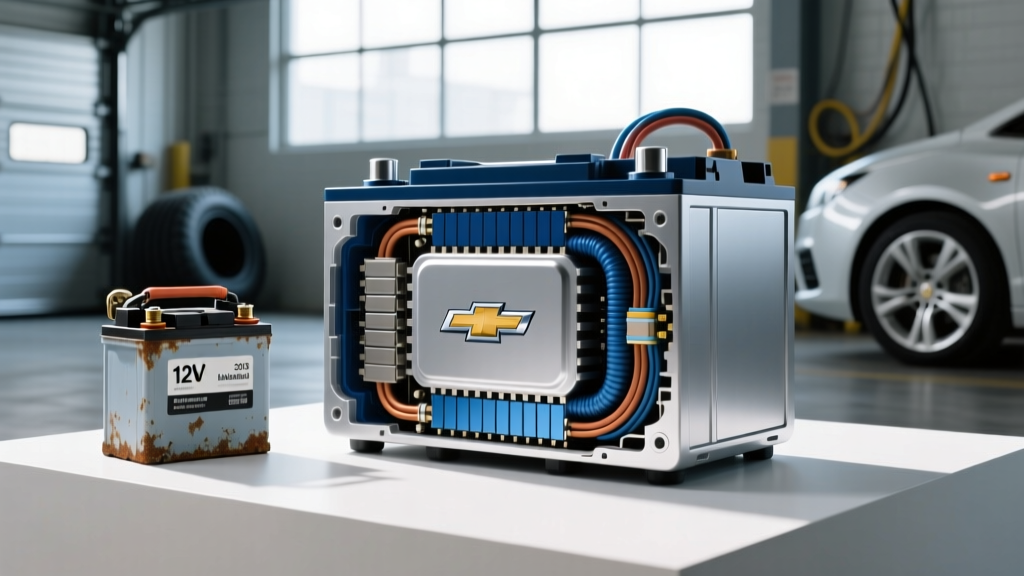
If you own a 2013 Chevrolet Malibu and the engine won't crank, you're almost certainly dealing with a failed 12-volt lead-acid starter battery — a Group 48 (H6) or Group 47 (H5) unit that costs roughly $160–$240 at an auto parts store and takes ten minutes to swap. That's a straightforward, inexpensive fix. But the moment you start cross-shopping your next car and land on an electric vehicle, the word "battery" takes on a completely different meaning, and a completely different price scale.
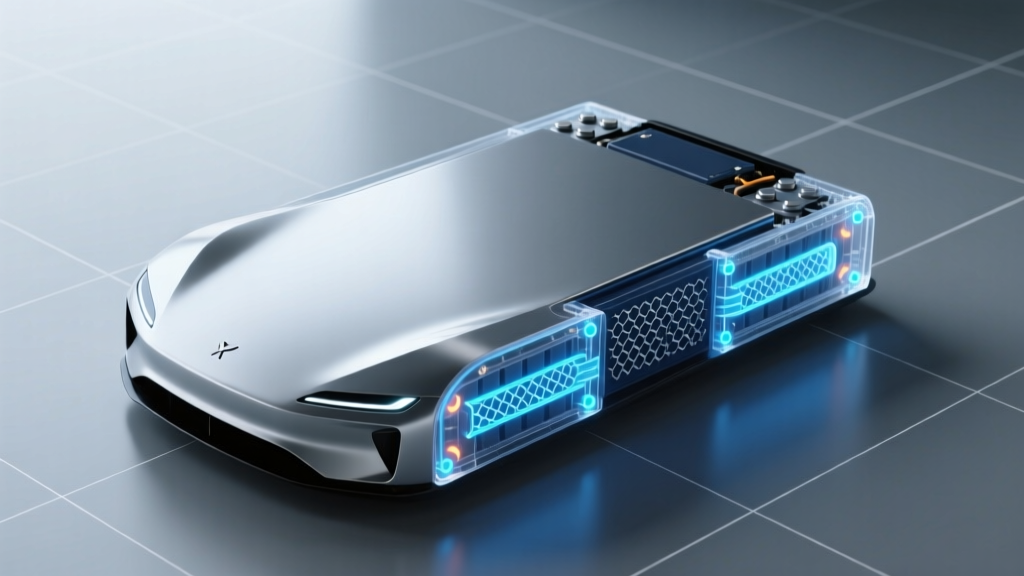
An EV's high-voltage traction battery is the single most expensive component in the vehicle — typically 60 to 120 kWh of lithium-ion cells operating at 350–800 volts, responsible for every mile of range you get. Understanding how these batteries are built, how they age, what warranties cover, and what replacement actually costs is the single highest-leverage piece of research an EV buyer can do. This guide covers all of it, with real numbers.
The 12V Battery in a 2013 Chevy Malibu vs. an EV Traction Battery
Before we go deep on EV battery technology, let's close the loop on the Malibu question so there's no confusion between the two very different "batteries" in play.
| Attribute | 2013 Malibu 12V Battery | EV Traction Battery (e.g., 2026 Hyundai Ioniq 5) |
|---|---|---|
| Voltage | 12V | ~697V (84 kWh pack) |
| Chemistry | Lead-acid (flooded or AGM) | NMC or LFP lithium-ion |
| Energy capacity | ~0.7–0.9 kWh | 58–110+ kWh |
| Purpose | Crank starter, run accessories | Propel the vehicle, store regen energy |
| Typical lifespan | 3–5 years | 15–20+ years (to 70–80% capacity) |
| Replacement cost | $160–$240 | $6,000–$22,000+ (out of warranty) |
Important note: modern EVs also carry a small 12V battery (or increasingly, a 12V lithium unit) to run lights, infotainment, and computers. If that 12V dies, the car won't "start" even though the massive traction battery is fully charged. But when people worry about "EV battery replacement cost," they mean the traction pack — and that's what this guide addresses.
Battery Chemistry: LFP vs. NMC/NCA Trade-Offs
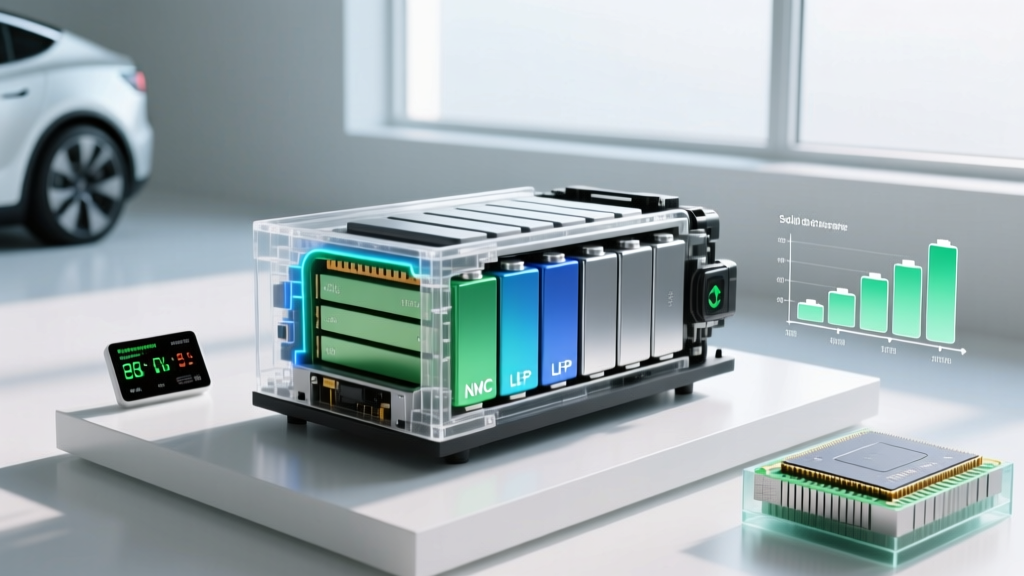
Two lithium-ion chemistries dominate the 2026 EV market. The choice between them affects range, longevity, cold-weather behavior, and price.
| Factor | LFP (Lithium Iron Phosphate) | NMC / NCA (Nickel-based) |
|---|---|---|
| Energy density | Lower (~160–180 Wh/kg cell-level) | Higher (~230–300 Wh/kg cell-level) |
| Typical pack sizes | 50–75 kWh (Tesla Model 3 RWD, standard-range BYD) | 75–120+ kWh (long-range, performance models) |
| Cycle life | 3,000–5,000+ full cycles | 1,000–2,000 full cycles |
| Cold-weather performance | Weaker; greater range loss below freezing, slower cold charging | Better low-temp discharge and charge acceptance |
| Charging to 100% daily | Recommended (helps BMS calibration) | Generally discouraged; 80% daily preferred |
| Cost per kWh | Lower ($90–$115/kWh at pack level) | Higher ($120–$155/kWh at pack level) |
| Cobalt/nickel content | None (cobalt-free) | Contains nickel and often cobalt |
| Best for | Daily commuters, high-mileage drivers, budget-focused buyers | Long road trips, cold climates, maximum range seekers |
Which is better? There is no universal winner. If you drive under 250 miles a day, live in a moderate climate, and want a battery that will likely outlast the car's body, LFP is the durability champion. If you regularly take 400-mile road trips or live where winters are harsh, NMC/NCA gives you the range buffer and cold-weather performance you need. Tesla, Ford (base Mustang Mach-E), and Rivian offer LFP options on select trims; most long-range and performance EVs remain NMC.
How Long Do EV Batteries Actually Last?
The short answer: far longer than most buyers fear. Data from fleets, long-term owners, and manufacturer studies consistently show modern liquid-cooled lithium-ion packs retaining 85–92% of original capacity at 100,000 miles.
Observed degradation data points (sourced from fleet and owner studies):
- Tesla Model 3/Y (NMC, 2019–2024): ~5–7% capacity loss at 100,000 miles; ~10–12% at 200,000 miles (Tesla Impact Report, owner aggregations via Teslamate).
- Chevrolet Bolt EV (NMC, 2017–2023, 60–65 kWh): ~8–10% loss at 100,000 miles under normal use; higher in hot climates with frequent DC fast charging.
- Nissan Leaf (passive air-cooled, 2011–2017, 24–30 kWh): 15–25% loss at 80,000–100,000 miles — the cautionary tale that pushed the industry toward active liquid cooling.
- LFP packs (Tesla Model 3 RWD, BYD models): Early fleet data suggests 3–5% loss at 100,000 miles, reflecting LFP's superior cycle life.
At an average of 13,500 miles per year (FHWA data), a modern liquid-cooled NMC pack should comfortably reach 200,000 miles while retaining 75–85% of original capacity — well beyond the point where most owners have moved on. LFP packs project even further. The era of needing a mid-life battery swap is largely behind us for mainstream, liquid-cooled EVs.
What Does the Battery Warranty Actually Cover?
Federal law (EPA emissions-related warranty requirements, interpreted to include traction batteries on PHEVs and BEVs) effectively sets a floor: 8 years / 100,000 miles for battery capacity retention on most EVs sold in the U.S., with California Air Resources Board (CARB) states extending that to 10 years / 150,000 miles on PZEV/EZEV-classified vehicles. Manufacturers then set their own capacity-retention thresholds.
| Manufacturer | Warranty Term | Capacity Retention Threshold |
|---|---|---|
| Tesla (Model 3/Y RWD, LFP) | 8 yr / 100,000 mi | 70% |
| Tesla (Model 3/Y Long Range/Perf.) | 8 yr / 120,000 mi | 70% |
| Hyundai / Kia (Ioniq 5, EV6, EV9) | 10 yr / 100,000 mi | 70% |
| Ford (Mustang Mach-E, F-150 Lightning) | 8 yr / 100,000 mi | 70% |
| Chevrolet (Equinox EV, Blazer EV, Silverado EV) | 8 yr / 100,000 mi | 70% (Bolt was 60% historically) |
| Rivian (R1T, R1S) | 8 yr / 175,000 mi | 70% |
| BMW (i4, iX, i7) | 8 yr / 100,000 mi | 70% |
What triggers a warranty claim? If the pack's usable capacity falls below the stated percentage of its original kWh within the term, the manufacturer must repair or replace it — typically via module-level replacement rather than a full pack swap. Normal gradual degradation above the threshold is not covered. Damage from accidents, flooding, improper modifications, or unauthorized charging equipment is excluded. Always read the specific warranty booklet; terms like "defect" vs. "capacity loss" matter.
EV Battery Replacement Cost: What It Really Takes
Out-of-warranty traction battery replacement is expensive but increasingly rare as a surprise — most packs outlive the vehicle's economic life. When replacement is needed (typically 15+ years in, or after catastrophic damage), costs vary dramatically by pack size and chemistry.
| Vehicle / Pack | Pack Size | Chemistry | Replacement Cost (parts + labor) |
|---|---|---|---|
| Tesla Model 3 RWD | ~60 kWh | LFP | $8,000–$12,000 |
| Tesla Model Y Long Range | ~82 kWh | NMC | $12,000–$16,000 |
| Hyundai Ioniq 5 | 77.4 kWh | NMC | $11,000–$15,000 |
| Ford F-150 Lightning Ext. Range | ~131 kWh | NMC | $18,000–$25,000 |
| Chevrolet Bolt EV (older) | 60–65 kWh | NMC | $9,000–$14,000 |
| Nissan Leaf (24–40 kWh) | 24–40 kWh | NMC | $6,500–$9,500 |
| BMW iX xDrive50 | ~105 kWh | NMC | $16,000–$22,000 |
Context matters: a $15,000 battery replacement at year 16 on a vehicle that saved $1,200/year in fuel and maintenance versus a comparable gas car has already netted positive over its life. And refurbished or remanufactured packs are increasingly available from third-party shops for 30–50% less than OEM new-pack pricing. For comparison, a transmission replacement on a gas vehicle runs $4,000–$8,000 and is far more common than an EV traction battery swap.
What Kills an EV Battery Early (and What Doesn't)
Lithium-ion batteries degrade via two mechanisms: calendar aging (chemical reactions that occur regardless of use, accelerated by heat and high state of charge) and cycle aging (wear from charge/discharge cycles, accelerated by high C-rates and deep cycles). Here's what actually moves the needle, and what's overblown.
High-Impact Factors (Manage These)
- Sustained high state of charge in heat: Parking an NMC pack at 100% SoC for days in 95°F+ weather is the single worst thing you can do. Store at 50–70% when parked long-term.
- Frequent DC fast charging above 150 kW: Occasional road-trip fast charging is fine; daily 250 kW sessions on the same pack measurably accelerate degradation. Favor Level 2 home charging for daily use.
- Extreme heat exposure: Liquid-cooled packs manage this well, but regularly parking in direct desert sun without thermal management active shortens life.
- Repeated 0% discharges: Letting the car sit at 0% SoC (true empty, not the buffered "0%" on the dash) stresses cells. Plug in promptly after low-SoC drives.
Lower-Impact Factors (Don't Obsess)
- Cold weather range loss: A 20–30% range drop at 20°F is temporary physics, not damage. The battery recovers when warm.
- Occasional 100% charges: Charging NMC to 100% before a road trip, then driving off promptly, is perfectly fine. The problem is sitting at 100%.
- Regenerative braking: Regen currents are well within safe C-rate limits. Use it freely.
- Preconditioning: Warming the battery before fast charging (via nav-routed preconditioning on Tesla, Hyundai, Ford) actually protects the pack by avoiding lithium plating during cold fast charges.
Monitoring Battery Health: How to Check State of Health (SoH)
State of Health (SoH) is the percentage of original capacity your pack still holds. A new pack is 100% SoH; at 70% SoH on an NMC pack, you're at the typical warranty-replacement threshold. Here's how to check it:
- In-vehicle displays: Tesla's Service Mode (accessible via a hidden menu) shows estimated SoH. Hyundai/Kia's diagnostic screen, accessible via the infotainment system, reports pack health. Nissan Leaf owners can read "capacity bars" on the dash — 12/12 bars is near-new; 8/12 is ~70%.
- OBD-II dongles + apps: Tools like LeafSpy (Nissan), Scan My Tesla, or ABRP-linked OBD readers can pull BMS-reported SoH, cell voltage variance, and pack kWh remaining.
- Dealer diagnostics: Any authorized service center can run a full battery health report. Request one before buying a used EV — it's the equivalent of a compression test on a gas car.
- Manual calculation: Charge to 100%, note the displayed range, and compare to the original EPA sticker. A 2020 Model 3 LR that displayed 322 miles new but now shows 285 miles at 100% is at ~88.5% SoH. (Account for temperature — do this in mild weather.)
For used-EV buyers, SoH is the single most important data point. A 6-year-old EV at 92% SoH is a better buy than a 3-year-old at 85% SoH, because the latter suggests abusive charging habits or a defective module.
What's Next: Solid-State and Silicon-Anode Batteries
Two next-generation technologies are frequently hyped. Here's where they realistically stand as of 2026:
Solid-state batteries replace the liquid electrolyte with a solid conductor, promising higher energy density (potentially 400+ Wh/kg), faster charging, and improved safety. Toyota has announced limited solid-state deployment in select 2027–2028 models; Samsung SDI and QuantumScape are supplying pilot cells to OEMs. However, manufacturing yield and cost remain barriers. Expect solid-state to appear in low-volume, premium vehicles first, with mainstream availability no earlier than 2029–2030. Treat any automaker claiming imminent solid-state production with skepticism.
Silicon-anode batteries (used in the 2026 Tesla Cybertruck's structural pack and several startup applications) blend silicon into the graphite anode to boost energy density by 10–20% without the manufacturing upheaval of solid-state. This is real, shipping technology today — but gains are incremental, not transformational. Silicon anodes also face cycle-life trade-offs that limit them to specific applications.
Sodium-ion batteries are emerging as a low-cost, cobalt-free alternative for budget city EVs (BYD and CATL are shipping them in China-market vehicles). Energy density is lower than LFP, so they're best suited for short-range urban cars, not long-haul applications.
Bottom line: the lithium-ion batteries in 2026 EVs are already excellent. Don't delay a purchase waiting for solid-state — the pack in a current Ioniq 5, Model Y, or Equinox EV will serve you well for 15+ years.
Frequently Asked Questions
Is the battery for a 2013 Chevy Malibu the same kind of battery as in an EV?
No. The 2013 Malibu uses a conventional 12V lead-acid starter battery (Group 48/H6, ~$180) to crank the gas engine. An EV's traction battery is a high-voltage lithium-ion pack (400V–800V, 50–130+ kWh) that propels the vehicle. They share the word "battery" but have nothing in common in chemistry, cost, or function. EVs also have a separate 12V battery for accessories.
How long do EV batteries last in years and miles?
Modern liquid-cooled EV batteries typically last 15–20 years or 200,000+ miles while retaining 70–85% of original capacity. LFP chemistries project even longer cycle life. The Nissan Leaf's early air-cooled packs (2011–2017) degraded faster, but that generation is no longer representative of the market.
How much does it cost to replace an EV battery out of warranty?
Between $6,500 and $25,000 depending on pack size and chemistry, with most mainstream packs (60–80 kWh NMC or LFP) falling in the $9,000–$16,000 range including labor. Refurbished packs from third-party shops can reduce this by 30–50%. Most packs never need replacement during normal ownership.
What does the federal battery warranty cover?
At minimum, 8 years / 100,000 miles of capacity retention above a stated threshold (typically 70% of original capacity). CARB states extend this to 10 years / 150,000 miles for qualifying vehicles. The warranty covers defects and abnormal degradation — not damage from accidents, misuse, or unauthorized modifications.
Should I choose LFP or NMC for my next EV?
Choose LFP if you want maximum cycle life, can charge to 100% daily without concern, live in a moderate climate, and don't need the longest possible single-charge range. Choose NMC/NCA if you regularly drive 300+ miles between charges, live in a cold climate, or want the highest range-per-dollar on long road trips.
Does fast charging damage my EV battery?
Occasional DC fast charging (road trips, a few times a month) causes negligible additional degradation on modern liquid-cooled packs. Daily use of 150+ kW chargers does measurably accelerate wear over years. For daily charging, Level 2 at home (7–11 kW) is the battery-health ideal.
How do I check my EV's battery State of Health before buying used?
Request a dealer diagnostic report, use an OBD-II app like LeafSpy or Scan My Tesla, or compare the displayed range at 100% charge (in mild weather) to the original EPA sticker. A SoH above 90% on a 3–5 year-old EV is typical; below 85% warrants investigation.
Sources: EPA fueleconomy.gov for official range and efficiency data; IRS.gov for current §30D clean vehicle credit rules including battery sourcing requirements; manufacturer warranty booklets from Tesla, Hyundai, Ford, Chevrolet, Rivian, and BMW (2026 model year).