Why a 2007 Ford Taurus Battery Search Leads Straight to EV Battery Science
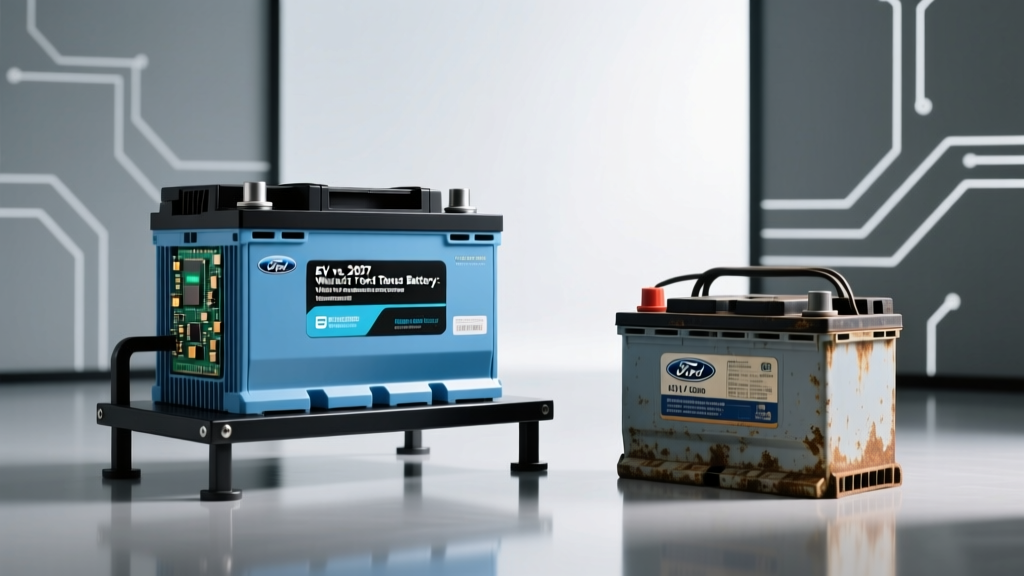
If you've searched for a 2007 Ford Taurus battery, you're likely dealing with a Group 65 12V lead-acid battery that costs between $150 and $250 and lasts roughly three to five years. It's a straightforward swap at any auto parts store. But that simple, well-understood replacement cycle is precisely what makes electric vehicle battery ownership feel so opaque to first-time EV buyers.
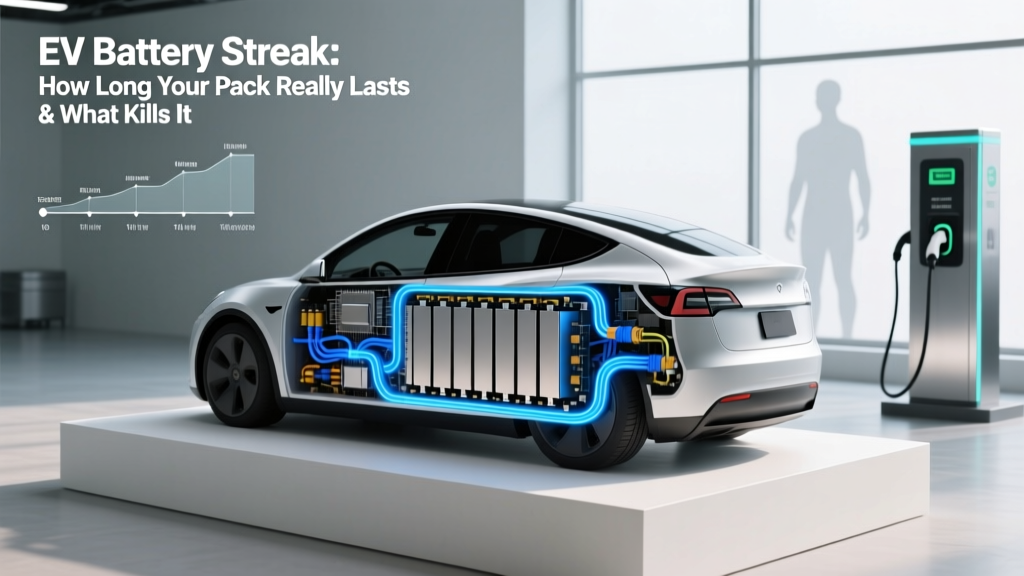
The high-voltage traction battery in a modern EV is a fundamentally different machine. It doesn't just start the car — it stores 50 to 100+ kWh of energy, weighs 800 to 1,200 pounds, and costs between $5,000 and $20,000 to replace. Understanding how these batteries degrade, what warranties actually cover, and whether you should worry about replacement is the real homework for any EV purchase.
This guide walks through the chemistry, degradation data, warranty structures, replacement economics, and care practices that determine how long an EV battery actually lasts — with the kind of hard numbers that spec-driven buyers need.
LFP vs. NMC/NCA: The Chemistry Decision That Defines Your Battery
Not all lithium-ion batteries are built the same. The cathode chemistry determines energy density, cycle life, cold-weather behavior, and cost. In 2026, two families dominate the market:
- NMC (Nickel Manganese Cobalt) / NCA (Nickel Cobalt Aluminum): Used in most long-range EVs (Tesla Model 3 Long Range, Hyundai Ioniq 5, BMW iX). Higher energy density means more range per kilogram.
- LFP (Lithium Iron Phosphate): Used in standard-range and cost-optimized models (Tesla Model 3 RWD, Ford Mustang Mach-E Select, BYD vehicles). Lower energy density but longer cycle life and no cobalt.
| Attribute | NMC / NCA | LFP |
|---|---|---|
| Energy Density (Wh/kg) | 220–300 | 140–180 |
| Typical Cycle Life | 1,000–2,000 cycles | 3,000–5,000+ cycles |
| Cold Performance (−10°C) | Better; ~15–20% range loss | Worse; ~25–35% range loss without heat pump |
| Cost (per kWh, 2026) | $110–$140 | $75–$100 |
| Recommended SoC for Daily Use | 80% charge limit | 100% charge OK |
| Cobalt Content | Yes (supply chain concern) | None |
| Thermal Stability | Lower; requires robust BMS | Higher; inherently safer chemistry |
The practical trade-off: If you need maximum range in a lighter package and don't mind charging to 80% daily, NMC delivers. If you prioritize longevity, want to charge to 100% without anxiety, and don't need every last mile of range, LFP is the smarter long-term play. Tesla's shift to LFP for standard-range models reflects this calculus — the chemistry is cheaper, lasts longer, and most buyers don't need 350 miles of EPA range.
How Long Do EV Batteries Actually Last? Degradation Data
The question isn't whether an EV battery degrades — it does, from day one. The question is how fast, and whether it matters within your ownership window.
Based on fleet data from Tesla's 2025 Impact Report, Recurrent Auto's battery health database, and independent testing by Recurrent, here's what real-world degradation looks like:
Typical Degradation Curve (NMC batteries, average driver ~12,000 mi/yr):
- Year 1 (12,000 mi): 2–4% capacity loss (initial "break-in" drop)
- Year 3 (36,000 mi): 6–9% total loss
- Year 5 (60,000 mi): 8–12% total loss
- Year 8 (96,000 mi): 10–15% total loss
- Year 10 (120,000 mi): 12–18% total loss
LFP batteries typically show slower degradation: 5–10% loss at 100,000 miles is common in Tesla Model 3 RWD fleet data.
What this means practically: A 2026 Hyundai Ioniq 5 with a 77.4 kWh battery and 303 miles of EPA range might deliver ~260 miles of usable range at 100,000 miles. That's still functional — not a crisis. The vast majority of EV batteries outlast the vehicle's body, suspension, and interior before they degrade to a point requiring replacement.
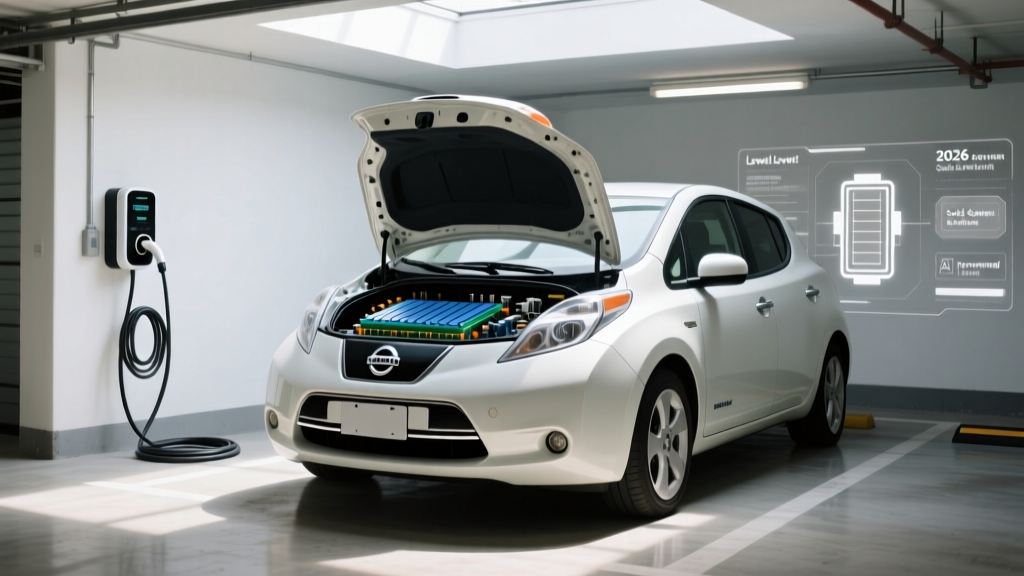
According to fueleconomy.gov, modern battery thermal management systems have dramatically reduced the catastrophic failures seen in early EVs like the 2011–2015 Nissan Leaf (which lacked active liquid cooling).
Battery Warranty Terms: What's Actually Covered
Federal law mandates a minimum 8-year / 100,000-mile warranty on EV battery packs for emissions-related compliance, but most manufacturers exceed this baseline. Here's what the major warranties look like for 2026 models:
| Manufacturer | Warranty Period | Mileage Cap | Capacity Retention Threshold |
|---|---|---|---|
| Tesla (Model 3/Y LFP) | 8 years | 120,000 miles | 70% |
| Tesla (Model 3/Y NMC) | 8 years | 120,000 miles | 70% |
| Hyundai / Kia | 10 years | 100,000 miles | 70% |
| Ford (Mach-E) | 8 years | 100,000 miles | 70% |
| BMW | 8 years | 100,000 miles | 70% |
| GM (Ultium platform) | 8 years | 100,000 miles | 70% |
| Rivian | 8 years | 175,000 miles | 70% |
Key details most buyers miss:
- The 70% threshold means the manufacturer only replaces the battery if it degrades below 70% of original capacity within the warranty period. A battery at 72% is functioning "as designed" — even if you've lost 80 miles of range.
- Warranties cover defects and abnormal degradation, not damage from accidents, flooding, or aftermarket modifications.
- Some manufacturers (Hyundai, Rivian) offer more generous mileage caps, which matters for high-mileage drivers and rideshare use.
- Warranty claims typically require a dealer diagnostic scan confirming SoH below the threshold — you can't self-certify.
EV Battery Replacement Costs: The Numbers Behind the Fear
This is where the 2007 Ford Taurus battery comparison becomes instructive. You replace that 12V battery every 4 years for $200 and think nothing of it. An EV traction battery replacement is a five-figure event — but it's also extraordinarily rare within typical ownership periods.
| Vehicle / Battery Size | Battery Chemistry | Replacement Cost (Parts + Labor, 2026) | Typical Replacement Trigger |
|---|---|---|---|
| Tesla Model 3 RWD (60 kWh) | LFP | $8,000–$12,000 | Rare before 200,000+ mi |
| Tesla Model Y LR (82 kWh) | NMC | $12,000–$16,000 | Rare before 180,000+ mi |
| Hyundai Ioniq 5 (77.4 kWh) | NMC | $11,000–$15,000 | Rare before 150,000+ mi |
| Ford Mach-E ER (91 kWh) | NMC | $14,000–$18,000 | Rare before 150,000+ mi |
| Chevy Bolt EV (65 kWh) | NMC | $9,000–$13,000 | Some early recalls; generally 150,000+ mi |
| BMW iX xDrive50 (111.5 kWh) | NMC | $18,000–$24,000 | Rare before 150,000+ mi |
Context that matters: According to data from Recurrent Auto, fewer than 5% of EV batteries have been replaced outside of recall campaigns. Most replacements occur after 150,000 miles — well beyond the average 6-year ownership period and beyond the point where most buyers have moved to their next vehicle.
Compare this to the lifetime cost of replacing 12V batteries across a gas car's life: a 15-year-old vehicle might go through four or five 12V batteries at $200 each, totaling $800–$1,000. An EV owner may never replace the traction battery — but if they do, the cost is 10–20× higher as a single event.
Factors That Accelerate (or Preserve) Battery Life
Battery degradation isn't purely a function of time. Your habits, climate, and charging patterns shift the curve meaningfully.
What Hurts Your Battery
- Frequent DC fast charging above 150 kW: High C-rates generate heat. Occasional fast charging is fine; daily 250 kW sessions accelerate degradation by 1–3% over 5 years vs. Level 2 charging.
- Regularly sitting at 100% SoC (NMC): High state of charge stresses cathode materials. Charge to 80% daily; save 100% for road trips.
- Deep discharges below 10% SoC: Repeatedly running the battery nearly empty damages cells. Plug in before you hit 15%.
- Prolonged exposure to extreme heat: Parking in 110°F+ desert heat without thermal management active is the single worst thing for long-term health.
- Aggressive driving in cold weather: High discharge rates on a cold battery (below 32°F) without preconditioning cause lithium plating risk.
What Preserves Your Battery
- Level 2 home charging (7–11 kW): Slower charging = less heat = longer life. This is the ideal daily routine.
- 20–80% SoC window (NMC): The "middle half" of the battery is the happiest zone.
- Preconditioning before DC fast charging: Most EVs do this automatically when you navigate to a charger. It warms the battery to ~95°F for optimal charge acceptance.
- Garage parking in extreme climates: Keeping the pack near ambient 50–80°F reduces calendar aging.
- Driving regularly: Batteries prefer use over sitting. A car driven 12,000 mi/yr often degrades less than one sitting for weeks at a time.
Monitoring Battery Health: How to Check State of Health (SoH)
Unlike the 2007 Ford Taurus — where you knew the 12V battery was failing when the engine cranked slowly — EV battery degradation is gradual and invisible without tools.
Methods for checking SoH:
- In-vehicle diagnostics: Tesla, Hyundai, and BMW provide battery health readouts in the service menu. Tesla shows estimated range at 100% charge, which you can compare to the original EPA figure.
- OBD-II dongles + apps: Tools like OBDeleven (VW/Hyundai/Kia) or Scan My Tesla read BMS data including SoH percentage, cell voltage variance, and cycle count.
- Recurrent Auto / Geotab fleet data: If you opt into data-sharing programs, these services benchmark your battery against thousands of identical vehicles.
- Dealer diagnostic scan: Request a battery health report during service visits. Most manufacturers will print a SoH certificate — useful for resale.
What to watch for: Cell voltage variance above 0.1V between modules can indicate a weak cell group. A sudden drop in estimated range (rather than gradual decline) warrants a warranty check. And if your 10–80% DC fast charge time has increased by more than 20% compared to when the car was new, internal resistance is rising — a degradation signal.
Emerging Battery Tech: Solid-State and Silicon Anodes
Looking forward, two technologies promise to reshape EV batteries — but neither is ready for your next purchase.
Solid-state batteries replace the liquid electrolyte with a solid ceramic or polymer, theoretically doubling energy density, enabling 10-minute fast charges, and eliminating fire risk. Toyota has announced a 2027–2028 production timeline for a limited run; Samsung SDI and QuantumScape target 2028–2030 for broader availability. Realistically, expect solid-state EVs to reach mainstream pricing after 2030.
Silicon anode technology (used in limited form by GM's Ultium and Sila Nanotechnologies' partnership with Mercedes) increases energy density by 20–40% by replacing graphite anodes with silicon composites. This is closer to market — 2026–2027 models from Mercedes and GM already incorporate partial silicon anodes. Expect incremental range gains rather than revolutionary leaps.
What this means for today's buyer: Don't wait for solid-state. Current NMC and LFP batteries are mature, well-warrantied, and will outlast your ownership. The technology you buy in 2026 will serve you well through 2034 and beyond.
Frequently Asked Questions
How long do EV batteries last in years and miles?
Most modern EV batteries retain 80–88% of original capacity at 100,000 miles (roughly 8–10 years of average driving). Complete failure requiring replacement before 150,000 miles is rare — fewer than 5% of batteries are replaced outside of recalls, per Recurrent Auto data.
How much does an EV battery cost to replace?
Between $8,000 and $24,000 depending on battery size and vehicle, including labor. Smaller packs (60 kWh, LFP) trend toward $8,000–$12,000; large packs (100+ kWh, NMC) can exceed $18,000. Most owners never pay this — the battery outlasts the car or is covered under warranty.
What does the battery warranty actually cover?
Manufacturers warrant the battery against defects and excessive degradation — typically defined as falling below 70% of original capacity within 8 years or 100,000 miles (whichever comes first). It does not cover accident damage, environmental damage, or modifications.
How do I check and maximize my EV battery health?
Check SoH via the in-vehicle service menu, an OBD-II app, or a dealer diagnostic scan. Maximize longevity by charging primarily on Level 2, keeping NMC batteries between 20–80% SoC for daily use, preconditioning before DC fast charging, and avoiding prolonged exposure to extreme heat.
LFP vs. NMC — which is better and why?
Neither is universally better. LFP wins on longevity (3,000–5,000 cycles), cost ($75–$100/kWh), safety, and the ability to charge to 100% daily without degradation concerns. NMC wins on energy density (220–300 Wh/kg), cold-weather performance, and suitability for long-range vehicles. Choose LFP for daily commuting and value; choose NMC if you need 300+ miles of EPA range or live in a cold climate.
Is an EV battery like the 12V battery in a 2007 Ford Taurus?
No. A 2007 Ford Taurus uses a Group 65 12V lead-acid battery (~$150–$250, replaced every 3–5 years) to start the engine and power accessories. An EV's high-voltage traction battery (50–100+ kWh, $8,000–$24,000) is the vehicle's primary energy source, lasts 150,000+ miles, and is covered by an 8–10 year warranty. EVs also have a separate 12V auxiliary battery for electronics — that one is similar to the Taurus battery and costs about the same to replace.