Why You'd Need to Remove an EV Battery (And Why It's Not a DIY Job)
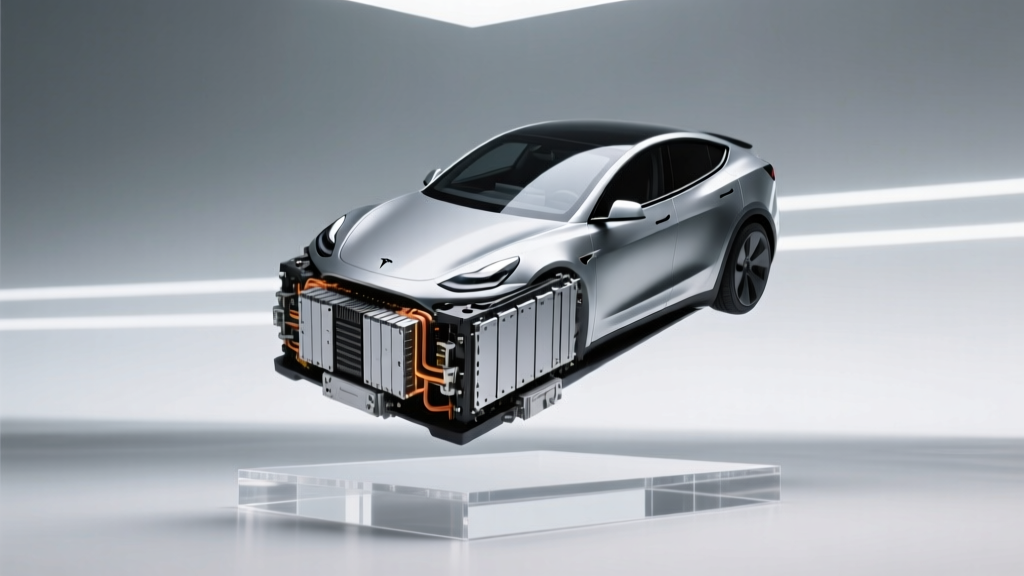
If you've searched "how to remove a battery from a car" and landed on EV territory, the answer is fundamentally different from swapping a 12V lead-acid block in a gas car. In a battery-electric or plug-in hybrid vehicle, the high-voltage traction battery is a structural component — often integrated into the chassis as a "skateboard" platform — weighing between 600 and 1,500 pounds and operating at 400 to 800 volts. Removing it requires a hydraulic lift, insulated high-voltage tools, OEM-specific diagnostic software to de-energize the system, and certification to handle lithium-ion packs safely.
The good news? Most EV owners will never need to remove or replace their traction battery. According to data from NREL and long-term fleet studies, the vast majority of EV batteries outlast the vehicles they power. But understanding the removal process, replacement economics, and degradation science is critical for anyone buying an EV — new or used — or planning long-term ownership.
LFP vs NMC: Understanding Your Battery Chemistry Before Removal
Before discussing removal and replacement, you need to know what's inside the pack. The two dominant lithium-ion chemistries in 2026 EVs are Lithium Iron Phosphate (LFP) and Nickel Manganese Cobalt (NMC), with some NCA (Nickel Cobalt Aluminum) still in use. Chemistry determines energy density, lifespan, cost, and even how the removal process is handled at recycling facilities.
| Attribute | LFP (Lithium Iron Phosphate) | NMC / NCA |
|---|---|---|
| Energy Density | ~160–180 Wh/kg (lower) | ~220–280 Wh/kg (higher) |
| Cycle Life | 3,000–5,000+ cycles | 1,000–2,500 cycles |
| Cold Performance | Weaker — 15–30% range loss below 32°F | Better — 10–20% range loss below 32°F |
| Cost per kWh | ~$80–$100 (lower) | ~$110–$140 (higher) |
| Thermal Stability | Excellent — higher runaway threshold | Good — requires more active management |
| Charging to 100% | Recommended regularly for SoC calibration | Best kept 20–80% for daily use |
| Common 2026 Vehicles | Tesla Model 3 RWD, Model Y RWD, Ford Mustang Mach-E Select (LFP option) | Hyundai Ioniq 5, Kia EV6, Tesla Model 3 LR, BMW iX, Rivian R1T |
Which is better? For high-mileage drivers, fleet operators, and those in moderate climates who can charge to 100% without worry, LFP offers superior longevity at a lower replacement cost. For drivers prioritizing maximum range per charge, cold-weather performance, and faster DC charging speeds, NMC remains the choice. The chemistry also affects replacement cost — an LFP pack is typically 20–30% cheaper to replace than an equivalently sized NMC pack.
How Long Do EV Batteries Last? Real Degradation Data
Battery degradation follows a nonlinear curve: steeper in the first 1–2 years, then leveling off into a long, slow decline. Based on aggregated fleet data from sources including Recurrent Auto and manufacturer warranty claims, here's what typical degradation looks like across popular 2026-era platforms:
- Year 1 / 15,000 mi: ~2–4% capacity loss (initial break-in)
- Year 3 / 45,000 mi: ~5–8% total loss
- Year 5 / 75,000 mi: ~8–12% total loss
- Year 8 / 120,000 mi: ~10–15% total loss
- Year 10 / 150,000 mi: ~12–18% total loss (varies significantly by usage)
LFP batteries typically show 2–4% less degradation at equivalent milestones. Vehicles frequently DC fast-charged or exposed to sustained high ambient temperatures (>95°F) may see 3–5% additional loss.
At 10–15% loss over 8 years, a vehicle originally rated for 300 miles of EPA range would still deliver approximately 255–270 miles — entirely usable for most drivers. The notion that EV batteries need replacement at 100,000 miles is not supported by data; most packs retain well above 70% capacity at 150,000 miles.
Factors That Accelerate Degradation
- Sustained high State of Charge in heat: Storing an NMC battery at 100% SoC in 90°F+ weather causes electrolyte decomposition. Keep daily charge at 80%.
- Frequent DC fast charging above 150 kW: High C-rates generate internal heat. Occasional road-trip fast charging is fine; daily 350 kW sessions accelerate wear.
- Deep discharges to 0%: Running the pack to true zero (not the buffer-protected 0% on the dash) stresses cells. Charge before hitting 10%.
- Extreme cold charging without preconditioning: Charging a frozen battery causes lithium plating on the anode. Always precondition before cold-weather DC charging.
- Prolonged storage at low SoC: Storing below 20% for weeks can cause cells to drop below safe voltage thresholds.
What Does the Battery Warranty Actually Cover?
Federal law mandates a minimum 8-year/100,000-mile warranty on EV battery packs (10 years/150,000 miles in CARB states like California, New York, and Massachusetts). But the details matter — "coverage" doesn't mean a free new battery the moment you notice range loss.
| Manufacturer | Duration | Capacity Retention Threshold | Coverage Type |
|---|---|---|---|
| Tesla (Model 3/Y) | 8 yr / 120,000 mi (LR) or 100,000 mi (RWD) | 70% | Defect + degradation below threshold |
| Hyundai / Kia | 10 yr / 100,000 mi | 70% | Defect + degradation below threshold |
| Ford (Mach-E, F-150 Lightning) | 8 yr / 100,000 mi | 70% | Defect + degradation below threshold |
| BMW (iX, i4) | 8 yr / 100,000 mi | 70% | Defect + degradation below threshold |
| Rivian (R1T, R1S) | 8 yr / 175,000 mi | 70% | Defect + degradation below threshold |
Key takeaway: Warranties trigger when capacity falls below 70% of original — not when you personally feel range loss. A battery at 72% capacity with 90,000 miles is technically "within spec" and won't qualify for a warranty replacement, even though you've lost nearly 90 miles of range on a 300-mile vehicle. This is why monitoring State of Health (SoH) matters.
How Much Does It Cost to Replace an EV Battery?
If your battery falls outside warranty coverage — or you're buying a used EV with an expired pack — replacement costs vary dramatically by vehicle, battery size, and chemistry. Here's the current landscape for out-of-warranty replacement in 2026:
| Vehicle | Battery Size (kWh) | Chemistry | Replacement Cost Range | Typical Need Timeline |
|---|---|---|---|---|
| Tesla Model 3 RWD | 57.5 kWh | LFP | $5,000–$7,500 | Rarely before 200,000 mi |
| Tesla Model Y Long Range | 75 kWh | NMC | $12,000–$16,000 | Rarely before 180,000 mi |
| Hyundai Ioniq 5 (Long Range) | 77.4 kWh | NMC | $10,000–$14,000 | Rarely before 175,000 mi |
| Ford F-150 Lightning (Extended) | 131 kWh | NMC | $18,000–$22,000 | Rarely before 150,000 mi |
| Chevrolet Bolt EV/EUV | 65 kWh | NMC | $9,000–$12,000 | Rarely before 175,000 mi |
Context that matters: Battery pack prices have fallen roughly 85% since 2010 and continue declining. By the time most 2026 EVs need an out-of-warranty replacement (2035+), costs will likely be 30–50% lower than today's figures. Additionally, a growing network of third-party EV battery repair shops can now replace individual modules rather than the entire pack — a $2,000–$4,000 repair instead of a $15,000 full replacement.
The Battery Removal Process: What Actually Happens
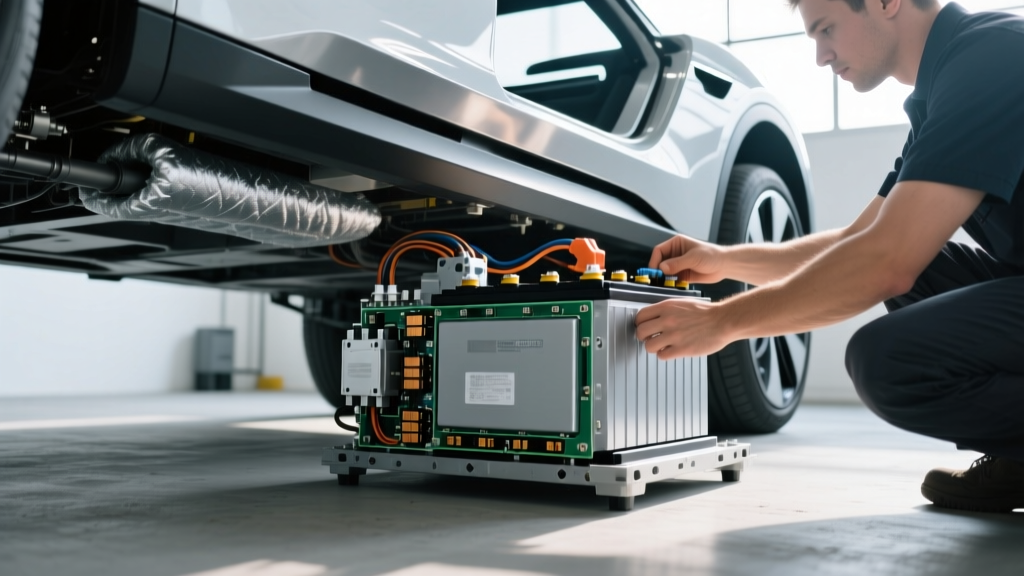
When a high-voltage traction battery does need removal — whether for replacement, module-level repair, or vehicle decommissioning — the process follows a strict sequence at a certified service center:
Step 1: De-Energization and Isolation
The technician uses OEM diagnostic software to open the battery contactors (high-voltage relays inside the pack), physically disconnecting the battery from the vehicle's power electronics. They then verify zero voltage at the high-voltage bus using a CAT III/IV multimeter. This step alone takes 30–60 minutes and includes a mandatory wait period for capacitors in the inverter to discharge.
Step 2: Coolant Drain and Harness Disconnection
Most modern EV battery packs are liquid-cooled. The thermal management coolant (typically a glycol-based fluid) must be drained and captured. The high-voltage orange cables, low-voltage communication harnesses, and coolant lines are then disconnected.
Step 3: Structural Unbolting and Lowering
The battery pack is bolted to the vehicle's underbody with 20–40 fasteners (varies by platform). On skateboard architectures like GM's Ultium, Hyundai's E-GMP, or Tesla's structural pack, the battery is a stressed member — the vehicle must be supported on a lift with proper jacking points before any bolts are removed. A hydraulic transmission table or dedicated battery lift platform lowers the 600–1,500 lb pack safely.
Step 4: Inspection, Replacement, or Recycling
The removed pack is bench-tested for individual module voltages, internal resistance, and insulation integrity. If only specific modules have failed, a specialist can swap them. If the entire pack is end-of-life, it enters either a second-life application (stationary storage) or a recycling stream — companies like Redwood Materials recover over 95% of critical minerals from spent packs.
How to Check and Maximize Your EV Battery Health
You don't need to wait for a warning light to assess your battery. Here's how to monitor State of Health (SoH) and extend your pack's lifespan:
Checking State of Health
- OEM Apps: Tesla's app shows rated range vs. original — a proxy for SoH. Hyundai's Bluelink and FordPass provide similar data.
- OBD-II Dongles + Apps: Tools like OBDLink MX+ paired with apps such as EV Bat Health or LeafSpy (Nissan) can read the battery management system's internal SoH estimate, which is more precise than range-based calculations.
- Dealer Diagnostic: Any service center can pull a full battery health report showing individual cell-group voltage variance, total energy throughput, and capacity retention percentage.
- Third-Party Testing: Companies like Recurrent offer battery health certificates for used EV sales — increasingly expected by informed buyers.
Best Practices to Maximize Longevity
- Charge to 80% daily (NMC/NCA); charge to 100% freely (LFP) — LFP needs full charges for accurate SoC calibration.
- Precondition before DC fast charging in cold weather — most EVs do this automatically when you navigate to a charger.
- Use Level 2 home charging (7–11 kW) as your primary method; reserve DC fast charging for road trips.
- Avoid parking at 100% SoC in heat — if you must charge to full, do it the morning of departure, not the night before.
- Keep the battery between 20–80% during long-term storage; check monthly.
What's Next: Solid-State and Silicon-Anode Batteries
The battery landscape is evolving, but it's important to separate announced timelines from showroom reality:
Solid-State Batteries: Promising 30–50% higher energy density, faster charging, and improved safety by replacing the liquid electrolyte with a solid ceramic or polymer layer. Toyota has announced a solid-state EV for 2027–2028, and Samsung SDI targets mass production by 2027. However, these remain in pilot production as of 2026 — no consumer vehicle currently on sale uses a solid-state pack. Expect initial availability in limited, premium models with broad rollout not before 2029–2030.
Silicon-Anode Batteries: Companies like Sila Nanotechnologies and Group14 are replacing graphite anodes with silicon-dominant composites, boosting energy density by 20–40%. These are beginning to appear in 2026 model-year vehicles in limited applications and are closer to mass adoption than solid-state. They use existing manufacturing infrastructure, making them a near-term improvement rather than a revolution.
Sodium-Ion Batteries: CATL and BYD have begun deploying sodium-ion packs in Chinese-market vehicles. While lower in energy density than lithium-ion, sodium is abundant and cheap — a potential game-changer for budget EV segments. US-market availability remains 2–4 years away.
Frequently Asked Questions
How long do EV batteries last in years and miles?
Most modern EV batteries (2022+ model years with active thermal management) last 15–20 years or 200,000+ miles before degrading below 70% capacity. Data from fueleconomy.gov and fleet operators consistently shows that battery replacement before 150,000 miles is uncommon for vehicles with liquid-cooled packs.
How much does an EV battery cost to replace out of warranty?
Between $5,000 and $22,000 depending on battery size and chemistry. A compact EV like the Tesla Model 3 RWD with an LFP pack runs $5,000–$7,500, while a large truck like the F-150 Lightning Extended Range can cost $18,000–$22,000. Module-level repairs at specialist shops can reduce this to $2,000–$4,000 in many cases.
What does the federal EV battery warranty require manufacturers to cover?
Under EPA and CARB regulations, manufacturers must warrant the battery for at least 8 years/100,000 miles (10 years/150,000 miles in CARB states) against defects and capacity loss below a stated threshold — typically 70% of original capacity. If your battery drops to 68% capacity within the warranty period, the manufacturer must repair or replace it at no cost.
Can I remove an EV battery myself at home?
No. High-voltage traction batteries operate at 400–800V and can deliver fatal shock. They also weigh 600–1,500 lbs and require hydraulic lifts, insulated tools, and OEM diagnostic software to de-energize safely. Removal should only be performed by certified high-voltage technicians.
LFP vs NMC — which battery chemistry should I choose?
Choose LFP if you prioritize longevity (3,000–5,000+ cycles), lower replacement cost, and don't mind slightly lower range and weaker cold-weather performance. Choose NMC if you need maximum range, faster DC charging, and better winter efficiency. For most daily commuters in moderate climates, LFP's superior cycle life makes it the more economical long-term choice.
How do I check my EV battery's State of Health?
Use your vehicle's OEM app to compare current rated range to the original EPA figure, connect an OBD-II reader with EV-specific software to pull the BMS-reported SoH percentage, or visit a dealer for a full diagnostic report. For used EV purchases, request a third-party battery health certificate.
Will my EV battery need replacing before I sell the car?
Statistically, no. The average American keeps a vehicle 8.4 years and drives ~13,500 miles per year (about 113,000 miles total). Most 2026-era EV batteries retain 85–90% capacity at that point — well above the 70% warranty threshold and still providing practical daily range.