Why Submarine Batteries and EV Batteries Share More DNA Than You Think
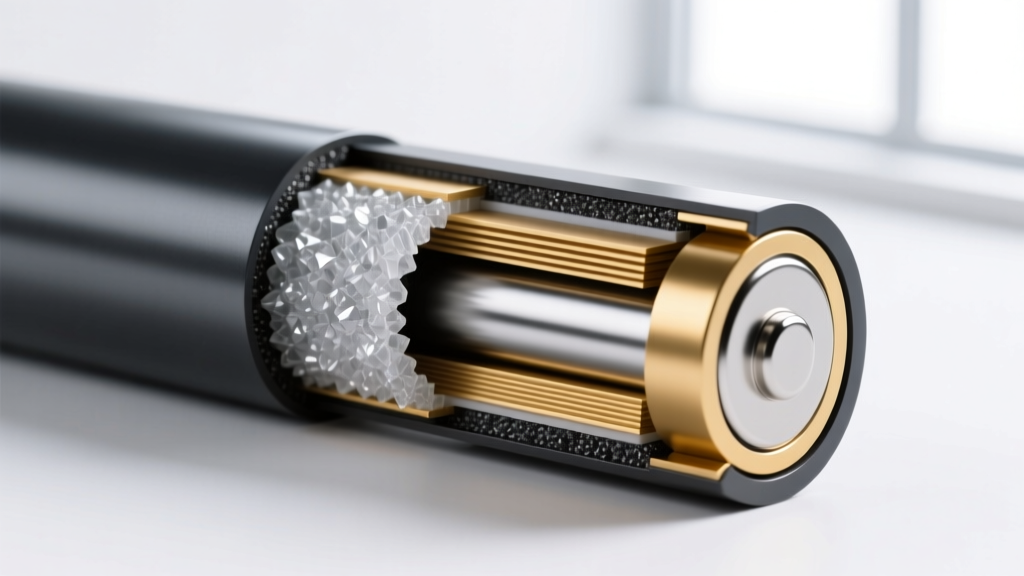
Search for "submarine batteries" and you'll surface a world of naval engineering: massive lead-acid banks in diesel-electric subs, lithium iron phosphate (LFP) modules in modern AIP (air-independent propulsion) vessels, and stringent cycle-life requirements measured in thousands of deep discharges. What you might not expect is how much overlap exists between those military-grade cells and the traction battery sitting under your electric vehicle.
Both applications demand high energy density, tolerance for repeated deep cycling, thermal stability, and a decade-plus service life under demanding conditions. The U.S. Navy's transition from flooded lead-acid to LFP cells on platforms like the Virginia-class submarines mirrors the exact same chemistry shift happening in consumer EVs — Tesla's standard-range models, BYD's entire lineup, and Ford's LFP-equipped Mustang Mach-E all run the same fundamental cathode chemistry that navies trust for submerged endurance.
This guide uses that submarine-to-EV parallel as a lens to explain everything you actually need to know about your vehicle's high-voltage traction battery: the chemistry inside, how fast it degrades, what the warranty truly covers, what replacement costs in 2026, and how to maximize the pack's lifespan.
Battery Chemistry: LFP vs NMC/NCA Explained
Every modern EV uses a lithium-ion variant, but the cathode chemistry splits into two dominant families. Understanding which one powers your car is the single most important factor in predicting longevity, cold-weather behavior, and charging habits.
| Attribute | LFP (Lithium Iron Phosphate) | NMC/NCA (Nickel Manganese Cobalt / Nickel Cobalt Aluminum) |
|---|---|---|
| Energy Density (cell-level) | ~160–180 Wh/kg | ~220–300 Wh/kg |
| Cycle Life (to 80% SoH) | 3,000–6,000+ cycles | 1,000–2,500 cycles |
| Cold Performance (−10°C range loss) | ~25–35% loss | ~15–25% loss |
| Thermal Runaway Risk | Very low (stable olivine structure) | Moderate (requires robust BMS & cooling) |
| Cost per kWh (2026 cell-level) | ~$70–$90 | ~$100–$130 |
| Recommended Daily Charge Limit | 100% (BMS calibration benefits) | 80–90% for daily; 100% for trips |
| Typical EV Applications | Tesla Model 3/Y RWD, BYD, Ford Mach-E Select, base Hyundai/Kia | Long-range & performance trims, Lucid, Rivian, BMW iX |
| Submarine / Naval Use | Widely adopted (AIP subs, surface vessels) | Limited (thermal risk concerns) |
The submarine connection: Naval engineers chose LFP for the same reason cost-conscious EV buyers should — exceptional cycle life, near-zero thermal runaway risk in confined spaces, and tolerance for sitting at high state of charge for extended periods. If your daily commute is under 60 miles and you don't regularly face sub-freezing winters, LFP is arguably the superior chemistry for long-term ownership.
When NMC/NCA wins: If you need maximum range from a single charge (300+ miles EPA), tow frequently, or live in northern climates where cold-weather energy loss compounds, the higher energy density of nickel-rich chemistries justifies the trade-offs in cycle life and cost.
How Long Do EV Batteries Actually Last?
The short answer, backed by fleet data: most modern EV traction batteries will outlast the vehicle they're installed in. But "outlast" needs definition.
Battery end-of-life in automotive terms doesn't mean sudden failure — it means the pack has degraded to roughly 70–80% of its original usable capacity. A 2026 Tesla Model Y Long Range with an original EPA range of 330 miles degraded to 75% State of Health (SoH) still delivers roughly 247 miles of range — more than adequate for most daily driving.
Real-World Degradation Data Points
Here's what the data actually shows across major platforms, drawing from fleet telemetry, owner-reported measurements, and third-party analysis:
| Vehicle / Platform | Chemistry | Mileage | Average Capacity Retention | Source Context |
|---|---|---|---|---|
| Tesla Model 3/Y (NMC/NCA, 2019–2023) | NCA/NMC | 100,000 mi | ~88–92% | Tesla Impact Report 2024; fleet telemetry |
| Tesla Model 3 RWD (LFP, 2022–2025) | LFP | 100,000 mi | ~94–97% | Owner SoH scans; fleet data |
| Chevrolet Bolt EV/EUV (NMC) | NMC (LG) | 80,000 mi | ~90–93% | Post-recall replacement packs performing well |
| Hyundai Ioniq 5 (NMC, 77.4 kWh) | NMC | 60,000 mi | ~93–95% | Owner community data; fueleconomy.gov |
| Nissan Leaf (early gen, passive cooling) | NMC/LMO | 80,000 mi | ~75–85% | Well-documented degradation; no active thermal mgmt |
| BYD Blade (LFP, various models) | LFP | 120,000+ mi | ~92–96% | Chinese fleet data; Blade cell architecture |
Key takeaway: Vehicles with active liquid thermal management (Tesla, Hyundai/Kia, Ford, GM Ultium, Rivian) show dramatically better long-term retention than older passively cooled designs (early Nissan Leaf). Chemistry matters, but thermal management is the great equalizer.
For context, the U.S. Navy expects LFP submarine battery banks to deliver 4,000+ deep cycles before reaching 80% SoH — roughly equivalent to 1.2 million miles of daily full-cycle EV driving. You will not out-cycle an LFP pack under normal automotive use.
What Does the Battery Warranty Actually Cover?
Federal law in the United States mandates a minimum battery warranty of 8 years / 100,000 miles for all EVs sold new. California Air Resources Board (CARB) states extend this to 10 years / 150,000 miles. Most manufacturers meet or exceed these floors.
| Manufacturer | Warranty Term | Capacity Retention Threshold | Notes |
|---|---|---|---|
| Tesla (Model 3/Y LWD) | 8 yr / 100,000 mi | 70% | LFP packs; replacement may be refurbished unit |
| Tesla (Model 3/Y LR & Performance) | 8 yr / 120,000 mi | 70% | NMC/NCA; higher mileage threshold |
| Hyundai / Kia | 8 yr / 100,000 mi | 70% | 10 yr / 100,000 mi in CARB states for some models |
| GM (Ultium platform) | 8 yr / 100,000 mi | 70% | Modular pack design allows partial replacement |
| Ford (Mach-E, F-150 Lightning) | 8 yr / 100,000 mi | 70% | LFP and NMC trims covered equally |
| Rivian | 8 yr / 120,000 mi (175k for R1T fleet) | 70% | Large packs degrade slower in practice |
| BMW (i4, iX, i7) | 8 yr / 100,000 mi | 70% | Gen5 eDrive; prismatic NMC cells |
Critical fine print: The warranty covers capacity loss below the threshold — typically 70% of original usable capacity — not cosmetic issues or minor degradation. If your 300-mile EPA vehicle drops to 205 miles of real range (roughly 70% after accounting for real-world factors), you'd have a valid claim. If it drops to 250 miles (~83%), you would not, even though the loss is noticeable.
The warranty does not cover damage from accidents, improper charging equipment, or modifications. It also typically does not cover the 12V auxiliary battery — that's a separate, conventional component with its own shorter warranty (usually 3 yr / 36,000 mi).
EV Battery Replacement Cost: 2026 Pricing Reality
Battery replacement is the number one fear for prospective EV buyers. Let's address it with actual numbers rather than worst-case headlines.
| Vehicle / Battery Size | Chemistry | Estimated Pack Cost (parts) | Labor + Programming | Total Range |
|---|---|---|---|---|
| Tesla Model 3 RWD (~57 kWh usable) | LFP | $5,500–$7,500 | $1,500–$2,500 | $7,000–$10,000 |
| Tesla Model Y LR (~75 kWh usable) | NMC | $8,000–$11,000 | $1,500–$2,500 | $9,500–$13,500 |
| Hyundai Ioniq 5 (~77.4 kWh) | NMC | $8,500–$12,000 | $2,000–$3,000 | $10,500–$15,000 |
| Ford F-150 Lightning Ext. Range (~131 kWh) | NMC | $14,000–$20,000 | $3,000–$4,500 | $17,000–$24,500 |
| Chevrolet Silverado EV (~200 kWh) | NMC (Ultium) | $20,000–$28,000 | $3,500–$5,000 | $23,500–$33,000 |
| GM Modular partial replacement (per module) | NMC | $2,000–$4,000 | $1,000–$2,000 | $3,000–$6,000 |
When is replacement actually needed? Based on current degradation curves, most liquid-cooled NMC packs reach 80% SoH around 150,000–200,000 miles, and LFP packs at 200,000–300,000+ miles. The average American drives ~13,500 miles per year (FHWA data), meaning a typical owner would need to keep their EV for 11–15 years before a pack replacement is even on the table. Many original owners will have sold or traded long before then.
Cell prices have continued their downward trajectory. In 2026, average pack-level pricing sits around $110–$130/kWh for NMC and $70–$90/kWh for LFP, down from $140–$160/kWh in 2023. If you do need a replacement in the 2030s, expect it to cost significantly less than today's figures.
Factors That Accelerate (or Preserve) Battery Life
Not all miles are created equal. A 100,000-mile pack can be in better shape than a 40,000-mile one depending on how it was treated. Here are the variables that matter most, ranked by impact:
High-Impact Factors
- Extreme heat exposure: Sustained ambient temperatures above 95°F (35°C) with a high state of charge accelerate calendar degradation. Park in shade or a garage when possible. This is the single biggest longevity killer.
- DC fast charging frequency: Daily use of 150+ kW DC fast charging adds thermal stress. Occasional road-trip fast charging is fine; making it your primary charging method adds measurable wear. Studies suggest exclusive DCFC use can add 1–3% additional capacity loss over 100,000 miles versus Level 2 charging.
- Sustained 100% SoC storage: Leaving an NMC/NCA vehicle plugged in at 100% for days or weeks (e.g., before a vacation) stresses the cathode. LFP tolerates this far better — another reason it's favored for submarine and grid applications where full charge standby is routine.
Moderate-Impact Factors
- Deep discharge cycles: Regularly driving below 10% SoC stresses the anode. Try to keep daily use between 20–80% for NMC; LFP is more tolerant of the full range.
- Cold-weather fast charging without preconditioning: Charging a cold battery at high power causes lithium plating on the anode. Always use your vehicle's navigation-to-charger preconditioning feature (Tesla, Rivian, Hyundai, GM all offer this).
Lower-Impact Factors
- Regenerative braking intensity: High regen settings create micro-charge cycles, but the effect on degradation is minimal compared to thermal and SoC factors.
- Driving style: Aggressive acceleration draws high C-rates, but the duration is brief. Sustained high-speed driving (80+ mph for hours) generates more pack heat and matters more.
How to Check and Monitor Your Battery's State of Health
State of Health (SoH) is the percentage of your battery's current maximum capacity relative to its original factory capacity. A new pack is 100% SoH; a degraded pack at 85% SoH holds 85% of its original energy.
Methods to Check SoH
1. Built-in vehicle displays: Some manufacturers now include SoH readouts directly in the infotainment system. Hyundai/Kia's EV models display battery conditioning status; BMW's iDrive includes a traction battery health screen. Tesla does not surface a direct SoH percentage in-car, but the displayed range at 100% SoC can be compared to the original EPA figure for a rough estimate.
2. OBD-II scanner apps: Tools like OBD Eleven, Leaf Spy (Nissan Leaf), and Scan My Tesla (via CAN bus) read the BMS-reported SoH directly. These typically cost $30–$60 for the adapter plus a free or low-cost app. This is the most accurate consumer-accessible method.
3. Dealer diagnostic reports: Any authorized service center can pull a full battery health report. Request one during routine service — it typically shows individual module voltage balance, total energy capacity, and SoH percentage.
4. Third-party services: Companies like Geotab and Recurrent provide fleet-level and individual battery health tracking using telematics data. Some used-EV marketplaces now include battery health certificates.
Building a Baseline
Check your SoH at purchase (especially for used EVs) and then every 6–12 months. Degradation is typically fastest in the first year (2–5% initial drop as the SEI layer stabilizes) and then slows to roughly 1–2% per year for NMC and 0.5–1% per year for LFP. If you see an abrupt drop of 5%+ between readings, schedule a dealer diagnostic — it may indicate a failing module rather than normal wear.
What's Next: Solid-State, Silicon Anodes, and Realistic Timelines
Emerging battery technologies promise step-change improvements, but timelines matter more than press releases.
Solid-state batteries replace the liquid electrolyte with a solid ceramic, polymer, or sulfide layer. Benefits include higher energy density (~400+ Wh/kg cell-level), faster charging potential, and near-zero thermal runaway risk. Toyota, Samsung SDI, and QuantumScape are all targeting limited production between 2027–2030. Realistically, expect solid-state to debut in low-volume, premium vehicles first (likely Japanese and Korean OEMs), with mainstream cost parity not arriving until the early-to-mid 2030s.
Silicon-dominant anodes replace graphite with silicon, which can store roughly 10× more lithium ions per gram. Companies like Sila Nanotechnologies and Group14 are already shipping silicon-composite anodes in limited consumer electronics and automotive applications. Expect 5–15% energy density gains in EV cells using partial-silicon anodes by 2027–2028, with higher-silicon content following as expansion-cycle challenges are resolved.
Sodium-ion batteries are entering the market at the low end — CATL and BYD are producing Na-ion cells for budget city cars and energy storage. Energy density is lower (~120–150 Wh/kg), but cost is significantly less and cold performance is excellent. Don't expect sodium-ion in long-range U.S. vehicles, but it may appear in urban delivery vans and entry-level EVs by 2028.
None of these technologies are available in any production EV sold in the U.S. as of early 2026. If you're buying now, current LFP and NMC chemistries are mature, well-understood, and backed by extensive warranty coverage.
The Submarine Parallel: Why Military Specs Validate Your EV Battery
The reason "submarine batteries" keeps surfacing in EV discussions is that naval procurement offices have independently validated the same chemistries automakers use — under far more demanding conditions. A submarine battery bank must:
- Survive thousands of deep discharge cycles in saltwater environments
- Operate safely in sealed, confined compartments with zero ventilation for thermal runaway
- Maintain capacity after months of standby at high SoC
- Function across extreme pressure and temperature ranges
The fact that modern navies have largely standardized on LFP for these requirements — the same LFP in your Tesla Model 3 RWD or BYD Atto 3 — is a strong endorsement of the chemistry's fundamental robustness. Your EV battery isn't a consumer-grade compromise; it's the same technology trusted to keep sailors alive underwater.
Frequently Asked Questions
How long do EV batteries last in years and miles?
Most liquid-cooled EV batteries with NMC chemistry retain 80%+ capacity at 150,000–200,000 miles (roughly 12–15 years at average U.S. driving rates). LFP batteries routinely exceed 200,000–300,000 miles before reaching the same threshold. Calendar aging also matters — expect roughly 1–2% loss per year even if the car sits unused.
How much does an EV battery cost to replace in 2026?
Full pack replacement ranges from roughly $7,000 for a smaller LFP pack (Tesla Model 3 RWD) to $24,000+ for a large NMC pack (Ford F-150 Lightning Extended Range). GM's Ultium platform allows individual module replacement at $3,000–$6,000 per module. Most owners will never need a replacement, as packs typically outlast the vehicle's economic life.
What does the battery warranty cover?
Federal minimum is 8 years / 100,000 miles, with CARB states requiring 10 years / 150,000 miles. The warranty covers capacity loss below a threshold (typically 70% of original capacity). It does not cover accident damage, improper charging, or the 12V auxiliary battery. Warranty replacement may use a refurbished pack with equivalent capacity.
How do I check my EV battery health?
Use an OBD-II scanner with an EV-compatible app (Scan My Tesla, Leaf Spy, OBD Eleven) for the most accurate SoH reading. Some vehicles display battery health in the infotainment system. Dealers can pull a full diagnostic report. Check every 6–12 months and track the trend line.
LFP vs NMC — which is better for me?
Choose LFP if: you want maximum longevity, can charge to 100% without worry, drive under 250 miles daily, and live in a moderate climate. Choose NMC/NCA if: you need 300+ miles of range, frequently drive in cold weather, tow heavy loads, or prioritize performance. Both chemistries are proven and well-warrantied; neither is a wrong choice.
Does frequent DC fast charging damage the battery?
Occasional DC fast charging (road trips, a few times per month) has minimal measurable impact. Exclusive reliance on DCFC as your only charging method can add 1–3% extra capacity loss over 100,000 miles. For daily charging, a home Level 2 charger at 7–11 kW is ideal for longevity.
Are submarine batteries the same as EV batteries?
Modern submarine battery banks use the same LFP cell chemistry found in many consumer EVs. Naval specifications demand higher cycle life, pressure tolerance, and safety margins, but the fundamental electrochemistry is identical. The parallel validates LFP as an exceptionally robust and safe battery technology.
Sources: U.S. DOE / fueleconomy.gov — EV Technology; IRS §30D Clean Vehicle Credit guidelines; NHTSA vehicle safety data. Battery pricing and degradation figures reflect 2025–2026 industry data and owner-reported fleet telemetry.