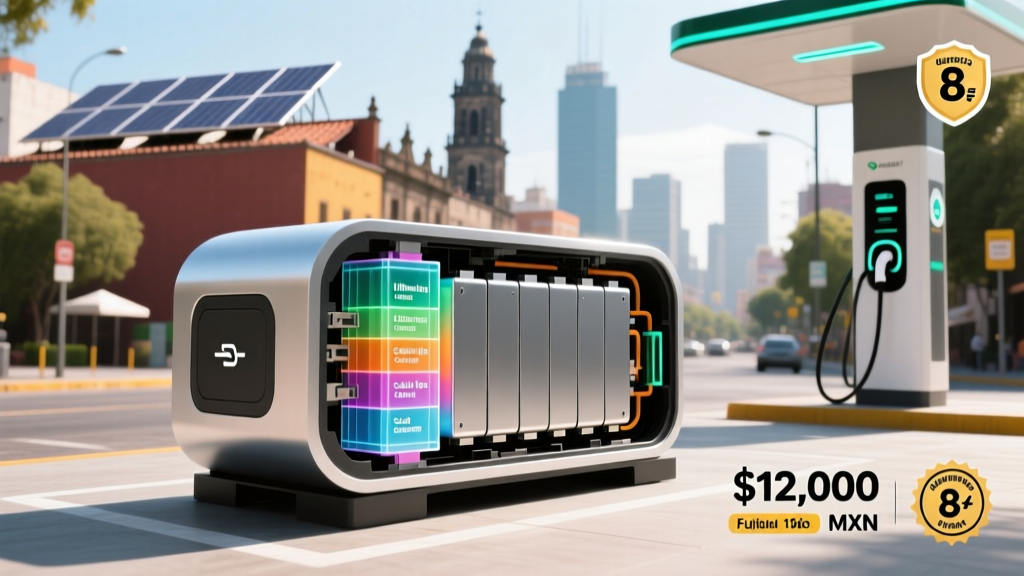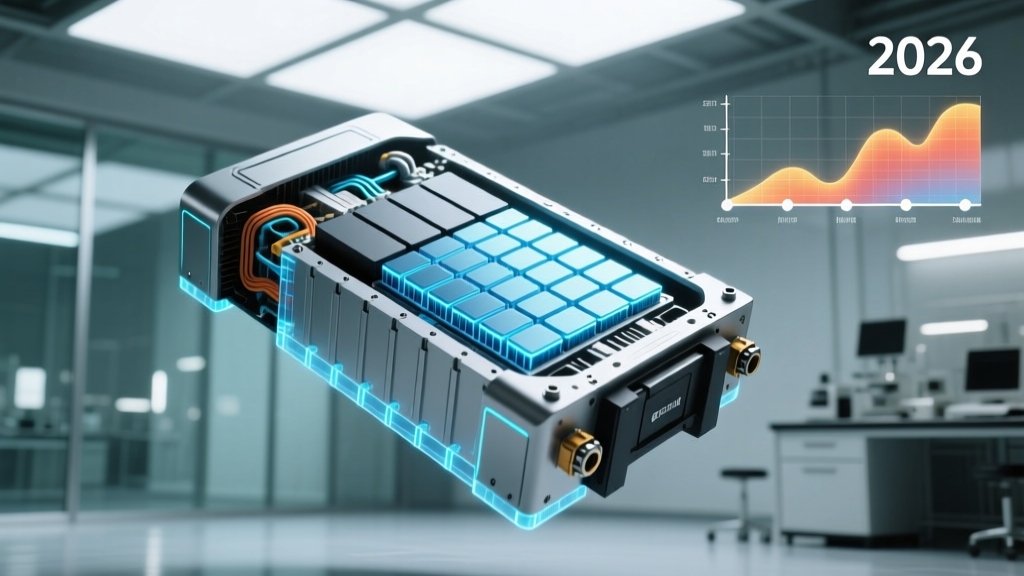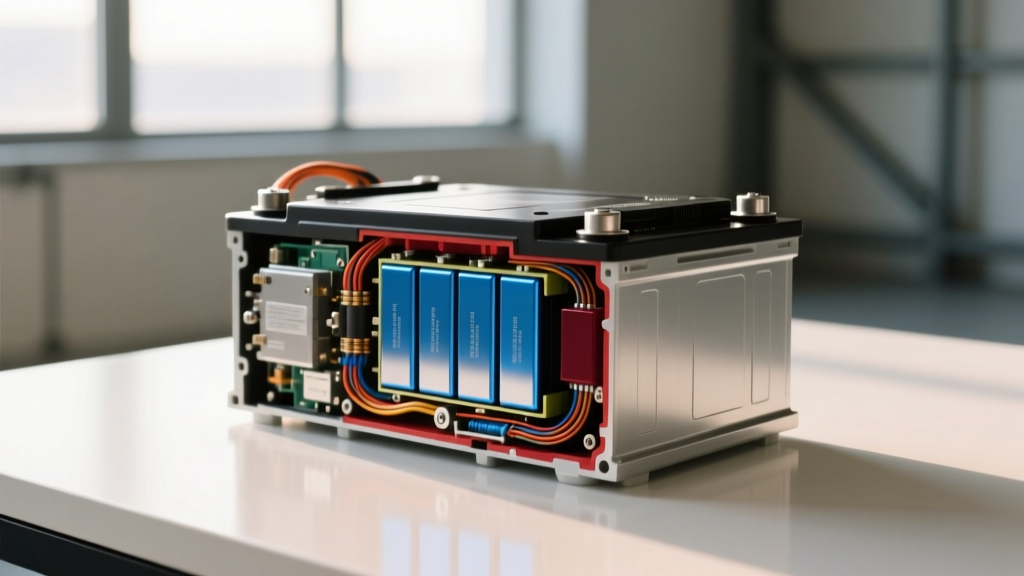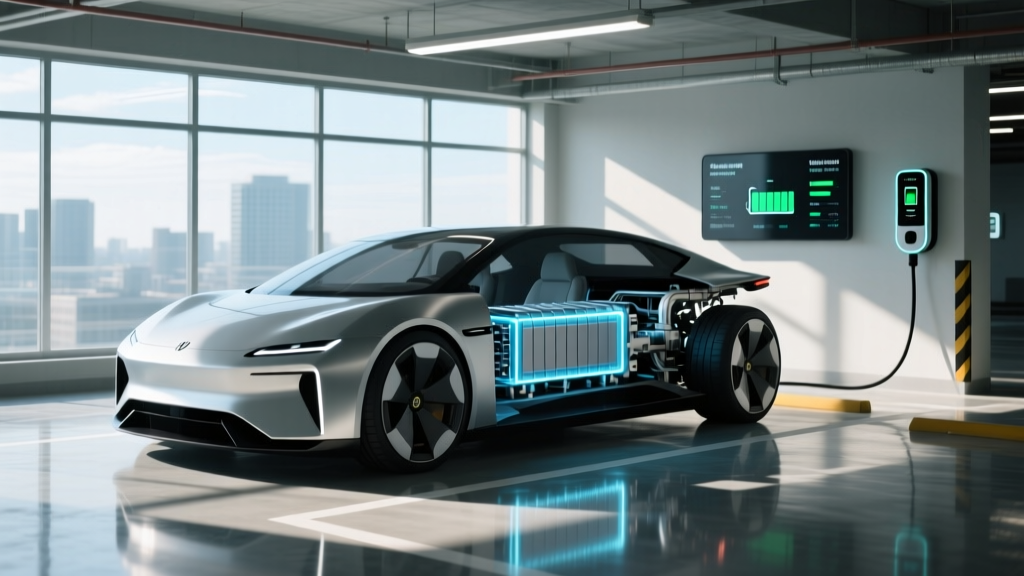
If you have been following electric vehicle news, you have likely seen the promise: an EV with solid state battery technology delivering 500+ miles of range, 10-minute charging, and a decade-long lifespan. Automakers from Toyota to Nissan to Samsung SDI have announced breakthroughs. But as of 2026, no mass-market solid-state EV is available for purchase in the United States. What is available is a mature, well-understood lithium-ion ecosystem that most buyers underestimate.
This guide separates the forward-looking solid-state timeline from the batteries you can actually buy today — covering chemistry trade-offs, real degradation data, warranty coverage, replacement economics, and how to monitor and maximize the pack in your current or next EV.
Today's EV Batteries: LFP vs NMC vs NCA Chemistry Explained
Every EV sold in the U.S. in 2026 uses one of three lithium-ion chemistries in its high-voltage traction battery. Understanding which one is under your floorboard matters for range, longevity, cold-weather behavior, and cost.
NMC (Nickel Manganese Cobalt) and NCA (Nickel Cobalt Aluminum) dominate long-range and performance vehicles. They pack more energy per kilogram, enabling EPA ranges of 300–400+ miles in packs weighing 400–500 kg. Tesla's Model 3 Long Range, Hyundai Ioniq 5, and Ford Mustang Mach-E Extended Range all use NMC/NCA variants.
LFP (Lithium Iron Phosphate) trades energy density for durability and cost. LFP packs are heavier for the same kWh, but they tolerate daily 100% charging, endure more charge cycles before meaningful degradation, and avoid cobalt supply-chain concerns. Tesla's Model 3 Standard Range, the base Chevrolet Equinox EV, and several BYD models use LFP.
| Attribute | LFP (Lithium Iron Phosphate) | NMC / NCA (Nickel-based) |
|---|---|---|
| Energy Density | 140–170 Wh/kg (cell level) | 220–300 Wh/kg (cell level) |
| Typical Cycle Life | 3,000–5,000+ cycles to 80% SoH | 1,000–2,000 cycles to 80% SoH |
| Cold Performance | Moderate — slower charging below 32°F | Better low-temp discharge, still benefits from preconditioning |
| Recommended Daily Charge Limit | 100% (regular full charges encouraged) | 80% for daily, 100% for trips |
| Cost per kWh (pack level) | ~$90–$110 | ~$120–$150 |
| Cobalt Content | None | Varies (NCA low, NMC moderate) |
| Best For | Daily commuters, high-mileage drivers, budget EVs | Long-range road trippers, performance models |
The takeaway: LFP is the longevity champion if you can accept slightly less range for a given pack weight. NMC/NCA is the range champion but demands more careful state-of-charge management. Neither is "better" universally — it depends on your driving pattern.
How Long Do EV Batteries Actually Last? Real Degradation Data
The fear that EV batteries die like phone batteries after two years is not supported by fleet data. According to analysis by Recurrent Auto, which tracks over 15,000 EVs in real-world conditions, the average EV battery retains approximately 90–95% of its original capacity after 5 years and 60,000 miles. Degradation is non-linear: the steepest drop occurs in the first 1–2 years (typically 2–5%), then the curve flattens significantly.
Geotab's long-term fleet study of 6,300 electric vehicles found an average annual degradation rate of just 1.8% across all chemistries. At that rate, a battery would retain roughly 82% of its capacity after 10 years — well above the 70% threshold most warranties guarantee.
Here is what degradation looks like across common ownership milestones:
- Year 1 / 12,000 miles: 2–5% capacity loss (initial "break-in" drop)
- Year 3 / 36,000 miles: 5–8% total loss
- Year 5 / 60,000 miles: 7–12% total loss
- Year 8 / 96,000 miles: 10–16% total loss
- Year 10 / 120,000 miles: 13–20% total loss (varies heavily by climate and habits)
For a 300-mile EPA-rated EV, a 15% degradation at year 8 still leaves roughly 255 miles of range — more than adequate for most drivers. The vehicles most likely to need attention are those in extreme-heat climates (Arizona, Texas) that also rely heavily on DC fast charging.
What Does the Battery Warranty Actually Cover?
Federal law mandates that EV batteries carry a minimum warranty of 8 years / 100,000 miles (10 years / 150,000 miles in California and states that follow CARB emissions standards). Most automakers match or exceed this baseline. The warranty covers capacity loss below a defined threshold — typically 70% of original capacity — plus defects in materials and workmanship.
| Manufacturer | Warranty Period | Capacity Retention Threshold | Notes |
|---|---|---|---|
| Tesla (Model 3/Y) | 8 yr / 120,000 mi (LR/AWD); 8 yr / 100,000 mi (RWD) | 70% | LFP on RWD, NMC on LR |
| Hyundai / Kia | 10 yr / 100,000 mi | 70% | Among the longest coverage |
| Ford (Mach-E, F-150 Lightning) | 8 yr / 100,000 mi | 70% | Covers battery components + capacity |
| Chevrolet (Equinox EV, Blazer EV) | 8 yr / 100,000 mi | 60% (some trims 70%) | Check specific model terms |
| BMW (i4, iX) | 8 yr / 100,000 mi | 70% | Includes thermal management system |
| Rivian (R1T, R1S) | 8 yr / 175,000 mi | 70% | Highest mileage threshold in segment |
Critical fine print: the warranty applies to the traction battery (the high-voltage pack that propels the car), not the 12V auxiliary battery that powers accessories. The 12V battery is covered under the standard bumper-to-bumper warranty (typically 3 yr / 36,000 mi) and is a much smaller, cheaper component. Also, warranty claims require that the degradation be measured by the manufacturer's diagnostic tools — a third-party OBD reader estimate will not suffice for a claim.
EV Battery Replacement Cost: What to Budget and When
This is the question that generates the most anxiety — and the most misinformation. Here is the reality: the vast majority of EV batteries outlive the vehicle they are installed in. According to Consumer Reports, most EV owners will never need a full battery replacement. When replacements do occur, they are typically due to manufacturing defects (covered by warranty) or physical damage from collisions, not age-related degradation.
That said, if you are buying a used EV out of warranty or planning to keep a vehicle for 15+ years, here is what replacement costs look like in 2026:
| Vehicle | Battery Capacity | Chemistry | Replacement Cost (parts + labor) |
|---|---|---|---|
| Tesla Model 3 RWD | ~60 kWh | LFP | $8,000–$12,000 |
| Tesla Model Y Long Range | ~75 kWh | NMC | $12,000–$16,000 |
| Hyundai Ioniq 5 | 77.4 kWh | NMC | $13,000–$18,000 |
| Ford Mustang Mach-E ER | 91 kWh | NMC | $15,000–$22,000 |
| Chevrolet Silverado EV | ~200 kWh | NMC | $25,000–$35,000 |
| Nissan Leaf (40 kWh) | 40 kWh | NMC | $6,500–$9,000 |
These costs are declining. Pack-level prices have dropped roughly 8–12% annually since 2022, driven by manufacturing scale and chemistry improvements. Module-level repair — replacing individual degraded modules rather than the entire pack — is increasingly available through specialized EV shops and can cost $2,000–$6,000 depending on the number of modules replaced.
Factors That Accelerate (or Slow) Battery Degradation
Not all miles age a battery equally. The following factors have the largest measurable impact on long-term State of Health (SoH):
Battery Care Checklist — Maximize Your Pack's Lifespan
- Avoid sustained 100% SoC (NMC/NCA only): Store and commute at 80% or below. Charge to 100% only when you will drive immediately. LFP owners: charge to 100% at least weekly for cell balancing.
- Minimize DC fast charging frequency: Occasional road-trip fast charging is fine. Daily reliance on 150+ kW DC charging accelerates degradation by an estimated 1–3% additional loss over 5 years vs. Level 2 home charging.
- Precondition before charging in cold weather: Battery thermal management systems work best when the pack is pre-warmed. Use your car's scheduled departure or preconditioning feature before plugging in below 40°F.
- Avoid extreme heat storage: Parking in a garage or shaded area in summer reduces calendar degradation. Batteries stored at 95°F+ at high SoC degrade measurably faster.
- Don't let SoC sit at 0% or near-zero: If storing the vehicle for weeks, set the charge limit to 50–60% and leave it plugged in if possible.
- Use regenerative braking moderately in cold weather: Some EVs limit regen when the battery is cold — this is protective, not a malfunction.
The single most impactful habit: if you drive an NMC/NCA vehicle and have home Level 2 charging, set your daily charge limit to 80% and charge overnight. This alone can add years of useful capacity. LFP owners have it easier — charge to 100% freely, as the chemistry is inherently stable at full charge.
How to Check and Monitor Your Battery's State of Health
State of Health (SoH) is the percentage of your battery's original capacity that remains usable. A brand-new EV has 100% SoH; a pack at 85% SoH holds 85% of its original kWh.
Built-in tools: Many 2026 EVs display SoH or estimated degradation in the vehicle settings menu. Tesla provides range-based estimates. Hyundai/Kia's Bluelink and Ford's connected services offer battery health reports. BMW's iDrive includes a battery health percentage in the service menu.
OBD-II apps: Third-party tools like Scan My Tesla, Leaf Spy (for Nissan Leaf), and ABRP (A Better Route Planner) OBD integration can read the battery management system's (BMS) reported SoH with reasonable accuracy. These are useful for used-EV buyers verifying a seller's claims.
Dealer diagnostics: For warranty purposes, a manufacturer-certified dealer can run a full pack diagnostic that measures individual module voltages, internal resistance, and total capacity. This is the gold standard and typically costs $100–$200 if out of warranty.
Range-based estimation: If your EV's EPA-rated range was 300 miles and you consistently see only 260 miles at 100% SoC under similar conditions, that suggests roughly 13% degradation. This method is imprecise (temperature, tire pressure, and driving style affect range), but it provides a useful sanity check.
The Solid-State Battery Timeline: What Is Real and What Is Hype
Solid-state batteries replace the liquid electrolyte in current lithium-ion cells with a solid material — ceramic, sulfide, or polymer. The theoretical advantages are significant: higher energy density (potentially 400+ Wh/kg at the cell level), faster charging without lithium plating risk, improved safety (no flammable liquid electrolyte), and longer cycle life.
However, the gap between laboratory demonstrations and mass-produced, cost-competitive automotive packs remains substantial. Here is where the major programs stand as of early 2026:
- Toyota: Has announced a solid-state battery targeting 750 km (~465 miles) of range with 10-minute 10–80% charging. Toyota's stated production timeline is 2027–2028, initially in limited-run vehicles sold in Japan. U.S. availability in a mass-market model is not expected before 2029–2030. Toyota has also acknowledged that initial costs will be high.
- Nissan: Plans a solid-state pilot production line in Yokohama with a target of fiscal year 2028 for initial vehicle integration. Details on chemistry and vehicle platform remain preliminary.
- Samsung SDI: Has demonstrated all-solid-state prototype cells and targets mass production by 2027, initially for premium EV applications. No specific U.S. vehicle partnerships have been confirmed for retail sale.
- QuantumScape: The Volkswagen-backed startup has delivered prototype cells to automotive partners and reported positive testing results. Commercial production timing remains unconfirmed but is widely expected no earlier than 2028–2029.
- BMW / Solid Power: BMW has been testing Solid Power's cells in its i7 test fleet. A production vehicle with solid-state cells is targeted for the late 2020s, per BMW's public statements.
What this means for buyers: If you need an EV in 2026 or 2027, solid-state technology will not be an option. The current generation of NMC and LFP batteries is mature, well-warrantied, and demonstrably long-lasting. Waiting for solid-state means waiting at minimum 3–5 years for limited availability, likely at a premium price point, before the technology reaches mainstream U.S. models at accessible MSRPs.
Silicon-anode technology — which boosts energy density within the existing lithium-ion framework — is a nearer-term improvement. Companies like Sila Nanotechnologies and Group14 are already shipping silicon-dominant anode materials to battery manufacturers, with incremental energy density gains appearing in 2026–2027 model-year cells. This is a meaningful evolution, not a revolution, but it will push pack ranges higher without the manufacturing challenges of fully solid-state designs.
Frequently Asked Questions
How long do EV batteries last in years and miles?
Based on fleet data from Recurrent Auto and Geotab, most EV batteries retain 80–90% of their original capacity at 10 years / 120,000 miles. Many will outlast the vehicle itself. Federal warranty requirements ensure coverage for at least 8 years / 100,000 miles against capacity loss below 70%.
How much does an EV battery cost to replace?
Full pack replacement ranges from approximately $6,500 for a small pack (Nissan Leaf 40 kWh) to $35,000 for a very large pack (Chevrolet Silverado EV ~200 kWh). Most mainstream EVs (60–80 kWh) fall in the $10,000–$18,000 range including labor. However, most owners never need a replacement — defects are covered under warranty, and age-related degradation rarely renders a pack unusable within the vehicle's lifetime.
What does the battery warranty cover?
The federal minimum is 8 years / 100,000 miles (10/150,000 in CARB states). It covers capacity loss below a threshold (typically 70%) and manufacturing defects. It does not cover damage from accidents, modifications, or improper use. The warranty applies to the high-voltage traction battery only — the 12V auxiliary battery has separate, shorter coverage.
LFP vs NMC — which battery chemistry is better?
LFP is better for daily commuting, high-mileage drivers, and owners who want to charge to 100% regularly without degradation concern. It offers 3,000–5,000+ cycle life and lower cost. NMC/NCA is better for long-range needs and cold-climate performance, offering higher energy density (more range per pound) but requiring 80% daily charge limits for longevity. Neither is universally superior — the choice depends on your driving pattern.
Should I wait for an EV with solid state battery?
For most buyers, no. Solid-state EVs are not expected to reach U.S. showrooms in meaningful volume before 2029–2030 at the earliest, and initial pricing will target premium segments. Current lithium-ion batteries (LFP and NMC) are proven, warrantied for 8–10 years, and retain 80%+ capacity at 100,000+ miles based on real-world fleet data. If you need an EV now or within the next two years, today's battery technology is more than adequate.
How do I check my EV battery health?
Use your vehicle's built-in battery health display (available on most 2024+ models), third-party OBD-II apps like Leaf Spy or Scan My Tesla, or request a dealer diagnostic for the most authoritative reading. For a quick check, compare your real-world range at 100% SoC to the original EPA rating under similar driving conditions — a consistent 10–15% shortfall suggests similar degradation.