If you have been following EV headlines, you have likely seen bold promises about solid-state batteries delivering 600-mile ranges and 10-minute charge times. The electric vehicle solid state battery market is undeniably generating massive investment — Toyota, Samsung SDI, QuantumScape, and Solid Power are all racing to commercialize the technology. But for buyers shopping in 2026, the relevant question is not whether solid-state batteries exist in a lab, but when they will sit under your seat at a price you can actually afford.
Before we look forward, let's ground ourselves in what is powering today's EVs: lithium-ion cells using either NMC/NCA or LFP chemistry. Understanding these chemistries, their real-world degradation patterns, and the actual cost of replacement is far more valuable for your next purchase decision than any solid-state press release.
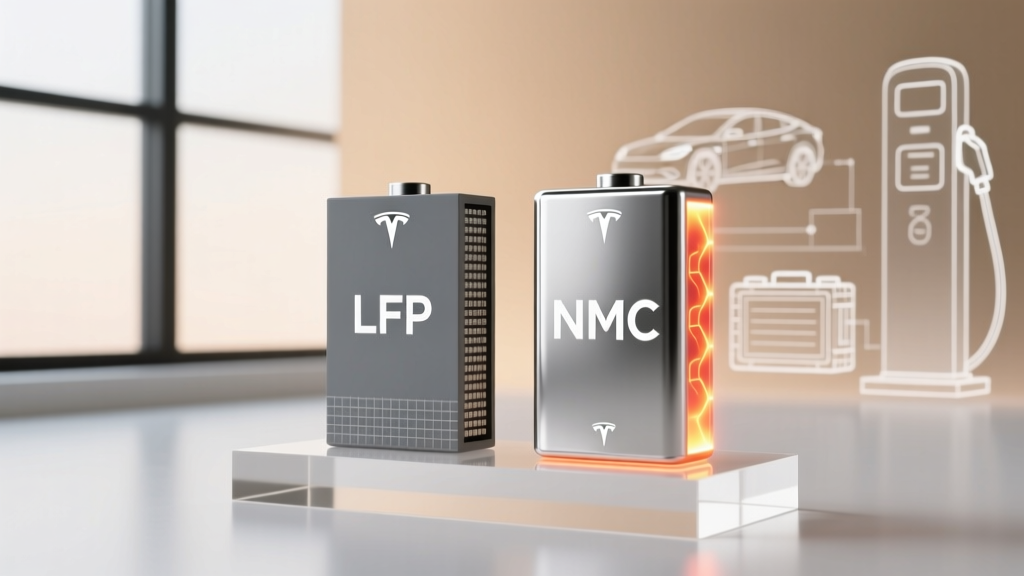
Today's Battery Chemistries: LFP vs NMC/NCA Explained
Every EV sold in the US in 2026 uses one of two dominant cathode chemistries in its high-voltage traction battery (not to be confused with the 12V auxiliary battery that powers accessories). The chemistry choice affects your range, charging habits, cold-weather performance, and long-term durability.
| Attribute | LFP (Lithium Iron Phosphate) | NMC/NCA (Nickel Manganese Cobalt / Nickel Cobalt Aluminum) |
|---|---|---|
| Energy Density | Lower (~160-180 Wh/kg cell-level) | Higher (~220-260 Wh/kg cell-level) |
| Typical Range per Pack Size | Less range for same kWh; heavier pack | More range for same kWh; lighter pack |
| Cycle Life | 3,000-5,000+ cycles to 80% SoH | 1,000-2,000 cycles to 80% SoH |
| Cold-Weather Performance | Greater range loss below 32°F; slower charge acceptance | Better low-temp conductivity; less range penalty |
| State-of-Charge Flexibility | Can charge to 100% daily without significant harm | Best kept 20-80% for daily use; 100% for trips only |
| Cobalt/Nickel Content | None — lower supply-chain and ethical concerns | Contains cobalt and/or nickel |
| Cost (Cell-Level) | Lower ($80-100/kWh in 2026) | Higher ($110-140/kWh in 2026) |
| Common In 2026 Models | Tesla Model 3/Y RWD, Ford Mustang Mach-E Select (LFP option), Rivian Standard pack | Hyundai Ioniq 5/6, Chevy Equinox EV, BMW iX, most long-range/AWD trims |
The practical takeaway: If you charge at home nightly and want a lower-cost EV for commuting, LFP is an excellent match — its cycle life is extraordinary and you can charge to 100% without guilt. If you need maximum range for road trips or live in a cold climate, NMC/NCA delivers better energy density and cold-weather usability. Neither chemistry is universally "better"; the right choice depends on your driving pattern.
How Long Do EV Batteries Actually Last?
Based on fleet data from Tesla, real-world studies by Geotab, and owner-reported metrics, modern liquid-cooled EV batteries are lasting significantly longer than early-2010s packs. Here is what the data shows for typical degradation:
| Timeframe | Average Capacity Retained | Notes |
|---|---|---|
| Year 1 / 15,000 mi | ~96-98% | Initial "break-in" loss; steepest drop occurs early |
| Year 3 / 45,000 mi | ~92-95% | Degradation curve flattens significantly |
| Year 5 / 75,000 mi | ~89-93% | Most owners report minimal day-to-day perceived change |
| Year 8 / 120,000 mi | ~85-90% | Within warranty threshold for most manufacturers |
| Year 10 / 150,000 mi | ~82-88% | Data from Tesla Model S/X high-mileage fleets |
These figures assume moderate fast-charging use (not exclusively DC fast charging), temperate-to-mixed climate exposure, and reasonable state-of-charge habits. Tesla's own 2024 impact report (the most recent comprehensive fleet data published) showed Model 3/Y packs retaining approximately 85% capacity after 200,000 miles. For the vast majority of owners, the battery will outlast the vehicle's economic life.
What Does the Battery Warranty Actually Cover?
Federal regulations mandate a minimum battery warranty of 8 years / 100,000 miles for EVs sold in the US. California Air Resources Board (CARB) states require 10 years / 150,000 miles. Most manufacturers exceed these minimums. Here is how major brands structure coverage in 2026:
| Manufacturer | Warranty Period | Capacity Retention Threshold | Coverage Details |
|---|---|---|---|
| Tesla (Model 3/Y) | 8 yr / 100,000 mi (LFP) or 120,000 mi (Long Range) | 70% | Defects + capacity below threshold |
| Hyundai / Kia | 10 yr / 100,000 mi | 70% | Defects + capacity below threshold |
| Ford (Mach-E, F-150 Lightning) | 8 yr / 100,000 mi | 70% | Defects + capacity below threshold |
| GM (Ultium-based) | 8 yr / 100,000 mi | 70% | Defects + capacity below threshold |
| Rivian | 8 yr / 120,000 mi (Standard) or 175,000 mi (Max) | 70% | Defects + capacity below threshold |
| BMW | 8 yr / 100,000 mi | 70% | Defects + capacity below threshold |
The critical detail: warranty coverage triggers when measured capacity drops below the stated threshold (usually 70% of original). Simply perceiving less range is not sufficient — the dealer or service center must verify State of Health (SoH) via diagnostic tools. Warranty covers defects and excessive degradation; it does not cover damage from accidents, flooding, or improper modifications.
EV Battery Replacement Cost: The Real Numbers
This is where fear-mongering often outpaces reality. The truth: the overwhelming majority of EV batteries never need full replacement. When they do, it is typically due to a manufacturing defect (covered under warranty) or physical damage (covered by insurance). Out-of-warranty degradation severe enough to warrant replacement is rare before 200,000+ miles. That said, here are current replacement cost ranges for context:
| Model | Battery Size (kWh) | Replacement Cost Range | Notes |
|---|---|---|---|
| Tesla Model 3 RWD (LFP) | ~60 kWh | $10,000 - $13,000 | Refurbished packs increasingly available at lower cost |
| Tesla Model Y Long Range | ~75 kWh | $13,000 - $16,000 | Module-level repair sometimes possible |
| Hyundai Ioniq 5 | ~77.4 kWh | $14,000 - $18,000 | Full pack replacement; module repair emerging |
| Ford F-150 Lightning Extended | ~131 kWh | $22,000 - $28,000 | Largest consumer packs carry highest replacement cost |
| Chevy Equinox EV | ~85 kWh | $14,000 - $17,000 | Ultium platform designed for module-level service |
Two trends are working in owners' favor: (1) module-level repair is becoming more common, meaning a single degraded or faulty module can be replaced for $2,000-$5,000 rather than swapping the entire pack, and (2) the refurbished/remanufactured battery market is growing, offering packs at 40-60% of new-pack pricing. According to data tracked by the IRS and industry analysts, cell-level pricing continues its long-term decline even as labor and logistics costs remain significant.
Factors That Accelerate (or Protect) Battery Life
Not all miles are created equal when it comes to battery wear. Here are the evidence-based factors that influence how quickly your pack degrades:
Practices That Accelerate Degradation
- Exclusive DC fast charging: Daily reliance on 150+ kW DC fast charging generates sustained heat, accelerating chemical wear. Occasional road-trip use is fine; daily use adds up.
- Prolonged high state of charge: Storing an NMC/NCA vehicle at 100% SoC for days or weeks stresses the cathode. LFP is more tolerant of 100% SoC.
- Extreme heat exposure: Regularly parking in 100°F+ ambient temperatures without thermal management active (some vehicles limit cooling when parked to save energy).
- Deep discharges: Regularly driving to 0% SoC or leaving the vehicle at very low SoC for extended periods.
- High-performance driving in heat: Repeated hard acceleration and high-speed driving generates internal cell heat beyond what thermal management can fully offset.
Practices That Protect Battery Health
- Daily charging to 80% (NMC/NCA) or 100% (LFP): Staying in the middle of the SoC window minimizes stress.
- Level 2 home charging as primary: 7-11 kW AC charging generates far less heat than DC fast charging.
- Preconditioning before fast charging: Most modern EVs do this automatically when a charger is set as your navigation destination; it brings the battery to optimal temperature for accepting charge, reducing stress.
- Garage parking in extreme climates: Even an unheated garage buffers against temperature extremes.
- Plug in during extreme cold: Many EVs use grid power to maintain battery temperature when plugged in, preserving health and ensuring range availability.
How to Check and Monitor Your Battery's State of Health
State of Health (SoH) is the percentage of original capacity your battery can still hold. A new battery is 100% SoH; a battery that held 75 kWh when new and now holds 67.5 kWh is at 90% SoH. Here is how you can monitor it:
- In-vehicle displays: Tesla shows a range-based estimate in the app and vehicle settings. Hyundai/Kia provides SoH readouts in the EV menu on newer models. BMW iDrive includes a battery health screen.
- OBD-II diagnostic tools: Devices like the OBDLink SX combined with apps such as LeafSpy (Nissan), Scan My Tesla, or Car Scanner can read the battery management system (BMS) directly for precise SoH figures.
- Dealer diagnostics: Any authorized service center can pull a full battery health report. Request this during routine service visits, especially as you approach warranty mileage thresholds.
- Charging-log analysis: Tracking how many kWh it takes to charge from a known SoC to another known SoC gives a rough capacity estimate. For example, if charging from 20% to 80% takes 46 kWh on a 77 kWh pack, your usable capacity is approximately 76.7 kWh — suggesting ~99.6% SoH. This method has a margin of error due to charging losses but is useful for trend tracking.
For buyers considering a used EV, always request a battery health report before purchase. A 2022 model with 40,000 miles showing 94% SoH is in excellent shape; one showing 83% warrants further investigation or negotiation.
The Electric Vehicle Solid State Battery Market: Timeline and Reality
Now to the technology generating the most headlines. Solid-state batteries replace the liquid electrolyte in current lithium-ion cells with a solid material (ceramic, sulfide, or polymer), enabling the use of lithium-metal anodes. The theoretical benefits are substantial:
- Energy density: 400-500+ Wh/kg at the cell level (roughly double today's NMC), enabling 500-600+ mile ranges in sedan-sized packs.
- Charge speed: Potential for 10-80% in under 10 minutes due to improved thermal stability and lithium-metal anode kinetics.
- Safety: No flammable liquid electrolyte, reducing thermal runaway risk.
- Longevity: Potentially longer cycle life, though this depends heavily on the specific solid-electrolyte material and lithium-metal interface stability.
However, the engineering challenges remain formidable. Lithium-metal anodes are prone to dendrite formation (microscopic needle-like structures that can short-circuit cells), manufacturing yields are low, and production costs are currently 3-5x that of conventional lithium-ion cells at scale.
Realistic commercialization timeline (forward-looking, subject to change):
- 2026-2027: Limited production runs in premium/low-volume vehicles. Toyota has announced plans for a solid-state-equipped model in this window, likely in small numbers for the Japanese market. Samsung SDI targets 2027 for initial production. These will be expensive, limited-availability vehicles.
- 2028-2030: Broader availability in premium segments ($70,000+ vehicles). Manufacturing scale-up is the primary bottleneck. Cost per kWh is expected to remain above conventional lithium-ion.
- 2031-2035: Potential cost parity with NMC in mainstream vehicles, assuming manufacturing breakthroughs. This is the timeline most industry analysts consider realistic for solid-state batteries appearing in sub-$50,000 EVs.
Silicon-anode technology (used by companies like Sila Nanotechnologies, already in limited production in the Mercedes G-Class EV and Panasonic cells) represents a nearer-term incremental improvement, boosting energy density by 10-20% without the manufacturing challenges of full solid-state cells. Expect silicon-dominant anodes to proliferate in 2026-2028 model-year vehicles as a bridge technology.
The buyer's decision: Waiting for solid-state batteries to reach mainstream pricing means waiting until the early-to-mid 2030s based on current projections. Today's NMC and LFP batteries already deliver 250-350 miles of range, 10-80% charging in 18-25 minutes, and 150,000+ mile lifespans with minimal degradation. The technology gap between today's batteries and solid-state is real but is narrowing through incremental improvements (silicon anodes, dry-electrode manufacturing, improved electrolyte formulations) rather than a single revolutionary leap.
Frequently Asked Questions
How long do EV batteries last in years and miles?
Modern liquid-cooled EV batteries are lasting 150,000-200,000+ miles with 82-90% capacity retention. In years, that translates to 10-15+ years for average drivers (12,000-15,000 miles/year). Fleet data from Tesla and Geotab shows the degradation curve flattens significantly after year 3, meaning most of the capacity loss you will experience happens early. The battery is very likely to outlast your ownership of the vehicle.
How much does it cost to replace an EV battery?
Full pack replacement ranges from approximately $10,000 for a smaller LFP pack (Tesla Model 3 RWD) to $22,000-$28,000 for a large pack (F-150 Lightning Extended Range). However, most batteries never need replacement, and module-level repairs ($2,000-$5,000) are increasingly possible. If replacement is needed within the warranty period (8 years/100,000 miles minimum) due to defect or excessive degradation, the manufacturer covers it.
What does the EV battery warranty cover?
EV battery warranties cover manufacturing defects and capacity loss below a specified threshold — typically 70% of original capacity — within the warranty period (8 years/100,000 miles for most brands, 10 years/100,000 miles for Hyundai/Kia). They do not cover damage from accidents, flooding, improper modifications, or normal wear above the threshold. Some brands offer longer coverage on specific models (Rivian: 8 yr/175,000 mi on Max pack).
How do I check my EV battery health?
Check your vehicle's built-in battery health display (available on Tesla, Hyundai/Kia, BMW, and others). For more precise readings, use an OBD-II diagnostic tool with EV-compatible software (Scan My Tesla, LeafSpy, Car Scanner). You can also request a full battery health report from your dealer during service visits. Track trends over time rather than fixating on a single reading.
LFP vs NMC — which battery chemistry is better for me?
Choose LFP if you charge at home nightly, want maximum cycle life, prefer to charge to 100% without concern, and prioritize lower cost and cobalt-free sourcing. Choose NMC/NCA if you need maximum range from a smaller/lighter pack, regularly drive in cold weather, take frequent road trips, or want the longest single-charge distance. Both chemistries are proven and reliable in 2026; neither is universally superior.
Should I wait for solid-state batteries before buying an EV?
Based on current industry timelines, solid-state batteries will not reach mainstream pricing (sub-$50,000 vehicles) until the early-to-mid 2030s. Limited premium models may appear in 2027-2028 at high prices. Today's EVs already offer 250-350 miles of EPA range, 18-25 minute fast charging, and batteries that last the life of the vehicle. Waiting 5-10 years for solid-state means forgoing the fuel savings, lower maintenance costs, and available tax credits of today's EVs. If your current vehicle meets your needs, waiting is reasonable. If you are spending $3,000-$4,000/year on gas now, the math favors buying today.