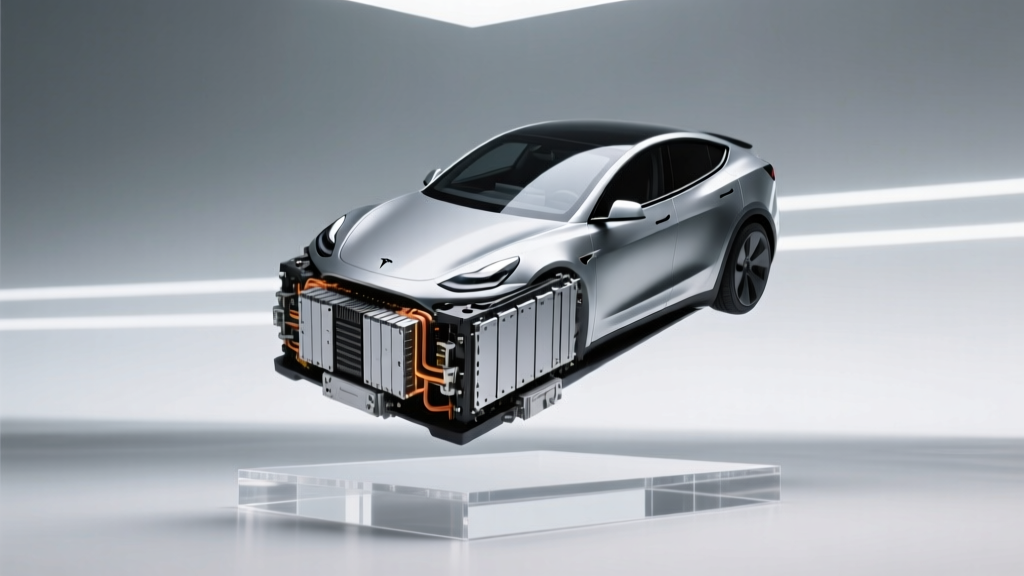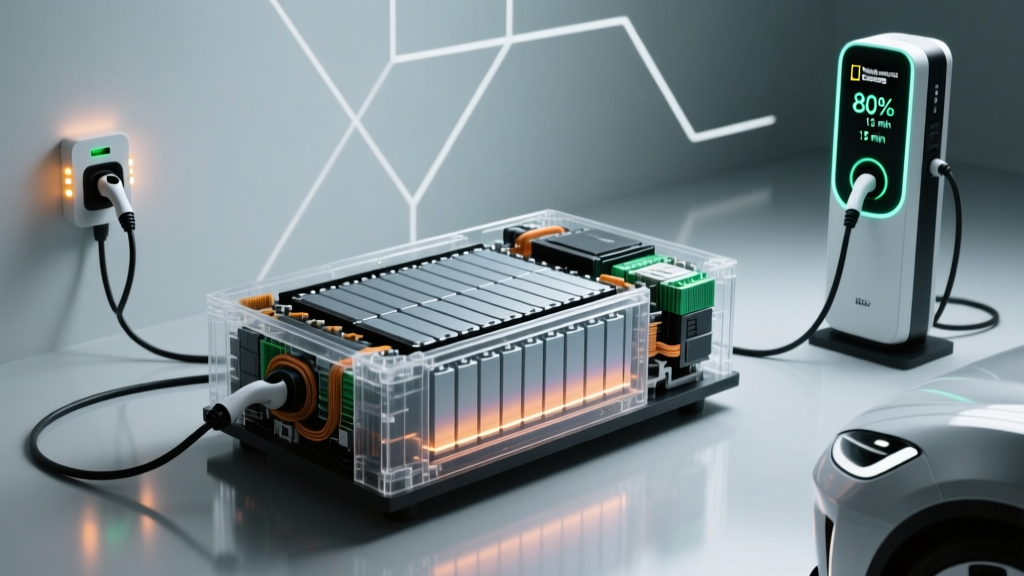
The high-voltage traction battery is the single most expensive component in any electric vehicle, and the chemistry inside it dictates your range, charging speed, longevity, and eventual replacement bill. Yet most buyers choose a trim package based on wheel size while ignoring the cells underneath. That's a mistake.
As of 2026, the EV market has largely consolidated around two dominant lithium-ion chemistries — NMC (nickel manganese cobalt) and LFP (lithium iron phosphate) — with NCA (nickel cobalt aluminum) still appearing in some Tesla and Rivian applications. Meanwhile, new battery tech like solid-state cells and silicon-dominant anodes dominates headlines but remains, for now, largely pre-commercial. This guide cuts through the hype with hard numbers on degradation, warranty coverage, replacement costs, and daily care habits that actually move the needle on battery life.
LFP vs NMC vs NCA: Chemistry Trade-Offs That Affect Your Daily Drive
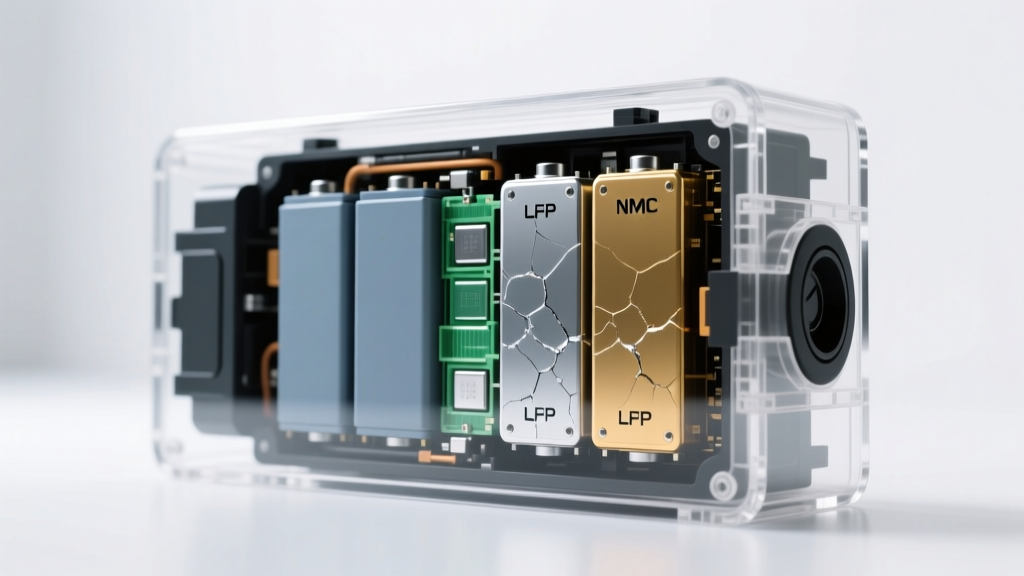
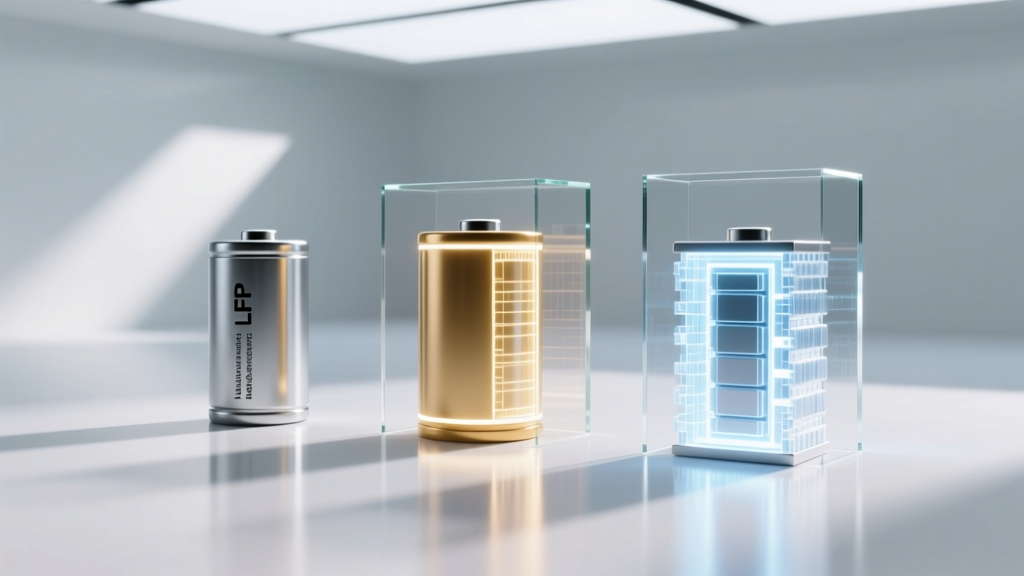
Not all lithium-ion batteries are created equal. The cathode chemistry determines energy density (how far you go per kWh of battery weight), cycle life (how many charge-discharge cycles before meaningful degradation), cold-weather performance, and raw material cost. Here is how the three mainstream chemistries stack up in current-production EVs.
| Attribute | LFP (Lithium Iron Phosphate) | NMC (Nickel Manganese Cobalt) | NCA (Nickel Cobalt Aluminum) |
|---|---|---|---|
| Energy Density (cell-level) | ~160–180 Wh/kg | ~220–260 Wh/kg | ~250–270 Wh/kg |
| Typical Cycle Life | 3,000–5,000+ cycles to 80% SoH | 1,000–2,000 cycles to 80% SoH | 1,000–1,500 cycles to 80% SoH |
| Cold-Weather Range Retention | Lower — steeper range loss below 32°F | Better — more stable in cold climates | Better — similar to NMC |
| Cost per kWh (pack-level) | ~$90–$110 | ~$120–$145 | ~$125–$150 |
| Recommended Daily Charge Ceiling | 100% SoC (no penalty) | 80–90% SoC for daily use | 80–90% SoC for daily use |
| Notable 2026 Vehicles | Tesla Model 3 RWD, Ford Mustang Mach-E Select (some trims), BYD models | Hyundai Ioniq 5, Kia EV6, VW ID.4, BMW iX | Tesla Model S/X, Rivian R1T/R1S (some packs) |
| Thermal Stability / Safety | Excellent — very resistant to thermal runaway | Good — requires robust BMS/cooling | Good — requires robust BMS/cooling |
Which is better? There is no universal winner. LFP is the pragmatic choice for cost-conscious buyers who can charge at home nightly and don't need maximum range. Its cycle life is extraordinary — 5,000 cycles on a 250-mile-range vehicle is well over 1 million miles of driving. NMC wins for buyers who need longer range in a lighter package, tow frequently, or live in cold climates where LFP's winter range penalty stings harder. NCA occupies a similar niche to NMC but is less common in new platforms.
One critical difference: LFP owners should charge to 100% regularly (the chemistry tolerates it, and the battery management system needs full-charge events to recalibrate cell balancing). NMC and NCA owners benefit from setting a daily charge limit of 80–90% and only charging to 100% before long trips.
How Long Do EV Batteries Actually Last? Degradation Data
The fear that an EV battery will "die" like a smartphone battery after two years is not supported by fleet data. Modern liquid-cooled battery packs with sophisticated battery management systems (BMS) degrade far more slowly than consumer electronics cells. Here's what the numbers show:
- Tesla fleet data (2025 Impact Report): Model 3/Y packs retained approximately 85% of original capacity at 150,000 miles. Degradation was steepest in the first 20,000–30,000 miles (~5% loss), then flattened to roughly 1% per 30,000 miles thereafter.
- Geotab fleet study (2024, ~10,000 vehicles across brands): Average annual degradation across all chemistries was approximately 1.8% per year. At that rate, a battery retains ~82% capacity after 10 years — well above typical warranty thresholds.
- Recurrent Auto data (2025, mixed fleet): Vehicles with LFP packs showed measurably lower degradation rates at high mileage compared to NMC equivalents, consistent with LFP's superior cycle-life chemistry.
Most current-production EV batteries will outlast the vehicle's economic life. A pack retaining 75–80% capacity at 200,000 miles is common, not exceptional. The cars around the battery — suspension, interior, electronics — typically age out first.
What the Battery Warranty Actually Covers (and What It Doesn't)
Federal law mandates that EV battery warranties cover a minimum of 8 years or 100,000 miles (10 years/150,000 miles in California Air Resources Board states). But the details matter — specifically, the capacity retention threshold that triggers a warranty claim.
| Manufacturer | Warranty Period | Mileage Cap | Capacity Retention Threshold | Notes |
|---|---|---|---|---|
| Tesla (Model 3/Y LFP) | 8 years | 100,000 mi | 70% | Long Range/Performance: 120,000 mi |
| Hyundai / Kia | 10 years | 100,000 mi | 70% | Among the longest coverage in the industry |
| Ford (Mach-E, F-150 Lightning) | 8 years | 100,000 mi | 70% | Covers battery and hybrid/electric components |
| Volkswagen (ID.4) | 8 years | 100,000 mi | 70% | Transferable to second owner |
| BMW (iX, i4) | 8 years | 100,000 mi | 70% | Includes battery conditioning system |
| Rivian (R1T/R1S) | 8 years | 175,000 mi | 70% | Higher mileage cap reflects truck use case |
The 70% threshold is industry-standard. If your pack drops below 70% of original usable capacity within the warranty window, the manufacturer will repair or replace it — typically with a refurbished pack, not a brand-new one. Normal degradation above 70% is not covered. Neither is physical damage from accidents, flooding, or modifications.
One nuance: some manufacturers require that you follow their recommended charging practices (e.g., not exclusively DC fast-charging) to maintain warranty validity. Check your owner's manual. Documentation matters if you ever need to file a claim.
EV Battery Replacement Cost: What You'd Actually Pay
Out-of-warranty battery replacement is the scenario that generates the most anxiety — and the most misleading headlines. Here are realistic 2026 replacement costs based on pack size, chemistry, and current labor rates:
| Vehicle Category | Pack Size | Chemistry | Battery Cost (Parts) | Labor | Total Estimate |
|---|---|---|---|---|---|
| Compact sedan (e.g., Tesla Model 3 RWD) | ~60 kWh | LFP | $6,500–$8,500 | $1,500–$2,500 | $8,000–$11,000 |
| Midsize crossover (e.g., Hyundai Ioniq 5) | ~77 kWh | NMC | $10,000–$13,000 | $1,800–$3,000 | $12,000–$16,000 |
| Full-size SUV/truck (e.g., F-150 Lightning Ext.) | ~131 kWh | NMC | $16,000–$22,000 | $2,500–$4,000 | $18,500–$26,000 |
| Luxury sedan (e.g., BMW iX xDrive50) | ~111 kWh | NMC | $14,000–$18,000 | $2,000–$3,500 | $16,000–$21,500 |
Context matters: the vast majority of EV batteries never need replacement under normal ownership. Pack-level prices have fallen roughly 80% since 2013 (per BloombergNEF data), and module-level repairs — replacing only the degraded cell modules rather than the entire pack — are increasingly available through independent EV shops for $3,000–$7,000 depending on the vehicle. A full pack swap is the last resort, not the default.
Five Factors That Accelerate (or Protect) Battery Life
Battery degradation is not purely a function of time. How you use the pack matters enormously. These are the factors with the largest measurable impact on long-term State of Health (SoH):
- DC fast-charging frequency: Occasional DC fast charging (1–2 times per week) has minimal impact. Daily exclusive use of 150+ kW DC fast charging accelerates degradation by roughly 1–2 additional percentage points per year versus predominantly Level 2 home charging, according to Geotab fleet data. The heat generated at high charge rates is the primary culprit.
- Extreme temperatures without preconditioning: Charging a cold battery (below 32°F / 0°C) at high power causes lithium plating on the anode — permanent capacity loss. Always use your vehicle's battery preconditioning feature before DC fast charging in cold weather. Similarly, repeatedly charging in ambient heat above 95°F without active cooling degrades cells faster.
- State of charge habits: For NMC/NCA batteries, routinely sitting at 100% SoC or dropping below 10% SoC accelerates calendar degradation. The sweet spot is 20–80% for daily use. LFP batteries are more tolerant of 100% SoC and actually benefit from periodic full charges for cell balancing.
- Depth of discharge: Shallow cycles (e.g., charging from 40% to 70%) are gentler than deep cycles (10% to 95%). If your commute only uses 20% of the battery, you don't need to charge to 90% every night.
- Calendar aging: Even a parked EV battery degrades over time — roughly 1–2% per year at moderate temperatures and 50% SoC. Storing a vehicle at 100% SoC in a hot garage for weeks accelerates this significantly.
How to Check and Monitor Your Battery's State of Health
State of Health (SoH) is the percentage of original usable capacity your battery currently holds. A new pack is 100% SoH; a pack at 85% SoH holds 85% of its original kWh. Monitoring SoH helps you track degradation trends and plan for warranty claims if needed.
Built-in vehicle tools: Some manufacturers display SoH directly in the infotainment system or companion app. Tesla shows estimated range at 100% (which you can compare to the original EPA figure). Hyundai/Kia's Bluelink app includes battery health indicators on newer models. BMW's iDrive system surfaces battery health data in the service menu.
Third-party diagnostics: Services like Recurrent Auto (free enrollment, passive data collection via OBD-II or telematics) provide detailed SoH reports with fleet percentile rankings. Independent EV shops can perform a controlled discharge test to measure actual usable kWh — the most accurate SoH assessment, typically costing $100–$200.
DIY estimation method: Charge to 100%, note the displayed range, and compare it to the EPA-rated range when new (available at fueleconomy.gov). Adjust for the fact that displayed range uses an algorithm, not a direct kWh measurement. For a more precise figure, use an OBD-II dongle with EV-compatible software (such as ABRP's OBD integration or Scan My Tesla for Tesla vehicles) to read the pack's reported total kWh capacity directly from the BMS.
New Battery Tech on the Horizon: Solid-State, Silicon Anodes, and Realistic Timelines
If you've read about solid-state batteries promising 600-mile ranges and 10-minute charging, temper your expectations with production timelines. Here is where the most discussed emerging technologies actually stand as of 2026:
Solid-state batteries (SSB): These replace the liquid electrolyte in conventional lithium-ion cells with a solid material (ceramic, sulfide, or polymer), potentially enabling higher energy density (~350–400 Wh/kg at cell level), faster charging, and improved safety. Toyota has announced limited production of solid-state-equipped vehicles for 2027–2028, initially in small volumes and likely in Japan-market models first. Samsung SDI and QuantumScape are targeting 2028–2030 for broader automotive production. Cost remains the primary barrier — current SSB cells are estimated at 3–5x the cost per kWh of mature lithium-ion cells. Expect solid-state to appear in luxury/flagship models first, with mainstream adoption unlikely before 2030–2032.
Silicon-dominant anodes: Replacing graphite anodes with silicon can increase energy density by 20–40%. Companies like Sila Nanotechnologies and Group14 Technologies are supplying silicon-anode materials to battery manufacturers, with early automotive applications appearing in limited-production vehicles (e.g., Mercedes-Benz G-Class EV variants). Broader adoption is expected in the 2027–2029 window as manufacturing scales and cycle-life challenges are addressed.
Sodium-ion batteries: Using abundant sodium instead of lithium, these cells are cheaper (~$40–$60/kWh projected) but lower in energy density (~120–150 Wh/kg). CATL and BYD have begun deploying sodium-ion packs in budget Chinese-market EVs. US-market availability is uncertain and likely limited to fleet/commercial applications initially.
None of these technologies are currently available in US-market production vehicles. Buyers shopping today are choosing between mature, well-understood LFP and NMC/NCA chemistries — and that is not a bad thing. Proven technology with known degradation curves and established warranty coverage is a safer bet than waiting for next-generation cells that may take years to reach price parity and scale.
Frequently Asked Questions
How long do EV batteries last in years and miles?
Based on fleet data from Geotab, Tesla, and Recurrent Auto, most modern liquid-cooled EV batteries retain 75–85% of original capacity at 150,000–200,000 miles (roughly 12–15 years of average driving). LFP packs often exceed this. Complete failure is rare — gradual capacity loss is the norm.
How much does an EV battery cost to replace?
Out-of-warranty replacement costs range from approximately $8,000 for a compact LFP pack (60 kWh) to $26,000 for a large NMC truck pack (131 kWh), including labor. However, most batteries never require full replacement. Module-level repairs cost significantly less ($3,000–$7,000), and pack prices continue to decline.
What does the EV battery warranty cover?
Federal minimum is 8 years/100,000 miles (10 years/150,000 miles in CARB states). Coverage applies if capacity drops below the manufacturer's threshold — typically 70% of original usable capacity. The warranty covers defects and abnormal degradation but not physical damage, misuse, or normal wear above the threshold. See IRS.gov for how battery sourcing also affects federal tax credit eligibility under §30D.
How do I check and maximize my EV battery health?
Monitor SoH through your vehicle's app, an OBD-II diagnostic tool, or a service like Recurrent Auto. To maximize longevity: rely primarily on Level 2 home charging, set daily charge limits to 80% (NMC/NCA) or 100% (LFP), avoid frequent deep discharges below 10%, precondition the battery before DC fast charging in cold weather, and avoid leaving the vehicle parked at 100% SoC in extreme heat for extended periods.
LFP vs NMC — which battery chemistry should I choose?
Choose LFP if you prioritize low cost, exceptional cycle life (3,000–5,000+ cycles), home charging access, and don't need maximum range or tow frequently. Choose NMC if you need longer EPA range, better cold-weather performance, faster DC charging speeds, or regularly drive in sub-freezing climates. Neither is objectively "better" — the right choice depends on your driving profile, climate, and budget.